What's in this note
- Why insurers care about winterizing at all
- The line every freeze claim is argued across
- What reasonable care tends to mean in practice
- Unoccupied, vacant and under construction are not the same word
- Before you start: what this walkthrough assumes
- Step 1: Read the freezing and vacancy wording in your own policy
- Step 2: Map every water line that runs through a cold space
- Step 3: Stop the cold air before you insulate the pipe
- Step 4: Drain everything that lives outdoors
- Step 5: Service the heating system and give it an alarm
- Step 6: Decide heat or drain for every absence, in advance
- Step 7: Clear the roof and gutter drainage path
- Step 8: Photograph and date the record before the first freeze
- The documentation an adjuster can actually use
- What the winterizing afternoon actually costs you in time
- The questions an adjuster asks after a freeze, and what each tests
- Ice dams are a different peril with the same maintenance argument
- Second homes, rentals and a house on the market
- Renters and condo owners winterize a smaller surface
- Common mistakes that undo an otherwise good winterizing job
- What winterizing does not do for your coverage
- A worked example: one January absence, two records
- What to do if the freeze happens anyway
- If the claim is denied on a maintenance argument
- Winterizing as a yearly habit rather than a one-off project
- The bottom line
Short answer: Winterize a home for insurance by maintaining heat, or shutting off and draining the water system if nobody is occupying the building, because standard forms attach that reasonable-care condition to the freezing peril and most freeze denials turn on it rather than on the burst itself. Policies rarely name a thermostat temperature, so the most valuable step is dated photographs, a thermostat history, and a written note of what you did, filed before winter.
Winterizing is usually sold as a plumbing task. It is also, quietly, an insurance task, because the maintenance you perform before a cold snap is the maintenance an adjuster asks about afterwards. Standard homeowners forms do not simply promise to pay for freeze damage. They attach a condition to the freezing peril, and that condition commonly asks whether you used reasonable care to maintain heat in a building nobody was occupying, or shut off the supply and drained the system instead. Two identical houses can lose the same pipe in the same cold snap and settle differently on that sentence alone.
This walkthrough approaches the whole subject from the policy side. It works through the maintenance-versus-accident logic that decides freeze and ice-dam arguments, what reasonable care and the vacancy provisions tend to ask of an owner, the eight practical steps that put a house in a defensible position before the first hard freeze, and the record to build while the weather is still mild, since documentation gathered in October is worth more than documentation attempted in February. It sits beside our note on frozen pipes for what a burst actually pays and our note on ice dam roof damage for the roof version of the same argument. Size your own exposure in the companion below as you read.
Key takeaways
- Freeze denials usually turn on a condition attached to the peril rather than on the peril itself, and that condition commonly asks about maintaining heat or shutting off and draining the water in an unoccupied building.
- Policies rarely name a thermostat temperature, because reasonable care is judged against circumstances, which means the record of what you did carries more weight than any single number would.
- Unoccupied, vacant and under construction are three different states in policy language, and a separate vacancy provision can suspend coverages a freezing condition never touches.
- Insurers pay for events and generally not for deterioration, so winterizing works partly by keeping a loss on the sudden side of that line and partly by proving where it sat.
- The most valuable step in this walkthrough is the cheapest one: dated photographs, a thermostat history and a written note of what you did, filed before winter rather than reconstructed after a claim.
Why insurers care about winterizing at all
Insurance prices risk, and freeze losses are unusually sensitive to owner behaviour. A hailstorm arrives whether or not anyone prepared for it. A frozen supply line, by contrast, is the product of a cold spell meeting a specific set of conditions inside a specific building: where the pipe runs, how much cold air reaches it, whether the heat was on, whether anyone was there to notice. Carriers know that, and the standard forms reflect it by attaching conditions to the freezing peril that other perils do not carry.
None of that makes freeze damage uninsurable or unusual. It is one of the most commonly paid categories in property insurance, and the ordinary outcome of a burst in a heated, occupied home is a paid claim. What it means is that this is one of the few losses where your conduct before the event is part of the coverage question rather than merely part of the risk. Understanding that shifts winterizing from a chore to a piece of contract housekeeping.
The line every freeze claim is argued across
Every property policy draws one central line, and the entire subject of this walkthrough sits on it. On one side are losses caused by an event: something that started, happened and finished, with a cause and a moment. On the other side are conditions: deterioration, wear, corrosion, gradual seepage, and the accumulated consequences of maintenance that did not happen. Policies are built to pay for the first and to decline the second, and that is a definition of what insurance is rather than a trick played on policyholders.
A freeze can produce either. A line that holds pressure until an ice plug splits it during a hard cold snap is an event. A fitting that has been weeping into a cabinet base since two winters ago, which finally lets go when the cold arrives, reads as the end of a long story. The physical water is identical. The classification is not, and it decides the claim. Our water damage note works the same distinction across every source of water in a house.
What reasonable care tends to mean in practice
Common freezing conditions use language about using reasonable care to maintain heat in the building, or shutting off the water supply and draining the system and appliances. Wording differs between carriers and forms, and some versions apply more broadly than others, so the sentence printed in your own policy is the only one that governs your claim. What is worth understanding is the shape of the standard rather than any particular phrasing.
Reasonable care is a circumstances test. It does not ask whether you were home, and it does not ask whether you achieved a perfect result. It asks what a sensible owner would have done given the weather, the length of the absence, the construction of the building and what was known at the time. That is why policies rarely name a temperature: a number that made sense for a modern insulated house in a mild climate would be wrong for an older building in a deep freeze. The standard flexes, which is generous in principle and awkward in practice, because it means the answer is assembled after the loss from whatever evidence exists.

Unoccupied, vacant and under construction are not the same word
Three words show up in property policies and they carry different consequences. Occupied means people are living in the building. Unoccupied usually means the belongings are still there but nobody is currently in residence, which describes a family away for a month or a seasonal home closed for the winter. Vacant usually means both the people and the contents are gone, which describes a house between tenants, an empty listing, or a property waiting on an estate. Under construction speaks for itself and often carries its own arrangements.
The freezing condition commonly attaches to all three states, which is why a long trip can put you inside it without anyone doing anything wrong. A separate vacancy provision on many forms suspends a wider list of coverages once a dwelling has been vacant beyond a stated period, with thirty or sixty consecutive days the figures most often cited. A property can therefore sit outside the freezing condition and inside the vacancy provision, or the reverse. Our note on what home insurance covers maps the coverage parts those provisions act on.
Before you start: what this walkthrough assumes
The eight steps below assume a house you live in, in a climate where freezing is a real possibility, and an owner who wants to be in a defensible position rather than one who wants a guarantee. No amount of preparation guarantees a paid claim, because coverage is decided by your form, your endorsements, your state and the facts of the loss. What preparation does is remove the arguments that are avoidable and leave you with evidence for the ones that are not.
Three practical notes before starting. This walkthrough does not price the work, because material and labour costs vary enormously by region, building and season, and a made-up number would be worse than none. Anything involving gas appliances, electrical work near water, roof access or heating equipment belongs with a licensed trade rather than with a weekend. And the steps are ordered so the cheapest, highest-value work comes first, which means the reading and the recording bracket the physical jobs rather than following them.
Step 1: Read the freezing and vacancy wording in your own policy
Start with the document, not the toolbox. Open your policy form and find three things: the freezing exclusion and whatever condition or exception is attached to it, the vacancy provision and the period it names, and the duties-after-loss section that sets out what you must do once damage occurs. Read them slowly and write down, in your own words, what each demands of you. Most owners have never done this, and almost everyone who does is surprised by at least one sentence.
While you are in there, note the deductible that would apply to a water loss, whether contents settle on replacement cost or actual cash value, and whether any endorsement changes the freezing treatment. Our note on reading a declarations page shows where those figures are printed, and our note on what a deductible is covers the arithmetic they drive. If a sentence is genuinely ambiguous, that is a question for your agent rather than for the internet, and the answer is worth having in writing before the season starts.
Step 2: Map every water line that runs through a cold space
Winterizing fails most often because someone protected the pipes they could see. The task in this step is a map, room by room, of every place water travels through a space that is not heated to living temperature. The usual list is crawl spaces, unfinished basements, attics, attached garages, the cavity above a garage in a room built over it, exterior wall runs on the shaded side of the house, and the interior stub behind every hose bib.
Add the things that hold water without being pipes: the water heater, a washing machine and dishwasher and their supply lines, an ice maker line, a humidifier, water treatment equipment, a hydronic heating loop, a boiler, and any automatic fire protective sprinkler system, which the standard freezing wording names specifically. Write the map down and keep it. It becomes the checklist for every winter after this one, the briefing for anyone who watches the house while you are away, and part of the record that shows you knew your building. Our plumbing coverage note covers how the policy treats each of those systems when they fail.
Step 3: Stop the cold air before you insulate the pipe
Pipe insulation is the famous measure and it is the second most useful one. Insulation slows the movement of heat, so a wrapped pipe in a space that is genuinely cold will still freeze eventually. What actually protects a line is keeping the space around it from reaching freezing temperature in the first place, and the cheapest way to do that is to stop cold outside air from moving through the cavity where the pipe lives.
That means finding and sealing the air leaks that feed those spaces: rim joist gaps in a basement, an open crawl space vent that nobody has closed since summer, a garage door seal that no longer meets the slab, gaps around a dryer vent or a hose bib penetration, and the attic hatch that leaks conditioned air upward while cold air arrives elsewhere. Moving air freezes a pipe far faster than still air of the same temperature. Once the air is under control, insulate the runs on your map, and where a pipe sits in an exterior wall, remember that insulation belongs between the pipe and the outdoors rather than between the pipe and the heated room.
Step 4: Drain everything that lives outdoors
Outdoor water is the easiest freeze exposure to remove entirely, and it is also the one with the least reliable coverage if it goes wrong. Disconnect every hose, because a hose left attached holds water against the bib and can hold a column of ice back into the wall. Shut the interior valve serving each hose bib if one exists, then open the bib outside to let the stub drain. Frost-free bibs still fail when a hose is left on, which is why the disconnection matters more than the hardware.
Then work through the rest of the outdoor list: lawn irrigation, which usually needs a proper blow-out rather than a hopeful drain, pool and spa lines and equipment, an outdoor kitchen supply, and any exterior shower or utility tap. Coverage here is the weak point twice over. Some forms exclude freezing of plumbing on the exterior of the building outright, and damage to buried lines, landscaping and outdoor equipment often sits under separate exclusions or sub-limits whatever caused it. Draining those systems is worth doing regardless of what your form says, because the policy may never be the backstop you assumed.
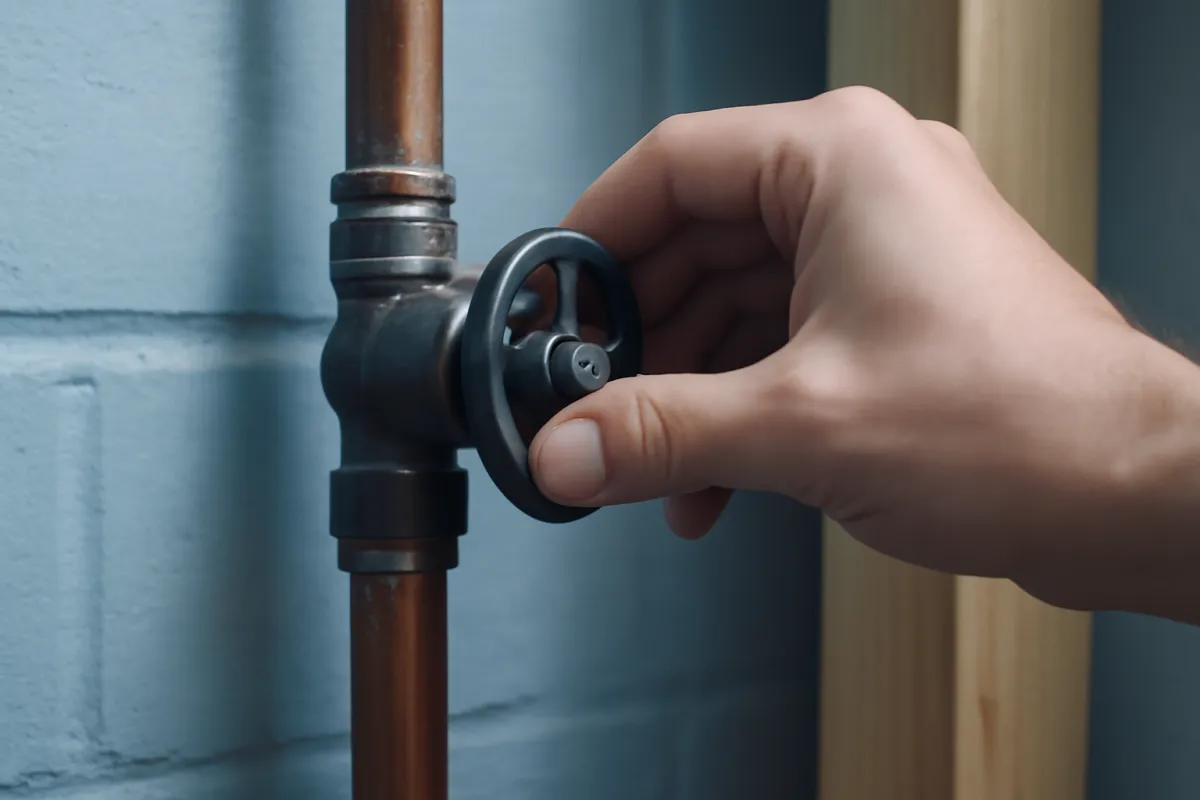
Step 5: Service the heating system and give it an alarm
Every heat-based winterizing plan depends on equipment continuing to work while nobody watches it. That is a strong assumption, and the way to earn it is a service visit before the season rather than a repair call during it. A licensed technician checking the furnace or boiler, replacing filters, confirming the flue and the condensate path, and testing the safeties turns a hope into a record, and the invoice with its date becomes part of your file.
Then add the layer that matters most for an empty house: notification. A smart thermostat with a low-temperature alert will tell you the house is cooling long before a pipe is in danger, and a simple monitored temperature sensor does the same in a crawl space or garage the thermostat cannot see. Pair that with leak detection sensors at the risk points from your map, and consider an automatic shutoff valve that closes the main when it detects an abnormal flow. Some carriers recognise those monitored devices with a credit, which varies by carrier and state, and our note on lowering your premium covers how to ask.
Step 6: Decide heat or drain for every absence, in advance
The freezing condition typically offers two branches, and the useful discipline is choosing one deliberately for each absence rather than drifting into neither. Maintaining heat is the sensible choice for short absences in a house with reliable equipment, and it depends on the furnace, the fuel supply and the electricity all holding for the whole period. Shutting off the water and draining the system is the stronger choice for long absences and for hard-freeze climates, because a drained house cannot burst regardless of what the power grid does.
Draining properly is more than closing a valve. It usually means opening the highest and lowest fixtures so the lines empty, dealing with the water heater according to its instructions, addressing traps and toilets with the appropriate non-toxic antifreeze, and emptying anything on your map that holds water. It is reasonable to have a plumber do it, and reasonable to learn it once and repeat it. Whichever branch you choose, write down what you did and when, since that note is the answer to the first question an adjuster will ask. The companion below lets you test how a given absence length changes the picture.
Step 7: Clear the roof and gutter drainage path
Cold weather produces a second loss with the same maintenance argument, and it arrives from above. Meltwater running down a roof refreezes at the cold eave, builds a ridge of ice, and backs water up under the covering and into the building. The insurance treatment varies more than freeze losses do, and the argument is frequently about whether the intrusion followed a sudden event or a drainage path that had been failing for seasons.
Preparation is unglamorous and effective. Clear the gutters and downspouts before the leaves finish falling so meltwater has somewhere to go. Check the attic for the two things that build ice dams from the inside: warm air leaking upward from the living space, and insufficient insulation letting the roof deck warm unevenly. Look at ventilation while you are there. Photograph the roof edge and gutters from the ground before winter, because that image is what shows the drainage path was clear. Our ice dam note works through how those claims are argued, and our note on roof replacement covers the age and condition questions that sit behind them.
Step 8: Photograph and date the record before the first freeze
The last step is the one people skip and the one that decides arguments. Once the work is done, spend twenty minutes building a record of the state of the building before the cold arrives. Photograph the thermostat showing its setting, the main shutoff, insulated runs in every cold space on your map, drained and closed hose bibs, the water heater area, the furnace or boiler with any service tag visible, and the gutters and roof edge from the ground. Add a short video walking through the unheated spaces while you say the date aloud.
Write a plain note of what you did, when, and who did it, and keep any invoices from trades. Store all of it in cloud storage rather than on a device that lives in the basement, and file it with your policy documents. Every one of those items answers a question an adjuster will otherwise ask you to answer from memory. Our note on building a home inventory applies the same habit to belongings, and the two records together are the strongest position a homeowner can be in before a winter claim.

The documentation an adjuster can actually use
Not all evidence is equal, and the difference matters more than most owners expect. An adjuster reconstructing a freeze loss is trying to establish the state of the building and your conduct at a moment that has already passed. Recollection is the weakest input, because it is unverifiable and because honest people misremember dates. Contemporaneous records are the strongest, because they were created before anyone had a reason to argue.
The chart below is a constructed illustration rather than a survey. It scores each kind of record on how much of the reasonable-care question it can answer on its own, on an invented scale where a complete file is 100. The point is the ordering rather than the values.
How much of the reasonable-care question each record can answer, illustrative
An invented completeness index built for this walkthrough, scaled so a full pre-winter file is 100. It is a way of ranking kinds of evidence against each other, not a measurement of anything, and no insurer scores claims this way.
Bars are scaled to the 100 top figure. Notice how far the first two sit below the rest: the gap between remembering and proving is most of the distance in a contested freeze claim. The worked example later in this walkthrough runs the same house at 100 and at 10.
What the winterizing afternoon actually costs you in time
Money is the wrong unit for this work, partly because prices vary too much to state honestly and partly because the binding constraint for most households is a free afternoon rather than a budget. The split below is an illustrative share of one such afternoon across the physical and paper tasks in this walkthrough, assuming an average single-family house and someone doing the accessible work themselves while leaving heating service and gas appliances to a licensed trade.
Where an illustrative winterizing afternoon goes, by share of time
A constructed split of one pre-winter session across the tasks in this walkthrough. Shares sum to 100 and are meant to show the balance between the physical work and the paperwork, not to predict how long any particular house takes.
A quarter of the session is air sealing and insulation, which is the work that actually keeps cavities above freezing. The two smallest slices, reading the wording and building the record, are the ones with the most leverage on a claim, which is an uncomfortable ratio to look at honestly.
The questions an adjuster asks after a freeze, and what each tests
Adjuster questions on a freeze loss are not conversation. Each one maps to a provision, and knowing the map makes the conversation easier and your answers more useful. Was anyone living in the house, and when was it last occupied, tests the unoccupied and vacancy provisions. What was the heat set to, and was the system working, tests the care branch of the freezing condition. Did you shut off and drain the water, tests the other branch.
Three more arrive later. When did you last see that area dry tests whether the loss was sudden or the visible end of a slow leak. What have you done since you found it tests your duty to protect the property from further damage, and a delay of days before drying starts is a real deduction risk. And what was the condition of the pipe, meaning age, material and prior repairs, tests whether deterioration can be blamed instead of the freeze. Answer all of it from your notes rather than from memory, because a guessed date that you later correct turns a simple claim into a contested one.
Ice dams are a different peril with the same maintenance argument
It is worth separating the two winter losses, because owners often merge them. A frozen pipe is a plumbing failure inside the building and the water is your own supply. An ice dam is a drainage failure at the roof edge and the water is melted snow finding a way in. They involve different coverage sections, different exclusions and different evidence.
What they share is the maintenance argument. In both cases the insurer is asking whether the loss was an event or the visible consequence of a building condition that had been developing. For ice dams the specific questions tend to be about gutter and downspout condition, attic insulation and ventilation, the age and condition of the roof covering, and whether previous water intrusion had been recorded. That is why photographing the roof edge before winter is disproportionately useful. Our ice dam note covers how those claims are decided, and our note on a leaking roof covers the repair-versus-replace argument that often follows.
Second homes, rentals and a house on the market
Every provision in this walkthrough bites hardest on property nobody lives in, which is also the property most likely to freeze. A seasonal home closed for the winter is unoccupied by definition. A rental sitting between tenants can be vacant in the policy sense within weeks. A house listed for sale after the owners have moved out is the classic case, because the contents are gone, the heat is often turned down to save money on an empty building, and everyone assumes the existing policy works exactly as it did.
Three moves address it. Tell your insurer before the property sits empty and ask specifically how the freezing condition and the vacancy provision apply to your form, and whether a vacancy permit endorsement is available. Choose the drain branch rather than the heat branch for anything longer than a short absence in a hard-freeze climate, because a drained building does not depend on equipment. And arrange documented interior checks by someone who will actually go inside and send you a dated message afterwards. Our landlord insurance note covers how these provisions read on rental property.
Renters and condo owners winterize a smaller surface
If you rent, the building and its plumbing belong to someone else, and so does most of this walkthrough. What remains yours is worth doing anyway. Know where the shutoff for your unit is and how to close it. Report a cold spot, a draught, or a heating fault in writing rather than by phone, because a written report creates the record that the responsibility was passed on. Keep your belongings off basement and garage floors. A renters policy commonly covers your own property against sudden water damage on its own terms, and our renters insurance note sets out what it reaches.
Condominium owners sit in the most complicated position, because responsibility splits between the association’s master policy and your unit owner policy along a line drawn in the association documents rather than by any general rule. Interior fixtures you installed, pipes inside your walls, and water arriving from the unit above can each land differently. Loss assessment coverage matters here too, since an association deductible can be passed through to owners. Our condo insurance note works through the split, and the practical winterizing task is usually about your own unit and about reporting building-wide issues early and in writing.
Common mistakes that undo an otherwise good winterizing job
Five mistakes account for most of the freeze losses that happen in prepared houses. The first is insulating a pipe in an exterior wall on the wrong side, so the insulation sits between the pipe and the heated room and keeps the warmth out rather than the cold. The second is leaving a hose attached to a frost-free bib, which defeats the design and holds water where it can freeze. The third is closing crawl space vents in winter but leaving the rim joist wide open, so cold air still pours in at a level nobody inspects.
The fourth is turning the heat down to save money in an empty house without drawing the line between economising and leaving the building cold, which is exactly the situation the freezing condition was written to reach. The fifth is doing everything correctly and recording none of it, which produces a house that was genuinely well maintained and an owner with nothing but recollection when the questions start. That last one is the most common and the easiest to fix.

What winterizing does not do for your coverage
Balance matters here, and overselling prevention would be its own kind of misinformation. Winterizing does not create coverage that your policy does not contain. If your form excludes freezing of exterior plumbing, draining the hose bibs protects the building but does not add a coverage line. If damage to buried irrigation sits under a sub-limit, careful blow-outs do not raise the sub-limit. If flood is excluded, and it generally is on a homeowners form, nothing in this walkthrough touches that.
It also does not guarantee that a claim is paid. Conditions, exclusions, endorsements and state regulation all still apply, and adjusters reach different conclusions on similar facts. What winterizing does is narrow the disputable ground. It removes the omissions that make an easy denial, it keeps the loss on the event side of the maintenance line, and it hands you evidence rather than assertions if the conversation becomes difficult. That is a meaningful advantage and it is not the same thing as a promise.
A worked example: one January absence, two records
Put it together on one invented household. The Ferreiras live in a cold-winter region and leave for nineteen days in January. Their house has a crawl space, a bathroom on an exterior wall, and a garage with a hose bib. Before leaving, they read the freezing wording, map the cold-space lines, seal the rim joist gaps and insulate the crawl space runs, disconnect the hoses and drain the bibs, have the furnace serviced, set a low-temperature alert on the thermostat, and photograph everything with the date visible. They choose the heat branch deliberately and note that choice in writing.
A hard cold snap arrives while they are away. Despite the preparation, the line serving the exterior-wall bathroom freezes and splits, and the low-temperature alert does not trigger because the house stayed warm. A neighbour with a key finds water the next morning and closes the main. The covered damage comes to an illustrative $16,400 across flooring, subfloor, drywall, the vanity and some stored belongings. Against an illustrative $1,500 deductible, the policy pays an illustrative $14,900, and the file that supports it scores 100 on the completeness index used in the chart above.
Now rerun the same nineteen days with one thing changed. The Ferreiras did the same work but recorded none of it, and nobody wrote down which branch they chose. The pipe splits identically. The adjuster asks what the heat was set to, when the crawl space was last insulated, and whether the bibs were drained, and every answer is a recollection scored at 10 on the same index. The claim may still be paid, because the facts have not changed. What has changed is that a straightforward loss now depends on being believed, and an illustrative $14,900 sits on that. Run your own absence and loss size through the companion below to see the same comparison on your numbers.
What to do if the freeze happens anyway
Preparation reduces the odds and does not remove them, so the response plan matters. Shut off the water at the main first, then open the lowest faucets to drain pressure so the break stops feeding. If water is anywhere near electrical equipment, cut power to those circuits at the panel, and if that cannot be done safely, stay out and call an electrician. Only then start moving belongings to dry ground.
Photograph and film before anything is touched or dried, because mitigation destroys the evidence of how bad it was. Report the loss and ask directly whether the insurer wants a preferred mitigation vendor. Get drying equipment running the same day, since your policy imposes a duty to protect the property from further damage and since drying time is what decides whether mould becomes part of the claim. Keep the failed section of pipe rather than letting it leave in a truck, because it is the physical evidence that the failure was sudden. Our note on filing a home insurance claim sets out the full sequence, and our mold note covers the caps that apply if drying is delayed.
If the claim is denied on a maintenance argument
A denial that rests on maintenance is an argument rather than a verdict, and it is answerable. Ask for the decision in writing with the specific policy provision cited, because a denial letter that names a clause is something you can address and a verbal explanation is not. Then read that clause against what the file actually shows. Maintenance denials frequently rest on an inference about condition rather than on a finding, and an inference can be met with dated photographs, service records and a thermostat history.
Build the response around four categories: the weather that occurred and its dates, the condition of the building beforehand, the timeline of discovery and response, and your conduct during the absence. Consider whether an independent professional opinion on the cause of failure is worth obtaining. Our note on appealing a denied claim sets out the sequence, and our note on public adjusters explains who represents whom. Keep in mind that a claim history also affects renewal, which our note on non-renewal and our note on premium increases after a claim both cover.
Winterizing as a yearly habit rather than a one-off project
The first pass is the expensive one in time. Everything after it is maintenance of a system you already built. Keep the cold-space map, the photographs and the written notes in one folder, add a dated set each autumn, and the annual job shrinks to walking the map, refreshing the photos, disconnecting hoses, booking the heating service, and writing two lines about which branch you chose for any planned absence.
Tie it to a date rather than to the weather, because the first hard freeze is usually earlier than people expect and preparation done in a cold snap is preparation done badly. Two useful habits sit alongside it. Review your coverage at the same time each year, since limits drift out of line with rebuild costs, which our note on how much home insurance you need covers. And treat the seasonal preparation for other perils the same way, in the manner our hurricane season note sets out for coastal owners.
The bottom line
Winterizing a home for insurance purposes is really two jobs wearing one name. The first is physical: map the water that runs through cold spaces, stop the air that chills them, insulate what remains, empty everything outdoors, service the heat, add alerts and sensors, and clear the roof drainage path. The second is contractual: read the freezing and vacancy wording in your own form, choose the heat branch or the drain branch deliberately for every absence, and build a dated record of what you did before the cold arrives. The physical job protects the building. The contractual job protects the claim, and the second is the one almost everyone skips.
Nothing here guarantees a payment, because your policy form, your endorsements, your state and the facts of the loss decide that. What preparation buys is a narrower argument. In the two versions of the Ferreira household above, the pipe split the same way and the damage was identical, and the only difference was whether an illustrative $14,900 rested on evidence or on being believed. Read your own freezing wording tonight, put this autumn’s session in the calendar, and size your own version in the companion below while the weather still lets you act on it.
This walkthrough is educational reading about how standard homeowners, renters, condominium and landlord policies in the United States commonly treat cold-weather maintenance, freeze losses and the conditions attached to the freezing peril. It is not insurance, legal, financial, plumbing or building advice, and it does not describe the contract you hold or the condition of your building. Whether any particular freeze or ice-dam loss is paid depends on your own policy form and its exact freezing and vacancy language, the endorsements attached to it, your limits and deductible, the occupancy status of the property, the facts an adjuster establishes, and the law and regulation of your state, all of which differ between carriers and change over time. No temperature, absence length, shut-off practice or maintenance step described above is presented as a policy requirement, and no omission described above is presented as something that would void your coverage. Every figure and score used here, including the completeness index, the time split and both versions of the Ferreira household, is an invented illustration built to show how the reasoning fits together, never a quote, a measurement or a prediction. Work involving gas appliances, electrical systems, heating equipment, roof access or ladders carries real safety and code considerations this walkthrough does not address, and belongs with licensed trades. Read your own declarations page and full policy wording, and put the specifics in front of a licensed insurance professional who can see your documents.
Frequently asked questions
Does winterizing a home actually affect whether a freeze claim is paid?
It can, though not in the way most owners assume. Winterizing is not a checklist your insurer grades before writing a cheque. What matters is that standard homeowners forms attach a condition to the freezing peril, and that condition commonly asks whether you used reasonable care to maintain heat in the building, or shut off the water supply and drained the system, in a building nobody was occupying. Winterizing is simply the ordinary way people satisfy that condition and, just as importantly, the way they can show they satisfied it. A house that was heated and a house that was drained can both be in a strong position. A house that was neither, left empty through a hard freeze, is the situation the wording was written to reach. Only your own policy form and the exact sentence it uses decide any particular claim, so read it and put questions to a licensed agent.
What temperature does my policy require me to leave the heat at?
Most forms do not name one. They use a standard like reasonable care, which is judged against circumstances rather than against a number, so the weather, the length of the absence, the construction of the house and what you actually did all feed into the answer. General cold-weather advice often suggests holding an unoccupied house well above freezing rather than at a comfortable living temperature, but that is guidance from the maintenance world rather than a term printed in a contract, and this walkthrough will not present it as a requirement. If you want certainty for a specific absence, ask your own insurer what it expects, ask for the answer in writing, and keep that answer with your policy documents. In a hard-freeze climate and a long absence, the shut-off-and-drain branch of the condition removes the question entirely.
What is the difference between maintenance and a sudden and accidental loss?
It is the line the whole subject turns on. Property policies pay for damage caused by an event with a beginning and an end, and they generally do not pay to correct deterioration, wear, or the consequences of a condition that developed over time. A pipe that freezes hard in a cold snap and splits is an event. A joint that has been weeping into a cabinet base for two winters is a condition. The same physical water can land on either side of that line depending on how the sequence reads. Winterizing matters because it keeps a loss on the event side of the line and gives you the record to show it: dated proof that the house was in good order before the cold arrived is what makes the split look sudden rather than like the end of a long slow story.
Do I have to tell my insurer before I leave the house empty for the winter?
Telling them is usually the cheaper move, whatever the wording turns out to say. Two separate provisions can be in play when nobody is living in a property. The freezing condition attaches to buildings that are vacant, unoccupied or under construction. A separate vacancy provision on many forms suspends a wider set of coverages once a dwelling has been vacant beyond a stated period, with thirty or sixty consecutive days the figures most commonly cited in insurance writing. Both are wording questions rather than universal rules. A short call before the absence lets you ask which provisions apply to your form, whether a vacancy permit endorsement is available, and what the insurer expects of you while the house sits empty, and it converts a later argument into a written answer you already hold.
Will my insurer inspect whether I winterized?
Not usually before a loss, and often quite carefully after one. Underwriting inspections happen for other reasons, mostly roof age, wiring, heating equipment and general condition, and our note on home insurance inspections covers what those look at. The scrutiny that matters here arrives with the claim. An adjuster on a freeze loss is reconstructing the state of the building before the water arrived, and the tools are your photographs, your thermostat history, service records, messages, and whatever anyone who visited the property can confirm. That is why the last step of this walkthrough is documentation rather than plumbing. The work protects the house. The record protects the claim.
If I did everything right and the pipe still froze, is that covered?
That is exactly the accident the policy exists for, and on a standard form the water damage from a pipe that freezes and bursts is commonly paid after one deductible. Extreme cold reaches pipes in walls that have never frozen before, power fails, furnaces stop, and a well-maintained house can still lose a line. The condition attached to the freezing peril asks about care, not about outcomes, so a reasonable effort that failed is not the same as an omission. What decides those claims in practice is evidence, because the insurer is reconstructing your conduct after the fact. Our note on frozen pipes works through what a freeze claim pays for, and our note on appealing a denied claim covers what to do if the first answer disagrees with you.
Does winterizing lower my premium?
Some of it can, indirectly, and this walkthrough will not promise a number. The measures carriers tend to recognise are the monitored ones rather than the manual ones: leak detection sensors, automatic water shutoff devices, monitored alarms, and sometimes a low-temperature alert tied to a smart thermostat. Where a credit exists it is usually modest and it varies by carrier, by state and by the device, so the only reliable way to find out is to ask your own insurer what it recognises and what proof it wants. Insulating a crawl space pipe or draining a hose bib rarely earns a discount on its own. The financial argument for those is the loss you did not have and the claim history you did not create, which our note on premium increases after a claim puts in context.
What should I photograph before winter, and where do I keep it?
Photograph the things an adjuster would want to see the state of before the water arrived: the thermostat showing its setting, the main shutoff valve, insulated pipe runs in crawl spaces, attics and garages, drained and closed hose bibs, the water heater area, the furnace or boiler with any service tag visible, and the gutters and roof edge from the ground. Add a short video walk through unheated spaces narrating the date. Keep a written note of what you did and when, and if anyone else performed the work, keep their paperwork. Store all of it somewhere that survives the house, meaning cloud storage rather than a folder in the basement, and file it with your policy documents. Our note on building a home inventory covers the same habit applied to belongings.

Hamza Hai is the editor of SumSured. She holds an MBA and reviews the site's articles against our editorial standards, checking that every figure is labelled for what it is, that nothing is presented as verified fact without a source the reader can check, and that the writing stays useful to a non-specialist.