What's in this note
- The short answer: does home insurance cover frozen pipes?
- Why a freeze is treated as sudden and accidental
- The three bills a freeze produces, and who pays each
- The failed pipe itself is usually yours
- Reasonable care to maintain heat: the condition behind most denials
- Shut off and drain: the alternative the wording usually offers
- Unoccupied is not the same word as vacant
- Where pipes actually freeze, and why the location changes the argument
- How long the water ran is the biggest single number in the claim
- Freeze losses that are not a supply pipe at all
- Gradual seepage after a freeze, and where the mold line falls
- What a frozen-pipe claim actually pays for
- Tear-out: the coverage that opens the wall
- Drying, dehumidification, and the emergency mitigation bill
- Flooring, cabinetry, and the matching problem
- Belongings, and whether they settle at replacement cost
- Additional living expenses if you cannot stay in the house
- The deductible math on a freeze claim
- When a frozen-pipe claim is not worth filing
- What a paid freeze claim does to your renewal
- The first hour: what to do when a pipe bursts
- How to document a freeze loss so it is not recharacterized
- The questions the adjuster will ask, and what each one is testing
- Prevention insurers actually recognise
- Second homes, rentals, and a house sitting on the market
- Renters and condo owners have a different version of this
- A worked example: one frozen supply line, itemised
- The same freeze in a house left unheated
- The bottom line
Short answer: Yes for the water damage, usually not for the pipe. A pipe that freezes and bursts is a sudden and accidental discharge on a standard homeowners policy, so the damage to the structure and your belongings, the tear-out to reach the break, and the drying are commonly covered after one deductible. The plumber's bill is treated as maintenance, and the claim can be denied if nobody maintained heat or drained an unoccupied building.
Does home insurance cover frozen pipes? Or, put more broadly, are frozen pipes covered by insurance at all, whatever kind of policy you hold? The honest answer splits in two, and both halves matter, and it holds across homeowners, renters, condo, and landlord forms alike, each of which this coverage note comes back to further down. The water damage a frozen pipe causes when it splits and thaws is one of the most routinely paid claims in property insurance, because a burst is the textbook sudden and accidental discharge that standard forms were built around. The pipe that failed is usually yours to fix. And sitting behind both is a condition most owners have never read: the policy generally expects you to have maintained heat in the building, or to have shut off and drained the system if nobody was living there.
That condition is why two identical bursts in two identical houses can settle at an illustrative $17,000 and at nothing. This coverage note works through the covered-versus-excluded line in detail, why the failed pipe sits outside it, what the reasonable-care and unoccupied-dwelling wording actually asks of you, what a claim pays for once it is accepted, how the deductible math works, when a freeze loss is not worth claiming, the prevention insurers genuinely recognise, and how to document a loss so it cannot be recharacterized as a slow leak. It sits alongside our coverage note on water damage for the wider sudden-versus-gradual rule and our coverage note on plumbing for the pipe-versus-damage split across every plumbing failure. Build your own version in the companion below as you read.
Key takeaways
- The water damage from a pipe that freezes and bursts is commonly covered as a sudden and accidental discharge, along with the tear-out to reach the break and the drying afterwards.
- The failed pipe itself is normally not covered, because standard forms pay for damage to the building rather than for repairs to the system that failed.
- Most freeze denials rest on a condition, not on the peril: the wording typically requires reasonable care to maintain heat, or shutting off and draining the supply in an unoccupied building.
- Unoccupied and vacant are different words with different consequences, and a separate vacancy provision can suspend coverage entirely after a stated period of empty weeks.
- How long the water ran is the largest single variable in the size of the claim, which is why the shutoff valve matters more to the outcome than any clause in the policy.
The short answer: does home insurance cover frozen pipes?
Compressed before it is taken apart: on a standard homeowners policy, water escaping from a pipe that froze and split is a covered loss, and the resulting damage to the structure and your belongings is paid after one deductible. Dwelling coverage handles the building: subfloor, flooring, drywall, insulation, ceilings below, trim and built-in cabinetry. Personal property handles what was ruined: rugs, furniture, stored boxes, electronics. Loss of use can pay additional living expenses if the house genuinely cannot be lived in while it dries and gets rebuilt.
Two things are outside that. The plumbing repair itself, meaning the plumber’s bill to cut out and replace the split section, is normally treated as a maintenance cost rather than as damage. And the whole loss can fall away if the freeze happened in a building where nobody maintained heat and nobody drained the water, because the common forms attach that condition directly to the freezing peril. Our note on reading a declarations page shows where the limits, deductible and endorsements that govern all of this are actually printed.
Why a freeze is treated as sudden and accidental
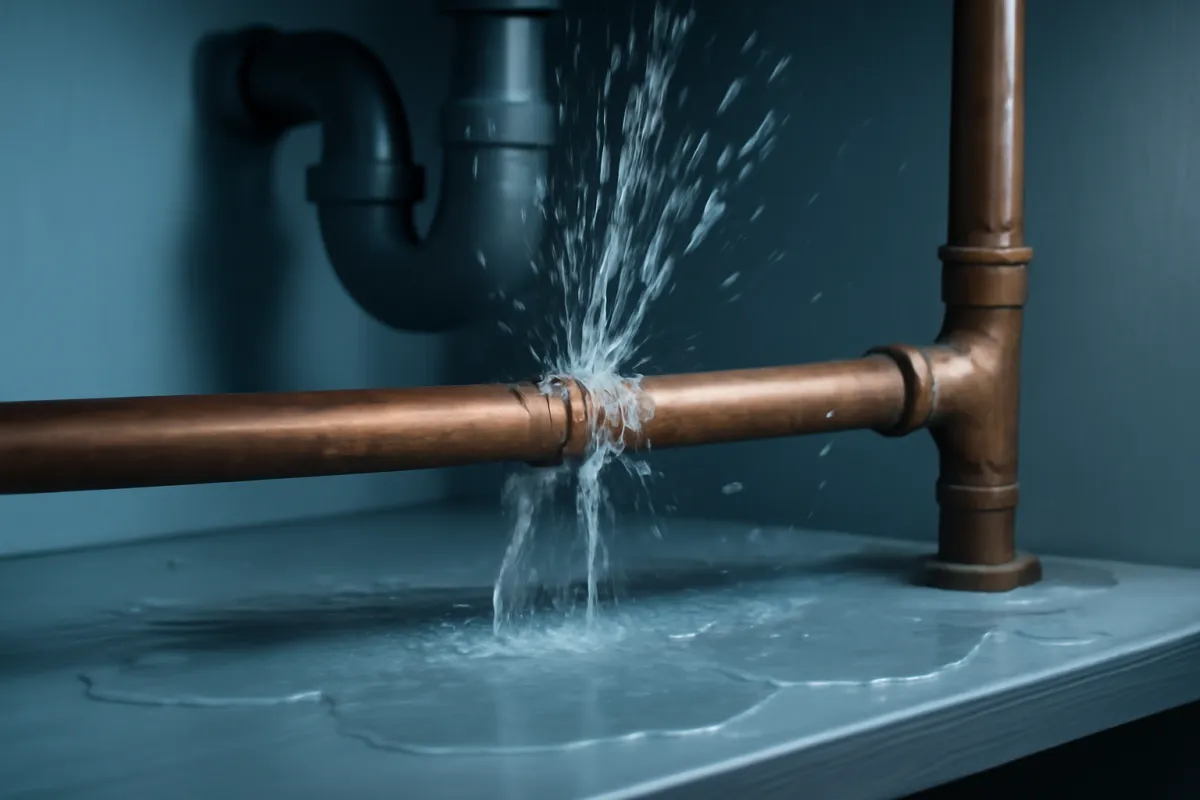
Standard property policies draw their central line between losses that happen abruptly and losses that develop over time. A burst is on the right side of that line by design. Water inside a pipe expands as it freezes, pressure builds between the ice plug and a closed fixture, and the pipe wall or a joint gives way. Often nothing escapes at that moment, because the ice is still sealing the break. The water arrives when the thaw does, which is why so many freeze losses are discovered when the weather improves rather than during the cold snap itself.
From an insurance point of view that sequence reads as one event with a clear cause and a clear moment. That is what the policy means by sudden and accidental. It is the same category as an appliance hose letting go or a water heater rupturing, and the opposite of the slow weeping joint behind a vanity that stains a cabinet base over eighteen months. Our water damage note works that distinction across every source of water in a house.
The three bills a freeze produces, and who pays each
A freeze loss almost always arrives as three separate invoices, and confusing them is the fastest route to disappointment. The first is the plumber, who thaws or cuts out the failed section, replaces it, tests the system, and often reinsulates the cavity. That bill is typically the smallest and is typically yours. An illustrative range for one accessible break sits somewhere around $300 to $1,500, more if the break is under a slab or behind finished work.
The second is emergency mitigation: extraction, drying equipment, dehumidification, sometimes a temporary heat source. That is usually covered, and the policy expects you to arrange it promptly. The third is restoration, meaning the rebuild of everything the water ruined, which is normally the largest by a wide margin and is the heart of the claim. Keeping these three ledgers separate in your own head, and asking every contractor to invoice them separately, makes the claim far easier to settle and far harder to argue with.
The failed pipe itself is usually yours
This surprises people more than any other part of the subject, so it is worth stating plainly. Standard homeowners forms cover physical damage to your property caused by a covered peril. The pipe is the thing that failed, not the thing the failure damaged, and the policy generally treats repairs to the plumbing system as maintenance. So the split length of copper or PEX, the fittings, the labour to open and close the wall for the plumber’s benefit alone, and any reinsulation of the cavity tend to sit on your side of the ledger.
There is one important nuance. Tear-out to reach the break, meaning cutting into drywall, ceiling or flooring so the repair can happen, is often payable even when the pipe repair is not, and the same is true of putting that opening back afterwards. That distinction is worth real money on a break inside a finished wall. Our plumbing coverage note walks the pipe-versus-damage split across slab leaks, repiping and appliance failures, and the companion below lets you separate the plumber’s bill from the restoration so you can see the shape of your own claim.
Reasonable care to maintain heat: the condition behind most denials
Here is the clause that decides real claims. Common forms exclude loss caused by freezing of plumbing, heating, air conditioning or automatic fire protective sprinkler systems, or of a household appliance, while the building is vacant, unoccupied or under construction, unless you used reasonable care to maintain heat in the building, or to shut off the water supply and drain the system and appliances of water. Wording varies between carriers and forms, and some versions apply the condition more broadly than others, so the exact sentence in your policy is the one that matters.
Read what that actually demands. It is not a requirement to be home. It is a requirement to have done one of two things when the building was not occupied: kept it warm enough, or emptied the pipes. Notice also that the condition is written around the state of the building rather than around your intentions. Nobody asks whether you meant to be away. The question is what state you left the house in and whether that was reasonable given the weather.
Shut off and drain: the alternative the wording usually offers
The second branch of the condition is the one people forget exists, and for long absences it is stronger than the first. Shutting off the main and draining the system removes the water that would otherwise freeze, which means a power cut, a failed furnace or an empty fuel tank cannot produce a burst while you are gone. Maintaining heat depends on equipment continuing to work unattended for weeks. Draining does not depend on anything.
Doing it properly means more than closing a valve. It usually means opening the lowest and highest fixtures to let the lines empty, draining or bypassing the water heater according to its instructions, dealing with traps and toilets with the appropriate non-toxic antifreeze, and thinking about anything else that holds water, including the dishwasher, the washing machine, an ice maker, a humidifier and any water treatment equipment. A plumber will winterize a house for an illustrative few hundred dollars, which is small against the loss it forecloses and against a claim your own policy may not pay.
Unoccupied is not the same word as vacant
Three words appear in property policies and they are not interchangeable. Occupied means people are living there. Unoccupied usually means the furniture and belongings are still there but nobody is currently in residence, which describes a family on a month-long trip or a seasonal home in the off season. Vacant usually means both the people and the contents are gone, which describes a house between tenants, an empty listing, or a property waiting on probate.
The distinction has consequences. The freezing condition above commonly attaches to vacant, unoccupied and under-construction buildings alike, so a long trip triggers it. A separate vacancy provision on many forms suspends a wider set of coverages once a dwelling has been vacant beyond a stated period, with thirty or sixty consecutive days the figures most commonly cited, and water damage frequently appears on the suspended list. A property can therefore fail the freeze condition, the vacancy provision, or both. Our note on what home insurance covers maps the six coverage parts these provisions act on.
Where pipes actually freeze, and why the location changes the argument
Freezes cluster in predictable places, and knowing them helps both prevention and the claim conversation. Pipes in unheated spaces are first: crawl spaces, attics, garages, unheated basements, and the cavity above a garage in a room built over it. Pipes in exterior walls are second, especially on the north side and especially where insulation was installed behind the pipe instead of in front of it. Hose bibs and their interior stubs are third. Lines serving rarely used fixtures are fourth, because water sitting still freezes sooner than water that moves. Water arriving up through a basement floor drain in cold weather is a different peril with its own endorsement, covered in our note on sewer backup, rather than a freeze loss at all.
Location matters to coverage because it shapes what an adjuster concludes about reasonable care. A pipe that froze in a heated living space during an extreme cold event reads as an accident nobody could have prevented. A pipe that froze in an unheated garage that has frozen before, in a house left cold, reads as a foreseeable outcome. Neither reading is written in the policy. Both influence the argument, which is why the documentation section further down matters as much as the clause does.
How long the water ran is the biggest single number in the claim
Everything else in this coverage note is secondary to one variable. A frozen pipe releases water at a rate set by pressure and pipe size, not by whether anyone is watching, and the damage grows roughly with time. A break found in fifteen minutes is a mopping job. The same break found the next morning has soaked subfloor, wicked up drywall, and dripped through to the ceiling below. The same break found three weeks later has done all of that continuously, into every cavity the water could reach.
Illustrative freeze loss cost by how long the water ran before it was found
A rough, illustrative sense of how a single split supply line scales with time, holding the pipe, the pressure and the house constant. Real losses vary enormously with pipe size, water pressure, where the water goes, and what it reaches. These are constructed examples, not survey figures.
Bars are scaled to the ~$95,000 top figure, which is why the first two are barely visible. That is the point: the difference between a nuisance and a rebuild is response time, not policy wording. The overnight figure is the one used in the worked example later in this coverage note.
Freeze losses that are not a supply pipe at all
Supply lines get the attention, but a hard freeze finds every water-bearing thing in a building. Heating systems freeze: a hydronic loop, a boiler, a radiator, or the condensate line on a high-efficiency furnace. Automatic fire protective sprinkler systems freeze and can discharge across an entire floor, which is why the standard freezing condition names them specifically. Water heaters, washing machines, dishwashers, ice makers and humidifiers all hold water. So do outdoor kitchens, pool equipment, irrigation systems and hose bibs.
The coverage treatment mostly follows the same logic as a supply pipe: the resulting water damage is a covered sudden discharge, the equipment that failed is usually not, and the same heat and drainage condition applies. Two wrinkles are worth flagging. Some forms exclude freezing of plumbing on the exterior of the building outright, which reaches spigots and outdoor lines. And damage to buried irrigation lines, landscaping and outdoor equipment frequently sits under separate exclusions and sub-limits regardless of cause. Cold weather also produces a roof version of the same story, where meltwater backs up behind ice at the eaves and enters the building from above, which our note on ice dam roof damage works through separately.
Gradual seepage after a freeze, and where the mold line falls
A freeze can also produce the exact loss the policy is designed to refuse. A hairline split that weeps rather than bursts, a joint that loosens and drips, or a break in a cavity that releases slowly can go unnoticed for months. The cause was a freeze, but what the adjuster sees is continuous or repeated seepage over a long period, which is a named exclusion on most forms. The word insurers use is repeated, and once damage is characterized that way, coverage generally disappears whatever started it.
Mold is the sharpened version of this problem. Where mould grows because a covered burst was dried promptly, many policies pay it, usually under a modest cap rather than as unlimited coverage. Where it grows because water sat for weeks, it tends to be excluded as the consequence of a gradual leak, or as a failure of your duty to mitigate. Our mold coverage note works through the caps and the conditions in full, and the practical lesson here is that speed of response is a coverage question, not just a cleanup question.
What a frozen-pipe claim actually pays for
Once a freeze claim is accepted, the payment is not one number but a scope of work, and knowing its parts helps you check the estimate. Emergency mitigation covers extraction, air movers, dehumidifiers, monitoring and sometimes antimicrobial treatment. Tear-out covers removing wet drywall, insulation, flooring, cabinetry and trim, and disposing of it. Reconstruction covers putting all of that back. Contents covers what was damaged. Additional living expenses cover the cost of being somewhere else while it happens.
What an illustrative $18,000 of covered freeze damage is made of
The covered portion of the worked example later in this coverage note, an overnight burst in a room above a garage, broken into the scope lines a restoration estimate typically carries. Constructed for illustration, not drawn from any real estimate or market data.
Shares are rounded to sum to 100 and exclude the illustrative $900 plumbing repair, which sits outside the covered scope. Notice that demolition and drying together are more than a quarter of the bill before a single new board is installed, which is why an estimate without those lines is usually incomplete rather than cheap.
Tear-out: the coverage that opens the wall
Tear-out deserves its own section because it is the provision that quietly rescues a claim where the pipe repair is excluded. Most forms include language that pays to tear out and replace the part of the building necessary to gain access to a system or appliance from which water escaped. In plain terms, the insurer pays to open the wall, the ceiling or the floor so the plumber can reach the break, and to put that surface back, even though it does not pay the plumber.
Two limits usually apply. The provision is generally about access, so it is not a licence to open everything; and it usually does not extend to the system itself. Ask for tear-out to be scoped and priced as its own line rather than folded into general demolition, because on a break behind tile, inside a finished ceiling, or under a slab it can be the difference between a claim that covers the real cost of access and one that leaves you paying for the hole. Our plumbing note covers how this reads on slab leaks in particular.
Drying, dehumidification, and the emergency mitigation bill
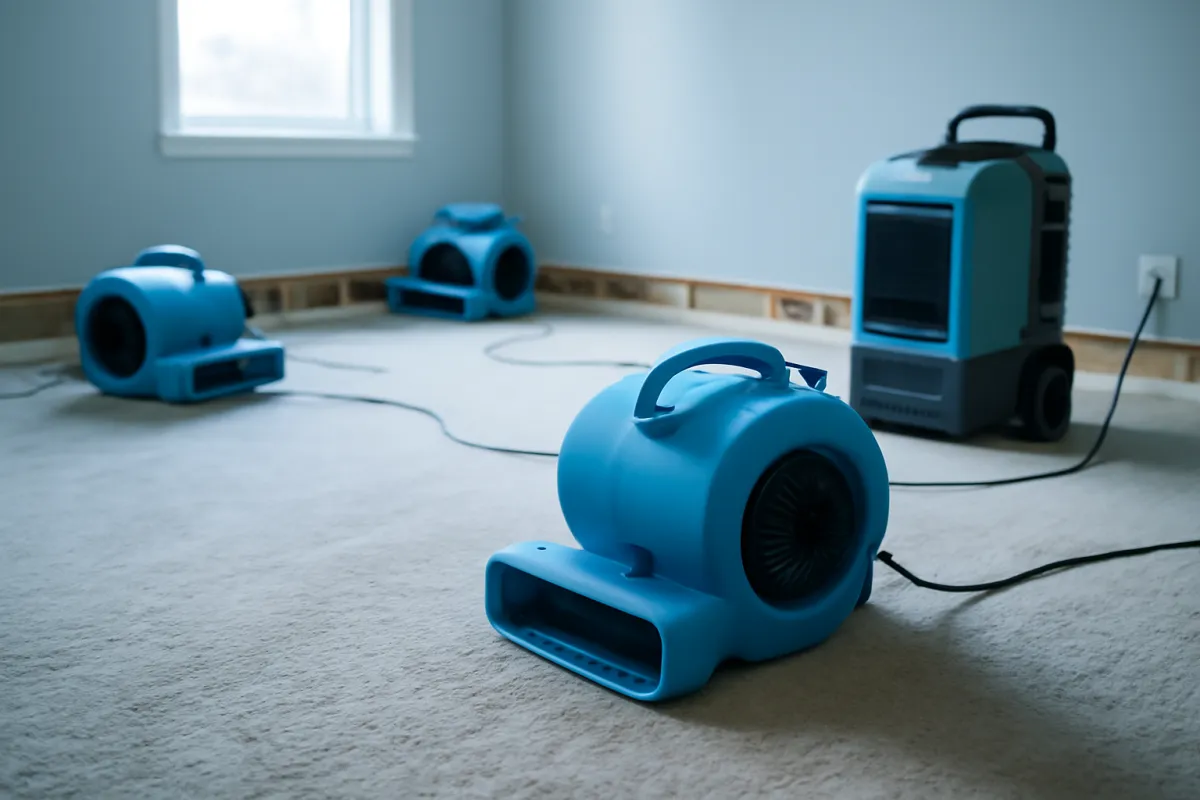
Mitigation is where a freeze claim starts and it is also where the policy makes a demand of you. Standard forms impose a duty to protect the property from further damage after a loss, and reasonable emergency expenses incurred doing so are normally reimbursed. In a freeze that means shutting off the water, arranging extraction, getting air movers and dehumidifiers running, and removing saturated material that will otherwise grow mould. Doing it fast protects the building and protects the claim at the same time.
Two habits pay off. Photograph and video everything before anything is removed or dried, because mitigation destroys the evidence of how bad it was. And get the mitigation company to document moisture readings daily, room by room, with equipment counts and run times. Restoration invoices are frequently queried on exactly those points, and a dated moisture log is the difference between a negotiation and a deduction. Our note on filing a home insurance claim sets out the wider sequence.
Flooring, cabinetry, and the matching problem
Two categories cause most of the friction in freeze settlements. The first is flooring. Water spreads horizontally and finds the whole floor plane, so a single burst frequently damages a continuous run of hardwood, laminate or tile that extends well past the wet area. Whether the insurer pays to replace the whole run or only the damaged portion is the classic matching dispute, and the answer depends on your policy language and on state regulation, both of which vary. Raise it early and in writing rather than discovering it at the estimate stage.
The second is cabinetry. Kitchen and bathroom cabinets sit on the floor, absorb water into their bases and backs, and rarely dry usefully. Because they are usually installed as a fitted run, replacing three damaged units in a discontinued line raises the same matching problem as flooring. Neither issue has a universal answer, so ask the adjuster directly how the policy treats matching, get the response in writing, and read our note on actual cash value versus replacement cost before agreeing to any settlement figure.
Belongings, and whether they settle at replacement cost
Personal property is the part of a freeze claim owners consistently underestimate. Water on a floor reaches rugs, sofa bases, stored boxes, books, framed pictures leaning against a wall, electronics on the floor, and anything in a basement or garage that was never meant to sit in water. In the worked example below, belongings are an illustrative $3,800 of an $18,000 covered loss, more than a fifth of it, and that is on a single room.
How they settle depends on which contents basis you carry. On actual cash value, the insurer depreciates each item for age and condition and pays what it was worth, which on a ten-year-old sofa is a fraction of what a replacement costs. On replacement cost contents, you are typically paid the depreciated amount first and the balance once you actually replace the item and send the receipts. That second step is missed often enough to be worth a diary note. Our note on actual cash value versus replacement cost works the arithmetic in full.
Additional living expenses if you cannot stay in the house
A freeze that takes out a kitchen, a bathroom or the heating system can make a house genuinely unusable, and loss of use coverage exists for exactly that. It pays the necessary increase in living expenses while the home is repaired: temporary accommodation, extra food costs above your normal spend, pet boarding, laundry, storage, and additional travel where the temporary home is further from work or school. It does not pay your normal expenses, so the mortgage keeps going and the utilities you would have paid anyway are not claimable.
Two practical points. It is usually the increase that is payable, so keep receipts and a sense of what your normal monthly spend looks like, since the adjuster will ask. And the coverage typically has both a limit and a time period attached, which becomes relevant when a large restoration runs long. Ask what the limit is before you commit to an expensive rental, and confirm in writing that the accommodation you are choosing will be accepted.
The deductible math on a freeze claim
One occurrence means one deductible, even when the loss touches the structure, the contents and your living expenses at once. That is generous on a large loss and brutal on a small one. On a $1,000 deductible, an illustrative $18,000 of covered damage pays $17,000, and the deductible is 5.3% of the loss. On the same deductible, an illustrative $1,800 loss pays $800 and the deductible is 55.6% of it. The clause did not change. Only the size of the loss did.
Deductible choice interacts with freeze risk in a specific way. Water losses are common and freeze losses cluster in cold snaps, so a high deductible chosen for premium savings is most likely to be tested by exactly this kind of event. That is an argument for holding the savings you gained from the higher deductible rather than spending them. Our note on choosing a deductible runs the tradeoff, our note on what a deductible is covers the mechanics, and the companion below lets you move your own deductible against your own loss size.
When a frozen-pipe claim is not worth filing
Not every freeze belongs in a claim, and the calculation is not only about the deductible. A small loss caught quickly, dried in two days, with a plumber’s bill and a patch of drywall, can total an illustrative $1,800. Against a $1,000 deductible the policy pays $800, and in exchange a water claim sits on your record for years, visible to every insurer you approach. On those numbers most people are better off paying it and keeping the history clean.
The threshold moves with your circumstances. If you already have a claim in the last few years, the marginal cost of another is higher, because frequency drives non-renewal more than severity does. If your loss is genuinely large, none of this applies and you should file promptly. A rough working rule is that a loss under roughly twice your deductible rarely justifies the claim, a loss over five times it usually does, and the middle deserves an honest conversation about your own claim history. Model your own version in the companion below.
What a paid freeze claim does to your renewal
Insurers price on claim history, so a paid water claim is information about future losses and an increase at renewal is the normal outcome rather than the exception. An illustrative increase of 7% to 15%, held for an illustrative three to five years, takes a $1,900 annual premium up by roughly $130 to $285 a year, or an illustrative $400 to $1,400 across the period. Losing a claim-free discount at the same time makes the effective cost higher than the headline rate suggests.
Water claims carry a particular reputation in underwriting, because a house that has had one water loss is statistically more likely to have another and because the causes often persist. Two water claims in a short window can affect availability rather than just price. None of that is a reason to skip a large legitimate claim. It is a reason to be deliberate about small ones, and a reason to document the prevention you put in afterwards, since being able to show what changed helps at renewal. Our note on premium increases after a claim works through the pattern.
The first hour: what to do when a pipe bursts
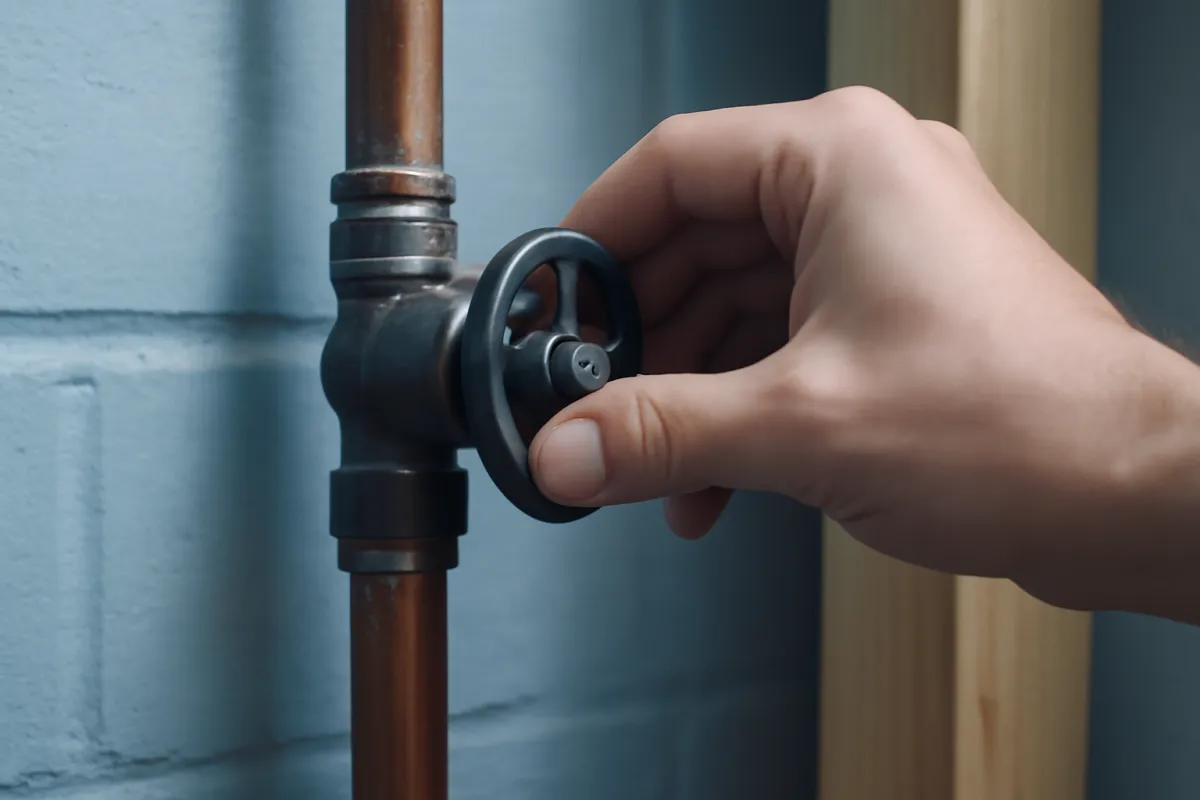
Order matters more than speed alone. Shut off the water at the main, then open the lowest faucets in the house to drain pressure out of the system so the break stops feeding. If water is anywhere near electrical equipment, cut power to the affected circuits at the panel, and if you cannot do that safely, stay out and call an electrician. Only then start moving belongings to dry ground.
Next, photograph and film before anything is touched, including wide shots of each room, close shots of the break, and the standing water at its actual depth. Call your insurer to open the claim and ask directly whether they want to use a preferred mitigation vendor. Call a mitigation company and get equipment running the same day, because drying time is what decides whether mould becomes part of the story. Keep the failed section of pipe rather than letting the plumber take it away, since it is the physical evidence that the failure was sudden.
How to document a freeze loss so it is not recharacterized
The single greatest threat to an otherwise valid freeze claim is being told the pipe had been leaking beforehand. Corrosion, mineral tracks, staining on adjacent timber, and rot around the break all support that reading, and once a loss is characterized as gradual, the exclusion for continuous or repeated seepage does the rest. Documentation is how you keep the claim on the sudden side of the line.
Build the record in four parts. Weather: a record that a hard freeze occurred, and the dates. Condition: photographs of the failed section with the break visible, and the section itself kept in a bag rather than discarded. Timeline: when the house was last checked, when the water was found, when the main was closed, when the mitigation company arrived, all with timestamps you can prove. Conduct: thermostat settings or a smart-thermostat history, the date you shut off and drained if you did, and messages from anyone who was checking the property. Our note on appealing a denied claim shows what that evidence is worth if the first answer is no.
The questions the adjuster will ask, and what each one is testing
An adjuster’s questions on a freeze loss are not small talk, and knowing what each is aimed at makes the conversation easier. Was anyone living in the house, and when was it last occupied, tests the unoccupied and vacancy provisions. What was the heat set to, and was the system working, tests reasonable care. Did you shut off and drain the water, tests the second branch of the same condition. When did you last see the area dry, tests suddenness.
Two more come later. What have you done since you found it tests your duty to mitigate, and a delay of days between discovery and drying is a real deduction risk. And what was the pipe’s condition, meaning age, material and any prior repairs, tests whether the failure can be attributed to deterioration rather than to the freeze. Answer all of it plainly and from your notes rather than from memory. Guessing at a temperature or a date and then correcting yourself later is the fastest way to make a straightforward claim complicated.
Prevention insurers actually recognise
Prevention has two payoffs here: fewer losses, and a stronger position when one happens anyway. The cheap measures do most of the work. Insulate pipes in unheated crawl spaces, attics, garages and exterior walls. Seal the air leaks that let cold reach those cavities, since cold air moving over a pipe freezes it faster than still cold air does. Disconnect hoses and shut off and drain hose bibs before the first freeze. Open cabinet doors under sinks on exterior walls during a cold snap, and let a vulnerable faucet drip so water keeps moving.
The measures that also earn credit are the monitored ones. Leak detection sensors placed at known risk points cost an illustrative $20 to $60 each. Automatic shutoff valves that close the main when they detect flow anomalies cost an illustrative $300 to $800 installed. Some carriers offer a discount for either, often in the range of an illustrative 2% to 8%, and availability varies by carrier and state. A low-temperature alert on a smart thermostat is close to free and is the one that saves empty houses. Our note on lowering your premium covers which mitigation credits tend to exist.
Second homes, rentals, and a house sitting on the market
Every provision in this coverage note bites hardest on property nobody lives in, which is precisely the property most exposed to a freeze. A seasonal home closed for the winter is unoccupied by definition. A rental between tenants can be vacant in the policy sense within weeks. A house listed for sale after the owners have moved out is the classic case, because the furniture is gone, the heat is often turned down to save money, and everyone assumes the existing policy still works exactly as it did.
Three moves address it. Tell your insurer before the property sits empty and ask specifically about the freezing condition and the vacancy provision, then ask what a vacancy permit endorsement costs. Decide deliberately between maintaining heat and winterizing, and prefer winterizing for anything longer than a few weeks in a hard-freeze climate. And arrange documented checks, ideally weekly, by someone who will actually go inside. Our landlord insurance note covers how these provisions read on rental property.
Renters and condo owners have a different version of this
If you rent, the building and its plumbing are not yours, so a burst pipe in the wall is the owner’s problem and the owner’s insurance question. What is yours is your belongings, and a renters policy commonly covers them against the same sudden discharge of water on the same illustrative basis, subject to your own deductible and limits. Loss of use coverage on a renters policy can pay for somewhere to stay while the unit dries. Our renters insurance note sets out what the policy does and does not reach.
Condominiums are the most complicated case, because responsibility is split between the association’s master policy and your unit owner policy, and where the line falls is set by the association documents rather than by any general rule. A pipe inside a common wall, water arriving from the unit above, and damage to fixtures you installed yourself can each land differently. Loss assessment coverage matters here too, since the association’s own deductible can be passed through to owners. Our condo insurance note works through the split.
A worked example: one frozen supply line, itemised
Put it together on one illustrative household. The Marchettis live in their home year round. During a hard freeze in February, the cold water line serving a bathroom in a bonus room over the garage splits inside an exterior wall cavity. The house is heated normally and the thermostat is at its usual winter setting, but the cavity above the unheated garage sits below freezing and the line was installed on the cold side of the insulation. The break happens overnight and is found in the morning, roughly six hours of flow.
The damage, all illustrative. Extraction, air movers and dehumidification come to $2,600. Tear-out of saturated drywall, insulation and flooring, plus disposal, comes to $2,400. Replacing the flooring and a section of subfloor comes to $4,300. New drywall, insulation and paint across the bonus room and the garage ceiling below come to $2,900. Damaged vanity cabinetry and trim come to $2,000. That is $14,200 of building damage. Belongings stored in the bonus room, a rug, a sofa and boxes, come to $3,800. The plumber charges $900 to cut out the split section, replace it, and reroute the line to the warm side of the insulation.
Now the settlement. Covered damage is $14,200 plus $3,800, or $18,000, against a total event cost of $18,900. One deductible of an illustrative $1,000 applies to the whole occurrence. The policy pays an illustrative $17,000, and the Marchettis absorb $1,900: the deductible plus the plumbing repair. That is 89.9% of the loss recovered, and it holds together because the house was heated, the water was found in hours, and the failed section of pipe went into a bag rather than into the plumber’s truck.
The same freeze in a house left unheated
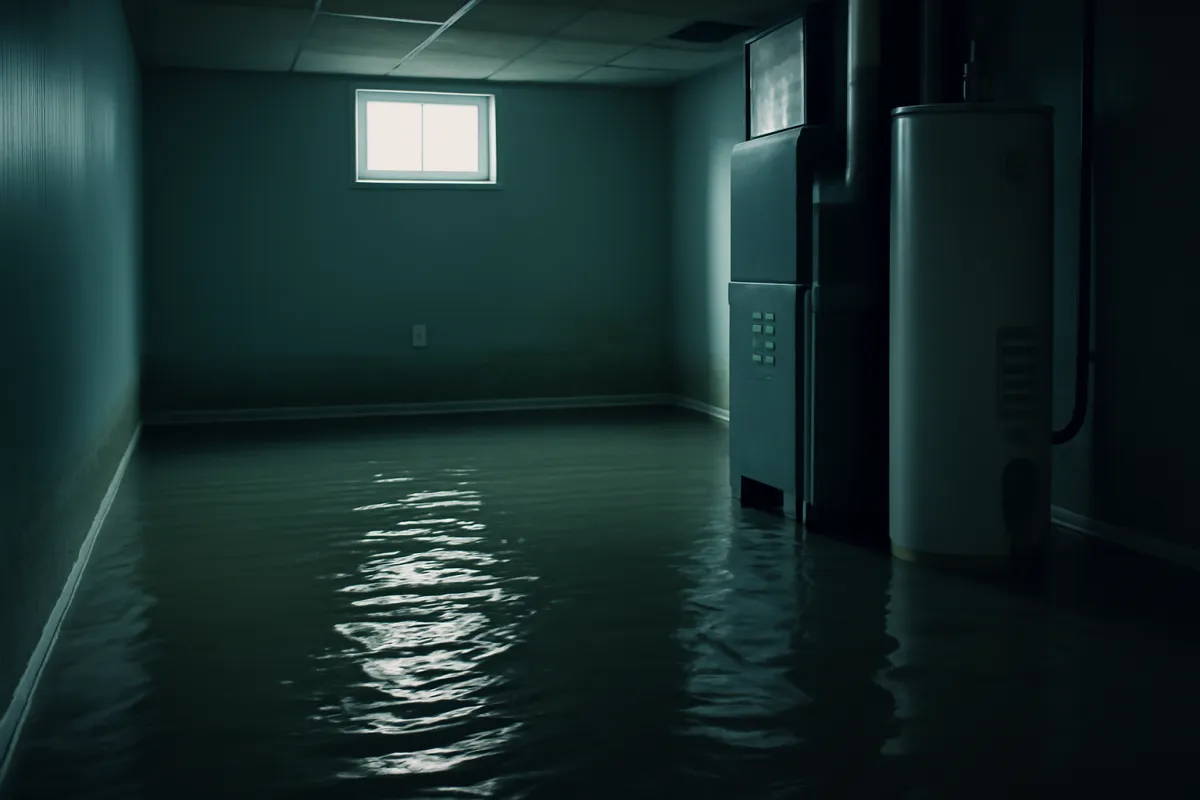
Rerun the identical event with one fact changed. The Marchettis have relocated for work, the house is empty and on the market, and the heat has been turned down to save money on a property nobody is living in. The same line splits in the same cavity during the same cold snap. Nobody is there in the morning, so the water runs until an agent shows the house eleven days later.
Two things happen at once. The loss is now vastly larger, because eleven days of flow is a different category of damage from six hours. And the freezing condition is squarely in play, because the building was unoccupied and neither branch of the condition was met: heat was not maintained at a level that kept the cavity above freezing, and the supply was not shut off and drained. On these illustrative facts the claim is a serious denial risk in full, which means an event that would have paid $17,000 pays nothing while costing several times more to repair. Switch the care selector in the companion below and watch the same figures collapse, because that single input outweighs every other variable on this page.
The bottom line
Does home insurance cover frozen pipes? For the water damage, on a standard form, generally yes: a pipe that freezes and bursts is the textbook sudden and accidental discharge, and the flooring, subfloor, drywall, cabinetry and belongings it ruins are commonly paid after one deductible, along with the drying and the tear-out needed to reach the break. For the pipe itself, generally no, because the policy pays for damage to the building rather than for repairs to the system that failed. And for both, only if the condition attached to the freezing peril is satisfied, which asks you to have maintained heat or to have shut off and drained the water in a building nobody was occupying. That single condition turned an illustrative $17,000 payment into nothing in the two versions of the Marchetti household above. Four things follow. Find the freezing and vacancy wording in your own policy tonight and read what it demands of you. Decide in advance, for each winter absence, whether you are maintaining heat or winterizing, and keep proof of whichever you chose. Put a leak sensor at every known risk point and know where your main shutoff is. And when a burst happens, shut the water, photograph everything, keep the failed pipe, and get drying equipment running the same day. Then size your own exposure in the companion below while it is still hypothetical rather than itemised.
This coverage note is educational reading about how standard homeowners, renters, condominium and landlord policies in the United States commonly treat frozen pipes and the water damage they release. It is not insurance, legal, financial or plumbing advice, and it does not describe the contract you hold. Whether any particular freeze loss is paid depends on your policy form and its exact freezing language, the endorsements attached to it, your limits and deductible, the occupancy status of the building, the steps you took before and after the loss, and the law and regulation of your state, all of which differ substantially between carriers and change over time. Freezing conditions, vacancy and unoccupancy periods, tear-out provisions, matching rules and mould caps are set by the wording rather than by any industry standard, and the terms used here are described as typical rather than universal. Every dollar amount, percentage, cost range, discount, premium and payout above, including both versions of the Marchetti household, is an invented illustration built to show how the arithmetic fits together, never a quote, a market rate, or a prediction of what any insurer will pay. Winterizing a building and working near water and electricity carry real safety and code considerations this note does not address. Read your own declarations page and full policy wording, put the specifics in front of a licensed insurance professional who can see your documents, and use a licensed plumber and, where power is involved, a licensed electrician for the physical work.
Frequently asked questions
Does home insurance cover frozen pipes?
Usually yes for the water damage, and usually no for the pipe. Standard homeowners forms treat a pipe that freezes and splits as a sudden and accidental discharge of water, so the soaked flooring, subfloor, drywall, insulation, cabinetry and belongings are commonly covered after your deductible, along with the tear-out needed to reach the break and the drying that follows. The plumber's bill to cut out and replace the failed section is normally treated as a repair to the plumbing system rather than damage to the building, and it stays with you. Almost every denial in this category turns on a condition rather than on the peril, because most forms require that you used reasonable care to maintain heat, or that you shut off the supply and drained the system if the home was unoccupied. Every dollar figure in this coverage note is an illustrative example rather than a quote, and only your own policy wording shows the terms that apply to you.
Does home insurance cover the burst pipe itself?
On a standard form, generally not. The policy is written to pay for physical damage to your property caused by a covered peril, and the pipe is treated as part of the plumbing system that failed rather than as something the loss damaged. So the plumber who cuts out the split section, sweats in a new length, and reinsulates the cavity is normally billing you, at an illustrative $300 to $1,500 for one accessible break. The compensation is that this is usually the smallest line on the invoice: the water damage the same break causes commonly runs ten to thirty times the pipe repair. Some carriers offer endorsements that broaden what counts as covered plumbing work, and the wording varies, so ask what yours does before assuming either way.
Will my claim be denied if I was away when the pipe froze?
Being away is not itself a denial, and traveling in winter is not a policy breach. What most forms actually require is that you used reasonable care to maintain heat in the building, or that you shut off the water supply and drained the plumbing system if the building was unoccupied. A home left with the furnace running normally while the owners take a week away typically satisfies that condition, and a pipe that freezes anyway is a covered accident. A home left cold with the water on for a long stretch is the exact scenario the condition was written to catch. The practical difference is often just evidence, so keeping a thermostat log, a smart-thermostat history, a note of the shutoff date, or a message from whoever checked the house is worth more than any argument after the fact.
What temperature should I leave the heat at when I travel in winter?
Policies rarely name a number. They use words like reasonable care, which means the standard is the circumstances rather than a thermostat setting, and an adjuster judges it against the weather, the length of the absence, and the construction of the house. A commonly cited rule of thumb in cold-weather advice is to hold an unoccupied home somewhere around the mid fifties Fahrenheit, high enough to keep cavity temperatures above freezing rather than to be comfortable. That is guidance rather than a policy term. If you want certainty, ask your own insurer what it expects for an absence of a given length, get the answer in writing, and treat a long absence in a hard-freeze climate as a shut-off-and-drain situation rather than a thermostat one.
Does insurance cover frozen pipes in a vacant or unoccupied house?
This is where most of the risk sits. Two separate provisions can bite. The freezing condition suspends coverage for freeze damage in a building that was unoccupied unless you maintained heat or drained the system, and a separate vacancy provision on many forms suspends a wider list of coverages once a dwelling has been vacant beyond a stated period, with thirty or sixty consecutive days the figures most commonly cited. A house that is empty between tenants, listed for sale, tied up in probate, or closed for a season can cross either line without anyone deciding to. A vacancy permit endorsement or a dedicated vacant property policy is the usual fix, and it has to be arranged before the loss rather than after it.
Are frozen outdoor spigots, sprinkler systems, and pool lines covered?
The damage they cause is usually treated like any other freeze loss, and the equipment itself frequently is not. A hose bib that splits behind the wall and floods a basement is the same sudden discharge as an interior pipe, and the water damage is commonly covered on the same terms and subject to the same heat and drainage conditions. A lawn irrigation system that cracks underground, a pool line, or an outdoor kitchen supply can be a different matter, because many forms limit or exclude damage to outdoor equipment, landscaping and buried lines. Some policies also exclude freezing of plumbing on the exterior of the building entirely. Read the exclusions for outdoor property on your own form before winter, and drain and blow out irrigation lines whether or not the answer is favourable.
How much does a frozen pipe claim typically pay?
There is no typical number, because the loss is driven almost entirely by how long the water ran and what it ran onto, not by the pipe. An illustrative shape looks like this: a split supply line found within an hour might do $4,500 of damage, the same line running overnight might do $14,200, and running unnoticed in an empty house for weeks can pass $95,000. Against a $1,000 deductible those become illustrative payments of roughly $3,500, $17,000 on the wider example used in this coverage note, and a very large number that may run into your policy limits. What the insurer pays is the covered damage minus your deductible, which is why shutting the water off fast changes the outcome more than any clause does.
Should I file a frozen pipe claim or pay for it myself?
It depends almost entirely on the size of the loss relative to your deductible, and on how many claims are already on your record. A small freeze loss cleaned up in a day, at an illustrative $1,800 against a $1,000 deductible, recovers $800 while putting a water claim on your history for years, which is rarely a good trade. A five-figure loss is a different question entirely and is exactly what you pay premiums for. An illustrative renewal increase of 7% to 15% held three to five years on a $1,900 premium is roughly $400 to $1,400, real money against a small claim and a rounding error against a large one. Water claims also attract more underwriting attention than most, so frequency matters more here than the single-claim arithmetic suggests.
Are frozen pipes covered by insurance no matter what kind of policy you have?
The water damage is treated the same way across the common property forms: homeowners, condo, landlord, and renters policies all build on the same sudden and accidental discharge language, so a pipe that freezes and splits is ordinarily a covered event under any of them. What differs is which coverage part responds. A homeowners or landlord policy pays for damage to the structure through dwelling coverage. A renters or condo owner's policy pays for the policyholder's own belongings rather than the building, since a tenant does not own the walls and a condo association usually insures the building shell under a master policy. The heat and drainage condition behind most denials is also common across these forms, worded slightly differently from carrier to carrier. So the short answer to whether frozen pipes are covered by insurance holds across policy types, and the longer answer, which coverage part pays and how much, depends on which one you are holding.

Hamza Hai is the editor of SumSured. She holds an MBA and reviews the site's articles against our editorial standards, checking that every figure is labelled for what it is, that nothing is presented as verified fact without a source the reader can check, and that the writing stays useful to a non-specialist.