What's in this note
- The short answer: does home insurance cover a leaking roof?
- Leak repair versus roof replacement: two different claims
- The sudden-peril test: what caused your leak
- When home insurance covers a leaking roof
- When home insurance does not cover a roof leak
- Roof leak causes: covered or not
- Ice dams and winter roof leaks
- The interior damage below the leak
- What to do the day you find the leak
- Emergency repairs, tarps, and the duty to mitigate
- How a roof leak claim is scoped and paid
- The wind and hail deductible wrinkle
- Skylights, chimneys, and flat roofs: the special leak points
- Why roof leak claims get denied
- Should you file for a small leak?
- Preventing the next leak
- A worked example: one storm leak, start to finish
- The bottom line
Short answer: Home insurance covers a leaking roof when a sudden covered peril caused it, such as wind stripping shingles, hail cracking them, or a branch punching through, and it then commonly pays for the interior water damage as well, minus your deductible. A leak from age, wear, or failed flashing is a maintenance problem the policy does not pay for, inside or out. A covered leak claim usually pays for repair, not replacement.
Does home insurance cover a leaking roof? The answer lives above the leak, not below it. A standard homeowners policy covers a roof leak the way it covers any loss, by asking what caused it. If a covered peril opened the roof, wind stripping shingles, hail cracking them, a branch punching through, the leak and the interior water damage it caused are commonly covered. If the roof simply wore out, if shingles aged, flashing failed, or seals dried until water found its way in, the leak is a maintenance problem, and the policy pays for none of it, inside or out.
This coverage note is about the leak: what causes are covered, what happens to the ceiling below, what to do in the first day, and how a leak claim is scoped and paid as a repair. That last word matters, because a leak claim and a roof replacement claim are different animals. This note handles the leak-repair question; when damage is widespread enough that the whole roof is on the table, the valuation rules, age schedules, and repair-versus-replace fight are walked in our coverage note on roof replacement, and the two are meant to be read as a pair. The water rules underneath both live in our coverage note on water damage. As you read, you can put your own numbers into the companion below.
Key takeaways
- A roof leak is covered when a sudden covered peril caused it, wind, hail, or falling objects, and denied when it developed from wear, age, or failed maintenance.
- When the leak is covered, the interior water damage that entered through the opening is commonly covered too, and it is often the larger half of the claim.
- A covered leak claim usually pays for repair of the damaged area, not a new roof; replacement is a separate, larger question with its own rules.
- Your first-day response, containing the water, tarping the roof, and documenting everything, both limits the loss and marks it as sudden rather than gradual.
- Wind and hail losses often carry their own percentage deductible, and small leak repairs frequently make more sense self-funded than filed.
The short answer: does home insurance cover a leaking roof?
Compress the whole subject into a paragraph and it reads like this. A standard homeowners policy covers sudden, accidental damage from listed or unexcluded perils, and a roof leak inherits the status of whatever caused it. Leak caused by a covered peril: covered, both the roof opening and the water damage below it, minus your deductible. Leak caused by deterioration: excluded, usually on both sides of the shingles. The policy never covers the wear itself, and it treats a leak that ran unnoticed for months with the same suspicion it applies to any gradual water loss.
Hold on to two more framing facts and the rest of this coverage note will slot into place. First, a covered leak claim is scoped as a repair: the insurer’s obligation is to return the roof and the interior to their pre-loss condition, which for a localized leak means patching the damaged slope and the stained ceiling, not writing a check for a new roof. Second, the cause question is decided by evidence, and the homeowner who can show a specific storm, a dated photo of a healthy roof, and a prompt response holds most of the cards. Every dollar figure from here on is illustrative, chosen to show how the pieces move rather than to quote anyone’s policy.
Leak repair versus roof replacement: two different claims
It is worth being precise about the boundary between this coverage note and its sibling, because the two questions get very different treatment from insurers. A leak claim says: a peril opened my roof in one place, water came in, pay to repair the opening and the interior damage. It is usually a mid-sized claim, settled as a repair of the affected area plus interior restoration. A replacement claim says: the peril damaged the roof so broadly that repair is impractical, pay for a new roof. It is a large claim, and it triggers the machinery of age schedules, actual cash value depreciation, matching disputes, and adjuster scrutiny that our roof replacement note walks in full.
The boundary between them is drawn by the damage, not by the homeowner’s preference, and adjusters guard it. A hailstorm that bruised shingles across every slope can genuinely justify replacement. A wind gust that stripped a patch above the kitchen justifies a repair, and no amount of hoping turns it into a new roof. Where the line gets contested, when repairs cannot match discontinued shingles, when a slope is more damage than shingle, the replacement note covers the arguments. For this note, assume the common case: a localized leak, a repairable roof, and an interior that needs drying and restoration. That is the claim most homeowners actually file, and it has its own rules worth knowing cold.
The sudden-peril test: what caused your leak
Every roof leak claim begins with the same question an adjuster will ask: what made the water start coming in? Insurance covers events, not conditions. An event is datable, a windstorm on the 14th, hail on Tuesday, a limb that fell in the night, and a leak that begins with an event is a covered loss on most forms. A condition is gradual, shingles at year 22 of a 20-year life, flashing that has been lifting for seasons, and a leak that emerges from a condition is excluded as wear and deterioration, along with, usually, the interior damage that follows.
The test sounds clean; roofs make it messy. Real roofs age and get hit by storms, and a leak often has both a condition and an event in its history. The adjuster who climbs up after your claim is reading the physical evidence for which story fits: torn and creased shingles, fresh hail bruises, and displaced flashing say event; smooth granule loss, brittle curling, and long rust tracks say condition. Your evidence joins the same argument, which is why the dated photos of a sound roof and the weather records of a specific storm matter more in roof claims than nearly anywhere else in home insurance. Our note on documenting storm damage is effectively the field manual for winning this test.
When home insurance covers a leaking roof
The covered causes are the perils that can genuinely open a roof in a day. Wind is the workhorse: gusts that lift, crease, or tear away shingles create exactly the sudden opening the policy contemplates, and wind-driven rain entering through it is part of the loss. Hail cracks, bruises, and punctures roofing surfaces. Falling objects, a tree, a limb, wind-borne debris, breach the deck itself. Fire, lightning, and the weight of ice and snow round out the usual list. In each case the roof went from sound to leaking by way of an identifiable event, and both the roof repair and the interior water damage are commonly covered.
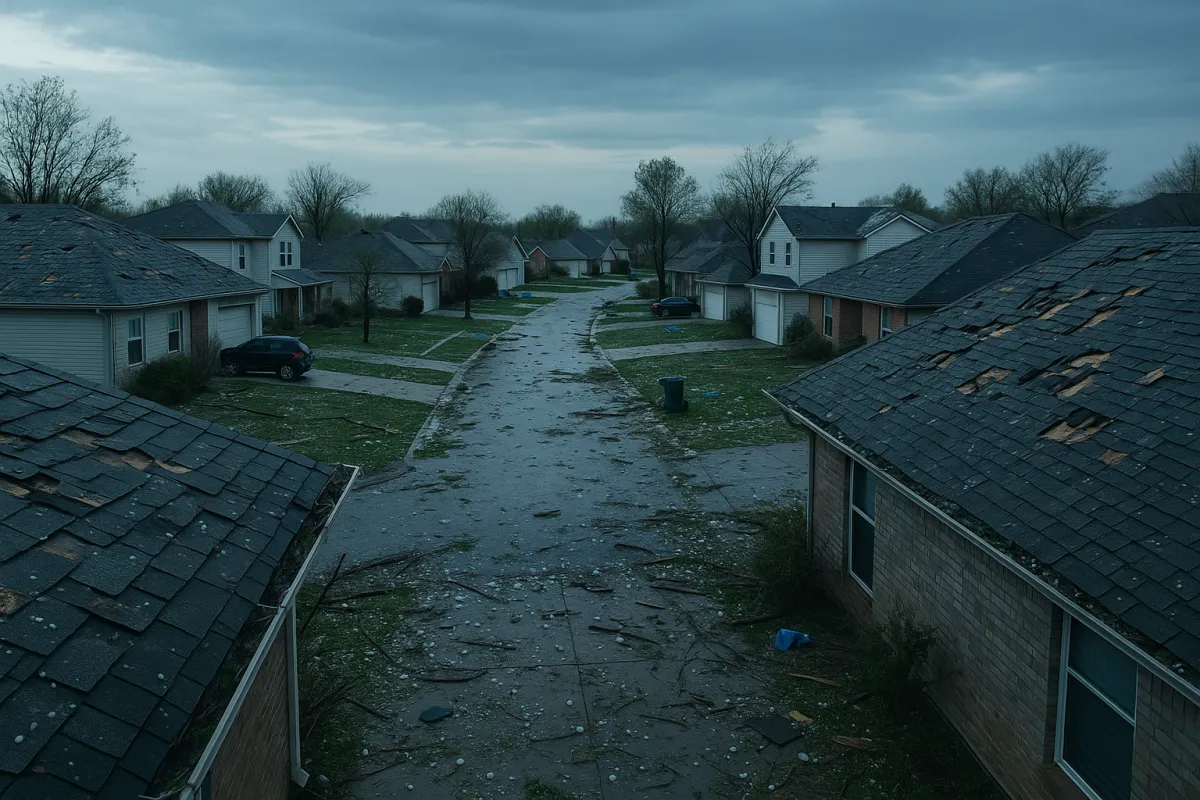
Two practical notes sharpen the covered category. First, the leak does not need to be dramatic to be covered; a single creased shingle can admit water into the deck, and a slow interior stain after a documented storm is still an event-caused loss. Report it promptly anyway, because a covered leak left unrepaired for months starts to look like the gradual damage exclusion. Second, wind and hail losses in many regions carry their own percentage deductible, larger than the flat one, which changes the economics of smaller claims; a later section runs that math. If your region sees regular hail, the interplay between these deductibles and leak claims is worth understanding before the season, not after.
When home insurance does not cover a roof leak
The excluded causes are the ones that accumulate. Worn shingles that finally admit water, flashing that loosened around a chimney or vent over years, cracked pipe boots, dried sealant, clogged gutters that pushed water under the edge, moss that held moisture against the surface until it found a path: all are maintenance conditions, and leaks that emerge from them are denied under the wear, deterioration, and neglect exclusions that every standard form carries. In most of these denials the interior damage falls with the roof, because the water entered through an excluded failure.
Two adjacent exclusions round out the list. Gradual damage: even an event-caused leak can sour if it runs unnoticed or unrepaired long enough that continuous-seepage language applies, which is one more reason speed matters. And faulty workmanship: a leak traceable to a bad installation or a botched repair is generally excluded as a construction defect, whatever the roof’s age; your recourse there points at the contractor and any warranty rather than the policy. The theme across all of it is the same one that runs through our water-damage note: the policy insures against the day something went wrong, not the years in which it slowly was going wrong. A roof at end of life needs a budget line, not a claim.
Roof leak causes: covered or not
Here is the cause test laid out as a table. It is illustrative and general; policy wording varies, some forms exclude or limit wind and hail on older roofs, and the facts an adjuster establishes control any real claim.
| Cause of the leak | Roof repair covered? | Interior damage covered? |
|---|---|---|
| Wind tears or creases shingles | Usually yes | Usually yes |
| Hail cracks or punctures the surface | Usually yes | Usually yes |
| Tree or limb falls through the roof | Usually yes | Usually yes |
| Weight of ice and snow damages the deck | Usually yes | Usually yes |
| Ice dam backs water under shingles | Often yes | Often yes |
| Worn, curled, aged shingles admit water | No | Usually no |
| Flashing or sealant failed over time | No | Usually no |
| Clogged gutters push water under the edge | No | Usually no |
| Faulty installation or repair leaks | No | Generally no |
| Event-caused leak left unrepaired for months | Yes at first | Erodes to no |
Read the two right-hand columns together, because their alignment is the lesson: with rare wording exceptions, the interior damage follows the roof’s fate. A covered cause carries the ceiling, the insulation, and the flooring with it; an excluded cause strands them. The last row deserves its own respect: coverage is a snapshot at the time of the event, and it decays if the leak is left to run. The middle rows, ice dams especially, are where policies differ most, which is the cue to read your own form rather than assume either way.
Ice dams and winter roof leaks
Ice dams deserve their own section because they sit right on the covered line and generate leaks in a way no other peril does. An ice dam forms when heat escaping the attic melts snow on the upper roof, and the meltwater refreezes at the cold eaves into a ridge of ice. Water pooling behind that ridge has nowhere to go but sideways and up, under the shingles, into the deck, and through the ceiling below, often without a single shingle being damaged. Most standard forms treat the resulting interior water damage as covered, since the weight of ice and the backup of meltwater behave as a sudden winter peril.
The details are where winter claims get contested. The removal of the dam itself and preventive work, better attic insulation, ventilation, heat cables, are generally the homeowner’s cost, not the claim’s. Policies differ on damage to the roof surface from the ice, and a house with a history of dams every winter invites the argument that the loss was foreseeable and maintenance-shaped. As ever, response speed and paper win the close calls: photograph the dam and the interior damage while both are visible, have the dam removed safely rather than chipping at it, and note the storm and thaw dates. If your winters build dams regularly, the insulation fix costs less than one deductible and removes the argument entirely.
The interior damage below the leak
For most leak claims, the interior is where the money is. A modest roof opening can stain and soften a ceiling, saturate attic insulation, wick down inside wall cavities, buckle flooring, and ruin the contents of the room below. On a covered leak, all of that is part of the loss: structural drying, replaced insulation and drywall, repainting, floor repairs, and damaged belongings under your personal property coverage, all minus the deductible. It is entirely normal for the interior scope to outweigh the roof repair several times over, which is why treating a leak claim as a roofing quote alone undersells it.

Make sure the claim captures the full interior scope. Wet insulation does not dry in place, it gets replaced; drywall that soaked usually comes out; water travels, so the stain you can see is rarely the whole wet area, and a moisture meter reading is worth requesting. Photograph every affected room and item before cleanup, list damaged contents with rough values, and keep the drying receipts. The mold clock is running too, and mold carries its own cap and its own rules, walked in our mold note; fast drying is what keeps a leak claim from growing a capped, contested mold appendix. If the settlement offer reads thin against your documentation, our note on appealing a denied claim covers pushing back.
What to do the day you find the leak
The first day decides much of the claim, so treat it as a checklist. Contain: move belongings out of the drip line, put down containers and plastic, and if a ceiling is bulging with trapped water, pierce it over a bucket if you can do so safely, because a controlled drain beats a collapse. Cut power to affected fixtures if water is near wiring. Document before cleanup: film and photograph the drips, stains, wet rooms, and damaged items, and capture the roof from the ground; a wet roof is not a place to stand, and a roofer or a zoom lens gets the exterior shots.
Then mitigate and report. Reasonable emergency measures, a professionally installed tarp over the opening, extraction and fans inside, are both required by the policy’s duty to mitigate and commonly reimbursable on a covered loss, so keep every receipt. Report the claim promptly, with a plain factual account: the storm on this date, the leak found on this date, the steps taken since. Write a short timeline the same week while details are fresh. What you are building, beyond a dry house, is the record of a sudden loss met with a prompt response, which is exactly the profile insurers pay. Our note on filing a home insurance claim picks up the process from here through settlement.
Emergency repairs, tarps, and the duty to mitigate
The tarp deserves its own section because homeowners routinely get it wrong in both directions. Some do nothing, fearing that touching the roof will void the claim; the opposite is true, because every policy obliges you to take reasonable steps to prevent further damage, and rain entering an unprotected opening for another week is damage the insurer can decline as preventable. Others over-repair, replacing shingles and closing the opening before anyone has seen it, which destroys the best evidence of the peril. The right lane is in between: temporary, reversible protection now, permanent repair after the adjuster has documented the damage.
Practically, that means a tarp or roof wrap over the damaged area, installed by a roofer or storm-response service, plus interior extraction and drying, with photographs of the damage taken before the tarp goes on. Keep receipts; emergency mitigation is commonly a reimbursable part of a covered claim. Be wary of storm-chasing contractors who appear after weather events offering free inspections and pressure to sign over the claim; a reputable local roofer who documents with photos serves both the roof and the claim better. If the permanent repair must happen urgently, before an adjuster can arrive, photograph exhaustively and keep the removed materials, because the shingles in the garage can still testify to what the wind did.
How a roof leak claim is scoped and paid
A covered leak claim settles in parts. The roof: the adjuster scopes repair of the damaged area, so many squares of shingles, underlayment, flashing as needed, at local repair pricing. The interior: drying, insulation, drywall, paint, flooring, priced as restoration. Contents: damaged belongings under personal property coverage, which our note on what home insurance covers locates within the policy’s structure. From the total comes your deductible, and, if your policy applies actual cash value to roof surfaces, depreciation on the roof portion by its age, a reduction that grows steep for older roofs and is walked in detail in our roof replacement note.
An illustrative shape, echoed in the worked example later: a wind-created leak with a $2,500 roof repair and $6,000 of interior restoration, against a $1,000 deductible, settles around $7,500 on a replacement-cost basis, less any roof depreciation on an ACV schedule. Two friction points recur. Scope disputes: adjusters sometimes see a smaller repair than your roofer does, and competing written scopes with photos are how that argument is had. Matching: when discontinued shingles cannot be matched, the question of whether the insurer owes a larger area than the bare damage is a wording and state-law issue, and it is the doorway to the replacement fight next door. The companion below lets you run your own numbers through this arithmetic.
The wind and hail deductible wrinkle
In many regions, the deductible that applies to a roof leak is not the flat dollar figure on your declarations page. Policies in wind and hail country increasingly carry a separate percentage deductible for those perils, commonly an illustrative 1 to 2 percent of the dwelling limit, and since wind and hail cause most covered leaks, that is often the deductible your claim meets. On an illustrative $400,000 dwelling limit, a 1 percent wind deductible is $4,000, which converts a $7,000 leak claim from routine to marginal and swallows a $3,500 one entirely.
This is not a reason to skip coverage; it is a reason to know your numbers before the storm. Check your declarations page today for a wind, hail, or named-storm deductible and compute the dollar figure it implies. If it is high, that widens the band of leaks you will effectively self-fund, which argues for a healthy emergency fund and a bias toward prevention, and it sharpens the file-or-not decision a later section walks. Deductible strategy across the whole policy, including whether to trade premium for a lower or higher figure, is the subject of our note on choosing a deductible, and the companion below applies whichever deductible you enter to your own leak scenario.
Skylights, chimneys, and flat roofs: the special leak points
Some leak points deserve separate mention because they blur the cause test in predictable ways. Skylights leak for two distinct reasons: hail or debris cracking the glazing, which is an event and commonly covered along with the interior damage, and the slow failure of the seal or the flashing around the curb, which is a condition and commonly excluded. The same object, two opposite outcomes, and the physical evidence decides which story fits. Chimneys are similar: a storm that displaces the flashing or drops masonry is an event, while flashing that worked loose over seasons, failed crickets, and porous mortar wicking water are maintenance, and chimney-adjacent stains are among the most commonly misattributed leaks in the house.
Flat and low-slope roofs, common on additions and modern designs, age differently and claim differently. Membranes blister, seams open, and drains clog, and because standing water is part of a flat roof’s life, insurers look hard at ponding, drainage, and membrane age before treating a leak as sudden. An event remains an event, wind peeling a membrane or hail puncturing it is covered on the same logic as shingles, but the wear characterization comes faster when the surface shows years of ponding stains. The practical response is the same file this coverage note keeps building: periodic professional inspection of the membrane, seams, and drains, dated photos, and prompt attention to small blisters. On every roof type, the junctions and penetrations, valleys, vents, boots, skylights, chimneys, fail long before the field does, so that is where inspection money buys the most protection.
Why roof leak claims get denied
Denials cluster around a handful of arguments, and knowing them in advance is half the defense. Wear characterization is the big one: the adjuster attributes the leak to age and deterioration rather than the storm you cited. Pre-existing damage: the insurer dates the damage to before the policy or before the claimed event. Gradual damage: the leak ran long enough that continuous-seepage exclusions apply. Late reporting: months between storm and claim invite all three previous arguments. Inadequate mitigation: damage grew because the roof sat open. Below-deductible: real damage, but under the wind and hail figure. And excluded causes: workmanship, gutters, or a roof past a policy’s stated age limit.
Each argument has a factual answer, which is why the documentation this coverage note keeps returning to is not busywork. Dated photos of the roof before and after, weather records for your address, a roofer’s written inspection distinguishing storm damage from wear, receipts showing prompt tarping and drying, and a clean timeline together answer the characterization, dating, and mitigation arguments at once. A denial is a position, not a verdict: insurers reverse them when the evidence warrants, adjusters re-inspect, and state regulators take complaints. The escalation path, from a written appeal through appraisal and the insurance department, is walked step by step in our note on appealing a denied claim.
Should you file for a small leak?
A leak claim near the deductible deserves the same deliberate math as any small loss, with one roof-specific twist. The recovery is whatever the covered scope exceeds your applicable deductible, which for wind and hail may be the percentage figure computed above. Against it stands the cost of claiming: a CLUE entry that follows your address, a likely end to any claims-free discount, and renewal pressure that water-adjacent claims particularly invite. On an illustrative $3,000 leak against a $2,000 deductible, a $1,000 recovery can be outweighed by the premium effects over the following years; our note on how a claim affects your premium runs that surcharge arithmetic.
The twist: unlike some small losses, a roof leak cannot simply be absorbed and forgotten. An unrepaired leak grows, feeds mold, rots decking, and converts into exactly the gradual damage no future claim will cover, so the decision is never whether to fix it, only who pays. Decide with numbers: get a repair quote, compute your true deductible for the peril, and compare the net recovery against a few years of plausible surcharge. Then repair promptly either way, and keep the invoice, because a documented repair also protects the next claim by showing the roof was maintained. The companion below puts this exact comparison on one screen.
Preventing the next leak
Prevention on a roof is unglamorous and overwhelmingly effective, and it also builds the paper trail that wins claims. The physical routine: clear gutters and downspouts so water leaves the roof instead of backing under its edge; trim limbs that overhang or touch the surface; after any serious storm, scan the roof from the ground with binoculars for lifted, creased, or missing shingles; and have flashing, boots, and sealant checked on a periodic professional inspection, since those junctions fail years before the field of the roof does. Small findings fixed early, one boot, one strip of flashing, are the cheapest roofing work you will ever buy.
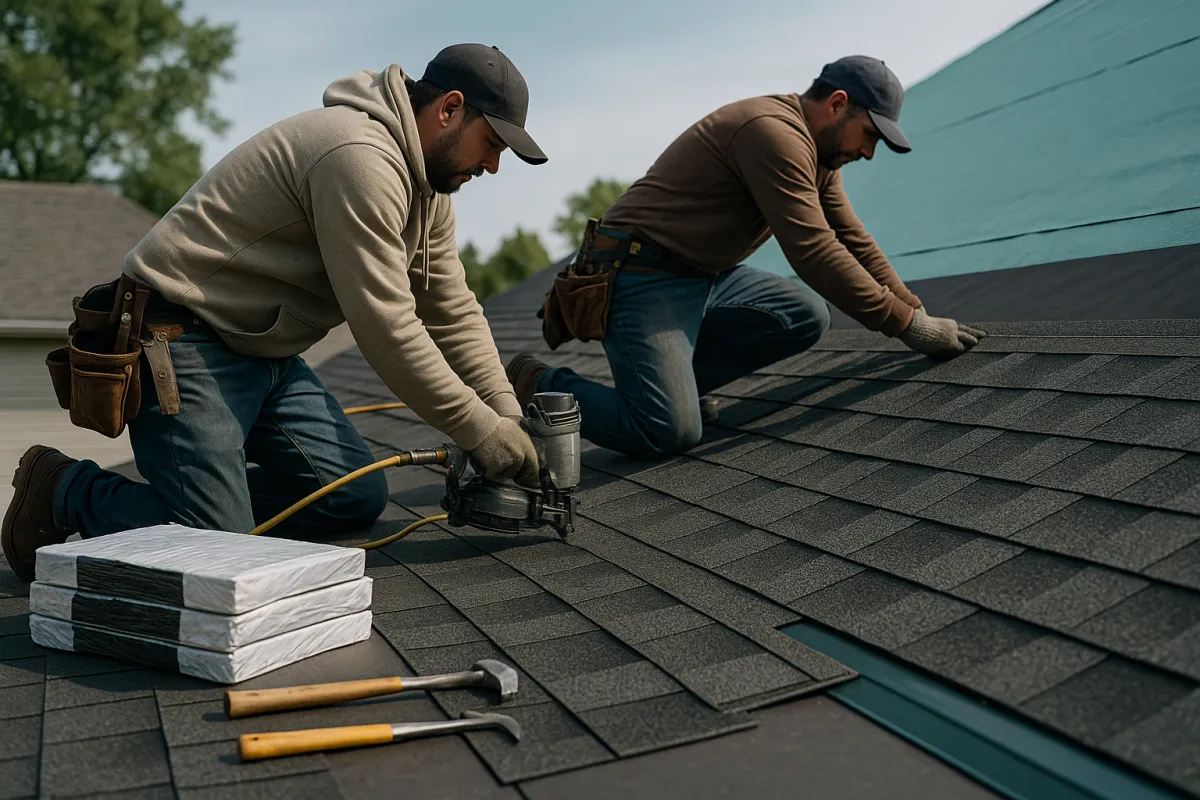
The paper routine matters nearly as much. Photograph your roof once a year and after each inspection, and keep the inspection reports and repair invoices in one folder. That file is what turns a future claim argument in your favor: when an adjuster suggests wear, a dated photo of sound shingles taken eight months before the storm is the cleanest rebuttal there is. It also serves the eventual replacement conversation, since a documented maintenance history supports the roof’s condition at every valuation step in our roof replacement note. Ten minutes with a camera each spring is the highest-yield insurance work a homeowner can do.
Illustrative likelihood a roof leak is covered, by cause
A rough, illustrative sense of how a standard homeowners policy tends to treat a roof leak and its interior damage by cause. Actual outcomes depend on your policy wording, your roof's documented condition, and the facts an adjuster establishes.
Bars are scaled to the ~85% top figure. Datable events cluster at the top; conditions that accumulated over time sit at the bottom, and even an event-caused leak slides downward the longer it goes unrepaired.
A worked example: one storm leak, start to finish
Walk one illustrative claim end to end. A March windstorm strips a patch of shingles above the Halloran family’s kitchen. Two days later a stain spreads across the kitchen ceiling. They photograph the stain and the roof from the ground, have a roofer tarp the opening the same week for an illustrative $400, run fans, and report the claim with the storm date. The adjuster confirms creased and missing shingles consistent with wind. The scope: $2,600 to repair the damaged roof area, $6,000 of interior work, insulation, drywall, paint, floor repair, and the $400 tarp, an illustrative $9,000 total. Their policy covers the roof at replacement cost and carries a $1,000 flat deductible, with no separate wind percentage in their state.
Settlement: $9,000 of covered scope minus the $1,000 deductible, about $8,000 paid, with the family out of pocket the deductible alone. Now run the counterfactuals that this coverage note has been building. Same stain, but the adjuster finds smooth, curled, 24-year-old shingles and no storm signature: wear, denied in full, interior included. Same storm, but the family sits on the claim until June while the leak keeps running: gradual-damage and mitigation arguments now apply to much of the interior scope. Same loss with a 2 percent wind deductible on a $400,000 dwelling limit: the deductible is $8,000 and the claim nets almost nothing. One leak, four outcomes, decided by cause, conduct, and the fine print. Set your own scope, cause, and deductible in the companion below to see which outcome your numbers produce.
Where the money lands in the worked example
The illustrative $9,000 covered storm leak above, split between what the policy pays and what the homeowners absorb, on a replacement-cost settlement with a $1,000 flat deductible.
The three slices sum to the full illustrative $9,000 loss, and the interior slice dominates, which is typical: on most covered leak claims the ceiling below costs more than the roof above.
The bottom line
Does home insurance cover a leaking roof? It covers the leak your roof did not earn: wind, hail, falling limbs, ice, the datable events that open a sound roof, and with them the interior damage below, minus your deductible. It excludes the leak your roof aged into, worn shingles, failed flashing, neglected gutters, and usually strands the ceiling damage with it. A covered leak pays as a repair, not a new roof; the replacement question has its own rules in our roof replacement note, and the underlying water logic runs through our water-damage note. Your leverage is mostly earned before and immediately after the storm: a photographed, maintained roof, a same-week tarp, fast drying, and a clean timeline turn contested claims into paid ones. Know your real wind or hail deductible today, do the file-or-self-fund math on small leaks, and repair promptly whichever way it comes out. Then run your own numbers in the companion below, because the best time to understand a leak claim is while the ceiling is still dry.
This coverage note is educational commentary on how standard homeowners policies commonly respond to roof leaks; it is not insurance, legal, or construction advice, and no part of it describes your policy or your roof. Real coverage turns on your form’s exact wording, your endorsements and deductibles, your roof’s documented condition, state law, and the facts established after a loss, and these vary widely and change over time. All amounts, percentages, likelihoods, and the worked example are illustrative inventions used to show how cause, timing, deductibles, and scope interact, never quotes, averages, or predictions of any settlement. Roof work is dangerous and subject to building codes this note does not cover; leave climbing to professionals. Before relying on anything here, read your declarations page and full policy, confirm how your insurer treats wind, hail, ice, and roof age, and take the specifics to a licensed insurance professional and a reputable roofing contractor who can see your actual documents and your actual roof.
Frequently asked questions
Does home insurance cover a leaking roof?
It depends on what caused the leak, not on the leak itself. A standard homeowners policy commonly covers a roof leak that a sudden covered peril created, wind tearing off shingles, hail cracking the surface, a tree limb punching through, and it also covers the interior water damage that entered through that opening. It generally does not cover a leak that developed from age, worn shingles, failed flashing, or deferred maintenance, and it never covers the wear itself. The same wet ceiling can be a paid claim or a denied one depending entirely on the story of the roof above it. Every figure in this coverage note is illustrative; your policy wording and your state control the real answer.
Does home insurance pay to repair the leak or replace the whole roof?
For a covered leak, the policy pays to return the roof to its pre-loss condition, and that usually means repair, not replacement. If the storm damaged one slope or a patch of shingles, the insurer scopes a repair of that area plus the interior damage. Replacement enters the picture when damage is widespread, when matching shingles are no longer available, or when repair is not practical, and that is a different and larger fight covered in our roof replacement note. Homeowners hoping a small leak will buy a new roof are usually disappointed, and adjusters are alert to exactly that hope. The honest framing: a leak claim is a repair claim unless the damage itself justifies more.
Does home insurance cover the ceiling and interior damage from a roof leak?
When the leak traces to a covered peril, yes, and the interior side is often the larger part of the claim. Rain that enters through a storm-created opening and stains ceilings, soaks insulation, wets walls, and ruins belongings is part of the covered loss, minus your deductible. When the leak traces to wear or age, most policies deny the interior damage along with the roof, because water that entered through a maintenance failure is excluded on both sides; a minority of situations and forms treat resulting interior damage more generously, which is a wording question for your specific policy. This split is why the cause of the leak is worth establishing carefully before you file.
Does home insurance cover a roof leak from wear and tear?
No. Shingles that curled and lost granules over years, flashing that slowly failed around a chimney, seals that dried out, and a roof simply past its service life are all maintenance conditions, and every standard policy excludes wear, deterioration, and neglect. The denial usually extends to the interior water damage that entered through the worn area as well. This is the single most common reason roof leak claims are denied, and it is also why documentation of your roof's condition matters so much: a storm leak on a well-kept roof reads as sudden, while the same leak on a visibly aged roof invites the wear characterization. If your roof is near end of life, budget for replacement rather than hoping a storm will intervene.
What should I do the day I find a roof leak?
Contain first, document second, file third. Move belongings out of the drip line, catch water in containers, and if it is safe, relieve a bulging ceiling by piercing it over a bucket so trapped water does not spread. Photograph and film the interior damage, then get exterior photos of the roof from the ground or from a professional; do not climb a wet roof. Arrange reasonable emergency measures, a tarp over the damaged area, and keep every receipt, since policies commonly reimburse emergency mitigation on a covered loss. Then report the claim promptly with a short dated timeline of the storm and your response. Fast, documented action both limits the damage and marks the loss as sudden.
Will insurance cover a roof leak if the roof is old?
Age does not automatically bar a claim, but it raises the bar. A twenty-year-old roof genuinely damaged by hail is still a covered loss on most forms, though it may settle at depreciated actual cash value if the policy applies an age-based roof schedule, which many now do. The risk is characterization: on an old roof, an adjuster is more likely to read a leak as wear rather than storm damage, and some policies exclude or limit roofs past a stated age entirely. Dated photos and inspection records showing the roof's condition before the storm are what keep an old-roof claim on the covered side. Our roof replacement note walks the age schedules and the ACV trap in detail.
Why was my roof leak claim denied?
The overwhelmingly common reason is that the insurer attributed the leak to wear, age, or maintenance rather than a covered peril. Other frequent grounds: the damage predated the storm you cited, the leak ran long enough that gradual-damage language applied, you delayed reporting, mitigation was inadequate and the damage grew, or the loss fell under a wind and hail deductible you had not met. A denial is not always the last word. If you have evidence the leak began with a specific storm, dated photos, weather records, a roofer's inspection report, you can contest the characterization. Our note on appealing a denied claim walks that process step by step.
Should I file a claim for a small roof leak?
Often not, and it is worth one deliberate look at the numbers first. A small repair, a few shingles and a patch of ceiling, may cost little more than your deductible, and on wind or hail losses many policies apply a separate percentage deductible that is larger still. Filing also puts a claim on your CLUE history and can cost a claims-free discount, so a marginal recovery can be outweighed by several years of higher premiums. Self-funding small repairs and reserving claims for losses that clear the deductible decisively is the pattern that serves most homeowners. Whatever you decide, fix the leak promptly, because an unrepaired leak becomes gradual damage no policy will touch.

Hamza Hai is the editor of SumSured. She holds an MBA and reviews the site's articles against our editorial standards, checking that every figure is labelled for what it is, that nothing is presented as verified fact without a source the reader can check, and that the writing stays useful to a non-specialist.