What's in this note
- The short answer: does home insurance cover solar panels
- Owned panels: dwelling coverage or other structures, and why the mount decides
- Roof-mounted panels and Coverage A
- Ground mounted and detached arrays: when Coverage B applies instead
- Leased panels and power purchase agreements: it usually is not your policy that responds
- Why a solar lender or lease company lists itself as a loss payee
- The perils a standard policy typically reaches
- What a standard policy typically will not pay for
- Sizing your dwelling limit after an installation
- Roof damage during installation, and roof damage during a later removal
- Liability: does a rooftop or ground array change your liability exposure
- Lost production is not a claim the way a burst pipe is
- Net metering disruption after a covered loss
- Does solar raise your premium
- Does solar affect insurability or trigger extra underwriting questions
- Documenting a solar claim
- A worked example: hail damage on an owned, financed array
- Panels in high-wind, hail-prone, and wildfire-exposed states
- Common mistakes homeowners make with solar coverage
- The bottom line
Short answer: Usually yes, if you own the solar system. A standard homeowners policy typically treats owned panels as part of the insured structure, roof mounted panels folded into dwelling coverage and ground mounted or detached arrays treated as other structures, reached by the same named perils as the rest of the house: fire, wind, hail, a falling limb, theft. Leased panels or a power purchase agreement are usually a different story, since you do not own the equipment and the leasing company's own policy is generally the one that responds.
Does home insurance cover solar panels? The short version is that ownership decides almost everything, and cause decides the rest. An owned system sitting on your roof is, to a standard homeowners policy, mostly just another expensive thing attached to your house, insured the same way a new roof or a rebuilt deck would be. A leased system is a different animal entirely, because you are not the owner of record, and a policy built to insure your property has little reason to pay to replace equipment that belongs to someone else.
This coverage note walks both paths. For owned systems it covers how the policy classifies the array, which perils reach it and which do not, the dwelling limit gap that catches many new solar owners, and what happens to a roof when panels have to come off for a separate roof job. For leased systems and power purchase agreements it covers what the lease actually asks of you, the loss payee requirement most of them carry, and where your liability exposure sits even when the equipment itself is not yours to insure. Where a related question has its own full answer, this note links the coverage note on dwelling coverage and the companion below rather than repeating them.
Key takeaways
- Owned solar panels are typically insured as part of the dwelling or as an other structure, reached by the same named perils, fire, wind, hail, falling objects, theft, that cover the rest of the house.
- Leased panels and power purchase agreements are usually insured by the leasing company's own policy, not yours, though your policy still needs to name them as a loss payee.
- A standard policy covers sudden accidental damage, not gradual output decline, normal wear, or a mechanical part that simply fails on its own.
- Installing an owned system without raising your dwelling limit is a common, quiet underinsurance gap, since the array adds real rebuild value the insurer does not automatically know about.
- Roof work that requires removing and reinstalling panels is where the most expensive, least anticipated disputes happen, so get a written scope from both contractors before anyone touches the roof.
The short answer: does home insurance cover solar panels
A standard homeowners policy generally does cover solar panels you own, treating them as part of the insured property rather than as a separate, exotic risk. That coverage runs through the ordinary structure of the policy rather than through a dedicated solar clause: roof mounted panels are typically absorbed into Coverage A, the dwelling limit, because they are physically attached to the structure, while a ground mounted array or a freestanding solar carport is more often treated as Coverage B, other structures, because it stands apart from the house. Either way, the panels are reached by the same list of named perils that protects everything else the policy insures.
What changes the answer entirely is ownership. If you bought the system outright or financed it with a loan where you hold title to the equipment, you have an insurable interest in it, and the policy’s ordinary machinery applies. If you leased the system or signed a power purchase agreement, the panels on your roof belong to someone else, and a policy built to protect your property is not generally built to replace theirs. The rest of this note works through both paths in turn, starting with the owned case because it is both the more common arrangement and the one where the standard policy does the most work.
Owned panels: dwelling coverage or other structures, and why the mount decides
The mounting method is the practical test insurers and adjusters use to decide which coverage line a solar system falls under, and it mirrors the same attachment test our coverage note on other structures walks for sheds, fences, and detached garages. A structure physically joined to the house generally falls under Coverage A. A structure that stands on its own generally falls under Coverage B. Solar arrays split across both categories depending on how they were installed.
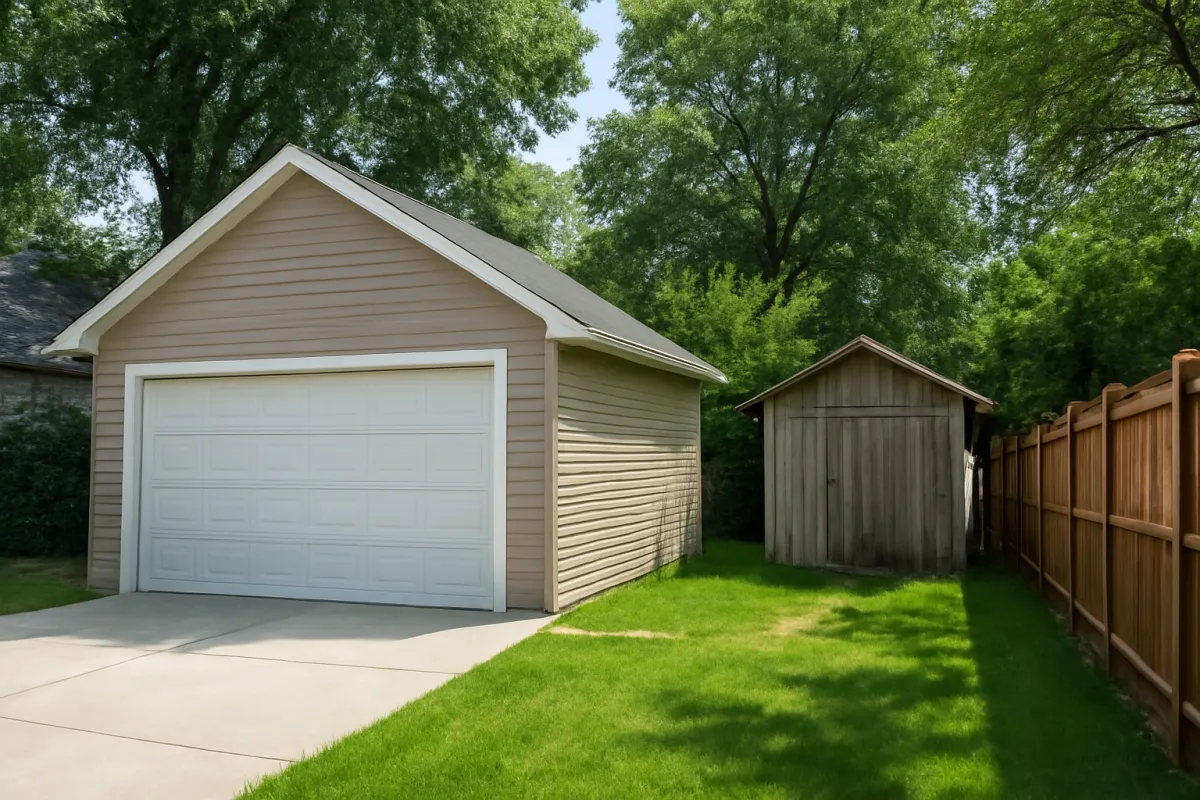
Most residential solar is roof mounted, racked directly to the existing roof structure with flashing and penetrations tying it into the building, which puts it squarely on the dwelling side of the line. A smaller share of installations, often where roof orientation or shading makes a roof mount impractical, go on a ground mounted rack or a dedicated solar carport built away from the house, which generally reads as its own freestanding structure and falls under other structures instead. The distinction matters because the two coverages carry separate limits, and other structures is commonly set as a modest percentage of the dwelling limit, often too small by default to fully cover a large ground mounted array without an adjustment.
Roof-mounted panels and Coverage A
A roof mounted system earns its coverage by being treated, in effect, as part of the roof it sits on. The racking, the panels, the conduit running down to the inverter, and the inverter itself when it is mounted to the exterior wall are commonly absorbed into the dwelling’s replacement value the same way a chimney, gutters, or built-in skylights would be. That has a direct and useful consequence: the same open perils and the same settlement basis that apply to your roof generally apply to the array sitting on it, rather than the system needing its own separate policy or rider in most ordinary cases.
It also means the array inherits the roof’s limitations. If your dwelling coverage settles roof claims on an actual cash value basis rather than replacement cost, which a growing number of insurers apply specifically to aging roofs, that depreciation schedule can apply to the panels too in some policies, even when the panels themselves are newer than the shingles beneath them. Our coverage note on actual cash value versus replacement cost walks that distinction in full, and it is worth confirming directly with your insurer whether an ACV roof endorsement reaches the solar equipment as written or treats it separately.
Ground mounted and detached arrays: when Coverage B applies instead
A ground mounted array avoids roof penetration issues entirely, which is one reason some homeowners choose it, but it moves the insurance question to a different and sometimes thinner limit. Other structures coverage is typically set as a default percentage of the dwelling limit, often around ten percent, calculated without anyone on the insurer’s side looking at what is actually standing on the property. A small shed easily fits inside that default. A ground mounted solar array sized for a whole household’s electricity use, with a rebuild cost that can run into the tens of thousands of dollars, may not.
The practical step is the one our other structures note recommends generally: walk the property, add up the rebuild cost of everything that is not the house itself, including the array, and compare that total against the Coverage B figure on your declarations page. If the total exceeds the default, you can usually raise the other structures limit for a modest additional premium, and that adjustment is far cheaper to make before a claim than to discover you needed after one.
Leased panels and power purchase agreements: it usually is not your policy that responds
A meaningful share of residential solar in the United States is not owned by the homeowner at all. Under a lease, a solar company installs and owns the system, charges a fixed monthly fee for its use, and typically carries its own property insurance on the equipment, since the equipment is its asset on your roof. Under a power purchase agreement, often shortened to PPA, you do not pay for the hardware at all; you agree to buy the electricity the system generates at a set rate, and the installer or an investor owns and insures the panels for the length of the contract.
In both arrangements, the system is not yours, and a homeowners policy generally covers only property you have an insurable interest in. That means your own policy usually is not the one that pays to repair or replace damaged leased panels, however much you may feel responsible for the roof they sit on. The leasing company’s commercial property coverage is designed to do that job, and it typically does, because an uninsured asset generating no income and attached to someone else’s roof is not a position a solar company wants to be in either.
Why a solar lender or lease company lists itself as a loss payee
What the lease or PPA does typically ask of you is paperwork, not a separate policy on equipment you do not own. Almost every lease and PPA agreement requires you to maintain homeowners insurance on the property generally and to list the solar company, or the financing entity behind it, as a loss payee or additional insured on your policy. That listing exists mainly so the company has standing and notice if a major loss, a fire or a severe storm, affects the property its equipment sits on, and so it is kept informed if your policy lapses, since a lapse jeopardizes its collateral.
A financed purchase, where you hold title to the panels but a lender holds a security interest the way a mortgage lender holds one on the house, works similarly: you own and insure the equipment as part of your own dwelling coverage, and the lender is typically listed as a loss payee on that portion, the same mechanism your mortgage company already uses for the house itself. Read your own financing or lease documents for the specific insurance clause, since requirements and the consequence of not meeting them vary by contract.
The perils a standard policy typically reaches
For an owned system, the practical list of perils that commonly reach a solar array mirrors the list that reaches the rest of the house, because the policy is not treating the panels as a special category of property, just as another expensive thing the dwelling or other structures limit protects. Fire is a named peril on essentially every standard form, our coverage note on fire damage walks it in full, and a fire that damages both the roof and the array sitting on it is generally evaluated as one structural loss rather than two separate questions.
Wind and hail are named perils too, and solar hardware is a frequent, if less dramatic, casualty of severe weather: cracked glass, bent racking, a panel torn loose and sent across the yard. A large falling tree limb that strikes an array is handled under the same tree damage logic our coverage note on tree damage sets out. And theft, while less common for roof mounted systems simply because they are harder to remove quickly, is a named peril our coverage note on theft covers, applying the same way to a stolen inverter or a ground mounted panel as it would to any other stolen property attached to the home.
What a standard policy typically will not pay for
The boundary runs in the same place it runs for the rest of the dwelling: sudden and accidental, not gradual and expected. A solar inverter that simply fails after years of service, the way any electronic component eventually can, reads as a mechanical breakdown rather than an insured peril, and standard homeowners policies generally exclude mechanical breakdown the same way they exclude a furnace that dies of old age. A gradual decline in panel output over many years, which is a normal and expected characteristic of solar technology rather than a sudden event, is not a loss a property policy is built to measure or pay for at all.
Manufacturer defects sit in a related but distinct category: a panel that underperforms because of a defect in its cells is typically a warranty question for the manufacturer or installer, not an insurance claim, since the policy insures against external accidental causes rather than against a product not performing as promised. And ordinary wear, dirt accumulation, and the slow efficiency loss every array experiences are maintenance, in the same sense that a roof slowly aging is maintenance rather than a covered event.
Illustrative likelihood a standard policy responds, by solar scenario
A rough, illustrative sense of how a standard homeowners policy tends to treat each situation for an owned system, before any limit or deductible is applied. These are teaching figures rather than measured rates, and actual outcomes depend on your policy wording, your state, and the facts an adjuster establishes.
Bars are scaled to the ~85% top figure. The gap between the top four bars and the bottom two is the entire lesson: sudden, named-peril damage to an owned system is treated like damage to the rest of the house, while gradual or mechanical loss generally is not, regardless of how expensive the equipment was.
Sizing your dwelling limit after an installation
Here is the gap that catches more new solar owners than any peril-by-peril question does. A solar installation adds real, substantial replacement value to a home, often tens of thousands of dollars, and that value does not automatically show up in your dwelling or other structures limit just because the panels are now on the roof. Insurers rely on homeowners to report major improvements, and an array is squarely the kind of improvement our coverage note on dwelling coverage describes as something that should trigger a limit review, the same way a kitchen remodel or a finished basement would.
Left unreported, the array sits on a dwelling limit that was calculated before it existed. That does not usually mean a claim is denied outright, since the array is still physically part of the insured structure, but it can mean the dwelling limit is now running below the true rebuild cost of the home, which our coverage note on dwelling coverage explains can trigger a coinsurance penalty on even a partial claim under some policy forms. The fix is simple and cheap relative to the exposure: tell your insurer about the installation, get a current rebuild estimate that includes the system, and confirm the dwelling or other structures limit was adjusted to match. Run your own numbers through the replacement-cost estimator before that call.
Roof damage during installation, and roof damage during a later removal
Two separate moments create roof risk around solar, and they are easy to conflate. The first is the installation itself, when an installer penetrates the roof to anchor the racking. A competent, properly flashed installation should not create a leak, but a poor one can, and damage caused by faulty workmanship during installation is generally a contractor liability and warranty question rather than a homeowners insurance claim, since the policy covers sudden accidental perils, not defective work. Keep your installer’s workmanship warranty with your policy documents, because it is the document that actually addresses this scenario.
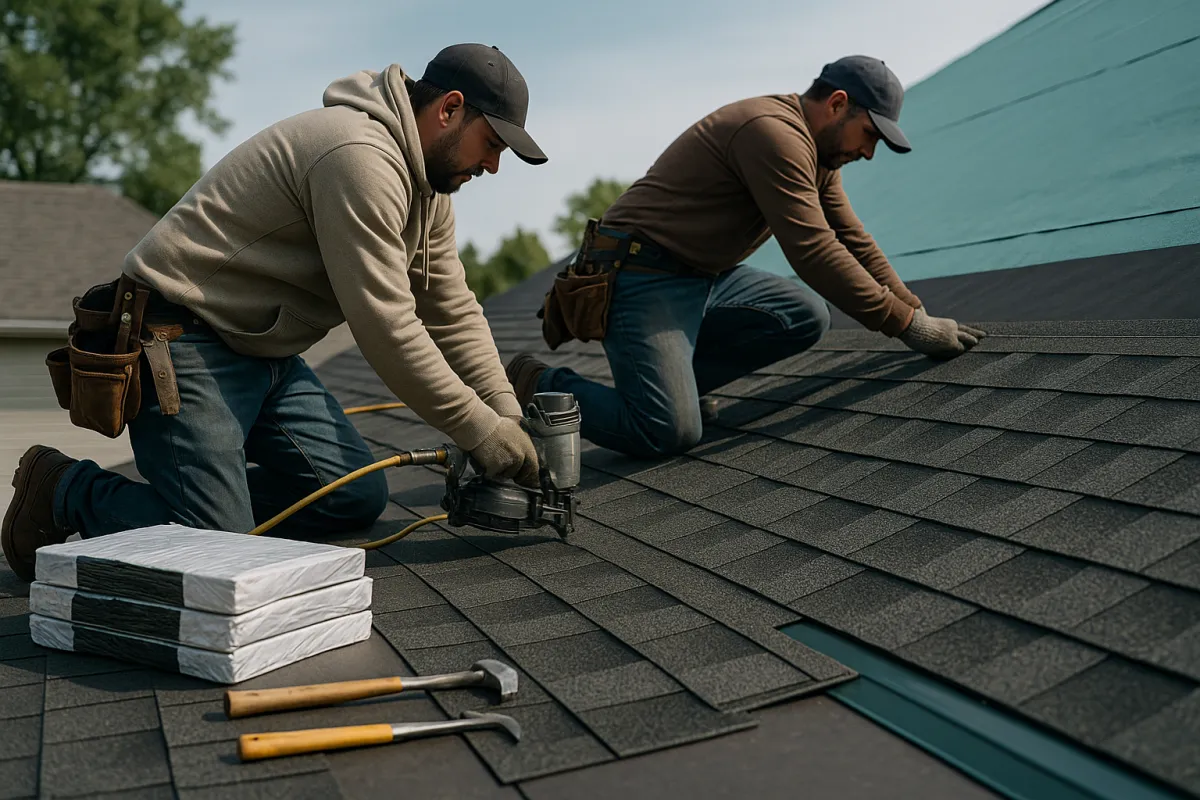
The second moment, and the one homeowners are far less prepared for, comes years later when the roof itself needs replacing and the array has to come off and go back on to get at it. This is routine, it happens on a predictable cycle tied to roof age, and the removal and reinstallation labor is commonly billed as its own line item separate from the roofing job, sometimes covered by the roof claim and sometimes not, depending on your insurer and the circumstances of the claim. Where it turns expensive is damage during that process: a cracked panel, a bent rail, a reinstalled penetration that leaks the following winter. Get a written scope of work from both the roofer and the solar installer before anyone starts, and ask your insurer directly, in writing, whether panel removal and reinstallation labor is included in a covered roof claim.
Liability: does a rooftop or ground array change your liability exposure
A properly installed, permitted solar system does not meaningfully change your liability profile the way a trampoline or an unfenced pool does, which our coverage note on personal liability covers for those higher-risk features specifically. The exposure that does exist is narrower: a ground mounted array close to a walkway is one more object someone could trip over or into, and racking or wiring that is not properly secured could, in a worst case, present a hazard during a storm. None of that is unique to solar in kind, it is the same ordinary premises liability logic that applies to any fixed feature on the property, and a standard liability limit is generally adequate for it.
Where liability becomes a genuinely separate question is on a leased system: if a guest or a worker is injured by equipment you do not own, responsibility can be shared or contested between you as the property owner and the leasing company as the equipment owner, which is exactly the kind of split exposure a personal umbrella policy is built to sit above. If your installation is substantial or your assets meaningful, it is worth a direct conversation with your agent about whether your underlying liability limits are still adequate.
Lost production is not a claim the way a burst pipe is
It is worth saying plainly, because it is the most common misunderstanding in this subject after the ownership question. A standard homeowners policy pays to repair or replace damaged property. It does not reimburse you for income, savings, or utility credits a working system would have generated while it sat offline for repair. A damaged array that takes six weeks to fix means six weeks of a higher electric bill, and that gap is not itself an insured loss on a typical form, the same way a damaged rental property’s lost rent is a separate, specifically named coverage rather than something a standard policy assumes.
The only lever that actually shortens that gap is the speed of the claim and repair process itself, which is one more reason to document the damage promptly and keep the claim moving rather than letting paperwork sit. A small number of solar-specific insurance products, sold directly by installers or by insurers specializing in renewable energy equipment, do offer a production guarantee or a lost-generation add on as a distinct product from a standard homeowners policy. If ongoing production matters enough to you to insure against, that is a conversation to have with your solar installer, separate from this note.
Net metering disruption after a covered loss
A related and often overlooked wrinkle involves net metering, the billing arrangement many utilities use to credit solar households for electricity they send back to the grid. When an array is damaged and taken offline for repair, the net metering relationship with your utility does not pause itself automatically in every case, and depending on your utility’s rules, an extended outage can affect your billing cycle, your credit balance, or in rare cases require you to re-register the system once repairs are complete. None of this is an insurance question exactly, but it is a real administrative cost of downtime that belongs on the list of reasons to get a damaged system repaired quickly rather than letting a claim drag. Check with your utility directly about how an extended outage affects your specific net metering account.
Does solar raise your premium
Typically yes, modestly, for a straightforward reason: the array adds real rebuild value to the insured property, and the insurer is now on the hook to replace more than it was before. Our coverage note on why home insurance costs what it does and note on lowering your premium both cover the general mechanics of how added value moves a premium, and solar follows the same logic rather than a special rule of its own. The increase is generally proportionate rather than dramatic, since solar hardware is comparatively durable and the mounting systems are engineered specifically for roof exposure to wind and weather, but it is rarely exactly zero once the dwelling or other structures limit is raised to reflect the system’s value.
A handful of insurers ask a few additional underwriting questions when a solar installation is reported, commonly about whether the installer is licensed and the work permitted, and whether the system is owned or leased, since the answer changes what the insurer is actually being asked to cover. None of this should be read as a reason to avoid reporting the installation. An unreported system that surfaces during a claim is a worse outcome than a small premium adjustment made honestly up front.
Does solar affect insurability or trigger extra underwriting questions
In the ordinary case, a permitted, professionally installed system does not meaningfully affect whether an insurer will write or renew your policy. Where it occasionally becomes relevant is in combination with other factors our non-renewal coverage note discusses generally: an older home with aging electrical service that a solar installation adds load to, an installation that was not permitted or inspected by the local authority, or a roof that was already near the end of its useful life before panels were added on top of it, which can complicate a future roof claim. None of these are solar-specific problems exactly, they are the same underwriting factors insurers look at generally, concentrated by one more system sitting on the roof. Keep your permits, inspection sign-off, and installer documentation on file, both because some insurers ask for them and because they are useful if a claim or a sale ever requires proof of a proper installation.
Documenting a solar claim
A solar claim benefits from the same documentation discipline our note on filing a home insurance claim and note on documenting storm damage describe for any property loss, with a few solar-specific additions worth keeping on hand before you ever need them. Keep your original installation contract and invoice, which establishes both ownership and the system’s original cost. Keep the manufacturer specifications and serial numbers for the panels and inverter, since replacement often requires matching or compatible equipment. Keep your permit and final inspection sign-off, and keep dated photographs of the installed system from a few different angles, taken when everything is working normally, so there is a clear before picture if damage ever needs to be shown against it.

A worked example: hail damage on an owned, financed array
Put the pieces together on one illustrative household. The Dunphys financed a rooftop solar system two years ago, own the panels outright on a loan with their credit union listed as a loss payee, and never got around to confirming whether their dwelling limit was adjusted afterward. A severe hailstorm cracks several panels and dents a section of racking, with a contractor estimating an illustrative $22,000 to replace the damaged panels and racking. Their policy carries a $1,000 deductible.
Because the damage is sudden, weather driven, and the system is owned, the claim proceeds the way a damaged roof section would: the insurer evaluates the loss under the dwelling coverage perils, the credit union is notified as loss payee on the settlement, and the illustrative payout is the $22,000 repair cost minus the $1,000 deductible, or $21,000, before any adjustment for how the specific policy settles roof-attached equipment. Separately, because they never confirmed their dwelling limit was raised after installation, their insurer flags that the $400,000 limit on file may be running below true replacement cost now that a $22,000 system sits on the roof, a conversation they are having for the first time during a claim rather than before one. Run your own system value, cause of loss, and deductible through the companion below to see the same arithmetic on your own numbers.
How the Dunphys' illustrative hail claim splits up
An illustrative $22,000 repair on an owned, financed system with a $1,000 deductible. Figures are an example chosen to show the shape of the split, not a quote or estimate for any home.
The two slices sum to the full $22,000 repair. Change the cause to a mechanical inverter failure instead of hail in the companion below and this chart effectively flips to one slice: nothing paid, the full amount absorbed, because the loss never clears the named-peril threshold in the first place.
Panels in high-wind, hail-prone, and wildfire-exposed states
Where you live changes the practical risk profile of an array more than it changes the coverage logic itself. In states that see frequent severe hail or hurricane-force wind, many insurers apply a separate, often percentage-based wind and hail deductible to the whole dwelling, our note on wind and hail deductibles walks how that figure is calculated, and that same deductible typically applies to a damaged array rather than your standard flat deductible. It is worth asking your insurer directly whether panel damage from a named storm falls under the separate wind and hail deductible or the standard one, since the gap between them can be substantial on a higher-value system.
In wildfire-exposed regions, the concern is less about the panels themselves and more about the broader insurability questions our non-renewal coverage note covers: some carriers in the highest-risk areas have pulled back from writing new homeowners business at all, independent of whether the home carries solar, and a homeowner in that position may be shopping for coverage through a state FAIR plan or a specialty high-risk carrier rather than a standard insurer. A solar installation does not meaningfully change that underwriting picture one way or the other, but it is one more reason to confirm, with whichever carrier you end up with, exactly how the policy treats an array mounted on a roof in a region the insurer already considers higher risk.
Local building codes add a final layer worth knowing about. Many high-wind jurisdictions require solar racking to meet specific wind-uplift ratings as a condition of the permit, and a system installed to that standard is generally more resilient in a storm than one that was not, which is part of why a permitted, inspected installation matters beyond the paperwork reason covered earlier. If you are installing a new system in a region prone to severe weather, ask your installer directly what wind rating the racking carries and whether it exceeds the local code minimum, since that choice affects how the array performs in exactly the scenario this note spends the most time on.
Common mistakes homeowners make with solar coverage
A short list covers most of what goes wrong, and none of it is exotic. The first and most common is never reporting the installation, which leaves the dwelling limit undersized and the insurer unaware of a major improvement. The second is assuming a leased or PPA system is covered by your own policy simply because it sits on your roof, when ownership rather than location decides the question. The third is treating panel removal for a separate roof job as automatically included in that roof claim, when it is frequently a negotiated, sometimes separately billed, line item.
The fourth is skipping the installer’s and lease’s insurance clauses entirely, missing the loss payee requirement until a lender or lease company flags it, sometimes during a home sale when the paperwork finally gets reviewed closely. The fifth is confusing a warranty question, underperformance from a manufacturing defect, with an insurance question, damage from a sudden external cause, and expecting the wrong party to pay for the wrong kind of problem. Each of these is cheap to fix proactively and comparatively expensive to untangle during a claim.
The bottom line
Does home insurance cover solar panels? Usually yes if you own them, through the same dwelling or other structures coverage and the same named perils, fire, wind, hail, falling objects, theft, that protect the rest of the house, and usually not directly if you lease them, because a policy built to insure your property is not generally built to replace equipment that belongs to a solar company or lease investor. Report an installation to your insurer, confirm your dwelling or other structures limit reflects the system’s real value, read your lease or financing agreement’s insurance and loss payee clause closely if the system is not outright yours, and keep your installation paperwork and dated photographs on hand before you ever need them. Run your own system’s value, likely cause of loss, and deductible through the companion below, and confirm the specifics against your own declarations page with a licensed agent before treating anything here as the answer for your particular policy.
This coverage note is educational reading about how standard homeowners policies commonly treat owned and leased solar installations, and it is not insurance, legal, or financial advice, nor a description of your particular contract. Ownership structures, lease and power purchase agreement terms, dwelling and other structures treatment, and underwriting practices differ between insurers, between states, and between individual lease agreements, so nothing above should be read as the language of your policy or your lease. Every dollar figure, premium effect, and claim outcome in this note is an illustrative example chosen to demonstrate how the coverage generally works, not a price, a quote, or a prediction for any specific home or system. Before acting on anything here, read your own homeowners policy, your installation contract, and your lease or financing agreement’s insurance clause, and confirm your position with a licensed insurance professional who can see your actual documents.
Frequently asked questions
Does home insurance cover solar panels?
Usually yes, if you own the system. Most standard homeowners policies treat panels you own outright or are financing as part of the insured structure, either folded into the dwelling if they are roof mounted or treated as an other structure if they stand separately, and the same named perils that reach your roof, fire, wind, hail, a falling tree limb, theft, typically reach the panels too. The two qualifications that matter most are ownership and cause. If the system is leased or financed through a power purchase agreement, you generally do not own it and your own homeowners policy is usually not the one that responds. And like the rest of the house, the policy covers sudden accidental damage, not gradual output decline or a mechanical part that simply wears out. Read your own declarations and ask a licensed agent how your specific policy treats an installed solar array, since forms and endorsements differ.
Does homeowners insurance cover leased solar panels?
Generally not through your own property coverage, because you do not own what you do not insure. A leased system or one financed through a power purchase agreement, commonly called a PPA, is owned by the solar company or a third party investor, and that company typically carries its own property coverage on the equipment, often required as a condition of the lease. What usually falls to you is liability if the installed system causes injury or damage to someone else, and the paperwork obligation to list the leasing company as a loss payee or additional insured on your homeowners policy, which most lease agreements require. Read your lease's insurance clause closely, because it generally tells you exactly what you are responsible for carrying and what the lessor is expected to carry on its own asset.
What happens if a hailstorm damages my solar panels?
If you own the array, hail is typically treated the same way it is treated on the rest of your roof: a sudden, weather driven, named peril that a standard policy is built to respond to, subject to your dwelling or other structures limit and your deductible. Many policies that carry a separate, often percentage based wind and hail deductible apply that same deductible to panel damage rather than your standard flat deductible, which our note on wind and hail deductibles explains in full. If the panels are leased, the claim generally runs through the leasing company's own policy rather than yours, though you may still want to document the damage and notify your insurer, since hail severe enough to crack panels is often severe enough to damage the roof underneath them too.
Does installing solar panels void my homeowners insurance?
No, not by itself, but it is a change you are expected to report. A homeowners policy is underwritten against the property as the insurer understood it when the policy was written, and adding a rooftop or ground mounted system is a material change to the structure, its value, and in some cases its roof penetrations and wiring. Most insurers want to know about the installation, some ask a handful of underwriting questions about the installer, the mounting method, and whether it is owned or leased, and a few may require an inspection or a specific endorsement. Not reporting it does not usually void the whole policy outright, but it can complicate a claim that involves the system, and an insurer that learns about an undisclosed major improvement during a claim investigation is rarely pleased about it. Tell your insurer before or shortly after installation.
Do solar panels raise my home insurance premium?
Often modestly, because the panels add real replacement value to a home that the insurer is now on the hook to rebuild, and that value should be reflected in your dwelling or other structures limit. The premium effect is typically smaller than the jump in rebuild cost, since solar hardware is comparatively durable and mounting systems are built for roof exposure, but it is rarely exactly zero once the limit is raised to match. Some insurers also ask a few additional underwriting questions, about the installer's credentials or the mounting method, that can influence the price slightly. The honest number only comes from your own insurer quoting your own system, so treat any figure here as illustrative rather than a quote.
Does home insurance cover solar panel theft?
If you own the system, theft is typically one of the perils a standard policy names, alongside fire, wind, hail, and vandalism, so a stolen panel or inverter is generally handled the same way a stolen air conditioning condenser would be, subject to your limit and deductible. Ground mounted systems and inverters stored in an accessible location are the more common theft targets in practice, simply because roof mounted panels are harder to remove quickly. If the system is leased, the leasing company's own policy is usually the one that responds to a theft, though you should still file a police report and notify both your insurer and the leasing company promptly, since most lease agreements obligate you to report a loss affecting their equipment.
What if my roof is damaged while removing panels for a roof replacement?
This is a genuinely common and underappreciated gap. Removing and reinstalling an array to get at the roof underneath is a routine part of replacing an aging roof under solar, and the removal and reinstallation labor itself is often treated as a maintenance cost tied to the roof job rather than an insurance claim, even when the roof replacement itself is covered by a storm claim. Where it gets expensive is damage caused during the removal or reinstallation, a cracked panel, a damaged mounting rail, a roof penetration that leaks afterward, which can become a dispute between you, the roofer, and the solar installer about whose workmanship caused it. Get a written scope from both contractors before work starts, and ask your insurer directly whether panel removal and reinstallation labor is included in a covered roof claim or sits outside it.
Does home insurance cover lost solar energy production?
No, not in the way a reader usually hopes. A standard homeowners policy pays to repair or replace damaged property, not to replace income or savings the property would otherwise have generated, so the electricity bill credit you lose while a damaged array sits offline is not itself an insured loss on a typical form. The repair or replacement of the physical equipment is what the policy reaches, and a faster claim and repair timeline is the only lever that shortens the production gap. A small number of specialty solar insurance products marketed directly by installers or solar specific insurers advertise a production guarantee or lost generation coverage as an add on, which is a different product from a standard homeowners policy and worth asking your installer about separately if it concerns you.

Hamza Hai is the editor of SumSured. She holds an MBA and reviews the site's articles against our editorial standards, checking that every figure is labelled for what it is, that nothing is presented as verified fact without a source the reader can check, and that the writing stays useful to a non-specialist.