
What's in this note
- The short answer: what renters insurance is
- What renters insurance covers: the three jobs
- Coverage C: your personal belongings
- Coverage E: personal liability
- Coverage D: loss of use and additional living expenses
- Medical payments to others
- What renters insurance does not cover
- The building is the landlord’s problem, not yours
- Flood and earthquake are still excluded
- Named perils versus open perils on your stuff
- Actual cash value versus replacement cost
- How much renters insurance costs
- Why renters insurance is so cheap
- How much personal property coverage you need
- How much liability coverage you need
- Sub-limits on jewelry, electronics, and cash
- Is renters insurance required?
- Renters insurance versus homeowners insurance
- Do you actually need renters insurance?
- How to file a renters insurance claim
- A worked example: one apartment fire
- Common mistakes renters make
- The bottom line
Short answer: Renters insurance is a low-cost policy that covers your personal belongings, your personal liability, and your extra living costs when a covered loss forces you out of your rental. It never covers the building, which is the landlord's responsibility. It pays for sudden accidental perils like fire, theft, and some water damage, excludes flood, earthquake, wear and tear, and pests, and costs a figure commonly cited in a low monthly range. Landlords increasingly require it.
What is renters insurance, in one line? It is a low-cost policy that covers your personal belongings, your personal liability, and your extra living costs when a covered disaster forces you out of your rental, without covering the building itself, which is your landlord’s responsibility rather than yours. That last part is the piece almost every new renter gets wrong: the apartment or house you rent is insured by whoever owns it, but nothing inside it that belongs to you is covered by that policy. If a fire, a burst pipe, or a burglar reaches your things, the landlord’s insurance does not pay you a cent for them.
This coverage note is the plain-language map of the whole product. It explains exactly what renters insurance covers and what it does not, walks the four coverages inside a typical policy, shows how much it usually costs and why it is so cheap, helps you size both your belongings coverage and your liability limit, answers whether it is required, draws a clean line between renters and homeowners insurance, and closes with how to file a claim. Along the way it links our coverage note on what homeowners insurance covers for the owner’s side of the fence, our note on actual cash value versus replacement cost for how a payout is calculated, our home inventory walkthrough for sizing your contents, and our coverage note on condo insurance if you own the unit rather than rent it, because an HO-6 adds a structural component and loss assessment coverage that a renters policy has no reason to carry. You can put an illustrative number to your own belongings with the helper on this page before you read a single line of a policy.
Key takeaways
- Renters insurance covers your belongings, your liability, and your loss of use as a tenant; it never covers the building, which is the landlord's responsibility.
- A standard policy covers sudden accidental perils like fire, theft, and some water damage, but excludes flood, earthquake, wear and tear, and pests.
- It is usually one of the cheapest policies you can buy, with figures commonly cited in a low monthly range, because it never funds rebuilding a structure.
- Size personal property to the cost of replacing everything you own, and choose a liability limit, commonly an illustrative $100,000 or more, that fits your risk.
- Landlords increasingly require it in the lease even though the law usually does not, and proof of coverage is often a condition of move-in.
The short answer: what renters insurance is
Renters insurance is a tenant’s policy. It protects the person living in a rented home, not the home itself. Where a homeowner buys one policy that covers both their structure and their stuff, a renter needs coverage only for the stuff, the liability, and the living costs, because the structure is already insured by the landlord. That division is the entire logic of the product, and holding it in mind makes everything else fall into place.
Inside a typical renters policy sit the same familiar coverage letters you would find on a homeowners policy, minus the dwelling. Coverage C is your personal property. Coverage D is loss of use, the additional living expenses if your rental becomes unlivable after a covered loss. Coverage E is personal liability. Coverage F is medical payments to others. There is no Coverage A dwelling and no Coverage B other structures, because you do not own the building or the detached garage. What remains is a compact, inexpensive policy built to do three jobs well, and the rest of this note walks each one. Every dollar figure below is illustrative, chosen to show the shape of the coverage rather than to quote your policy.
What renters insurance covers: the three jobs
Compress the whole product into three jobs and it becomes easy to remember. First, it protects your belongings against sudden accidental perils, so if a fire, a theft, a windstorm, or certain kinds of water damage reach your things, the policy pays to replace them up to your limit. Second, it protects your finances through liability coverage, so if you are found legally responsible for injuring someone or damaging their property, the policy pays for their losses and your legal defense up to the limit. Third, it keeps a roof over your head, paying your additional living expenses when a covered disaster forces you out of your rental while it is repaired.

Those three jobs cover the situations that actually sink renters financially: losing everything they own to a fire, facing a liability claim with nothing behind them, or being unable to afford a hotel and a new place at the same time after a disaster. A fourth, smaller coverage, medical payments to others, rounds out the policy for minor guest injuries. Notice what is missing from all four: the building. That absence is not an oversight, it is the defining feature, and the next sections take each coverage in turn before turning to what falls outside them.
Coverage C: your personal belongings
Coverage C, personal property, is the heart of a renters policy and usually the reason people buy one. It covers the movable things you own: furniture, mattresses and bedding, clothing, electronics, kitchenware, small appliances, books, tools, sports gear, and the contents of every closet and drawer. If a covered peril damages or destroys them, or a burglar carries them off, the policy pays to repair or replace them up to your Coverage C limit, minus your deductible. Many policies even extend a limited amount of this coverage to belongings stolen from your car or while you travel, though at a reduced sub-limit.
The number most renters underestimate is how much they actually own. A single room of furniture, a laptop, a phone, a television, and a full closet add up quickly, and a whole apartment adds up to far more than a first guess suggests. That is why a real home inventory, rather than a mental estimate, is the right way to set this limit, a process our home inventory walkthrough breaks down room by room. Two settings then decide how much you actually collect at a claim: the valuation basis, replacement cost versus actual cash value, and the category sub-limits that cap valuables. Both get their own section below, because both quietly rewrite the payout on a claim that is otherwise fully covered.
Coverage E: personal liability
Coverage E, personal liability, is the part of a renters policy that has nothing to do with your possessions and everything to do with protecting the rest of your financial life. It covers you if someone is injured in your rental, or if you accidentally injure someone or damage their property somewhere else, and you are found legally responsible. It pays for the other party’s damages and, just as importantly, for your legal defense costs, up to the limit you carry. A common baseline limit is an illustrative $100,000, with many renters choosing $300,000 for a small additional premium.
The reason liability deserves attention is that it defends against a low-probability, high-cost event, which is exactly the kind of risk insurance exists for. A guest who slips and is seriously hurt, a dog that bites someone, a kitchen fire that spreads to a neighbor’s unit, or an accident you cause away from home can generate a claim far larger than the value of everything you own. Without renters insurance, that claim lands entirely on you. Renters with meaningful assets sometimes layer an umbrella policy on top to extend liability into the millions for a modest cost. When renters compare policies on price alone, this is the coverage most likely to be set too thin, and it is the one whose absence can be genuinely catastrophic.
Coverage D: loss of use and additional living expenses
Coverage D, loss of use, is the coverage almost nobody thinks about until a fire or a burst pipe makes their rental unlivable, and then it becomes the most immediately useful part of the policy. It pays your additional living expenses, the extra costs of living elsewhere while your rental is repaired or you find a new place after a covered loss: hotel or short-term rental costs, restaurant meals above your normal grocery spend, extra commuting, pet boarding, and similar costs. It is typically set as a percentage of your personal property limit, so a larger contents limit carries a larger loss-of-use cushion.
The word “additional” is the key to how it pays. It reimburses the difference between your normal cost of living and your temporary elevated cost, not your entire new rent as if your lease vanished. If a covered disaster displaces you for weeks or months, which is common while a damaged building is repaired, this coverage funds the gap between what you normally spend and what the emergency forces you to spend. It is easy to overlook when comparing quotes, but for a renter with no fallback housing, it can be the coverage that prevents a bad week from becoming a financial crisis. Confirm whether your loss-of-use limit is a percentage cap or time-limited, because the structure decides how long it will actually carry you.
Medical payments to others
Coverage F, medical payments to others, is the small, quiet companion to liability, and it works on a no-fault basis. It pays modest medical bills, often capped at an illustrative $1,000 to $5,000 per person, for a guest who is injured in your rental, regardless of whether you were legally at fault. Its purpose is to handle minor injuries quickly and neighborly: a visitor trips on a rug and needs stitches, and the policy covers the emergency-room bill without anyone having to establish blame or file a full liability claim.
The value of Coverage F is that it defuses small incidents before they escalate. By covering a guest’s minor medical costs promptly and without a fault fight, it can keep a stumble from turning into the kind of dispute that would otherwise land on your liability coverage. It does not cover your own household’s medical expenses, which belong to your health insurance, and it does not apply to injuries in a car, which belong to auto coverage. It is a small coverage doing a specific job, and while it rarely drives a purchasing decision, it is a genuinely useful piece of the four-part structure, especially for renters who regularly host guests or gatherings.
The chart below shows how a renters policy’s protection tends to split across its four coverages, which is a useful way to see where the value of the policy actually sits. Personal property and liability do most of the work, with loss of use and medical payments filling important but smaller roles.
Where a renters policy's protection sits, illustratively
Rough share of one illustrative renters policy across its four coverages. Exact splits vary by policy, limits chosen, and carrier.
The belongings slice dominates because replacing a household of possessions is the loss most renters face, but the liability slice defends against the rare event that could cost far more than everything you own. Notice the building appears nowhere, because a renters policy does not fund it at all.
What renters insurance does not cover
Every policy has a boundary, and knowing the boundary of a renters policy prevents the most painful surprises. The largest exclusion is the building itself, because that belongs on the landlord’s policy, a point important enough to get its own section below. Beyond that, the recurring exclusions on a standard renters policy are flood, meaning rising water from outside; earthquake and other earth movement; gradual wear and tear; damage from pests such as insects and rodents; mold beyond a small cap; intentional acts; and losses from a business run out of the rental beyond a small allowance.
The theme connecting most of these is that renters insurance, like homeowners insurance, is built for sudden accidental events, not for slow deterioration or predictable problems, and not for catastrophic perils that require their own specialized pools. Several of the gaps can be filled: flood coverage is a separate policy, earthquake is an endorsement or separate policy in exposed regions, and high-value items are covered by scheduling them individually. Your roommate’s belongings are also generally excluded unless they are named on the policy, so roommates who want coverage usually each need their own. And motor vehicles are excluded entirely, since those belong on an auto policy. Read your exclusions page once, deliberately, so none of these is a surprise at claim time.
The building is the landlord’s problem, not yours
This is the single most misunderstood fact about renting, so it earns a plain statement: the structure you live in is insured by your landlord, and their policy does nothing for your belongings. If a fire guts the building, the landlord’s insurance rebuilds the walls, the roof, and the fixtures they own, and then it stops. Your furniture, your clothes, your electronics, and everything else you brought in are not on that policy at all. The landlord insures their asset, and you are responsible for insuring yours.
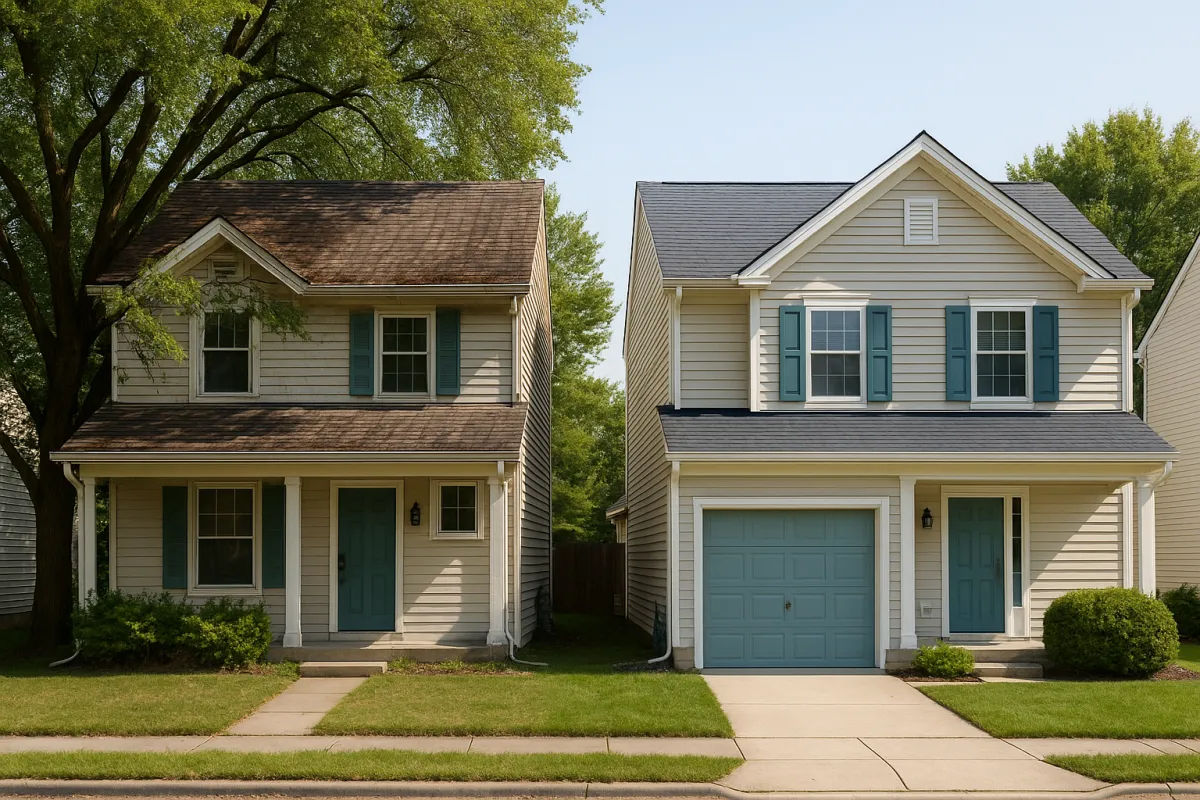
The confusion runs in the other direction too. Some renters assume that if a building problem, say a burst pipe in the wall, damages their belongings, the landlord automatically pays. Often the landlord is not liable unless negligence is proven, and even then, chasing that recovery is slow and uncertain compared with simply filing your own renters claim. There is also a liability dimension: if you or a guest causes damage to the unit or to a neighbor’s property, the landlord’s policy will not defend you, and may even pursue you for the cost. Renters insurance is the coverage that steps into all of these gaps. For the full picture of what the owner’s side actually covers, our coverage note on homeowners insurance walks the landlord’s half of the fence in detail.
Flood and earthquake are still excluded
Two big perils sit outside a standard renters policy exactly as they sit outside a standard homeowners policy, and both catch people off guard. The first is flood, which means rising water from outside the unit: an overflowing river, a storm surge, a flash flood, or water pooling from an overwhelmed drainage system during heavy rain. That water is excluded on a standard renters policy, full stop, regardless of how sudden the flooding was. Flood coverage for your belongings is a separate purchase, historically through the National Flood Insurance Program and increasingly through private insurers, and it typically carries a waiting period before it takes effect. Contents-only flood coverage for a renter is usually a modest fraction of what a homeowner pays, and our note on how much flood insurance is includes a section pricing exactly that renter’s slice.
The cruel twist is the water-source distinction. Water that rises from outside the building is a flood and is excluded, while water that escapes suddenly from inside, like a burst pipe or an overflowing appliance, is commonly covered by your standard renters policy. The same wet floor can be covered or denied depending entirely on where the water came from, which is one of the most common sources of denied claims across all property insurance. Earthquake follows the same pattern of being pulled out of the base policy and offered separately, which matters most in seismically active regions. If you rent in or near a flood-prone or earthquake-prone area, price the separate coverage as a normal part of your protection rather than an afterthought.
Named perils versus open perils on your stuff
A subtle setting decides how broadly your belongings are actually protected: whether they are covered on a named-perils or an open-perils basis. Most standard renters policies cover personal property on a named-perils basis, meaning the policy pays only if the cause of loss appears on a specific written list. That list is long and covers the events people worry about most, commonly fire, lightning, windstorm, hail, explosion, riot, smoke, vandalism, theft, falling objects, the weight of ice and snow, and certain water and appliance-related events. If your loss is caused by something on the list, you are covered; if it is caused by something not on the list, you may not be.
Open perils, also called all-risk, flips the logic: it covers any sudden accidental cause except the ones specifically excluded, which is broader protection. Some insurers offer an upgrade that moves your contents to an open-perils basis for a modest additional premium, closing gaps you might not anticipate. Whether the upgrade is worth it depends on how much you own and how much certainty you want, but the first step is simply knowing which basis your own policy uses, because the words “broad form” versus “special form” on your documents decide it. For a fuller treatment of how this distinction works across property insurance, see how it plays out on the owner’s side in our homeowners coverage note.
Actual cash value versus replacement cost
This is the single most consequential setting on a renters policy, and it decides how much you actually collect when a covered claim is paid. Replacement cost coverage pays what it costs to buy a new equivalent item today, so a destroyed five-year-old television is replaced with the price of a comparable new one. Actual cash value, or ACV, pays that replacement price minus depreciation for age and wear, so the same five-year-old television is paid as a five-year-old television, a much smaller check. Across a whole household of belongings, the gap between the two clauses can run to a large share of your contents value, and it is invisible until a claim exposes it.
The reason it matters so much for renters specifically is that a household of possessions depreciates heavily on paper, so an ACV policy on your belongings can pay a fraction of what replacing them actually costs. Replacement cost coverage usually costs modestly more in premium, and for most renters it is the setting worth paying for, because the whole point of the policy is to make you whole after a loss rather than to hand you the depreciated scrap value of your life’s accumulated stuff. Our note on actual cash value versus replacement cost runs the depreciation math in full. For now, confirm which basis your policy settles on, because it silently rewrites every payout you might ever receive.
How much renters insurance costs
Renters insurance is consistently one of the cheapest insurance products a household can buy, and figures commonly cited fall in a range of roughly fifteen to thirty dollars a month, which is illustrative and varies widely by person and place. The reason it is so inexpensive is structural and worth understanding, so it gets its own section next, but the headline is that a renter is buying protection for their belongings and liability without funding the enormous cost of rebuilding a structure. That single absence is what keeps the premium low.
Several factors move the number within that range. The biggest is how much personal property coverage you carry, since more contents coverage means more the insurer might have to pay. The liability limit matters, with higher limits costing modestly more. The valuation basis matters, since replacement cost costs more than actual cash value. Your deductible matters, with a higher deductible lowering the premium in exchange for absorbing more yourself. And your location matters, since local crime and weather risk feed the price. The helper on this page lets you move these levers and read an illustrative premium, and you can also anchor your belongings figure with the estimator on our homepage before you request real quotes. Whatever the tools suggest, confirm the actual number with live quotes at identical coverage.
Why renters insurance is so cheap
The low price of renters insurance is not a gimmick, it is arithmetic. A homeowners policy has to be able to fund rebuilding an entire house after a total loss, which is by far the most expensive thing a property insurer might have to pay, and that potential rebuild cost dominates the premium. A renters policy carries none of that exposure, because the building belongs to someone else and is insured on someone else’s policy. Strip out the dwelling, and what remains is coverage for a household of belongings, a liability limit, and some living expenses, all of which are modest compared with reconstructing a structure.
That is why the value proposition of renters insurance is unusually lopsided in the buyer’s favor. For a small monthly figure, a renter transfers the risk of losing everything they own, plus a potentially large liability claim, plus the cost of emergency housing, onto an insurer. Few other financial decisions offer that ratio of protection to cost. It is also why the common advice to buy it is so consistent: the premium is small enough that skipping it to save a little rarely makes sense against the size of the losses it prevents. Bundling it with an auto policy, which many insurers reward with a discount, can lower the already-small cost further, sometimes making the effective price of the renters coverage very low indeed.
How much personal property coverage you need
The right amount of personal property coverage is, in principle, simple: enough to replace everything you own at today’s prices. In practice, most renters guess low, because a household accumulates far more value than a mental tally suggests. The reliable way to size it is to build a real inventory, going room by room and listing what you would have to rebuy if it all vanished, from the obvious big items down to the closets full of clothing and the drawers full of kitchenware that quietly add up. Almost everyone who does this lands on a higher number than their first guess.

The chart below shows a few illustrative coverage tiers to make the scale concrete, but your own inventory is what should set the figure, not a round number that felt about right. Our home inventory walkthrough turns this into a repeatable process and explains how to store the record so it survives the very disaster it documents. Keep in mind that setting the limit too low leaves you underinsured on a total loss, while the valuation basis and sub-limits, covered elsewhere in this note, decide how much of that limit you actually collect. Anchor the number to what replacing your life would truly cost.
Illustrative personal property coverage tiers
Example contents limits a renter might carry. Your own room-by-room inventory should set the real figure, not a round number.
Bars are scaled to the $75,000 top figure. These tiers are illustrative only; a genuine inventory frequently lands higher than a first guess, which is exactly why building one before you buy is worth the hour it takes.
How much liability coverage you need
Liability is the coverage renters most often set on autopilot, and it deserves a deliberate choice. A commonly cited baseline is an illustrative $100,000 of personal liability, which many landlords accept as the minimum they require. A great many renters step up to $300,000 because the additional premium is small relative to the extra protection, and the jump can matter enormously if a serious injury or a fire that spreads to neighboring units ever produces a large claim against you. The right limit is the one that could actually absorb a worst-case claim without exposing your income and savings.
For renters with meaningful assets, or those who simply want a larger margin of safety, a personal umbrella policy sits on top of the renters liability and extends it into the millions for a relatively small premium, kicking in once the underlying limit is exhausted. Whether you need one depends on what you have to protect and what you could lose, but the underlying renters liability limit is the foundation the umbrella builds on, so it should be sized sensibly first. When you compare quotes, resist the temptation to shave the liability limit to save a few dollars, because it defends against precisely the rare, large event that renters insurance exists to handle.
Sub-limits on jewelry, electronics, and cash
The headline personal property number hides a set of much lower interior caps that surprise people at claim time. Within your contents coverage, standard policies impose special sub-limits on categories that are easily stolen or especially valuable: cash and precious metals are often capped at a few hundred dollars, jewelry and watches at an illustrative figure around $1,500 for theft, firearms at a modest cap, and electronics or business property at their own limits. These are not the full contents limit; they are much smaller ceilings that apply regardless of how large your overall coverage is.
The consequence is concrete. If a burglar takes $6,000 of jewelry and your policy caps jewelry theft at $1,500, the policy pays $1,500 even though your total contents limit is far higher, and the remaining $4,500 is simply uncovered. The fix is a scheduled personal property endorsement, sometimes called a rider or floater, which lists specific high-value items individually, often covers them on a broader all-risk basis, and usually carries no deductible. Anything you own that is worth more than its category sub-limit, an engagement ring, a camera kit, a laptop, a musical instrument, a collection, should be scheduled. Read your sub-limits page, compare it against what you actually own, and schedule the items that exceed their caps before a loss rather than after.
Is renters insurance required?
Renters insurance is generally not required by law, but it is increasingly required by landlords, and that distinction trips people up. There is usually no statute forcing a tenant to carry it. What there very often is, however, is a clause in the lease. Many landlords, and especially larger apartment communities managed professionally, write a renters insurance requirement directly into the lease agreement, frequently specifying a minimum liability limit such as an illustrative $100,000 and sometimes requiring proof before you receive the keys.
The landlord’s motive is straightforward: if a tenant causes damage or a liability incident, the landlord would rather that tenant have coverage standing behind them than have to pursue an uninsured renter. Some leases also require you to name the landlord or property manager as an interested party so they are notified if the policy lapses. If your lease requires coverage, treat it as a real obligation, because letting the policy lapse can be a lease violation. And even where nothing requires it, the near-universal advice to carry it holds, because the cost is small and the exposure it removes is large. Check your lease first, then buy the coverage it asks for, and consider whether the required minimum is actually enough for your own protection rather than just the landlord’s.
Renters insurance versus homeowners insurance
The cleanest way to understand renters insurance is to hold it beside homeowners insurance, because the two rhyme in everything except the one piece that matters most. Homeowners insurance covers the physical structure, the owner’s belongings, their liability, and their loss of use, all on one policy. Renters insurance covers the tenant’s belongings, liability, and loss of use, and leaves the structure entirely to the landlord. That single difference, the presence or absence of dwelling coverage, is why homeowners insurance costs several times more, since funding the rebuild of a house dominates the premium.
Everything else lines up closely. The personal property, liability, loss of use, and medical payments coverages work the same way in both products, use the same coverage letters, and carry the same core exclusions, including flood and earthquake. A renter who later buys a home will recognize most of their new policy immediately, with the dwelling and other-structures coverages added on top. If instead you own a manufactured or mobile home rather than renting, that is a third, distinct product with its own policy form, which our note on mobile and manufactured home insurance covers separately. And whichever product applies to you, sizing the coverage correctly is its own discipline, which our note on how much home insurance you need works through for owners in a way that informs the renter’s thinking too.
Do you actually need renters insurance?
Pull the threads together and the practical question is whether you, specifically, should buy it. For the large majority of renters the answer leans firmly toward yes, and the reasoning is the lopsided ratio between cost and protection. For a small monthly figure, you transfer three real risks off your own balance sheet: losing your belongings to a disaster or theft, facing a liability claim with nothing behind you, and being unable to afford emergency housing after a covered loss. Any one of those events, uninsured, can cost many times a year of premiums, and the first two can be financially ruinous.
The cases where someone might reasonably skip it are narrow. A renter with almost no belongings and no assets to protect faces a smaller downside, but even they carry liability exposure, because a claim can arrive uninvited regardless of what you own. If your lease requires coverage, the decision is made for you. If it does not, the calculus still usually favors buying, simply because the premium is small enough that the protection is nearly always worth it. The honest framing is not “can I get away without it” but “is the small premium worth removing these large risks,” and for most renters it clearly is. Put an illustrative number to your own situation with the helper on this page and the estimator on our homepage before you decide.
How to file a renters insurance claim
If a loss happens, the process rewards preparation and speed. First, make sure everyone is safe and prevent further damage where you reasonably can, such as shutting off water or securing the unit, because most policies expect you to mitigate. Second, document everything with photos and video before you move, clean up, or discard anything, since the visual record is the backbone of the claim. Third, if a crime such as theft occurred, file a police report, because the insurer will usually ask for the report number as part of the claim.
Fourth, contact your insurer promptly to open the claim, and provide your home inventory, receipts, and any proof of ownership or value for the damaged or stolen items, which is exactly why keeping an inventory in advance pays off. An adjuster may review the loss and issue a settlement based on your coverage, minus your deductible, and settled at replacement cost or actual cash value depending on your policy. Keep a record of every conversation and every document you send. The general process rhymes with the owner’s side, which our walkthrough on filing a home insurance claim covers step by step, and every figure you are quoted along the way is illustrative until your own adjuster reviews your actual policy.
A worked example: one apartment fire
Assemble everything on one illustrative renter to see how the coverages combine. Priya rents a one-bedroom apartment and carries an illustrative $30,000 of personal property coverage on a replacement-cost basis, $300,000 of liability, a loss-of-use cushion tied to her contents limit, and a $500 deductible. Her landlord’s policy insures the building; her policy insures her life inside it. On paper it is a modest, inexpensive setup, and then a kitchen fire tests it.
The fire damages her belongings and makes the unit unlivable for two months while repairs proceed. Her personal property coverage pays to replace the damaged furniture, clothing, and electronics at today’s prices, minus the $500 deductible, because replacement cost restores newer items without a depreciation haircut. Her loss-of-use coverage funds the additional cost of a short-term rental and higher living expenses above what she normally spends, so she is not paying for emergency housing out of pocket on top of everything else. Because no one else was hurt and she was not found negligent toward a neighbor, her liability coverage is not triggered here, but it stood ready if the fire had spread. The landlord’s policy, meanwhile, handles the building, which was never Priya’s responsibility. Same event, cleanly divided: the owner insures the structure, and the renter’s own policy makes the renter whole. Run your own version with the helper above and treat every figure as illustrative.
Common mistakes renters make
A handful of avoidable mistakes account for most of the disappointment renters feel about their coverage. The first is skipping the policy entirely on the assumption that the landlord’s insurance covers their belongings, which it never does. The second is buying it but setting the personal property limit too low, based on a mental estimate rather than a real inventory, so a total loss reveals the gap only when it is too late to fix. The third is choosing actual cash value to shave a few dollars, then collecting depreciated scraps at claim time instead of enough to replace what was lost.
The fourth mistake is ignoring the category sub-limits, so a stolen ring or a laptop pays out at a small fraction of its value because it was never scheduled. The fifth is under-sizing liability, treating it as an afterthought when it defends against the rare, large event that can outweigh everything you own. And the sixth is failing to keep any documentation, so a valid claim is weakened by an inability to prove what was owned and what it was worth. Every one of these is preventable with unglamorous habits: buy the policy, build an inventory, choose replacement cost, schedule your valuables, size liability sensibly, and keep records. None of it is difficult, and all of it is far cheaper than learning the lesson at claim time.
The bottom line
What is renters insurance? A low-cost tenant’s policy that covers your belongings, your liability, and your extra living costs when a covered disaster strikes, while leaving the building to the landlord’s own policy. It protects against sudden accidental perils like fire, theft, and some water damage, but it excludes flood, earthquake, wear and tear, and pests. It is one of the cheapest policies you can buy, precisely because it never funds rebuilding a structure, which makes the ratio of protection to cost unusually generous. Size your personal property to the real cost of replacing what you own, choose replacement cost over actual cash value, set a liability limit that fits your risk, and schedule anything worth more than its category cap. Check whether your lease requires it, because many landlords now do, and understand that the near-universal advice to carry it comes down to simple math: the premium is small and the losses it prevents are not. Put an illustrative number to your own belongings and liability with the helper on this page and the estimator on our homepage, then confirm the real figures with actual quotes before you buy.
This coverage note is educational reading about how renters insurance generally works, not insurance, legal, or financial advice, and it does not describe your specific policy. Every coverage amount, sub-limit, deductible, premium range, and dollar figure above is an illustrative example chosen to show how the pieces fit together, not a quote or a promise of how any claim will be paid. Renters policy forms, covered perils, exclusions, sub-limits, valuation rules, and landlord requirements differ meaningfully by insurer, state, and the specific policy you hold, and only your own policy language and your lease govern your situation. Before relying on anything here, read your policy and your lease, confirm your required and desired limits, and speak with a licensed insurance professional who can see your actual documents.
Frequently asked questions
What is renters insurance and what does it cover?
Renters insurance is a policy that protects you, the tenant, rather than the building you live in. It does three main jobs: it covers your personal belongings against perils like fire, theft, and certain kinds of water damage; it provides personal liability coverage if you are found responsible for injuring someone or damaging their property; and it pays your additional living expenses, sometimes called loss of use, if a covered disaster makes your rental temporarily unlivable. What it does not cover is the structure itself, because insuring the building is your landlord's responsibility, not yours. Treat every dollar figure discussed here as illustrative, and read your own policy for the exact limits and exclusions.
Do I really need renters insurance?
For most renters the honest answer leans strongly toward yes, because the downside it protects against is large and the cost is small. Without it, a fire, a burglary, or a burst pipe that ruins your belongings leaves you replacing everything out of pocket, and a liability claim against you has no policy standing behind it. Your landlord's insurance covers the building, not a single item you own, which surprises many first-time renters. Renters insurance is commonly one of the least expensive policies a household can buy, often cited in the range of a modest monthly figure, which is why the value proposition is unusually lopsided. The main cases where someone might reasonably skip it are rare, and even then a liability claim can arrive uninvited.
How much does renters insurance cost?
Renters insurance is typically one of the cheapest insurance products available, and figures commonly cited fall in the range of roughly fifteen to thirty dollars a month, though this is illustrative and varies widely. The price is driven mostly by how much personal property coverage you carry, the liability limit you choose, whether your belongings are settled at replacement cost or depreciated actual cash value, your deductible, and your location. Because the policy does not have to fund rebuilding an entire structure, the premium stays low relative to homeowners insurance. Bundling renters coverage with an auto policy often lowers it further. Always confirm the real number with actual quotes rather than relying on any published range, because your specific situation moves the figure.
Is renters insurance required by law or by my landlord?
Renters insurance is generally not required by law, but it is increasingly required by landlords as a condition of the lease. Many property managers, especially larger apartment communities, write a renters insurance requirement directly into the lease agreement, often specifying a minimum liability limit such as an illustrative one hundred thousand dollars. This protects the landlord by ensuring a tenant has liability coverage if the tenant causes damage, and it makes claims cleaner for everyone. If your lease requires it, you usually must show proof of coverage before move-in and keep the policy active throughout the tenancy. Even when no one requires it, carrying it is widely considered a sensible default given how little it costs.
What does renters insurance not cover?
The building itself is the biggest exclusion, because that belongs on your landlord's policy, not yours. Beyond that, a standard renters policy typically excludes flood, meaning rising water from outside, and earthquake, both of which need separate coverage or an endorsement. It also excludes gradual problems like wear and tear, pest infestations, and mold from long-term humidity, because insurance is built for sudden accidental events rather than slow deterioration. Your roommate's belongings are usually not covered unless they are named on the policy, and high-value items like jewelry or electronics are capped by category sub-limits well below your total. Motor vehicles are excluded too, since those belong on an auto policy. Read your exclusions page so none of these are a surprise at claim time.
How much renters insurance coverage do I need?
The right amount of personal property coverage is roughly the cost to replace everything you own at today's prices, which most people underestimate until they walk room by room and add it up. Furniture, clothing, electronics, kitchenware, and the contents of every closet accumulate faster than expected, and a quick home inventory usually lands higher than a first guess. For liability, a commonly cited baseline is an illustrative one hundred thousand dollars, with many renters choosing three hundred thousand for modestly more premium, and those with more assets sometimes layering an umbrella policy on top. You should also decide between replacement cost and actual cash value, because that setting decides whether a claim pays for new items or depreciated used ones. Every figure here is illustrative and should be confirmed against your own inventory and quotes.
What is the difference between renters and homeowners insurance?
The core difference is what gets insured: homeowners insurance covers both the physical structure and the owner's belongings and liability, while renters insurance covers only the tenant's belongings, liability, and living expenses, leaving the building to the landlord's own policy. That single difference is why renters insurance costs so much less, since it never has to fund rebuilding a house. The personal property, liability, loss of use, and medical payments portions rhyme closely between the two products, so a renter who later buys a home will recognize most of the coverage. Both exclude flood and earthquake on the standard form. If you own a manufactured home rather than rent, that is yet another distinct product with its own form, which our note on that topic covers separately.
How do I file a renters insurance claim?
Start by making sure everyone is safe and by preventing further damage where you reasonably can, such as shutting off water or securing the unit, then document everything with photos and video before you move or discard anything. Contact your insurer promptly to open the claim, and if a crime like theft occurred, file a police report because the insurer will usually ask for the report number. Provide your home inventory, receipts, and any proof of ownership or value for the damaged or stolen items, which is exactly why keeping an inventory in advance matters so much. An adjuster may review the loss and issue a settlement based on your coverage, minus your deductible, and settled at replacement cost or actual cash value depending on your policy. Keep records of every conversation, and treat any figure quoted here as illustrative until your own adjuster reviews your actual policy.

Hamza Hai is the editor of SumSured. She holds an MBA and reviews the site's articles against our editorial standards, checking that every figure is labelled for what it is, that nothing is presented as verified fact without a source the reader can check, and that the writing stays useful to a non-specialist.