What's in this note
- The short answer: does home insurance cover plumbing?
- The damage water causes versus the plumbing itself
- When home insurance covers plumbing damage
- What a standard policy will not pay for
- Plumbing scenario by scenario: covered or not
- Does home insurance cover burst pipes?
- Frozen pipes and the heat condition
- Does home insurance cover a slab leak?
- Does home insurance cover pipe replacement or repiping?
- Slow leaks, drips, and gradual damage: why they get denied
- Sewer lines, drains, and backups
- Water heaters and sudden appliance failures
- Old plumbing, galvanized pipe, and insurer scrutiny
- The deductible on a plumbing claim
- How to file a plumbing damage claim
- Should you file at all? Small losses and your premium
- How to prevent the plumbing claim entirely
- What a plumbing water loss costs, illustratively
- A worked example: one burst supply line, start to finish
- The bottom line
Short answer: Home insurance covers half of a plumbing disaster. The water damage a sudden, accidental plumbing failure causes, such as a burst supply line or a ruptured water heater, is commonly covered minus your deductible, and many policies pay the tear-out needed to reach the failed pipe. The pipe or system that failed is treated as maintenance and not covered, a slow leak that ran for weeks is usually denied, and sewer backup needs an endorsement.
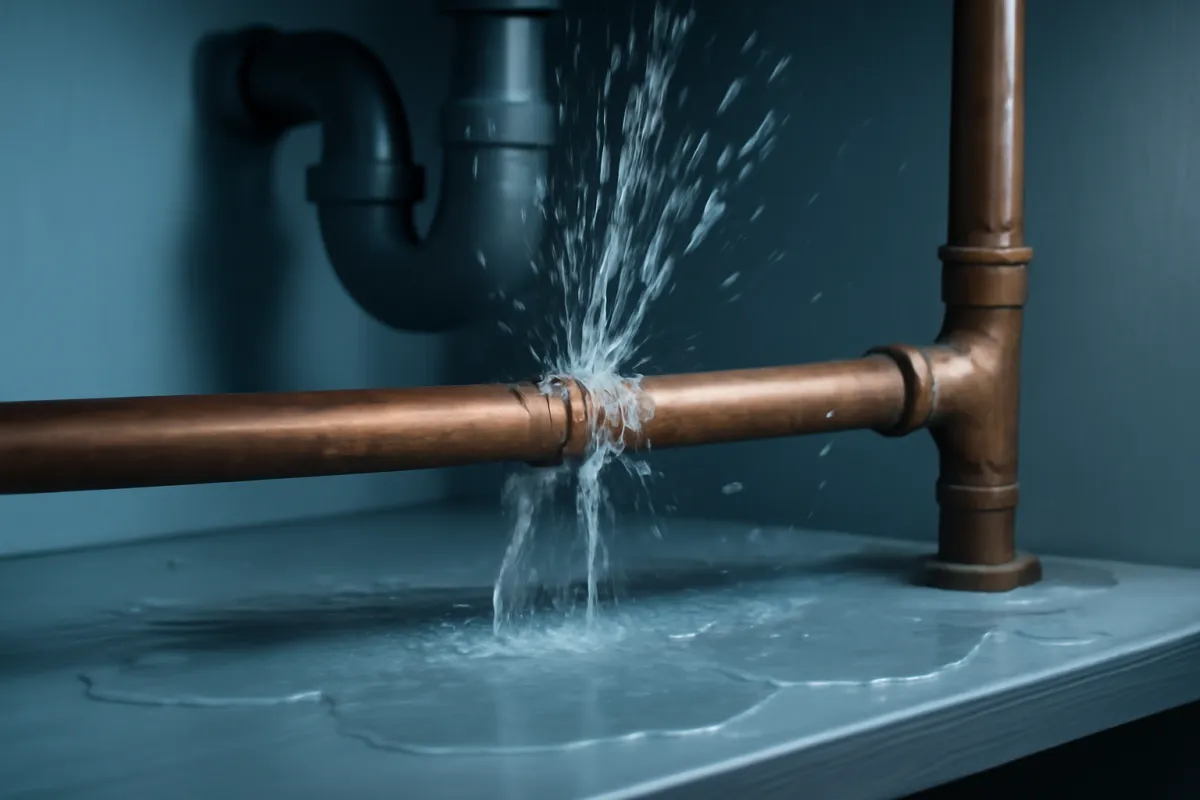
Does home insurance cover plumbing? Whether you phrase the search as does house insurance cover plumbing or will home insurance cover plumbing, the mechanics are the same, and the honest answer is that it covers half of a plumbing disaster, with homeowners routinely surprised by which half. A standard homeowners policy is built to pay for the water damage a sudden plumbing failure causes: the burst supply line that soaks a ceiling, the water heater that lets go and floods the utility room. It is not built to pay for the plumbing itself. The failed pipe, the corroded line, the repipe your plumber recommends, all of that generally stays on your side of the ledger, along with any damage from a leak that ran slowly enough that you could have caught it.
That split, the damage water causes versus the system that failed, plus the familiar sudden-versus-gradual line, decides nearly every plumbing claim, and this coverage note walks it end to end: burst and frozen pipes, slab leaks and tear-out, repiping, slow drips, sewer lines, water heaters, and the endorsements that patch the biggest gaps. The rules here sit on top of the source-of-water rules in our coverage note on water damage, and they connect to the mold cap covered in our coverage note on mold, since plumbing leaks are what feed most household mold. As you read, you can pressure-test your own numbers in the companion below.
Key takeaways
- Home insurance commonly covers the water damage a sudden plumbing failure causes, but generally not the repair of the pipe, fixture, or system that failed, which is treated as maintenance.
- The sudden-versus-gradual line decides everything: a burst pipe dried promptly is a covered loss, while a slow drip that ran for weeks is usually denied as neglect.
- Pipe replacement, repiping, and upgrades to aging galvanized or polybutylene plumbing are excluded as maintenance, even when a plumber calls the work urgent.
- Tear-out is the useful wrinkle: many policies pay to open a wall, floor, or slab to reach a failed pipe after a covered loss, even though the pipe repair itself is on you.
- Sewer backups and buried service lines are generally excluded on a standard form, and the endorsements that cover them are among the most practical add-ons a homeowner can price.
The short answer: does home insurance cover plumbing?
Here is the whole subject in one paragraph before the details. A standard homeowners policy treats plumbing as two separate questions. Question one: did a plumbing failure damage the home and its contents? If the failure was sudden and accidental, a burst pipe, a split supply hose, a water heater that ruptured, the resulting water damage is commonly covered, minus your deductible. Question two: who pays to fix the plumbing itself? Almost always you. The pipe that failed, the line that corroded, the system that needs replacing, all of it is treated as a maintenance cost, not an insured loss, no matter how sudden the failure was.
Layered over both questions is the timeline test that governs every water loss: sudden and accidental is covered, gradual is not. A pipe that bursts tonight and is dried tomorrow produces a covered claim for the damage. The same pipe weeping inside a wall for three months produces a denial, because the insurer reads a long-running leak as something routine attention should have caught (the Washington State Office of the Insurance Commissioner’s page on leaks and water damage draws the same sudden-versus-gradual line). So the practical shape of plumbing coverage is narrow but real: fast failures pay for their consequences, slow failures pay for nothing, and the hardware is yours either way. Every dollar figure in this coverage note is illustrative, chosen to show the shape of a claim rather than to quote any policy.
The damage water causes versus the plumbing itself
The distinction that surprises homeowners most is not sudden versus gradual, it is consequence versus cause. Insurance language often puts it this way: the policy covers the resulting damage from a plumbing failure, not the failed part. When a supply line bursts, the soaked drywall, the buckled floor, the ruined rug, and the drying bill are the resulting damage, and they are commonly covered. The supply line itself, the fitting that let go, and the plumber’s labor to replace them are the cause, and they are excluded as maintenance.
The logic is the same one that runs through the whole policy: insurance exists to absorb accidents, not to renew a home’s systems as they age. Pipes, valves, and water heaters wear out on a schedule, and a policy that paid to replace them would simply be a maintenance contract priced like one. What the policy sells instead is protection from the unpredictable consequence, the fact that a $300 pipe failure can cause an illustrative $10,000 of water damage in a night. Keep the two ledgers separate as you read this coverage note, because every scenario below sorts its costs into those same two columns: consequence, often covered; cause, almost never.
When home insurance covers plumbing damage
The covered category is built around abrupt failures. Typical covered origins include a burst or split supply pipe, a pipe that froze and ruptured while the home was heated, a washing machine or dishwasher hose that let go, a water heater that failed suddenly, an overflowing fixture caused by a sudden malfunction, and an accidental discharge from a plumbing appliance. In each case the water escaped in an event you could not have been expected to foresee that day, and the policy responds to the damage that water did to the structure and your belongings.
Two conditions run through all of these. First, promptness: you are expected to stop the water and dry the home quickly, because the policy imposes a duty to mitigate, and damage that grows from your delay can be carved out of the payment. Second, plausibility of suddenness: the adjuster will look at the failed part and the surrounding material to confirm the loss reads as abrupt rather than as the last chapter of a long leak. Meet both conditions and a plumbing water loss is one of the most routinely paid claims in homeowners insurance. The companion below will show you roughly what such a claim pays once your deductible is applied.
What a standard policy will not pay for
The excluded list is longer and it is where the expensive surprises live. A standard policy generally will not pay for: repair or replacement of the failed pipe, valve, fixture, or appliance itself; whole-home repiping or plumbing upgrades, whatever their urgency; damage from leaks that ran gradually over weeks or months; seepage of groundwater through the foundation; water or sewage that backs up through drains, absent an endorsement; the buried water or sewer service line between the house and the street, absent an endorsement; and damage traceable to neglect, such as a known drip left unfixed or a home left unheated in winter.
The pattern is consistent: slow, foreseeable, maintenance-flavored, or specifically excluded. Notice how much ordinary plumbing trouble lands on this list. The corroded galvanized lines a plumber warns you about, the running toilet, the aging water heater, the tree roots in the sewer lateral, none of it is insured on a standard form. That is not a defect in your particular policy; it is what the standard product is. The response is not to hope, it is to plan: maintain the system, price the two endorsements that close the backup and service line gaps, and keep an emergency fund for the hardware side of the ledger. Our broader coverage note on what home insurance covers places these exclusions in the full map of the policy.
Plumbing scenario by scenario: covered or not
Because the rules are easier to hold as cases than as clauses, here is the subject in one table. It is illustrative and general: your own policy wording and the facts an adjuster establishes control the real outcome, and every covered row still passes through your deductible.
| Plumbing scenario | Water damage covered? | The plumbing fix covered? |
|---|---|---|
| Supply pipe bursts suddenly, dried fast | Usually yes | No |
| Pipe freezes and ruptures, home heated | Usually yes | No |
| Pipe freezes, home left unheated and unoccupied | Often no | No |
| Washing machine hose fails abruptly | Usually yes | No |
| Water heater ruptures suddenly | Usually yes | No |
| Slab leak, sudden failure under concrete | Often yes, plus tear-out | No |
| Slow drip under a sink for weeks | No | No |
| Corroded pipes need repiping | No damage event | No |
| Sewer or drain backup, no endorsement | No | No |
| Sewer backup with endorsement | Yes, up to its limit | Varies |
| Buried service line fails, no endorsement | Generally no | No |
Read the right-hand column top to bottom and the lesson is blunt: the plumbing fix is essentially never covered, whatever the scenario. Read the middle column and the familiar water rules reappear: sudden events pay, gradual ones do not, and backups and buried lines need their own endorsements. The rows worth a second look are the frozen pipe rows, where your own conduct decides coverage, and the slab leak row, where tear-out coverage makes an otherwise brutal loss survivable. Each gets its own section below.
Does home insurance cover burst pipes?
Yes, for the damage, and it is the clearest case in the whole subject. A pipe that splits and releases water abruptly is the textbook sudden and accidental loss, and the soaked ceilings, walls, floors, and belongings are commonly covered after your deductible. Insurers pay burst-pipe water claims every day of the year; the claim is routine precisely because it fits the policy’s core design. What stays on your ledger is the pipe itself: the plumber’s bill to cut out and replace the failed section is a maintenance cost, usually a modest one next to the water damage.
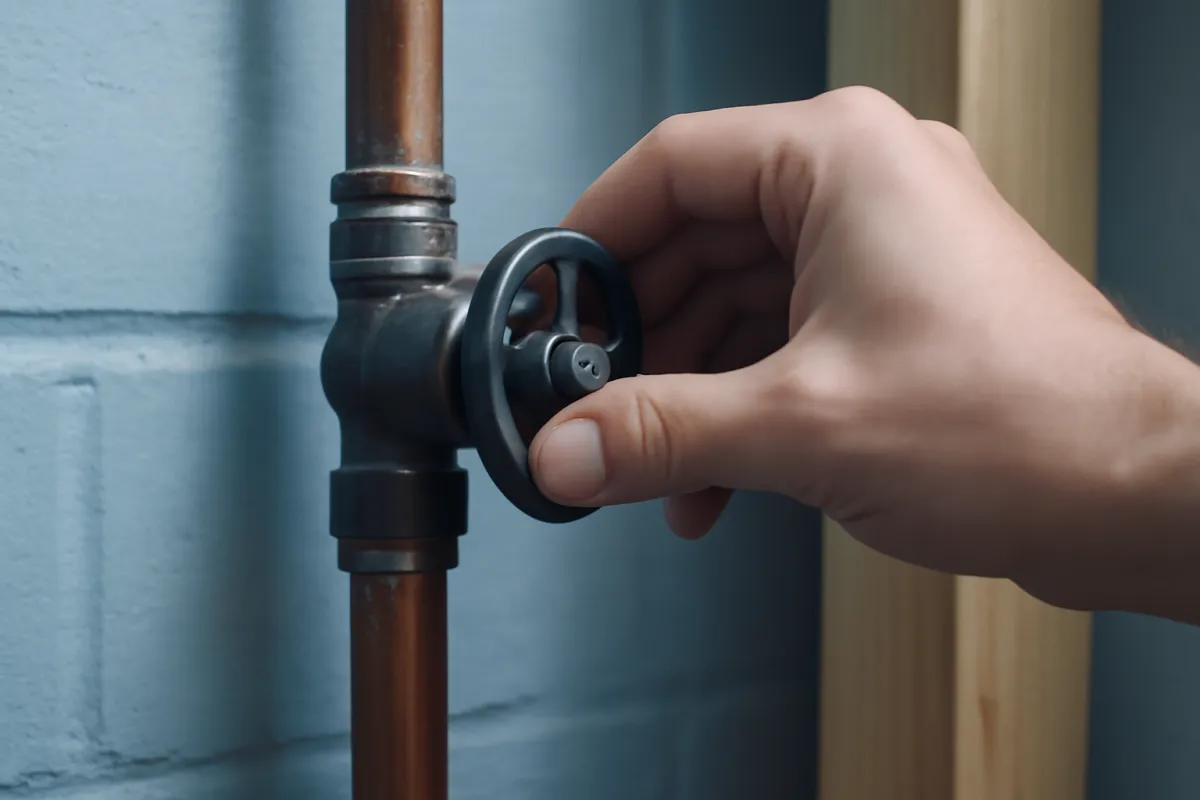
The practical risks to a burst-pipe claim are timeline and response. If the adjuster finds mineral tracks, long-term corrosion staining, or rot suggesting the pipe leaked slowly before it failed outright, the loss can be recharacterized as gradual and denied. And if you let the water sit, the damage attributable to your delay, including mold, can be carved out. So the playbook is simple: shut the water off at the main, photograph everything including the failed pipe before it is discarded, start drying immediately, and report promptly. Our water-damage note walks the burst-pipe claim in full detail.
Frozen pipes and the heat condition
A frozen pipe that ruptures is commonly covered, but it is the one plumbing scenario where the policy openly conditions coverage on your behavior. Most forms require that you used reasonable care to maintain heat in the home, or, if the home was vacant or unoccupied in cold weather, that you shut off the water supply and drained the system. Keep the furnace running through the cold snap and a pipe that freezes anyway is a covered accident. Leave for the winter with the heat off and the water on, and the same rupture is likely excluded as a failure of the stated condition.
This makes freeze losses unusually preventable, in the coverage sense as well as the physical one. Before travel in winter, keep the thermostat at a reasonable temperature, open cabinet doors on exterior walls, let vulnerable faucets drip in a hard freeze, and if the home will sit empty, shut off and drain the supply. Keep some record that you did, a thermostat setting, a smart-thermostat log, a note of the shutoff date, because the first question after a freeze loss in an empty house is what state you left the home in. The condition is written into the policy; meeting it is what keeps a frozen pipe on the covered side of the table above.
Does home insurance cover a slab leak?
Slab leaks are the scenario where the tear-out wrinkle earns its keep. When a pipe running beneath or within a concrete slab fails suddenly, the water damage to the home above is commonly covered, and many policies also pay the cost of tearing out and replacing the part of the slab needed to reach the failed pipe. That access coverage matters enormously, because breaking and restoring concrete is often the largest line on a slab leak invoice. The repair of the pipe itself, once reached, remains excluded, but it is usually the smallest number on the page.
The hazard with slab leaks is the timeline, because by their nature they hide. A slab leak often announces itself indirectly, a warm spot on the floor, an unexplained jump in the water bill, the sound of running water with everything off, and by the time it is found it may have run for a while. Whether the adjuster reads it as a hidden, undetectable leak, which some policies treat generously, or as a gradual loss you should have investigated sooner, depends on the wording and on how quickly you acted once the signs appeared. Investigate the warning signs the week you notice them, and document the date you did. If your home sits on a slab, read your policy’s tear-out and hidden-leak language now, before you need it.
Does home insurance cover pipe replacement or repiping?
No, and this is the answer that disappoints the most searchers, so it deserves its own plain statement. Replacing a failed pipe, rerunning a corroded line, upgrading old plumbing, and whole-home repiping are maintenance and improvement costs, and a standard homeowners policy does not pay for them under any ordinary circumstance. It does not matter that the plumber calls the work urgent, that the pipes are prone to failure, or that replacing them now would prevent a future covered claim. The policy insures against accidents; it does not fund the renewal of aging systems.
There is a modest silver lining hiding inside covered losses: tear-out. When a covered water loss requires opening a wall, ceiling, floor, or slab to reach the failed section, many policies pay for that access and for rebuilding what was opened, even though the pipe work itself is excluded. On a real invoice, the opening and closing of the structure is often most of the bill, so tear-out coverage quietly shoulders a large share of a covered plumbing loss. But it only attaches to a covered loss; there is no tear-out coverage for a preventive repipe. Budget for repiping the way you budget for a roof: a known, schedulable capital cost of owning the home, not an insurable event.
Slow leaks, drips, and gradual damage: why they get denied
The largest category of denied plumbing claims is not dramatic, it is slow. A supply line weeping behind drywall, a drain gasket seeping under a shower pan, a drip under the kitchen sink that ran for a month, all produce real damage and all are routinely denied, because every standard policy excludes damage from continuous or repeated seepage over time. The insurer’s reasoning is consistent: a leak that ran for weeks was findable, and the policy does not cover the consequences of deferred attention.
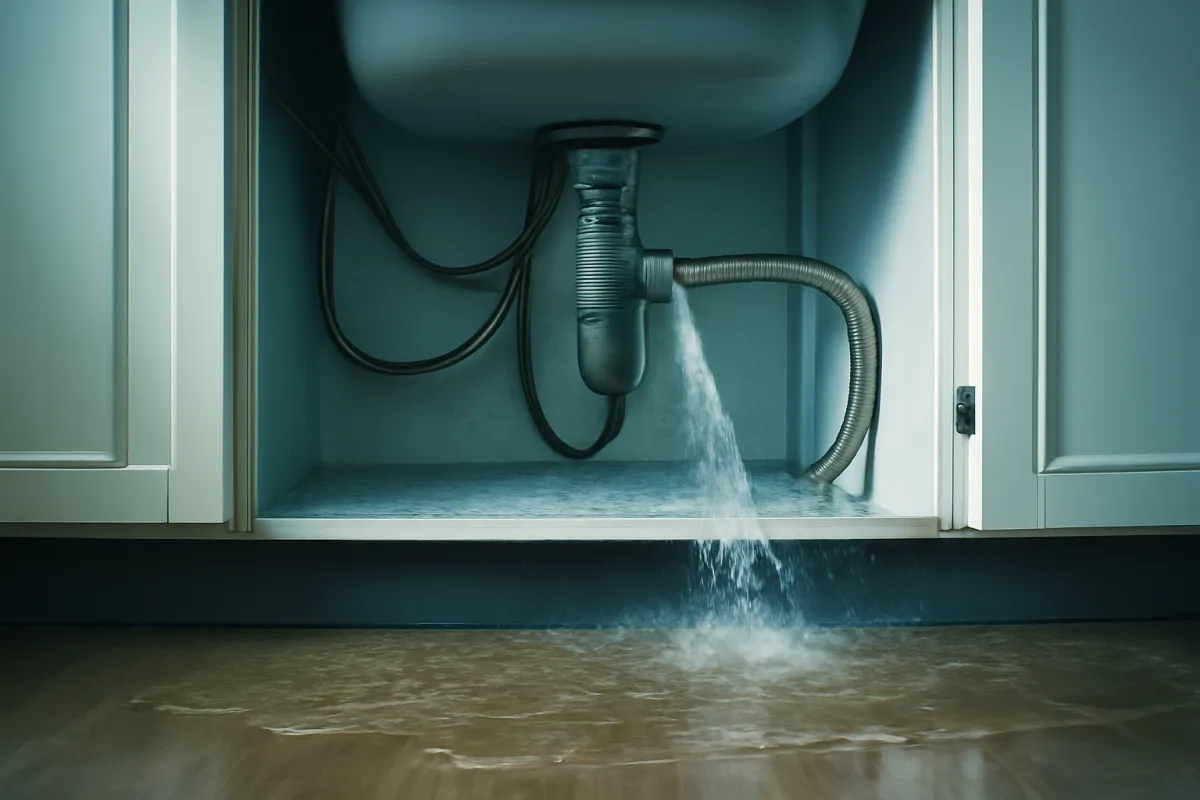
The gray zone is the genuinely hidden leak, water moving inside a wall or under a slab where no reasonable inspection would find it. Some policies expressly cover damage from a hidden, undetectable leak while still excluding the leaking part itself, and some do not; the wording varies more here than almost anywhere else in the form. Two habits protect you on both sides of the line. First, inspect the findable points, under sinks, behind toilets, at the water heater, at appliance connections, on a routine schedule, so slow leaks never get old. Second, the day you notice a sign of hidden moisture, act and document, because a homeowner who investigated promptly presents a far stronger claim than one who waited for the stain to spread. The mold that gradual leaks feed has its own cap and rules, covered in our mold note.
Sewer lines, drains, and backups
Two related exclusions catch homeowners here. The first is backup: water or sewage that comes up through drains, toilets, or a sump is generally excluded on a standard form, even though it is sudden, filthy, and expensive. The fix is a sewer or water backup endorsement, a modestly priced add-on that covers backup losses up to a stated limit (the Texas Department of Insurance’s home insurance guide lists backup of sewers or drains among the coverages you may need to add). It is one of the most frequently recommended endorsements in homeowners insurance and one of the most frequently skipped, usually discovered missing on the worst possible day.
The second is the buried service line itself. The water and sewer laterals running from your house to the street are yours to maintain, and they fail by root intrusion, corrosion, soil movement, and age, none of which is a sudden covered peril. A separate service line endorsement exists for exactly this gap, covering excavation and repair of buried lines up to a limit. If your home is older, or mature trees stand between the house and the street, these two endorsements are the most practical money in this whole subject: each typically costs an illustrative few dozen dollars a year against failures that can cost an illustrative five figures. Price both with your insurer, and confirm the limits, since backup endorsements in particular are often capped below the worst case.
Water heaters and sudden appliance failures
Water heaters sit squarely on the consequence-versus-cause line. When a tank ruptures or a fitting fails suddenly, the escaped water is a covered loss on the same footing as a burst pipe: the damaged flooring, walls, and belongings are commonly paid, minus the deductible. The water heater itself is not. A failed tank is an appliance at the end of its life, and its replacement is a maintenance cost, not a claim. The same logic applies to dishwashers, washing machines, ice maker lines, and every other water-connected appliance: the policy pays for what the escaping water ruined, not for the machine that let it escape.
Hoses deserve a special mention because they fail so often and so cheaply. A rubber washing machine hose that bursts while you are out can release water for hours, and it is one of the most common serious water losses in ordinary homes. The claim is commonly covered, but the smarter move is the $20 prevention: braided stainless supply hoses, replaced on a schedule, and the habit of running water-using appliances only while someone is home. Position matters too; a water heater or washer on an upper floor multiplies the damage below it, which is a reason to add a drain pan and a leak sensor there first. The companion below lets you see how fast an appliance loss outruns its deductible.
Old plumbing, galvanized pipe, and insurer scrutiny
The age and material of your plumbing affects more than your odds of a leak; it affects how insurers treat your home. Some materials, old galvanized steel that corrodes shut and springs leaks, and polybutylene, a once-common plastic with a known failure history, draw underwriting attention. Depending on the insurer and state, aging plumbing can mean pointed application questions, a required inspection, an exclusion for certain water losses, a higher premium, or reluctance to write the home at all. Insurers price what they expect, and old pipe is expected water damage.
This cuts two ways for a homeowner. Before a loss, it means honesty on applications matters: misdescribing your plumbing can give an insurer grounds to fight a later claim. After a repipe, it can work in your favor, since updated plumbing is a standard question on applications and updating it can improve your quote, one of the levers in our note on lowering your premium. It also reframes the repiping decision from the previous section: a repipe is not just a plumbing upgrade, it is an insurability upgrade, converting a home insurers squint at into one they price normally. If a plumber has flagged your materials, get the repipe quoted alongside a conversation with your agent about what it would do to your coverage and rate.
The deductible on a plumbing claim
Every covered plumbing loss passes through your deductible, and it comes off the top of the payment. Suppose a burst supply line does an illustrative $8,000 of water damage and you carry a $1,000 deductible: the policy pays about $7,000, and you absorb the first $1,000 plus the plumber’s bill for the pipe itself, which was never covered. The deductible is why small plumbing losses often are not worth filing at all: a $1,800 restoration against a $1,000 deductible recovers only $800, a recovery that can cost you a claims-free discount worth more than that over the next several years.
That math makes the deductible a genuine strategic choice for water-prone homes. A higher deductible cuts your premium every year but widens the band of plumbing losses you self-fund entirely; a lower one does the reverse. The right setting depends on your emergency fund, your home’s plumbing age, and your appetite for filing small claims, and the honest answer for many homeowners is a mid-range deductible plus the discipline to reserve claims for losses that clear it decisively. Our note on choosing a deductible runs that trade-off in full, and the companion below applies your own deductible to a plumbing loss of any size you set.
How to file a plumbing damage claim
A plumbing claim is won in the first hours, and the order of operations matters. First, stop the water: close the fixture’s shutoff or the main valve. Second, make the loss safe, cutting power to affected areas if water reached outlets or fixtures. Third, document before you disturb: photograph and film the failed pipe or hose, the standing water, and every damaged room and item. Keep the failed part itself if the plumber removes it, because a split hose or a burst fitting is physical proof of suddenness. Fourth, begin drying immediately, fans, dehumidifier, extraction, since the duty to mitigate is real and mold arrives within days.
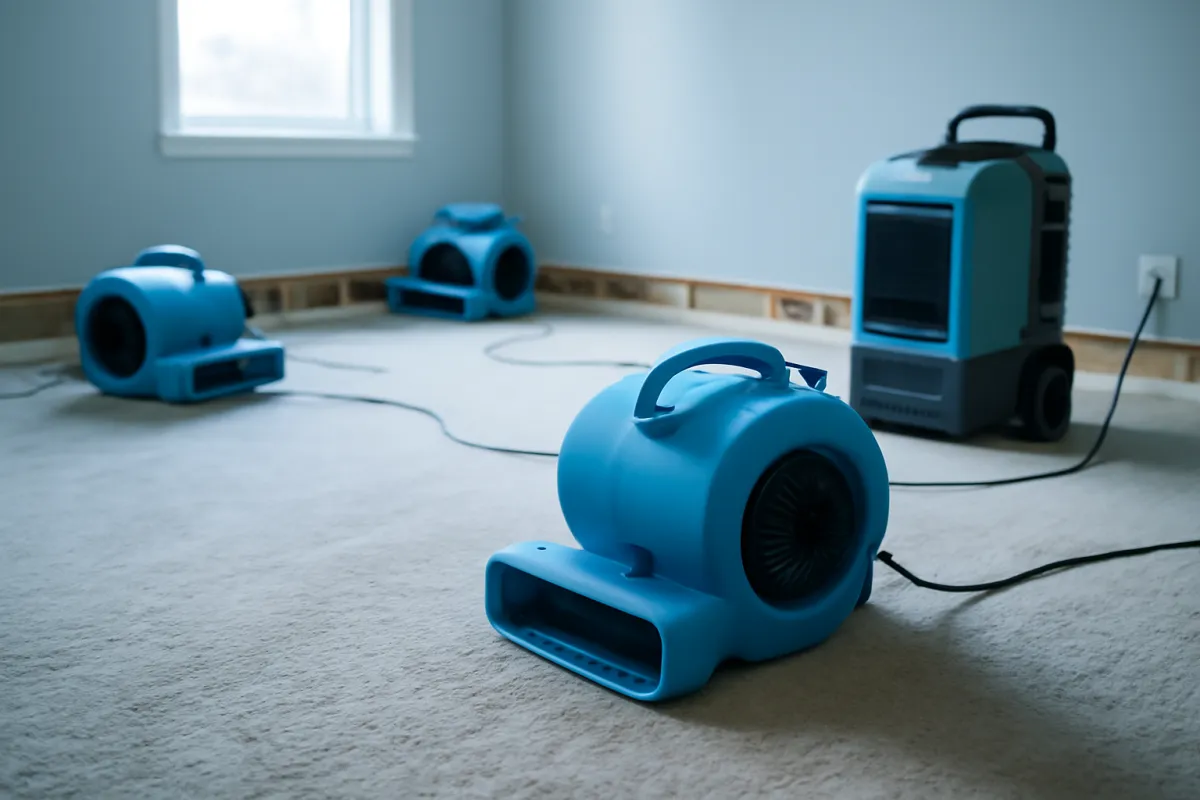
Then the paper side. Notify your insurer promptly and describe the loss as what it is, a sudden failure and its resulting damage. Keep receipts for emergency plumbing, drying equipment, and any restoration company, and write a short dated timeline while memory is fresh: when the failure happened, when you found it, what you did in each hour after. If the adjuster’s assessment feels short, you can push back with your documentation, and our note on filing a home insurance claim walks the full process, while our note on appealing a denied claim covers what to do if the answer comes back no.
Should you file at all? Small losses and your premium
Not every covered plumbing loss should become a claim, and the filing decision deserves one deliberate look at the numbers. A water claim lands on your CLUE loss history (Washington’s insurance commissioner CLUE page), can end a claims-free discount, and can nudge renewals upward for several years, because insurers watch water losses closely as a marker of recurring moisture risk. Against that stands what you would actually recover: the restoration cost minus your deductible, and nothing for the plumbing repair itself. For a loss that barely clears the deductible, the recovery is often smaller than the multi-year cost of the claim.
A reasonable rule of thumb, illustrative like everything here: when the covered damage is within a few hundred dollars of your deductible, self-fund and keep your record clean; when it is several multiples of the deductible, file without hesitation; in between, run the numbers. Two cautions temper the rule. Do not let a borderline loss go undried while you deliberate, because mitigation cannot wait for the filing decision. And never conceal a loss you later need to claim; the decision is file or self-fund, not file late. Our note on how a claim affects your premium walks the surcharge math behind this decision in detail.
How to prevent the plumbing claim entirely
Prevention is the highest-yield section of this coverage note, because the plumbing losses insurance handles worst, slow leaks, aging pipe, sewer trouble, are the most preventable. The routine: check under every sink, behind toilets, at the water heater, and at appliance connections on a schedule, monthly is plenty; replace rubber appliance hoses with braided stainless and renew them every few years; know where the main shutoff is and make sure everyone in the house can work it; keep the home heated in freezes and drain the system if it will sit empty; and watch the water bill, because an unexplained rise is often the first sign of a hidden leak.
Then the hardware. Point leak sensors are cheap and sit under sinks, behind the washer, and beside the water heater, alerting your phone at the first drip. A step up, an automatic shutoff valve on the main detects abnormal flow and closes the line whether you are home or not, and some insurers discount premiums for one. A drain pan under an upstairs water heater or washer, and insulation on pipes in unheated spaces, close two more common failure paths. None of this is expensive next to a single deductible, and every dollar of prevented loss also protects your claims record and, as our mold note explains, the far weaker coverage that mold gets when moisture lingers.
What a plumbing water loss costs, illustratively
Scale is what makes plumbing coverage matter, so hold some illustrative shapes in mind. A contained under-sink failure caught the same day might dry out for a few hundred dollars. A burst supply line that runs for an hour on one floor commonly reaches an illustrative few thousand once drying, drywall, and flooring are counted. A hose that fails while a house sits empty for a weekend, or a slab leak that saturates from below, can run well into five figures, with the tear-out and rebuild of finished surfaces dwarfing the plumbing repair itself. These are shapes, not quotes; your invoice will be its own.
Illustrative likelihood the water damage is covered, by plumbing scenario
A rough, illustrative sense of how a standard homeowners policy tends to treat the resulting water damage by scenario. The plumbing repair itself is excluded in every row. Actual outcomes depend on your policy wording, your response, and the facts of the loss.
Bars are scaled to the ~85% top figure. Sudden failures cluster at the top; conduct, timeline, and missing endorsements pull the bottom rows down. Even the top rows pay the resulting damage only, minus your deductible, never the pipe.
The chart is the whole subject compressed: the same house, the same water, and radically different outcomes driven by suddenness, your conduct, and whether an endorsement is in place. It is also why the prevention section above outranks every clause: the losses at the bottom of the chart, the ones coverage abandons, are the ones a monthly look under the sink and a $30 sensor mostly eliminate.
A worked example: one burst supply line, start to finish
Put the pieces together on one illustrative home. On a Tuesday evening, the cold-water supply line to an upstairs bathroom in the Ferreira home splits at a fitting. Water runs for roughly an hour before anyone notices, soaking the bathroom floor, the hallway carpet, and the ceiling of the kitchen below. They shut the main, photograph everything including the split line, call a plumber, and have drying equipment running by morning. The restoration scope comes to an illustrative $10,000: extraction and drying, replaced drywall and insulation in the kitchen ceiling, new bathroom flooring, and repainting. The plumber charges an illustrative $500 to replace the failed line, and the family carries a $1,000 deductible.
Now the money, in the two ledgers this coverage note started with. The resulting damage, $10,000 of it, is a covered sudden loss; after the $1,000 deductible the policy pays $8,500 of the restoration plus, in this illustration, $500 of tear-out needed to open the ceiling, for a total around $9,000. The cause, the $500 plumber’s bill for the line itself, is theirs, as is the deductible: about $1,500 out of pocket on an $10,500 disaster. Had the same line dripped for two months instead of bursting in an evening, the likely payment is zero. Same pipe, same water, different timeline. Run your own version, your restoration cost, your deductible, your cause, in the companion below.
Where the money lands in the worked example
The illustrative $10,500 burst supply line loss above, split into what the policy pays and what the homeowner absorbs between the deductible and the never-covered plumbing repair.
The three slices sum to the full illustrative $10,500 loss. In a prompt, well-documented sudden failure the policy carries most of the weight; the homeowner's share is the deductible plus the hardware, and it grows fast if the timeline slips.
The bottom line
Does home insurance cover plumbing? It covers the water damage a sudden plumbing failure causes, a burst pipe, a failed hose, a ruptured water heater, minus your deductible, and it does not cover the plumbing itself: no pipe repairs, no repiping, no upgrades, ever, on a standard form. Gradual leaks are denied on both ledgers, frozen pipes are covered only if you kept the home heated or drained, slab leaks often bring valuable tear-out coverage, and sewer backups and buried service lines need their own endorsements. The levers in your control are real: fast shutoff and drying, routine checks of the findable leak points, braided hoses and leak sensors, honest documentation, and a deliberate file-or-self-fund decision on small losses. Read the water and tear-out language in your own policy, price the backup and service line endorsements, and see the source-of-water rules in our water-damage note and the mold cap in our mold note. Then put your own numbers into the companion below so you know the likely shape of a plumbing claim before you ever have to make one.
This coverage note is educational material on how standard homeowners policies commonly treat plumbing failures and the water damage they cause; it is not insurance, legal, or financial advice and it does not describe any specific policy, including yours. Coverage for any real loss depends on your policy form’s exact wording, the endorsements you carry, the facts an adjuster establishes, and your state’s law, all of which differ between insurers and change over time. Every dollar amount, percentage, and scenario above is an illustrative construction meant to show how the sudden-versus-gradual line, the deductible, and the consequence-versus-cause split interact, not a quote, a prediction, or a promise of payment. Plumbing work itself can involve code and safety requirements this note does not address. Before acting on anything here, read your declarations page and full policy, ask your insurer how its water and tear-out provisions apply to your home, and rely on a licensed insurance professional, and where relevant a licensed plumber, who can see your actual documents and your actual pipes.
Frequently asked questions
Does home insurance cover plumbing?
Partly, and the split matters more than the yes or no. A standard homeowners policy commonly covers the water damage that a sudden, accidental plumbing failure causes, a burst supply line soaking the floor, a failed water heater flooding the utility room, and it commonly does not cover the plumbing itself. The pipe that burst, the corroded line that needs replacing, and any full repipe are treated as maintenance costs that belong to the homeowner. Gradual leaks, drips you should have caught, and wear-related failures are generally excluded on both sides. Every figure in this coverage note is illustrative; your own policy language and your state decide the real answer.
Does home insurance cover burst pipes?
The resulting water damage, usually yes. A pipe that splits suddenly and releases water is the textbook sudden and accidental loss a homeowners policy is designed for, so the soaked drywall, flooring, and belongings are commonly covered after your deductible. What the policy generally does not pay is the plumber's bill to repair or replace the failed pipe itself, because the pipe is treated as a maintenance item. Frozen pipes carry an extra condition: most policies require that you maintained heat or shut off the water if the home was unoccupied. Document the failure fast and dry the area promptly, since delay can turn a covered burst into a denied gradual loss.
Does home insurance cover pipe replacement or repiping?
Generally no. Replacing a corroded line, upgrading old galvanized or polybutylene plumbing, and whole-home repiping are treated as maintenance and improvement costs, not sudden accidental losses, so a standard policy excludes them even when a plumber says the work is urgent. The policy's job is to respond to the accident, not to renew the system that aged into one. The partial exception is tear-out: when a covered water loss requires opening a wall, floor, or slab to reach the failed section, many policies pay the cost of that access and the rebuild of what was opened, while still excluding the pipe repair itself. Read your own form's wording on tear-out and confirm with your insurer.
Does home insurance cover a slab leak?
Usually in part. When a pipe running under or through a concrete slab fails suddenly, many policies cover the resulting water damage to the home and, importantly, the cost of tearing out and replacing the portion of the slab needed to reach the failed pipe. What generally stays excluded is the repair of the pipe itself and any leak that an adjuster dates back weeks or months, since a slow slab leak reads as gradual damage. Slab leaks are also where wording differences between policies matter most, because tear-out language varies. If your home sits on a slab, it is worth reading that specific provision before a loss rather than after.
Does home insurance cover a leaking pipe under the sink?
It depends almost entirely on how long the leak ran. A supply line that fails abruptly and floods the cabinet is a sudden loss, and the resulting damage is commonly covered after the deductible. A drip that ran quietly for weeks, staining the cabinet floor and feeding mold, is a gradual loss, and insurers generally deny both the damage and the mold as maintenance issues you were positioned to catch. An under-sink leak is one of the most inspectable failure points in a home, which is exactly why adjusters scrutinize its timeline. Checking that cabinet on a routine schedule is both good prevention and the record that helps a genuine sudden failure get paid.
Does home insurance cover sewer line or drain problems?
Mostly no, on a standard form. Water or sewage that backs up through drains is generally excluded unless you added a sewer or water backup endorsement, which is a modestly priced add-on many homeowners skip. The buried sewer or water service line running from your house to the street is generally excluded too, since it fails by age, roots, and soil movement rather than by sudden accident; a separate service line endorsement exists for exactly that gap. If your home is older or has mature trees near the lateral, those two endorsements are among the most practical upgrades a homeowner can price. Confirm limits and exclusions with your insurer before assuming either is in place.
Will a plumbing claim raise my home insurance premium?
It can. Water-related claims draw more underwriting attention than a one-off wind loss because insurers read them as a sign of recurring moisture risk, and a claim can cost a claims-free discount or nudge the renewal upward. The claim also lands on your CLUE loss history, which follows you when you shop for coverage later. For a small loss that only modestly exceeds your deductible, self-funding the repair is often cheaper over several years than filing, especially since the plumbing repair itself would not be covered anyway. Run the math on the payout you would actually receive, the restoration cost minus the deductible, before you call, and treat the figures as illustrative.
How do I file a plumbing damage claim?
Stop the water first: close the fixture valve or the main shutoff, because you have a duty to mitigate and running water keeps growing the uncovered side of the loss. Photograph and film the failed pipe, the water, and every damaged surface and item before you clean up or let a plumber remove the evidence. Keep the failed section if you can, since it shows the failure was sudden. Then notify your insurer promptly, keep receipts for emergency drying and repairs, and write a short dated timeline of when the failure happened and what you did. A plumbing claim is won or lost on the story of suddenness, and documentation is how you tell it.

Hamza Hai is the editor of SumSured. She holds an MBA and reviews the site's articles against our editorial standards, checking that every figure is labelled for what it is, that nothing is presented as verified fact without a source the reader can check, and that the writing stays useful to a non-specialist.