What's in this note
- The short answer: does home insurance cover water damage?
- Sudden and accidental versus gradual: the distinction that decides everything
- What type of water damage is covered by homeowners insurance
- The water damage a standard policy does not cover
- Does home insurance cover a burst pipe?
- Burst pipes and freezing: the frozen-pipe wrinkle
- Does homeowners insurance cover water damage from rain?
- Is flooding covered by home insurance?
- Flood versus water damage: the crucial difference
- Does home insurance cover a leaking roof?
- Sewer and drain backup: the endorsement most people skip
- Sudden appliance overflow and water heater failure
- Gradual leaks, seepage, and neglect: why they get denied
- The deductible on a water damage claim
- How much coverage you need for water damage
- How do I file a water damage claim?
- How to prevent a water damage claim from being denied
- A worked example: one burst-pipe claim, start to finish
- The bottom line
Short answer: Usually yes when the water is sudden and accidental and comes from inside the home, such as a burst pipe, a failed water heater, or an overflowing appliance, and usually no when it is a flood from outside or a slow leak you could have caught. Flood always needs a separate flood policy, sewer and drain backup needs an endorsement, and every covered water loss still has the deductible taken off the top.
Does home insurance cover water damage? Usually yes when the water is sudden and accidental, like a burst pipe or an overflowing appliance, and usually no when it is a flood from outside or a slow leak you could have caught. The source and the suddenness decide everything, which is why one wet floor is paid and another identical one is denied.
That single distinction, sudden and accidental versus slow and gradual, is the spine of this whole subject, and it causes more denied claims than almost any other line in a homeowners policy. This coverage note walks each source of water in turn: the burst pipes and appliance overflows that are commonly covered, the floods and gradual leaks that are not, and the gray-area cases in between like roof leaks and sewer backups. It links our sibling notes as it goes, our coverage note on what a policy actually covers for the full picture, our flood-sizing note for the water that needs its own policy, our deductible note for what comes off every claim, and our coverage-sizing note for how much protection to carry. You can pressure-test your own numbers with the companion below as you read.
Key takeaways
- Home insurance turns on the source of the water: sudden and accidental internal water is commonly covered, while flood from outside and slow gradual leaks are not.
- A burst pipe, a failed water heater, and a sudden appliance overflow are the classic covered cases; a river overtopping its banks is the classic excluded one.
- Flood is never covered by a standard policy and needs a separate flood policy; sewer and drain backup is excluded unless you add a specific endorsement.
- Gradual leaks, seepage, and damage from neglected maintenance are typically denied because they are read as the homeowner's responsibility, not a sudden accident.
- Every covered water loss still has the deductible taken off the top, and an aging roof or older belongings may be settled at depreciated value.
The short answer: does home insurance cover water damage?
Here is the whole subject in one paragraph before we take it apart. A standard homeowners policy is built to pay for sudden, accidental, unexpected damage, so when water escapes suddenly from a system inside your home, a pipe, a water heater, a washing machine, a dishwasher, the resulting damage to your structure and belongings is commonly covered. When water reaches your home a different way, by rising from outside as a flood, or by seeping slowly through a leak you could have found, the standard policy generally does not pay, either because the peril is specifically excluded or because it falls on the maintenance side of the line. Coverage is not about how wet your floor is; it is about where the water came from and how fast.
Hold that frame as you read, because every section below is a variation on it. The covered cases share a signature: abrupt, accidental, traceable to a specific moment. The denied cases share the opposite one: slow, foreseeable, or sourced from outside the building envelope. Our broader coverage note on what home insurance covers sets water damage inside the six standard coverages, but for water specifically, the source is the entire game. Every dollar figure in this note is illustrative, chosen to show the shape of a payout rather than to quote your policy.
Sudden and accidental versus gradual: the distinction that decides everything
Insurers use two words over and over in water claims, and understanding them explains most outcomes: sudden and accidental. A sudden and accidental discharge of water is one that happens abruptly and without warning, a pipe that splits, a hose that ruptures, a tank that fails. That is the event a homeowners policy is designed to absorb. Its opposite is gradual damage: a slow drip, a weeping joint, a seeping seal, deterioration that builds over weeks or months. Gradual damage is treated as a maintenance problem, and maintenance is the homeowner’s job, not the insurer’s.
This is why two homes with identical-looking water damage get opposite answers. The house where a pipe burst last night has a sudden accidental loss and a strong claim. The house where a supply line wept behind the drywall for half a year has a gradual loss and a probable denial, because the insurer reasons that routine inspection should have caught it. The adjuster’s first questions, when did this start and what caused it, are aimed squarely at placing your loss on one side of this line. Everything that follows in this note is really about which side a given source of water tends to land on.
What type of water damage is covered by homeowners insurance
The covered category is more generous than many homeowners expect, as long as the water originated suddenly from inside the home. Commonly covered sources include a burst or frozen pipe, a ruptured washing-machine or dishwasher supply hose, a water heater that suddenly fails and releases its tank, a toilet or tub that overflows without warning, an air-conditioning or refrigerator line that abruptly lets go, and rain or snow that enters through an opening created by a sudden covered peril such as a windstorm tearing off part of the roof. In each case the water escaped a system unexpectedly, which is the trigger the policy is written for.
The covered category also usually extends to the cost of tearing out and replacing the material needed to reach the failed part, sometimes called access or tear-out coverage, even though the broken part itself, the pipe or the appliance, is generally not paid for. So a burst pipe claim commonly covers the soaked drywall, flooring, and cabinetry, plus the labor to open the wall, while you pay for the new length of pipe. The chart later in this note ranks these sources by how likely they are to be covered. For the full map of how water sits inside your other coverages, our coverage note lays out all six parts of the policy.
The water damage a standard policy does not cover
The excluded category is shorter but expensive, and it is where the painful surprises live. A standard policy generally will not pay for: flood, meaning rising water from outside the home; water that backs up through sewers or drains, unless you have added a specific endorsement; gradual leaks and seepage that caused damage over time; damage from a lack of maintenance or a repair you neglected; and, in many policies, water that seeps up through the ground or the foundation. The connecting logic is consistent: these are either catastrophic perils pooled separately, or slow and foreseeable events the policy expects you to prevent.
The dangerous exclusions are the ones people assume are covered until the claim is denied. A homeowner who watches a storm flood the street and pour into the basement often assumes the policy will respond, and is stunned to learn that rising outside water is the single clearest exclusion on the form. Another watches a stain spread on a ceiling and files a claim, only to have the adjuster date the leak back months and deny it as maintenance. Knowing this list in advance is the difference between planning around a gap, with a flood policy or a backup endorsement, and discovering it at the worst possible moment. Our flood-sizing note covers the biggest of these gaps in full.
Illustrative likelihood of coverage by water source
A rough, illustrative sense of how a standard homeowners policy tends to treat each source of water. Actual outcomes depend on your policy language, your maintenance, and the facts of the loss.
Bars are scaled to the ~90% top figure. The pattern is the whole lesson: sudden internal water clusters near the top, while flood and gradual leaks sit near the bottom, and sewer backup jumps from the floor to near the top the moment an endorsement is added.
Does home insurance cover a burst pipe?
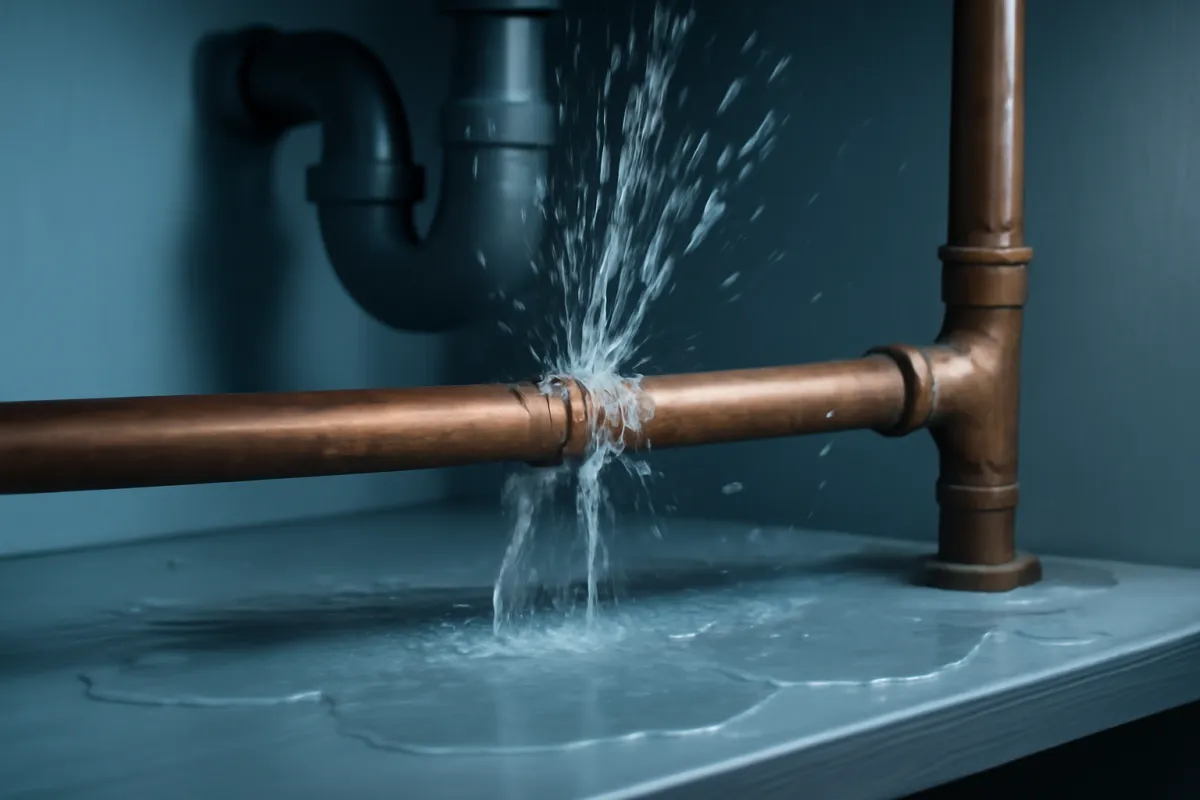
Yes, a burst pipe is the textbook covered water loss on a standard homeowners policy, precisely because it is sudden and accidental. When a supply line splits, a joint gives way, or a pipe cracks and releases water abruptly, the resulting damage to your walls, floors, ceilings, cabinetry, and belongings is commonly covered, along with the tear-out labor to reach the break. What the policy typically will not pay for is the broken pipe itself, which is treated as a repair, and any damage the insurer decides was caused by the pipe having leaked slowly beforehand rather than bursting outright. The full pipe-versus-damage split, including slab leaks, repiping, and tear-out, is walked in our coverage note on plumbing.
That caveat is the whole reason burst-pipe claims occasionally get denied. If an adjuster inspects and finds corrosion, mineral buildup, or staining that suggests the pipe had been weeping for a long time before it failed, the loss can be recharacterized as gradual and denied. The defense is documentation: if you can show the failure was abrupt, through photos, the timeline, and the condition of the surrounding material, the claim reads as sudden. Use the companion below to see roughly what a burst-pipe loss of a given size pays after your deductible, and read on for the frozen-pipe wrinkle that adds one more condition.
Burst pipes and freezing: the frozen-pipe wrinkle
Freezing deserves its own note because it is the one common way a burst pipe can be covered or denied depending on your behavior. When water freezes inside a pipe it expands and can split the pipe, and the sudden water release when it thaws is generally covered like any other burst. But most policies attach a condition: if the freeze happened because the home was left unheated and you did not use reasonable care to maintain heat or shut off and drain the water, the resulting damage can be excluded. The policy is drawing the sudden-versus-neglect line again, this time around whether you took basic precautions.
The practical implication matters most for vacant homes, vacation properties, and anyone traveling in winter. Leaving a house cold and unattended during a freeze, with the water on, is exactly the scenario a freezing exclusion is written to catch. Keeping the heat at a reasonable minimum while away, or shutting off the main and draining the lines for a longer absence, keeps a frozen-pipe loss on the covered side. It is a small habit that protects a potentially large claim, and it is one of the few water outcomes you directly control through a single decision before you leave.
Does homeowners insurance cover water damage from rain?
Rain is a perfect illustration of why the source matters more than the water. Rain that enters your home through an opening created by a sudden covered peril, for example a windstorm that rips shingles off the roof or a falling tree that punches a hole, is commonly covered, because the water intrusion follows directly from a sudden accidental event. The storm broke the building envelope abruptly, and the rain that came through is part of that covered loss. This is the storm-driven roof leak that homeowners are often relieved to find is paid.
Rain that gets in a different way, though, is treated very differently. Rain that seeps through an aging, worn roof that simply let go over time is a maintenance issue and usually denied. Rain that pools on the ground and rises into the home, or that overwhelms the drainage and floods in from outside, is not water damage at all in insurance terms; it is flood, and flood is excluded. So the same rainstorm can produce a covered loss through a wind-torn roof and an excluded loss through a flooded yard on the same night. The question is always how the water reached you: abruptly through sudden damage, or by rising from outside or seeping through neglect.
Is flooding covered by home insurance?
No, and this is the most expensive misunderstanding in the entire subject: a standard homeowners policy never covers flood. Flood has a specific meaning in insurance, water that rises and covers normally dry land from outside the home, whether from an overflowing river, a storm surge, a flash flood, or water pooling from an overwhelmed drainage system during heavy rain. That water is excluded on every standard policy, regardless of how sudden or unexpected the flooding was, because flood risk is geographically concentrated and catastrophically correlated, so it is pooled separately rather than folded into a standard policy.
Flood coverage is a separate purchase, historically through the National Flood Insurance Program and increasingly through private flood insurers, and it typically carries a waiting period, often around 30 days, before it takes effect. That waiting period is why buying flood coverage the week a storm is forecast does not work: it must be in place well ahead of the risk. If your home sits in or anywhere near a flood-prone area, price a separate flood policy as a normal part of your coverage rather than an afterthought. Our flood-sizing note walks the building and contents limits, the NFIP caps, and the below-grade traps in full, our note on what flood insurance costs puts illustrative premium ranges on that separate policy by risk zone, and the companion below will flag a flood cause as one a standard policy does not pay.
Flood versus water damage: the crucial difference
Because this distinction denies so many claims, it is worth isolating on its own. For insurance, flood and water damage are two different products. Water damage from a failed internal system, a pipe, an appliance, a water heater, lives on your homeowners policy and is commonly covered. Flood, meaning rising external water, lives on a separate flood policy and is never on the homeowners form. The cruel part is that the two can look identical on your floor: six inches of water in a basement is six inches of water whether it came from a burst pipe upstairs or a flooded street outside, but one is covered and the other is not.
The way to keep them straight is to trace the water to its origin. If it escaped a system inside the building suddenly, think water damage and think homeowners policy. If it rose from outside and came in at ground level, think flood and think separate policy. Sewer and drain backup sits in a third bucket that is neither, excluded on the standard policy unless you add an endorsement, which the next section covers. Getting the category right before a loss is what tells you which policies you actually need, and our broader coverage note places all three inside the standard exclusions. The category also decides which claim you file: rising external water goes through the flood insurance claim process, a separate walkthrough with its own deadlines and its own deductibles.
Does home insurance cover a leaking roof?
A leaking roof is the classic gray area, and it resolves, predictably, on the sudden-versus-gradual line. If a storm suddenly damages the roof, tearing off shingles or driving a branch through it, and rain enters through that fresh opening, the interior water damage is commonly covered as part of a sudden accidental loss. If the roof simply aged, with shingles curling and seals failing over years until water found its way in, the leak is a maintenance problem and usually denied. Insurers ask when the leak started and whether it traces to a specific weather event, because that answer decides everything. Our coverage note on a leaking roof walks the leak claim itself, the first-day response, the tarp, and the repair scope, in full.
There is a second wrinkle even when the leak is covered: the roof itself may be settled at actual cash value rather than replacement cost if it is old, which can turn a large roof repair into a much smaller check. The interior water damage is one question; how the roof material is valued is another, and both matter to your recovery. Our coverage note on actual cash value versus replacement cost runs the depreciation math that decides the roof half of this. To keep a genuine storm leak on the covered side, keep dated photos of your roof’s condition and any roofer inspection reports, so a sudden loss cannot be mistaken for years of neglect.
Sewer and drain backup: the endorsement most people skip
Sewer and drain backup is the sleeper gap that catches homeowners far from any floodplain. When a municipal sewer or your own drain backs up and pushes water, often contaminated, up into your basement or lower level, a standard policy typically excludes it. It is neither a sudden internal discharge nor a flood in the technical sense, so it falls into its own excluded bucket. The fix is a specific sewer-backup or water-backup endorsement, which is usually inexpensive and adds a modest limit of coverage for exactly this event.
The endorsement is one of the highest-value cheap add-ons on a policy, especially for a home with a finished basement, a sump pump, or older municipal infrastructure. Without it, a sewer backup that ruins a finished lower level can be a five-figure loss you absorb entirely. With it, the same loss is covered up to the endorsement’s limit, which is why the coverage chart above shows sewer backup leaping from near the floor to near the top the instant the endorsement is present. In the companion below, toggling the endorsement on a sewer-backup cause flips the likely-covered verdict, which mirrors exactly how this works in a real policy: the same water, a completely different outcome, decided by one line on your declarations page.
Sudden appliance overflow and water heater failure
Appliances are a leading source of covered water losses, and for the reassuring reason that their failures tend to be sudden. A washing machine whose supply hose ruptures, a dishwasher that overflows, a refrigerator ice-maker line that abruptly lets go, or a water heater that fails and dumps its tank all produce a sudden accidental discharge of water, the kind a standard policy commonly pays. The resulting damage to floors, walls, cabinets, and the belongings in the water’s path is generally covered, along with the tear-out to reach and dry the affected areas, while the appliance or hose itself is not.
The recurring exception is the same one that shadows every water loss: if the insurer finds the appliance had been visibly leaking for a long time, a hose that was cracked and weeping for months, a water heater that had been seeping at the base, the loss can be pushed back toward the gradual, maintenance side and denied. Rubber washing-machine hoses are a known failure point, and replacing them with braided steel lines on a schedule is cheap prevention that also keeps a future claim clean. When an appliance does fail suddenly, shut off the water, photograph the scene before you clean up, and file promptly, so the record clearly shows a sudden event rather than a slow one.
Gradual leaks, seepage, and neglect: why they get denied
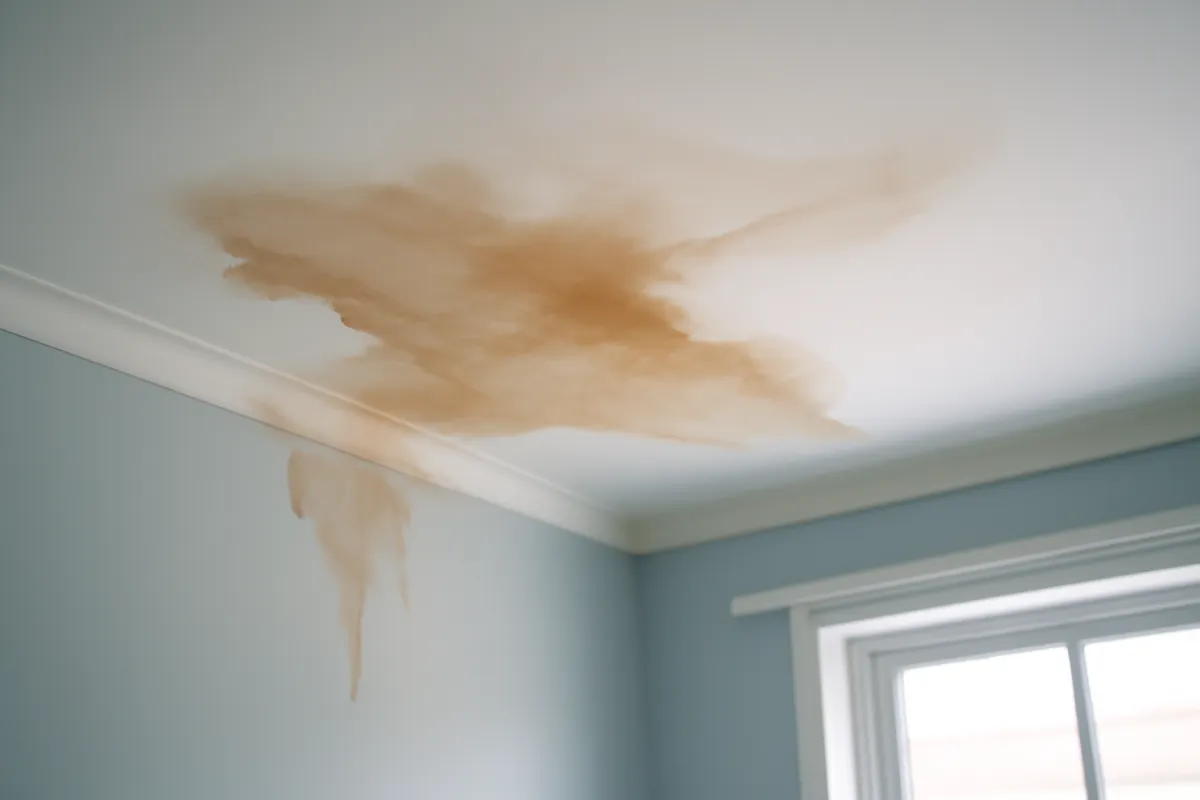
The largest category of denied water claims is not dramatic; it is slow. A gradual leak that wicks behind a shower wall, under a sink, or through an aging supply line, damaging the surrounding material over weeks or months, is denied because the policy reasons that routine attention should have caught it. Seepage of groundwater through a foundation, and general deterioration of plumbing that corroded over decades, land in the same excluded territory. The unifying principle is that insurance covers sudden accidents, not the slow, expected consequences of a home you are responsible for maintaining.
This is where documentation and habits earn their keep. Some policies do cover the damage from a leak that was genuinely hidden and undetectable, while still refusing to pay for the faulty part itself, so a leak inside a wall that you could not reasonably have seen may fare better than one under a sink you could inspect. Even so, the burden effectively falls on you to show the loss was not the product of neglect. Regular checks of the common failure points, under sinks, around the water heater, behind appliances, at supply-line connections, catch small leaks before they become large denied claims, and create the maintenance record that helps a borderline case read as sudden rather than gradual.
The deductible on a water damage claim
Even a fully covered water loss does not pay from the first dollar, because the deductible sits between you and every claim. On a covered $12,000 burst-pipe loss with a $1,000 deductible, the policy pays $11,000 and you absorb the first $1,000. The deductible applies per claim, not per year, so two separate covered water losses in one year each carry their own. Choosing the level is a genuine trade-off: a higher deductible lowers your premium but raises what you pay out of pocket when a loss occurs, which is exactly the math our deductible note runs in full.
There is a second reason the deductible looms large on water claims specifically: many water losses are small, in the low thousands, which puts them close to the deductible line where filing barely pays. A $2,500 water loss on a $2,500 deductible recovers nothing, and even a $4,000 loss on a $1,000 deductible recovers $3,000 while potentially raising your premium for years. Our note on how a claim affects your premium, our claim-cost note, shows why a modest water claim is often cheaper to self-fund than to file. The companion below subtracts your deductible from a covered loss so you can see the net recovery before you ever call.
How much coverage you need for water damage
Water damage does not have its own separate limit on a standard policy; it is paid out of your existing dwelling and personal-property coverages, which means sizing those correctly is how you make sure a water loss is fully paid. If your dwelling limit is set to the true rebuild cost, a serious water loss that requires gutting and rebuilding part of the home has room to be paid in full. If the dwelling limit is short, a large water loss can bump against it or trigger underinsurance penalties, the same 80 percent trap that afflicts any large claim. The rebuild figure is the anchor, and our coverage-sizing note walks how to set it.
Contents coverage matters just as much for water, because water losses are unusually destructive to belongings: soaked furniture, warped flooring, ruined electronics low to the ground. Whether those are paid at replacement cost or depreciated actual cash value is decided by a setting our actual cash value note explains, and it can dramatically change a water-claim check. The two add-ons worth pricing for water specifically are the sewer-backup endorsement and, if you are anywhere near rising-water risk, a separate flood policy. Start from a correct rebuild number with our replacement-cost estimator, then confirm your contents basis and your endorsements before a loss tests them.
How do I file a water damage claim?
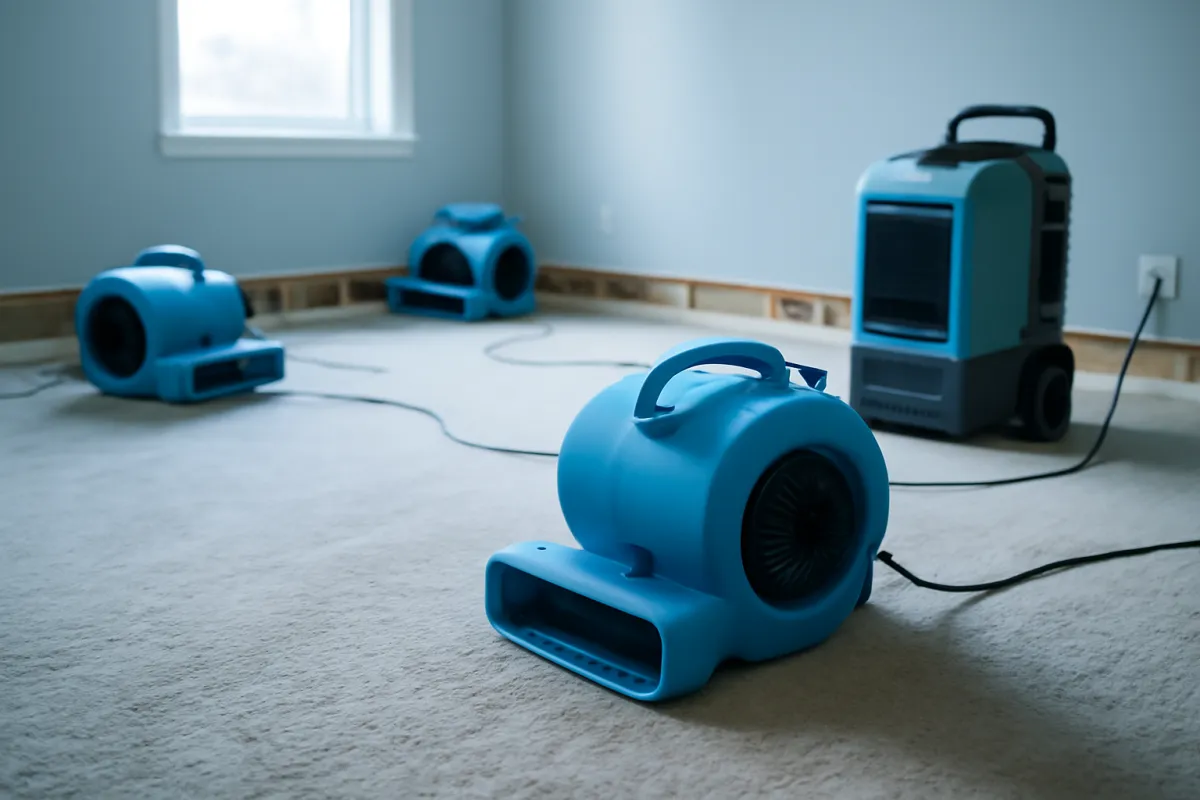
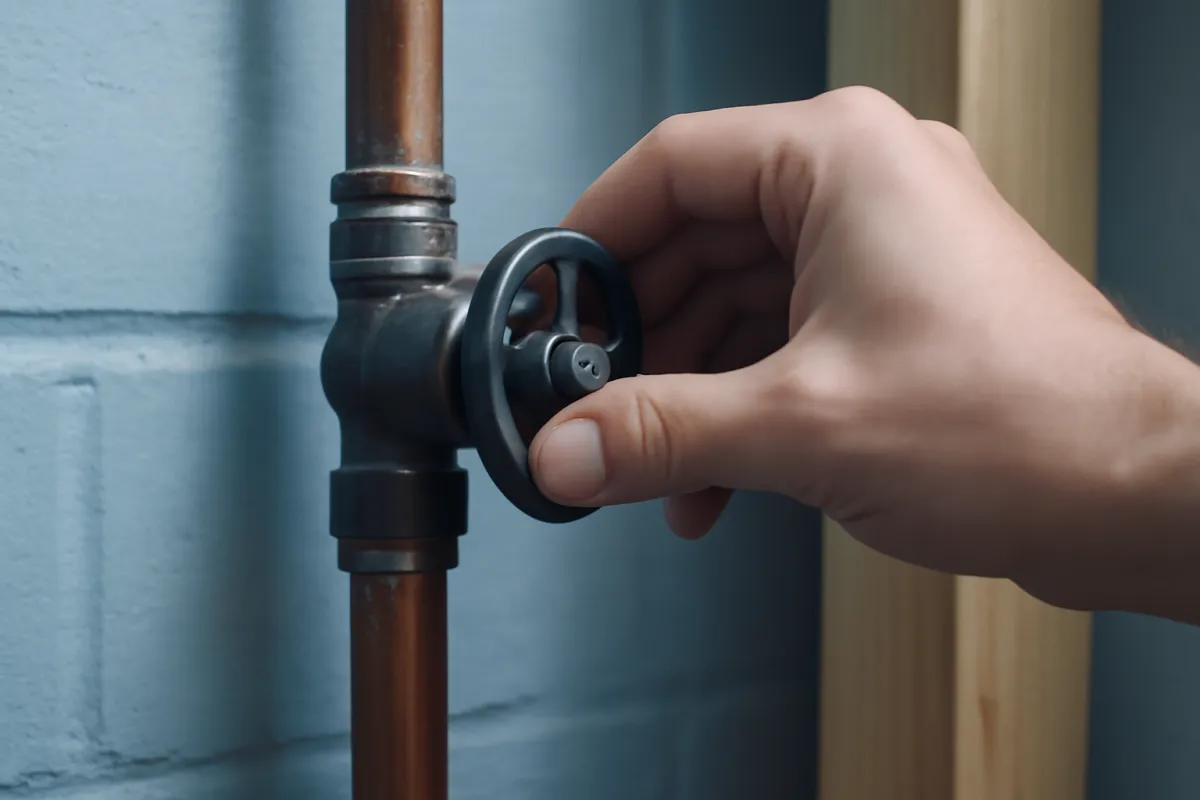
Filing a water-damage claim well is mostly about the first few hours. The steps, in order: first, stop the water at its source, shutting off the supply valve or the main to prevent further damage, because you have a duty to mitigate and unchecked water keeps causing loss the insurer may not pay for. Second, document everything before you clean up, photographing and filming the standing water, the source, and every damaged item and surface. Third, notify your insurer promptly, ideally the same day, and ask what they need. Fourth, begin reasonable drying and protect undamaged property, keeping receipts for anything you spend on emergency mitigation, which is often reimbursable.
From there, keep the file organized: a written timeline of when you discovered the loss and what you did, a running inventory of damaged belongings with their approximate age and value, and copies of every estimate and communication. Do not throw away damaged items until the adjuster has seen them or released you to do so, and do not begin permanent repairs before the inspection, though emergency drying and tarping are expected. If the loss is large, a licensed water-restoration company creates professional documentation that strengthens the claim. The companion below gives you a quick read on whether your cause is likely covered and what a covered loss pays after the deductible, so you walk into the call already knowing the shape of the outcome.
How to prevent a water damage claim from being denied
Most water denials trace to one of three findings, and each is preventable. The first is a gradual-damage finding, where the adjuster decides the leak was slow rather than sudden. You defend against it with maintenance records and by catching leaks early through routine inspection of the known failure points, so genuine sudden losses are not mistaken for neglect. The second is an excluded cause: a flood or a sewer backup with no endorsement. You defend against that in advance by buying the flood policy and the backup endorsement before you need them, closing the gap rather than discovering it.
The third is a mitigation or documentation failure: water left standing until mold grew, or a claim with no photos and no timeline. You defend against it by acting fast, shutting off the water, drying quickly, documenting before cleanup, and reporting promptly. Beyond claims, simple hardware prevents the losses themselves: braided steel appliance hoses, a water heater on a maintenance schedule, freeze precautions when the home is empty, and inexpensive water-leak sensors near the water heater, washing machine, and sinks that alert you before a drip becomes a flood. Prevention is cheaper than any deductible, and a clean, well-documented sudden loss is the kind insurers pay without a fight.
A worked example: one burst-pipe claim, start to finish
Put the pieces together on one illustrative home. On a cold January night, a supply line in an upstairs bathroom of the Ramos home splits and releases water for a couple of hours before anyone notices, soaking the bathroom floor, the ceiling and walls of the room below, and a bedroom’s worth of belongings. The total damage is assessed at an illustrative $12,000: about $9,000 to the structure and $3,000 to belongings. The Ramoses carry a $1,000 deductible, and their belongings settle on a replacement-cost basis. Because a burst pipe is sudden and accidental, this is a covered loss.
Now the money. The policy pays the covered loss minus the deductible, so on the $12,000 assessment the Ramoses recover an illustrative $11,000 and absorb the first $1,000 themselves. Because their contents are on a replacement-cost basis, an initial check may arrive at depreciated value with the remaining recoverable depreciation released after they replace the items and file proof, the two-step our actual cash value note explains. Had the identical water come from a flooded street instead of a burst pipe, the standard policy would have paid nothing, and only a separate flood policy would have responded. Same house, same $12,000, opposite outcome, decided entirely by the source of the water. Run your own version in the companion below by setting the damage, the deductible, and the cause.
What a water-damage claim payout looks like
An illustrative $12,000 covered burst-pipe loss with a $1,000 deductible, split into what you absorb, the first check, and the depreciation held back until you replace the items.
The three slices sum to the full $12,000 loss. Note that even a fully covered claim reaches you in pieces: the deductible never comes back, and the held-back depreciation arrives only after you replace the items and file proof before the deadline.
The bottom line
Does home insurance cover water damage? It covers sudden, accidental, internal water, a burst pipe, a failed water heater, an overflowing appliance, and rain that enters through sudden storm damage, and it does not cover flood from outside or slow gradual leaks and seepage that read as maintenance. The source of the water and the speed of the loss decide the answer, which is why one wet floor is paid and an identical one is denied. Fill the two biggest gaps before they find you: a separate flood policy for rising water, sized with our flood note, and a sewer-backup endorsement for the drain that is otherwise excluded. Set your dwelling and contents limits to cover a serious loss with our coverage-sizing note, understand the deductible that comes off every claim with our deductible note, and see the whole map in our coverage note on what home insurance covers. When water does strike, stop it, document it, and report it fast, and use the companion below to know the likely outcome before you call.
This coverage note is educational reading about how standard homeowners policies commonly treat water damage, not insurance, legal, or financial advice, and it does not describe your specific policy. Whether any particular water loss is covered turns on the exact wording of your policy, the endorsements you carry, the facts an adjuster establishes, and the laws of your state, all of which vary widely between insurers and forms. Every source-by-source likelihood, dollar figure, deductible, and payout above is an illustrative example chosen to show how the sudden-versus-gradual line works, not a quote or a promise of how any claim will be paid. Flood, sewer backup, mold, and roof valuation are treated very differently from one policy to the next. Before relying on anything here, open your declarations page and your full policy, read the water, flood, and exclusions language together, and confirm the details with a licensed insurance professional who can see your actual documents.
Frequently asked questions
Does home insurance cover water damage?
It depends almost entirely on the source of the water and whether the damage was sudden and accidental or slow and gradual. A standard homeowners policy commonly covers sudden internal water damage, such as a burst pipe, a failed water heater, or an appliance that overflows without warning, because those are abrupt accidental events. It does not cover flood, meaning rising water from outside the home, and it usually denies gradual leaks and seepage as maintenance problems. The same wet floor can be paid or denied depending purely on where the water came from, which is why the source is the first thing an adjuster establishes. Treat every figure here as illustrative and read your own policy language for the exact terms.
Does homeowners insurance cover water damage from a leaking roof?
A roof leak is covered when it is the result of sudden accidental damage, for example a storm that tears off shingles and lets rain in during the same event, and it is usually denied when the roof simply wore out and let water seep in over months. The distinction is the age-old sudden-versus-gradual line applied to the roof. Insurers frequently ask when the leak started and whether it traces to a specific storm or to deferred maintenance. Even when the interior water damage is covered, the roof itself may be settled on an actual cash value basis if it is old, which can shrink the check. Keep dated photos and any roofer reports so a genuinely storm-driven leak reads as sudden rather than neglected.
How long do I have to file a water damage claim?
Most policies require prompt notice, often phrased as reporting a loss as soon as reasonably possible rather than a fixed number of days, and they impose a separate duty to mitigate, meaning you must take reasonable steps to stop further damage right away. Waiting can hurt a water claim in two ways: the insurer may argue the delay allowed extra damage it will not pay for, and standing water quickly grows mold that carries its own low sub-limit. Practically, report the loss the same day you discover it and start drying and documenting immediately. Statutes of limitation for disputing a denial vary by state and are much longer, but they are a last resort, not a filing window. When in doubt, notify first and sort the details afterward.
Does insurance cover water damage from a slow leak?
Usually not, because a slow leak that damages a wall, floor, or cabinet over weeks or months reads as a maintenance issue rather than a sudden accident, and maintenance is the homeowner's responsibility. The classic denied claim is water that has been quietly wicking behind a shower, under a sink, or through an aging supply line long enough to rot the surrounding material. Some policies do cover the resulting damage from a leak that was genuinely hidden and undetectable, while still excluding the cost of fixing the faulty part itself, so the exact wording matters. The safest posture is to treat slow leaks as your job to catch early through routine inspection. Once discovered, a fast repair and good records give a borderline claim its best chance.
Will a water damage claim raise my premium?
It can, because water claims are among the most frequently filed and most closely watched by insurers, and even a single paid water claim can nudge your renewal upward or cost you a claims-free discount. The increase is not automatic and depends on the size of the claim, your prior history, and your carrier's rules, but water and mold losses tend to draw more scrutiny than a one-off weather event. A claim also lands on your CLUE history, which a future insurer can see when you shop. Our note on how a claim affects your premium walks the surcharge math and the file-or-not decision in detail. For a small loss close to your deductible, self-funding the repair is often cheaper over several years than filing.
Does home insurance cover mold from water damage?
Mold is usually covered in a limited amount when it results directly from a covered sudden water loss, and excluded or capped at a small figure when it grows out of a long-term leak or humidity problem. Many policies carry an explicit mold sub-limit, sometimes a few thousand dollars, that is far below what a serious remediation can cost. The logic follows the rest of water coverage: mold from yesterday's burst pipe that you dried quickly is treated as part of a sudden loss, while mold from a leak you left for months is treated as neglect. This is a large reason the duty to mitigate matters, because fast drying prevents the mold that your policy may barely cover. Check your declarations page for the specific mold cap that applies to you.
Is water damage from a broken washing machine hose covered?
Yes, in most cases, because a washing-machine supply hose that suddenly bursts and floods a laundry room or the floor below is a sudden accidental discharge of water, which is the kind of internal water damage a standard policy commonly pays. The same is true of a dishwasher that overflows or a water heater that fails and dumps its tank. Where it turns gray is if the insurer finds the hose had been visibly cracked and leaking for a long time, which pushes it back toward the maintenance line. Rubber supply hoses are a known failure point, so replacing them with braided steel lines on a schedule is cheap prevention. If one does let go, shut off the water, document the scene, and file promptly.
Does homeowners insurance cover tree damage?
Usually yes when a tree falls because of a covered peril and damages an insured structure, and this is a frequent companion to water claims because a tree through the roof is often how the rain gets in. If wind, a storm, the weight of ice or snow, or lightning brings a tree down onto your house, garage, or fence, a standard policy commonly pays to repair the structure and the resulting interior water damage, minus your deductible. Coverage gets narrower for the tree itself: removal of a fallen tree is typically covered only when it strikes an insured structure or blocks a driveway or a ramp for the disabled, and often under a modest sub-limit such as an illustrative few hundred to a thousand dollars per tree. A tree that simply falls in the yard and hits nothing, or one that comes down from rot or neglect the insurer views as a maintenance issue, is generally not covered. Whose policy responds when a neighbor's tree lands on your home is usually still your own, so document the damage and file promptly. Every figure here is illustrative and varies by policy and state, so confirm the limits with your insurer.
What is the difference between flood and water damage for insurance?
For insurance purposes, flood is a specific defined event: water that rises and covers normally dry land from outside the home, such as an overflowing river, a storm surge, a flash flood, or water pooling from an overwhelmed drainage system during heavy rain. Everything else that gets your home wet, a burst pipe, an appliance overflow, or rain entering through storm damage, is ordinary water damage. The distinction is not cosmetic, because a standard homeowners policy covers many kinds of water damage but never covers flood, which requires a separate policy through the National Flood Insurance Program or a private flood insurer. The confusing part is that identical-looking water on your floor can be covered or excluded depending only on whether it came from inside a failed system or from rising water outside. When the source is outside and rising, think flood, and think separate policy.

Hamza Hai is the editor of SumSured. She holds an MBA and reviews the site's articles against our editorial standards, checking that every figure is labelled for what it is, that nothing is presented as verified fact without a source the reader can check, and that the writing stays useful to a non-specialist.