
What's in this note
- Why claims get denied, and why most denials are answerable
- Before you start
- Step 1: Read the denial letter closely
- Step 2: Pin down the exact reason for the denial
- Step 3: Gather the evidence that answers that reason
- Step 4: Reread your policy and confirm your deadlines
- Step 5: Write the formal appeal letter
- Step 6: Escalate to your state insurance department
- Step 7: Consider a public adjuster or attorney
- A worked example: appealing a denied water-damage claim end to end
- Common mistakes that sink an appeal
- Troubleshooting: when the appeal does not go smoothly
- Your appeal checklist
- The bottom line
Short answer: To appeal a denied home insurance claim, read the denial letter for its specific stated reason, confirm your appeal window and suit-limitation deadline in writing, gather dated photos, independent contractor estimates, and the policy language that supports coverage, then send a calm, factual appeal letter answering that exact reason. If the insurer holds firm, a state department of insurance complaint costs nothing, and a public adjuster or attorney can help on a large loss.
How to appeal a denied insurance claim, or fight one you believe is wrong, starts with the same first move: a denial is a written position, not a verdict, and a written position can be answered. Insurers deny or underpay claims for specific, stated reasons, and every one of those reasons is a place where evidence, the policy language, and a calm, factual appeal can change the outcome. This walkthrough takes you from the moment the denial letter lands, through decoding exactly why the claim was refused, to building the evidence, writing the appeal, and escalating to your state if the insurer will not move.
By the end you will be able to read a denial for its real reason, assemble the documentation that answers that reason, write an appeal that asks for a specific reconsideration, and know when to bring in your state’s department of insurance or a licensed professional. Appealing a denial is the natural sequel to filing well, so if you have not filed yet, start with our home insurance claim walkthrough, and if outside water was involved, our flood-claim walkthrough runs on different rules. For the coverage picture behind any dispute, our note on what home insurance actually covers is the companion piece, and you can size up your own disputed gap with the companion below as you read.
Key takeaways
- The outcome: a documented, deadline-aware appeal that answers the insurer's exact stated reason, turning a flat denial or a low offer into a reconsideration you can actually win.
- The move that matters most: read the denial letter for its specific reason, because an excluded-cause denial, a missed-deadline denial, and a too-low estimate are each argued in completely different ways.
- A disputed claim is won on paper, not on the phone: dated photos, independent contractor estimates, and the policy language that supports coverage are what move an insurer, not frustration.
- Deadlines are the silent risk: your policy's suit-limitation clause and any appeal window vary by policy and state, so confirm yours in writing and calendar the earliest date before you start negotiating.
- You are not out of options if the insurer holds firm: a state department of insurance complaint costs nothing, and a public adjuster or coverage attorney can be worth it on a large or complex loss.
Why claims get denied, and why most denials are answerable
Before the steps, it helps to see the shape of what you are up against, because a denial is rarely arbitrary. Insurers refuse or reduce claims for a fairly short list of reasons, and naming yours tells you which tools to reach for. The most common reasons cluster into a few groups: the cause is excluded by the policy, such as flood, earth movement, or gradual seepage; the damage is attributed to wear, aging, or lack of maintenance rather than a sudden accidental event; a deadline or a policy condition was missed, such as late notice or an unmet duty to mitigate; the loss falls under your deductible; or the adjuster’s estimate simply scoped the damage too narrowly, which reads as a low offer rather than a denial. A smaller share come down to plain paperwork, a missing form, an unsigned proof of loss, or a clerical error.
The reason this matters is that each category has a different answer. An excluded-cause denial is won by showing the loss actually came from a covered event, which is often a factual question about where water came from or what triggered the damage; if the water genuinely rose from outside, the claim belongs on a separate flood policy instead, filed through the flood insurance claim steps rather than appealed on the homeowners form. A wear-and-neglect denial is answered with evidence that the event was sudden, such as dated photos and a contractor’s or plumber’s written opinion. A missed-deadline denial turns on the calendar and any reasonable explanation for timing. A too-low estimate is not really a denial at all and is disputed with your own line-item estimates. Because the fixes differ so much, the single most valuable thing you can do is identify which reason you are facing before you write a word of your appeal. Everything below is built around that idea.
Before you start
This walkthrough assumes you have received a written denial or a settlement offer you believe is too low, and you are ready to work the appeal rather than accept it. Gather these before you begin, because having them in hand turns a stressful letter into a checklist you can work:
- The denial letter or offer, in writing. If you only got the decision by phone, ask the insurer to send the reason in writing, because you cannot appeal a reason you cannot read. Every appeal is built on this document.
- Your full policy, not just the declarations page. You will need the actual coverage, exclusions, conditions, and any appraisal or suit-limitation language, so pull the complete policy booklet, not only the summary.
- Your claim file. Your claim number, the adjuster's name and contact, and copies of everything you already submitted: photos, inventory, receipts, and any estimates.
- Independent estimates or opinions. Where the dispute is about scope or cause, written estimates from licensed contractors, or an opinion from a plumber, roofer, or engineer, are the evidence that carries the most weight.
- A calendar and a paper trail. A single place to log every deadline, every call, and every letter, dated, because a disputed claim is won on documentation.
Time and difficulty: reading the denial and building the case takes a focused afternoon or two, and the full appeal commonly runs several weeks to a few months, depending on how many rounds it takes and whether you escalate. The work is not technical, it is methodical: identify the reason, answer it with evidence, submit in writing, and keep the calendar. Run your disputed figure through the companion below first so you know how large the gap is and whether it justifies a long process.

Step 1: Read the denial letter closely
The first step is the one people skip in the sting of getting a no, and skipping it wastes the whole appeal. Before you feel anything about the decision, read the denial letter slowly and find the exact sentence that refuses the claim, because that sentence, not your sense of unfairness, is what you have to answer. A proper denial letter names the specific reason and usually cites the policy provision it relies on, such as a particular exclusion or condition. Mark that sentence and write down, in your own words, precisely what the insurer is claiming: that the cause is excluded, that the damage is wear rather than a sudden event, that a deadline was missed, that the loss is below your deductible, or that the estimate is simply lower than your repair cost.
If the letter is vague, that is itself a problem you can act on. You are generally entitled to a clear, specific reason for a denial, so if the letter only says the claim is not covered without explaining why, call or write the insurer and ask, in writing, for the specific policy provision and the facts it relied on. Get the adjuster’s name, the date, and the exact language. An illustrative example: a letter that reads simply damage not covered under your policy is not a reason you can rebut until you learn whether the insurer means an excluded cause, a maintenance finding, or a scope dispute.
The watch-out here is emotional and practical at once: do not fire back an angry phone call before you understand the reason, because an off-the-cuff argument can lock you into a position or waive something you did not mean to. Read first, confirm the reason in writing, and note any deadline the letter mentions. Only once you can state the insurer’s reason in one clear sentence are you ready to answer it. Use the companion below to record the disputed amount while the letter is in front of you.
Step 2: Pin down the exact reason for the denial
Step one found the sentence; step two decodes what it actually means, because the same words can hide very different disputes, and each one is won differently. Take the reason you wrote down and sort it into a category, since that decides your entire strategy. If the insurer cites an exclusion, the fight is about cause: was the water a burst pipe (commonly covered) or rising flood water from outside (excluded and needing a separate flood policy), which is exactly the line our water-damage coverage note walks. If the insurer says wear, neglect, or maintenance, the fight is about whether the event was sudden and accidental rather than gradual. If it says late notice or a missed proof-of-loss window, the fight is about the calendar and any reasonable explanation.
Match the reason to the evidence it calls for, because answering the wrong question wastes time. An excluded-cause denial needs proof of what actually happened, dated photos, a plumber’s or roofer’s written opinion on the mechanism of failure, and the policy language showing the real cause is covered. A wear-and-neglect denial needs evidence of suddenness and of reasonable maintenance, such as service records or before photos. A missed-deadline denial needs your reporting timeline and any circumstance that explains it. A too-low estimate, which is not truly a denial, needs your own line-item contractor estimates set against the adjuster’s. Naming the category is what turns a vague grievance into a targeted rebuttal.
The watch-out is assuming the insurer is simply wrong without testing your own facts honestly. Sometimes the denial is correct: flood damage genuinely is excluded from a standard homeowners policy, and a loss below your deductible genuinely will not pay. Reading the reason honestly saves you from spending months appealing something the policy plainly excludes, and it tells you when the better move is a different remedy, such as a separate flood claim. Where the reason is a scope or value dispute rather than a coverage one, our replacement-cost versus actual cash value note explains how depreciation quietly shrinks an offer. Set the disputed gap in the companion below to see whether the amount justifies the fight.
Step 3: Gather the evidence that answers that reason
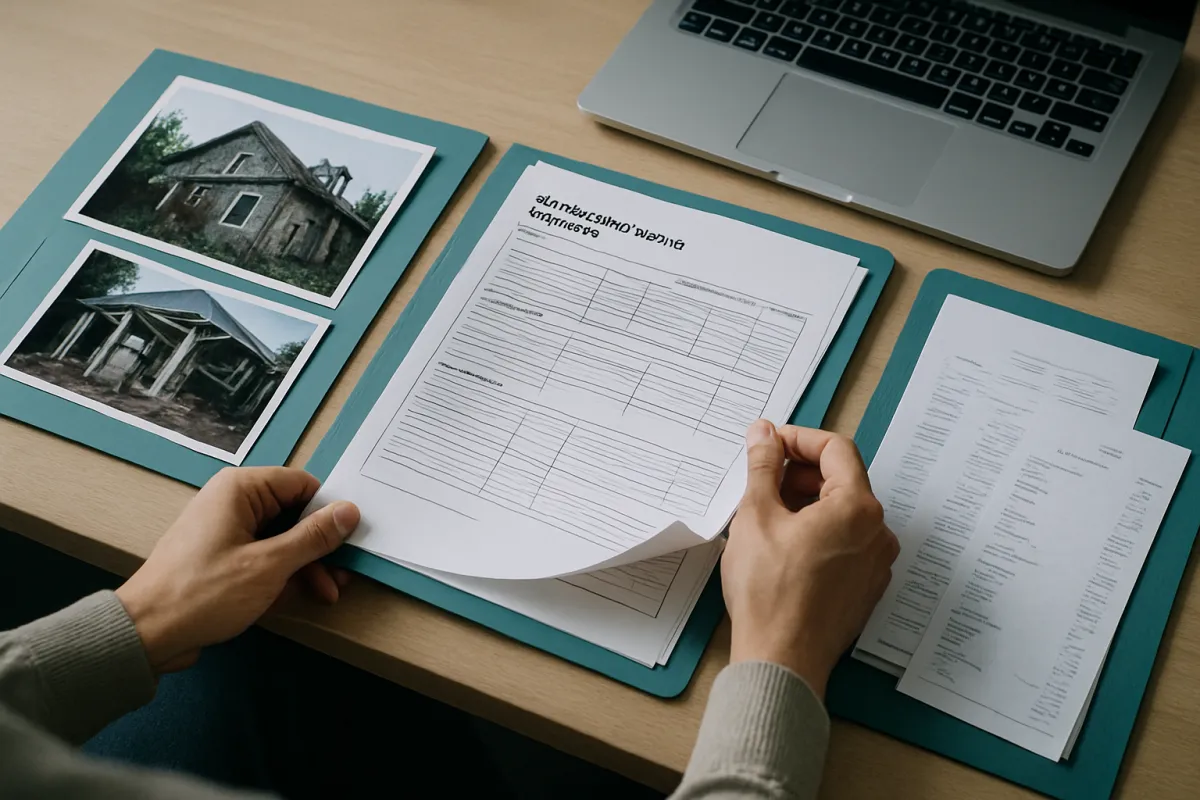
With the reason pinned down, step three is where the appeal is actually built, because a disputed claim is won on paper, not on the phone. Assemble a focused package of evidence that speaks directly to the insurer’s stated reason, and resist the urge to dump everything you have; a tight, relevant file reads as a stronger case than a thick, scattered one. Start with what you already submitted, then fill the gaps the reason exposes. For a cause dispute, that means dated photos and video of the damage and its source, and ideally a written opinion from a licensed tradesperson, a plumber, roofer, or engineer, describing what failed and why it was sudden. For a scope or value dispute, it means your own written, itemized estimates from licensed contractors.
Organize the evidence so it maps one to one against the reason. If the insurer said gradual wear, your file should lead with the evidence of suddenness: the timestamp on the photos, the plumber’s note that a supply line burst, the absence of prior damage in older pictures. If the insurer scoped the repair too narrowly, line your contractor’s estimate up item by item against the adjuster’s so the missing scope is obvious, whether it is water behind a wall, a full roof slope rather than a patch, or code-required upgrades. An illustrative example: the adjuster estimated 18,000 dollars, your two contractors independently estimated around 30,000 dollars, and the 12,000 dollar gap sits almost entirely in a roof section and interior drying the adjuster left out. That is a documented basis, not a complaint.
The watch-out is credibility. Independent, licensed, written estimates carry far more weight than a verbal figure or a number you produced yourself, and photos with visible dates or metadata beat undated ones. Keep originals, submit copies, and label everything clearly. If you built a home inventory, this is where it earns its keep; our note on creating a home inventory shows the level of detail that defends a contents dispute. The more specific and independent your evidence, the harder it is for the insurer to restate the same denial. Check the companion below to confirm the gap your evidence needs to cover.
Step 4: Reread your policy and confirm your deadlines
Before you write the appeal, step four sends you back to the policy itself, because your strongest argument is usually the insurer’s own contract, and your biggest risk is a deadline you did not know about. Read the full policy, not just the declarations page: the insuring agreement that says what is covered, the exclusions that say what is not, and the conditions that set the rules both sides must follow. Find the provision the denial cited and read it in context, because exclusions often have exceptions, and an exception can be exactly what puts your loss back inside coverage. An illustrative example: a policy excludes water damage from seepage but carves back coverage for sudden and accidental discharge, which is the difference between a denied slow leak and a covered burst pipe.
Then hunt down the deadlines, because they are the silent way an appeal dies. Look for a suit-limitation clause, which caps how long you have to take legal action if you disagree and can be as short as one to two years from the date of loss in some policies, though this varies by policy and state. Look for any proof-of-loss window and any internal appeal timeframe the insurer sets. Do not treat any figure you have heard as your deadline; read your own policy, ask the insurer in writing what its appeal window is, and confirm your state’s rules on its department of insurance website. Then calendar the earliest date you find, and work backward from it.
The watch-out is letting an informal negotiation lull you past a hard deadline. Insurers can take weeks to respond to each round, and a friendly back-and-forth can quietly run out the suit-limitation clock, which in many policies ends your options no matter how strong the case. If your deadline is close, say so in your appeal and ask the insurer to confirm in writing whether it will extend the timeframe while it reconsiders; do not assume it will. Two provisions worth checking for specifically are an appraisal clause, a formal way to resolve an amount dispute, and any requirement to submit a formal proof of loss, since missing that form is itself a denial reason. Confirm your policy’s specifics; the companion below flags how a tight deadline should raise your urgency.
Step 5: Write the formal appeal letter
Now you write, and step five is where preparation becomes a document the insurer has to answer in writing. Keep the appeal letter calm, factual, and specific, because its job is to make reversing the denial the easy and reasonable choice, not to vent. Open by identifying the claim: your name, policy number, claim number, date of loss, and the date of the denial you are appealing. State plainly that you are formally appealing the decision and ask for a written response by a specific, reasonable date. One clear paragraph of purpose beats three of grievance.
The body does the work, and it should track the reason you pinned down in step two. Name the insurer’s stated reason, then answer it directly with your evidence and, where you can, the policy language that supports coverage. If the denial cited wear, write that the damage was sudden and accidental, reference the dated photos and the plumber’s written opinion enclosed, and quote the policy’s coverage for sudden and accidental discharge. If the offer was too low, write that the scope was incomplete, reference your two enclosed contractor estimates, and identify the specific items left out and their illustrative cost, such as a 12,000 dollar gap in roofing and drying. List your enclosures. Close by asking for a specific action: reconsider the denial, revise the estimate to the enclosed scope, or explain in writing which evidence the insurer disputes and why.
The watch-out is tone and channel. Submit the letter in writing, by a method that creates a record, and keep a dated copy of everything you send and receive, because the paper trail is the case. Avoid threats, avoid legal conclusions you are not ready to back, and do not exaggerate the loss, since one inflated figure can undermine an otherwise solid appeal. Stay to the facts and the policy. If you are not comfortable drafting it, a licensed public adjuster or an attorney can write or review the letter, which we cover in step seven. Attach the disputed figure from the companion below so your specific ask is grounded in a clear number.

Where the disputed money sits in an illustrative appeal
An illustrative water-damage dispute: the homeowner believes the covered loss is worth 30,000 dollars after the deductible, the insurer first offered 18,000 dollars, and a documented appeal recovered part of the 12,000 dollar gap. Your policy, insurer, and state can move every figure.
Bars are scaled to the 30,000 dollar amount believed owed. The disputed gap is the difference between what you believe is owed and the first offer, and the recovery figure is an illustrative partial win, not a promise; some appeals recover all of a gap, some none.
Step 6: Escalate to your state insurance department
If the insurer holds the denial after your appeal, step six opens a door that costs nothing and often changes the tone: every state has a department or division of insurance that regulates the insurers licensed there and accepts complaints from policyholders. Filing a complaint does not force a payout the way a court can, and it does not guarantee a reversal, but it does require the insurer to respond in writing to a regulator about your specific claim, which frequently surfaces a clearer explanation, a second review, or a resolution the phone never produced. It is a low-cost, no-attorney step that also creates an official record of the dispute, which matters if you later escalate further.
The process is usually straightforward: you file online through your state department’s website, attaching your policy number, the denial letter, your appeal letter, and a short, factual summary of the disagreement and what you are asking for. Keep the summary as tight as your appeal, name the reason and your evidence, and let the documents speak. The regulator reviews the file, forwards it to the insurer, and requires a response within its own timeframe. An illustrative outcome: after a complaint, an insurer that had denied a water claim as gradual seepage takes a second look at the enclosed plumber’s opinion and reclassifies part of the loss as sudden and accidental. That is not guaranteed, but it happens, and the step is free.
The watch-out is expectations and jurisdiction. The department oversees whether the insurer followed the policy and the law, not whether you simply dislike the result, so a complaint works best when you can point to a policy provision or a handling problem, not just a number you wanted. Confirm your own state’s process, forms, and timelines on its official website, because they differ from state to state, and do not let the complaint timeline crowd out your policy’s suit-limitation deadline. If you believe the insurer acted in bad faith, denying without a reasonable basis or ignoring your evidence, note that in the complaint, and read on to step seven for when a professional belongs in the picture. The companion below helps you judge whether the disputed amount warrants escalating this far.
Step 7: Consider a public adjuster or attorney
Step seven is the judgment call about bringing in help, and it is not all or nothing: the right professional depends on the size of the loss and whether your dispute is about value or about law. A licensed public adjuster works for you rather than the insurer, typically for a percentage of the settlement, and earns that fee best on a large or complex property loss where the disagreement is about scope, pricing, and depreciation. They know how to build and price a claim and can take the documentation burden off you. On a small dispute, though, their percentage can eat most of what you might recover, so match the cost to the stakes.
An attorney experienced in insurance coverage is the better fit when the core issue is legal rather than numerical: whether an exclusion truly applies, whether the insurer breached the policy, or whether the handling crossed into bad faith, meaning the insurer denied without a reasonable basis. Many coverage attorneys offer a free initial consultation and can tell you quickly whether a case is worth pursuing, and some work on a contingency basis, taking a share only if you recover. An illustrative rule of thumb: if the disputed amount is large, the denial rests on a debatable legal reading, or the insurer has stopped engaging in good faith, a professional opinion is worth the call before your suit-limitation deadline approaches.
The watch-out is timing and paperwork. Do not wait until the last days before a deadline to seek help, because a rushed case is a weak one, and do not sign anything, an assignment of benefits, a contingency agreement, a public adjuster contract, before you understand exactly what it commits you to and what it costs. Be especially cautious of anyone who solicits you after a storm promising a guaranteed outcome. For most straightforward disputes, the sequence is: appeal yourself, file a state complaint, and only then bring in a paid professional if the amount justifies it. Weigh the professional’s likely fee against the disputed figure in the companion below before you commit.
A worked example: appealing a denied water-damage claim end to end
Walk one illustrative household through the whole process. The Okafor family returns from a weekend away to a soaked kitchen ceiling and warped flooring: a supply line to an upstairs bathroom failed while they were gone. They file a home insurance claim, but the insurer denies it, writing that the damage resulted from gradual seepage and long-term wear, which the policy excludes. The Okafors believe the covered loss, after their 2,000 dollar deductible, is worth an illustrative 30,000 dollars, and the insurer has offered nothing on the ceiling and floor, so the disputed gap is real and large.
Step one: they read the denial and mark the exact sentence, gradual seepage and wear, excluded. Step two: they sort it as a cause dispute, the insurer says gradual, they say sudden. Step three: they gather evidence that answers gradual, dated photos from the day they returned, a licensed plumber’s written opinion that a supply line burst suddenly rather than leaking for months, and two contractor estimates for the ceiling, drying, and flooring totaling an illustrative 30,000 dollars. Step four: they reread the policy and find it excludes seepage but covers sudden and accidental discharge of water, the exact exception their evidence supports, and they calendar the suit-limitation deadline so nothing lapses.
Step five: they write a calm appeal letter naming the reason, quoting the sudden-and-accidental coverage, listing the plumber’s opinion and the two estimates, and asking for reconsideration in writing by a set date. The insurer reviews it and revises its position, accepting the loss as sudden and offering an illustrative 27,000 dollars, recovering 9,000 dollars of the 12,000 dollar gap, with the remaining difference sitting in depreciation and a scope item still in discussion. Step six: unsatisfied with the last 3,000 dollars, they file a state department of insurance complaint enclosing the same evidence to push the remaining scope item. Step seven: because the remaining amount is now small relative to a public adjuster’s fee, they decide the complaint is the right final step rather than hiring help. Same denial, a largely recovered claim, because the reason was decoded and answered on paper. Set your own believed loss and offer in the companion below to see your version of this gap.
How the effort of an appeal is commonly spread
Illustrative shares of the work across the three phases of an appeal, from understanding the denial to escalating it. Real durations vary widely, and a contested cause dispute stretches the build phase most.
The three phases sum to 100 percent of an illustrative effort. The middle build phase carries most of the work, because a denial is reversed by the evidence and the policy language, not by the number of times you call.
Common mistakes that sink an appeal
Most failed appeals trace to a short list of avoidable errors. Watch for these:
- Appealing before you understand the reason. Arguing a general sense of unfairness instead of the insurer's specific stated reason wastes the strongest round you have. Decode the reason first, then answer that exact question.
- Fighting a denial that is actually correct. Flood damage genuinely is excluded from a standard homeowners policy, and a loss below your deductible will not pay. Read the reason honestly so you spend your energy where the policy actually supports you.
- Letting a deadline lapse. An informal negotiation can quietly run past your policy's suit-limitation clause, which in many policies ends your options. Confirm your deadlines in writing and calendar the earliest one before you start.
- Arguing on the phone instead of on paper. A disputed claim is won on documentation. Put every appeal in writing, keep dated copies, and treat calls as follow-ups to letters, not replacements for them.
- Submitting weak or your own unsupported figures. Independent, licensed, written estimates and dated photos carry weight; a number you produced yourself does not. Let credible third parties speak to cause and cost.
- Inflating the loss. One exaggerated figure can undermine an otherwise solid appeal and hand the insurer a reason to doubt the rest. Claim what you can document, and no more.
Troubleshooting: when the appeal does not go smoothly
What if the denial letter gives no clear reason? You are generally entitled to a specific reason, so write to the insurer and ask, in writing, for the exact policy provision and the facts it relied on. A vague denial is itself a weakness you can raise in a state complaint, and it is hard for an insurer to defend a refusal it never really explained.
What if the insurer just restates the same denial? Reread its response to see whether it actually addressed your evidence or simply repeated itself, because an unresponsive denial strengthens a complaint. Escalate to your state’s department of insurance, invoke your policy’s appraisal clause if the dispute is about the amount, and consider whether the pattern looks like bad faith worth an attorney’s opinion.
What if it is only the amount, not coverage, in dispute? That is often more winnable, because coverage is not contested. Line your own contractor estimates up item by item against the adjuster’s, submit the difference as a documented supplement, and ask whether your policy’s appraisal clause applies, since it can resolve an amount dispute without litigation. Depreciation is a frequent culprit, which our actual cash value versus replacement cost note explains.
What if I already accepted a payment? Cashing a check does not always close a claim, but it can in some situations, so ask the insurer in writing whether accepting a payment waives your right to seek more before you deposit it, and get the answer in writing. If you supplemented later after finding hidden damage, present the new evidence as an addition to the open claim rather than a new dispute.
What if my premium is the real worry? The claim, not the appeal, is what can affect your record, so appealing a claim you already filed does not add a separate mark. Whether the underlying claim moves your renewal depends on your insurer and state, which our note on how a claim can affect your premium walks, with every figure illustrative.
Your appeal checklist
Save this and work it top to bottom when a claim is denied or underpaid:
- Get the denial or the offer in writing, and read it for the exact stated reason.
- Sort the reason into a category: excluded cause, wear or neglect, missed deadline, below deductible, or a too-low estimate.
- Reread your full policy, find the cited provision in context, and look for exceptions that restore coverage.
- Find and calendar every deadline, especially the suit-limitation clause, and confirm the insurer's appeal window in writing.
- Gather a tight evidence file that answers the specific reason: dated photos, independent written estimates, and expert opinions.
- Line your contractor estimates up item by item against the adjuster's where the dispute is about scope or value.
- Write a calm, factual appeal letter that names the reason, presents the evidence, and asks for a specific reconsideration in writing.
- Submit by a method that creates a record, and keep dated copies of everything you send and receive.
- If the insurer holds firm, file a complaint with your state's department of insurance and enclose your evidence.
- Weigh a public adjuster or an attorney against the disputed amount, and act before your suit-limitation deadline approaches.
The bottom line
A denied home insurance claim is a written position, and written positions can be answered. Read the denial for its exact reason, decode which category it falls into, and build a tight evidence file that answers that specific reason rather than a general sense of unfairness. Reread your full policy for the exception that restores coverage and for the deadlines that can quietly end your options, then write a calm, factual appeal that asks for a specific reconsideration in writing. If the insurer holds firm, a state department of insurance complaint costs nothing, and a public adjuster or a coverage attorney can be worth the fee on a large or complex loss. If you have not filed yet, our home insurance claim walkthrough comes first, and for the coverage picture behind any dispute, our note on what home insurance covers is the companion piece. When a denial lands, run your disputed gap through the companion below so you know how large the fight is, and whether it is worth having, before you write a word.
This claim walkthrough is educational reading about how home insurance claim appeals commonly work, not insurance, legal, or financial advice, and it does not describe your specific policy, your denial, or your rights. Coverage, exclusions, conditions, appeal procedures, complaint processes, and deadlines such as suit-limitation clauses vary between insurers, between policies, and between states, and they change over time. Whether a denial is correct, and how any appeal is resolved, depends entirely on your own policy language and facts, so nothing here is a prediction that an appeal will succeed. Every dollar amount, timeline, and outcome above is an illustrative example chosen to show how the process fits together, not a quote, a deadline you can rely on, or a promise of recovery. Before you act, read your full policy and your denial letter, confirm your deadlines and your state’s process on your department of insurance website, and consult a licensed insurance professional, public adjuster, or attorney about your particular claim.
Frequently asked questions
How do I appeal a denied home insurance claim?
You start by reading the denial letter closely, because the stated reason is the exact thing your appeal has to answer, whether that is an excluded cause, damage attributed to wear or neglect, a missed deadline, or a scope narrower than the real loss. You then gather evidence that speaks to that specific reason, such as dated photos, independent contractor estimates, a written expert opinion, and the policy language that supports coverage. Next you write a calm, factual appeal letter that names the reason, presents the evidence, and asks for a specific reconsideration in writing, and you submit it within your policy's deadlines. If the insurer holds the denial and you believe it is wrong, you can escalate to your state's department of insurance and, for a large or complex loss, consult a licensed public adjuster or an attorney. Treat every figure and timeline here as illustrative, and confirm the exact process with your own insurer and your state's department of insurance, because rules vary by policy and by state.
How long do I have to appeal a home insurance claim denial?
There is no single nationwide deadline, and this is exactly the kind of time-sensitive fact you should verify rather than assume. Your policy usually contains a suit-limitation clause that caps how long you have to take legal action if you disagree, and it can be as short as one to two years from the date of loss in some policies, though this varies. Separately, the insurer may set its own internal appeal or reconsideration window, and your state's department of insurance has its own complaint timeframes. The safest habit is to read your denial letter and your policy for any stated deadline, ask the insurer in writing what its appeal window is, and calendar the earliest date you find. Do not let an informal back-and-forth run past a hard deadline, because a lapsed suit-limitation clause can end your options regardless of how strong your case is.
What are the most common reasons a home insurance claim is denied?
Denials commonly fall into a handful of buckets, and knowing which one you are facing shapes the entire appeal. The insurer may say the cause is excluded, such as flood, earth movement, or ordinary wear, or that the damage is maintenance and neglect rather than a sudden accidental event. It may say the claim was reported late or that a documentation deadline was missed, or that the loss falls under your deductible, or that a policy condition, like the duty to mitigate, was not met. Sometimes the issue is simpler: a paperwork error, a missing form, or an adjuster's estimate that scoped the damage too narrowly. Read the letter to identify which of these the insurer is asserting, because an excluded-cause denial is argued very differently from a too-low estimate or a missed-deadline denial. The reason is the map for everything you do next.
Can I appeal if my insurance offer is just too low rather than fully denied?
Yes, and a low offer is often more winnable than a flat denial because coverage is not in dispute, only the amount. When the insurer accepts the claim but offers less than the loss is worth, the gap usually sits in one of a few places: a repair scope narrower than the real damage, depreciation taken more aggressively than seems fair, or materials and labor priced below your local rates. You dispute a low offer by getting your own written contractor estimates, lining them up item by item against the adjuster's estimate, and submitting the difference as a documented supplement rather than a complaint. Many policies also include an appraisal clause, a formal process where each side names an appraiser to resolve a dispute over the amount of a covered loss. Ask your insurer whether your policy has one, because it can settle an amount dispute without litigation.
Should I hire a public adjuster or a lawyer to appeal a denial?
It depends on the size and the nature of the dispute, and it is not an all-or-nothing choice. A licensed public adjuster works for you rather than the insurer, usually for a percentage of the settlement, and can be worth it on a large or complex property loss where the disagreement is about scope and value. An attorney experienced in insurance coverage is the better fit when the issue is a legal question, such as whether an exclusion truly applies, or when you believe the insurer is acting in bad faith. For a small dispute, the fee can eat most of what you might recover, so many people first try appealing themselves and contacting the state department of insurance. Weigh the likely recovery against the cost, and remember that some attorneys offer a free initial consultation to tell you whether a case is worth pursuing.
What is the state department of insurance and how does it help?
Every state has a department or division of insurance that regulates insurers licensed to operate there and accepts complaints from policyholders. Filing a complaint does not guarantee the insurer will reverse its decision, and the department generally cannot force a payout the way a court can, but it does prompt the insurer to respond in writing to a regulator, which often surfaces a clearer explanation or a second look. It is a low-cost, no-attorney step that creates an official record of the dispute. You typically file online with your policy number, the denial letter, and a summary of the disagreement. Use it when you believe the insurer misapplied the policy or handled the claim unfairly, and confirm your own state's process on its official department of insurance website, because the name, forms, and timelines differ from state to state.
Does appealing a denied claim cost anything or raise my premium?
Appealing the decision yourself, by writing a letter and submitting evidence, generally costs only your time, and contacting your state's department of insurance is typically free. Costs appear only if you choose to hire a public adjuster, who takes a percentage of any recovery, or an attorney, who may work on a contingency or hourly basis. As for premium, the claim itself, not the appeal of it, is what can affect your record and future pricing, so appealing a claim you already filed does not add a separate mark. That said, the underlying claim can influence your renewal depending on your insurer and state, which is one more reason to weigh whether a small disputed amount is worth a long fight. Our note on how a claim can affect your premium walks that tradeoff, and every figure there is illustrative.
What if my appeal is denied again?
A second denial is not necessarily the end, though it does mean you should escalate rather than keep repeating the same letter. Reread the insurer's reasoning to see whether it addressed your evidence or simply restated the original reason, because an unresponsive denial is itself useful in a complaint. From there your options include filing or elevating a complaint with your state's department of insurance, invoking your policy's appraisal clause if the dispute is about the amount, or consulting an attorney about whether the denial breaches the policy or crosses into bad faith. Keep every document and every dated communication, because a disputed claim is won on paper. Above all, watch your policy's suit-limitation deadline so it does not pass while you exhaust the informal steps, since letting it lapse can foreclose the strongest option you have.

Hamza Hai is the editor of SumSured. She holds an MBA and reviews the site's articles against our editorial standards, checking that every figure is labelled for what it is, that nothing is presented as verified fact without a source the reader can check, and that the writing stays useful to a non-specialist.