What's in this note
- The short answer: does home insurance cover power surge damage?
- What counts as power surge damage
- Lightning strikes: the cleanest version of this claim
- The artificially generated electrical current peril
- Utility-grid surges, outages, and switching spikes
- When the cause cannot be pinned down
- Fried electronics, appliances, and HVAC control boards
- Settlement basis: actual cash value versus replacement cost on electronics
- The age of your electronics is most of the settlement
- Sub-limits: the cap that surprises people with a home theater or server rack
- Whole-house surge protectors and what they actually change
- Point-of-use power strips are not the same protection
- Power surge damage versus a home warranty
- Solar panels, inverters, and surge exposure
- Renters and condo owners: who pays for the fried television
- Documenting a power surge claim
- The deductible and whether a surge claim is worth filing
- Does a power surge claim raise your premium?
- A worked example: the storm that took out one house’s electronics
- The same night, no lightning recorded nearby
- Common mistakes people make with surge claims
- The bottom line
Short answer: Usually yes. A direct lightning strike is covered under the lightning peril, and a non-lightning power surge, such as one arriving through the grid, is typically covered under a separate named peril commonly worded as artificially generated electrical current. The catch is that many forms attach a lower sub-limit to that second peril for electronics, and most contents claims settle on depreciated actual cash value rather than full replacement cost, so an older television or appliance recovers far less than it costs to replace.
Does home insurance cover power surge damage? The short version is yes, through one of two named perils that sit on nearly every standard homeowners form. The long version is the one that actually decides what lands in your account after a storm fries the television, the router, the refrigerator’s control board, and the furnace’s circuit board in the space of one bad night. Two different perils can apply depending on what caused the surge, one of them commonly carries its own dollar cap separate from your regular contents limit, and almost every claim gets quietly shrunk by depreciation before the deductible is even subtracted.
This coverage note works through both perils in detail: lightning versus the artificially generated electrical current peril, the sub-limit that catches home offices and media rooms off guard, how actual cash value settles an electronics claim differently than a replacement cost quote would suggest, what a whole-house surge protector actually buys you, and how to document a claim when there is no scorch mark on the roof to prove anything happened. It leans on our coverage note on what home insurance covers for the full six-part map and our note on actual cash value versus replacement cost for the settlement mechanics that decide the final number. Size your own version in the companion below as you read.
Key takeaways
- A direct lightning strike is covered under the lightning peril, and a non-lightning surge is typically covered under a separate peril commonly worded as artificially generated electrical current, both standard on nearly every homeowners form.
- Many forms attach their own, smaller sub-limit to the artificially generated electrical current peril for personal property, often a few thousand dollars, separate from and well below the overall contents limit on the same policy.
- Most contents claims settle on actual cash value unless you carry a replacement cost endorsement on contents, and electronics depreciate quickly, so an older device recovers a fraction of what a new equivalent costs.
- Cause matters more than most people expect: a claim with no documented storm, outage, or utility event can stall while an adjuster tries to confirm the loss was sudden and accidental.
- A whole-house surge protector sometimes earns a modest premium credit, but its real value is preventing the loss in the first place, not the discount.
The short answer: does home insurance cover power surge damage?
Compressed before it gets taken apart: yes, in most ordinary situations, but which peril responds changes the details that matter. A lightning strike, whether it hits the house directly or strikes nearby and sends a surge through the wiring, is covered under the lightning peril, one of the oldest and least argued-over named perils on a standard form. A surge with no lightning at all, arriving instead through the grid from a utility event, a switching operation, or a neighboring transformer fault, is typically covered under a different named peril, commonly worded on the policy as sudden and accidental damage from an artificially generated electrical current.
Both perils exist on essentially every standard homeowners, condo, and renters policy in some form, so the question of whether you are covered at all is usually answered quickly. The harder questions are how much, because a sub-limit frequently applies to the second peril, and what, because actual cash value depreciation can cut a claim down well before the sub-limit or the deductible ever come into play. Our coverage note comparing HO-3 and HO-5 forms lists both perils in the standard named-perils set, which is worth reading if you want to see the exact company of perils this one keeps.
What counts as power surge damage
A power surge, in the plain-English sense people search for, is any abnormal spike in electrical current that overwhelms the components of a connected device and damages or destroys it. The visible symptom is usually a device that simply stops working, sometimes with a faint smell of burnt electronics, sometimes with no outward sign at all beyond a dead power light. Common casualties include televisions, routers and modems, computers and their power supplies, refrigerators and other appliances with digital control boards, garage door openers, furnace and air conditioner control modules, and increasingly, smart home devices and networked security systems.
What a surge is not, for insurance purposes, is a device that simply failed on its own from age or a manufacturing defect, since that is a mechanical or electrical breakdown question rather than a sudden external event, and it is generally outside both perils this note is about. The dividing line between a true surge and an internal failure is not always obvious from the outside, which is exactly why cause matters so much to how the claim is handled, a point this note returns to more than once.
Lightning strikes: the cleanest version of this claim
A confirmed lightning strike is, as insurance claims go, about as clean as this category gets. The lightning peril is named explicitly and almost universally on standard forms, it covers damage to the structure from a direct hit, and it covers the surge a nearby strike sends racing through the service line and into every outlet in the house. You do not need the lightning to have struck your own roof for the surge damage to be covered. A strike on a utility pole down the street, or on a tree at the edge of your property, can send a damaging pulse through the wiring without leaving a mark anywhere on the house itself.
The practical wrinkle with lightning claims is proof rather than coverage. When lightning scorches a roof or splits a tree, the cause is obvious. When lightning simply fries a cluster of electronics with no visible structural damage, the claim rests on circumstantial evidence: a thunderstorm that night, a neighbor’s report of a visible strike, or a utility record of a voltage event coinciding with a storm. None of that evidence is hard to gather if you think to gather it the same week, and it becomes much harder to reconstruct months later from memory.
The artificially generated electrical current peril
This is the peril that does the quiet, unglamorous work of covering everything lightning does not. Its wording varies by carrier, but it commonly reads close to sudden and accidental damage from an artificially generated electrical current, and our coverage note comparing HO-3 and HO-5 forms quotes very similar language as part of the standard named-perils list. The peril exists because damaging electrical spikes have more than one source: a utility switching operation, a fault on equipment somewhere on the grid, a surge that sometimes accompanies power being restored after an outage, or a wiring problem elsewhere in your own electrical system.
The word artificially is doing specific work here. It distinguishes a man-made electrical event, something happening inside the power system itself, from a natural event like lightning, which is why the two perils are named separately even though a homeowner experiencing either one just sees dead electronics. For coverage purposes the label usually does not change whether you are covered, since most forms carry both perils as standard, but it frequently changes how much, because of the sub-limit discussed next.
Utility-grid surges, outages, and switching spikes
A surge with no lightning anywhere near your property still has a cause, even when nobody in the house witnessed it. Utility equipment switches load around a grid constantly, and an equipment fault, a lightning strike miles away on a transmission line, or the moment power is restored after an outage can all send a voltage spike down the line into your home. Homeowners sometimes assume these events are somehow less covered than a direct lightning strike, and that is not generally true. The artificially generated electrical current peril is written broadly enough to reach exactly this scenario.
What is true is that many utilities keep records of voltage anomalies and outage events on their system, and requesting that record for the date and approximate time of your loss can be the single strongest piece of evidence in the file. A documented utility event converts an otherwise circumstantial claim, where an adjuster has to take your word that something abnormal happened, into one backed by the utility’s own data. Ask your utility’s customer service line whether such a report exists before you assume there is nothing to request.
When the cause cannot be pinned down
The weakest version of this claim is the one with no storm, no reported outage, and no utility record, just a cluster of dead electronics and a homeowner’s reasonable belief that something electrical must have happened. This is where claims genuinely stall, because both the lightning peril and the artificially generated electrical current peril require the loss to be sudden and accidental, and an adjuster’s job includes ruling out a slow internal failure that happened to be noticed all at once.
None of this means an undocumented claim is automatically denied. Multiple devices failing within the same narrow window, especially devices on different circuits or in different rooms, is itself meaningful evidence of a shared external cause rather than coincidental individual failures. What it does mean is that the burden of establishing cause falls more heavily on you when there is no independent record, which is exactly why the documentation habits later in this note matter even when nothing seems unusual enough to photograph at the time.
Illustrative likelihood a standard policy responds, by surge scenario
A rough, illustrative sense of how a standard homeowners policy tends to treat each scenario, before any sub-limit or deductible is applied. Actual outcomes depend on your policy form, your endorsements, your state, and the facts an adjuster can establish.
Bars are scaled to the ~95% top figure. The shape matters more than any single number: the peril itself is rarely the obstacle, the sub-limit and the documented cause are.
Fried electronics, appliances, and HVAC control boards
The category of property this peril reaches is broader than people assume. Televisions, computers, routers, and game consoles are the obvious ones, but a surge just as readily kills a refrigerator’s digital control board, a washing machine’s circuit module, a garage door opener’s logic board, a furnace or air conditioner’s control circuitry, and increasingly, the smart thermostats, doorbell cameras, and networked hubs that have become standard in a modern home. A single bad surge through the main panel can damage several of these at once, since they are all drawing from the same electrical system even though they sit in different rooms.
Appliances with both mechanical and electronic parts create a particular complication. A refrigerator with a fried control board but an undamaged compressor is usually a repair, not a replacement, while the same surge in an older unit might total it economically even if the compressor survived. Document the specific component that failed where you can, since a technician’s diagnosis naming the damaged part is stronger evidence than a general description of an appliance that stopped working.
Settlement basis: actual cash value versus replacement cost on electronics
This is the mechanism that most changes what actually lands in your account, and it has nothing to do with which peril applied. Most personal property claims settle on actual cash value unless your policy specifically carries a replacement cost endorsement on contents, and our coverage note on actual cash value versus replacement cost works through the general mechanics in full. For electronics specifically, actual cash value means the depreciated value of the item at the moment it failed, not what a new equivalent costs today, and electronics are commonly depreciated on a relatively short assumed useful life.
The practical result surprises people who have not filed this kind of claim before. A four-year-old television that cost $1,200 new and still worked perfectly the morning of the surge might settle for a few hundred dollars under actual cash value, because the depreciation schedule treats consumer electronics as losing value quickly regardless of how well the specific unit was actually functioning. If you carry a replacement cost endorsement on your personal property, the gap narrows considerably, though you may still need to front the depreciated amount first and recover the rest after you actually replace the item and submit receipts, a two-step process called recoverable depreciation that is worth confirming on your own policy.
The age of your electronics is most of the settlement
Because actual cash value is driven almost entirely by age, the single most important number in a power surge claim is often not the replacement cost of what was damaged but how old it was. A one-year-old laptop and a nine-year-old laptop can suffer identical surge damage and recover wildly different amounts, even against the identical replacement cost new, because the depreciation applied to each is different. This is uncomfortable in a way other claims are not, since nothing about your maintenance or carelessness caused the gap. An old device that worked fine the day before is simply worth less on paper than it was to you in practice.
The honest response is to treat age as a planning input rather than a surprise discovered after a claim. If a home office or media room holds several thousand dollars of aging equipment, knowing in advance whether your policy carries a replacement cost endorsement on contents, and what that endorsement would add to your premium, is a conversation worth having with your insurer before a storm rather than after one. Run your own items and their ages through the companion below to see the gap on your own numbers.
Sub-limits: the cap that surprises people with a home theater or server rack
Beyond depreciation, a second ceiling can apply specifically to property damaged by the artificially generated electrical current peril. Many forms name a sub-limit for this peril, separate from and typically well below the overall personal property limit on the same policy, commonly cited in the low thousands of dollars. The logic insurers apply is that electronics are a concentrated, fast-growing category of loss, and a dedicated cap keeps one bad surge from drawing deeply against the broader contents limit meant to cover furniture, clothing, and everything else in the house.
This is where a home office, a media room, or a household running several thousand dollars of networked equipment can be caught badly off guard. A sub-limit sized for an ordinary mix of household electronics can be exhausted by a single claim involving a large television, a home theater system, and a desktop workstation, even though the household’s overall personal property limit has plenty of room left. Whether a sub-limit even applies to your policy, and what it is set at, is printed in the personal property or conditions section rather than on the declarations page summary, so it is worth reading directly rather than assuming.
Where an illustrative $9,000 electronics loss gets paid
One illustrative household with four-year-old electronics, a $1,000 deductible, and no separate sub-limit applying because the loss traces to a direct lightning strike rather than a grid surge.
The three slices sum to the illustrative $9,000 total. Depreciation, not the deductible, is the biggest single cut on an electronics claim, which is the opposite of what most structural claims look like.
Whole-house surge protectors and what they actually change
A whole-house surge protection device, installed at the main electrical panel by a licensed electrician, is designed to intercept a damaging spike before it ever reaches your outlets, rather than after the fact the way an insurance claim does. It will not stop a direct lightning strike from doing structural damage to the house itself, but it meaningfully reduces the odds that a grid surge or a lesser lightning-induced spike reaches your television, your HVAC control board, and everything else plugged in.
On the insurance side, some carriers offer a modest premium credit for a permanently installed whole-house unit, sometimes bundled into a broader protective-device or smart-home discount, though availability and the size of the credit vary considerably by carrier and state and are not something to assume without asking. The stronger argument for installing one has little to do with the discount. Preventing a $9,000 electronics loss is worth more than any realistic premium credit, and it also means not spending a deductible, not losing a claims-free discount, and not having a surge claim on your record at your next renewal, a cost our note on how a claim affects your premium covers in general.
Point-of-use power strips are not the same protection
A power strip with a built-in surge suppressor, the kind sold at any hardware store, protects only what is plugged directly into it, and only up to its own rated capacity, which is typically far smaller than the energy a serious lightning-induced surge can carry. These devices are genuinely useful for everyday fluctuations and are worth using on expensive individual electronics, but they are not a substitute for whole-house protection at the panel, and insurers do not generally treat them as risk mitigation the way they sometimes treat a panel-level device.
The practical lesson is layering rather than choosing one or the other. A whole-house unit at the panel catches the large event before it reaches your wiring at all, and point-of-use protectors on your most valuable individual devices catch whatever smaller fluctuations get through or originate elsewhere in the house. Neither one changes whether your insurance policy covers a surge that still gets through, which is a separate question answered by the peril and the sub-limit discussed earlier.
Power surge damage versus a home warranty
A home warranty and a homeowners insurance policy sometimes seem to overlap on electronics and appliances, and the overlap is smaller than it looks. A home warranty typically pays to repair or replace a covered system or appliance that fails from ordinary wear, age, or a mechanical or electrical breakdown unrelated to a sudden outside event, which our comparison of home warranties and home insurance covers in full detail, including the exact example of a lightning-caused surge killing a control board being treated as an insured loss while the same board dying on its own would not be.
A power surge from lightning or a grid event is, by contrast, exactly the kind of sudden, external cause that homeowners insurance is built to respond to, and it is generally outside what a warranty was designed to cover at all. If you carry both products, the practical question after a surge is which one actually applies to your specific loss, and the honest answer is usually insurance when the cause is a surge and a warranty when the cause is an appliance simply reaching the end of its service life.
Solar panels, inverters, and surge exposure
A rooftop solar system adds inverters, charge controllers, and sometimes battery storage to a home’s electrical footprint, all of which are vulnerable to the same surge perils as everything else in the house, and in some configurations the inverter sits closer to the point a surge enters the system. Our coverage note on whether home insurance covers solar panels works through how the panels and their equipment are typically insured, including where they fall among the standard coverage parts and what tends to be excluded. The surge-specific point worth adding here is that an inverter or a battery management system damaged by a documented lightning or grid event is generally handled under the same perils discussed in this note, subject to whatever limits and depreciation apply to that equipment specifically.
Renters and condo owners: who pays for the fried television
A power surge does not care whether you own or rent, and the question of who pays follows the same ownership lines as any other contents loss. A renter’s own belongings, including a television, a computer, and a game console, are the renter’s claim under a renters policy rather than the landlord’s, and our note on renters insurance covers how that peril applies on a renters form, which commonly names the same lightning and artificially generated electrical current perils as a homeowners policy.
In a condominium, the building’s wiring and any fixed electrical systems generally fall to the association’s master policy, while your own electronics and personal property are your unit policy’s responsibility, the same split our coverage note on condo insurance walks through for other perils. Where a surge damages something built into the unit, such as a wired-in appliance the association’s documents treat as part of the structure, the governing documents rather than a general rule decide which policy actually responds.
Documenting a power surge claim
Because cause carries so much weight in a surge claim, documentation gathered the same week does more than documentation reconstructed later from memory. Photograph every damaged item before you unplug it or throw it away, including close-up shots of any visible scorching, melted plastic, or burnt smell, and note the model and approximate age of each one. Write down the exact date and, as closely as you can establish it, the approximate time the failures were discovered, since this is what an adjuster compares against a storm report or a utility outage log.
If a storm was involved, note the approximate time lightning activity was reported in your area. If you suspect a grid event rather than lightning, call your utility and ask whether a voltage anomaly or outage was logged on your line around that time, and request written confirmation if one exists. Keep any repair technician’s diagnosis naming the specific damaged component, since artificially generated electrical current damage has a recognizable signature that a qualified technician can often identify and document. Our note on documenting storm damage covers the same discipline for the structural side of a storm claim, and the method transfers directly.
The deductible and whether a surge claim is worth filing
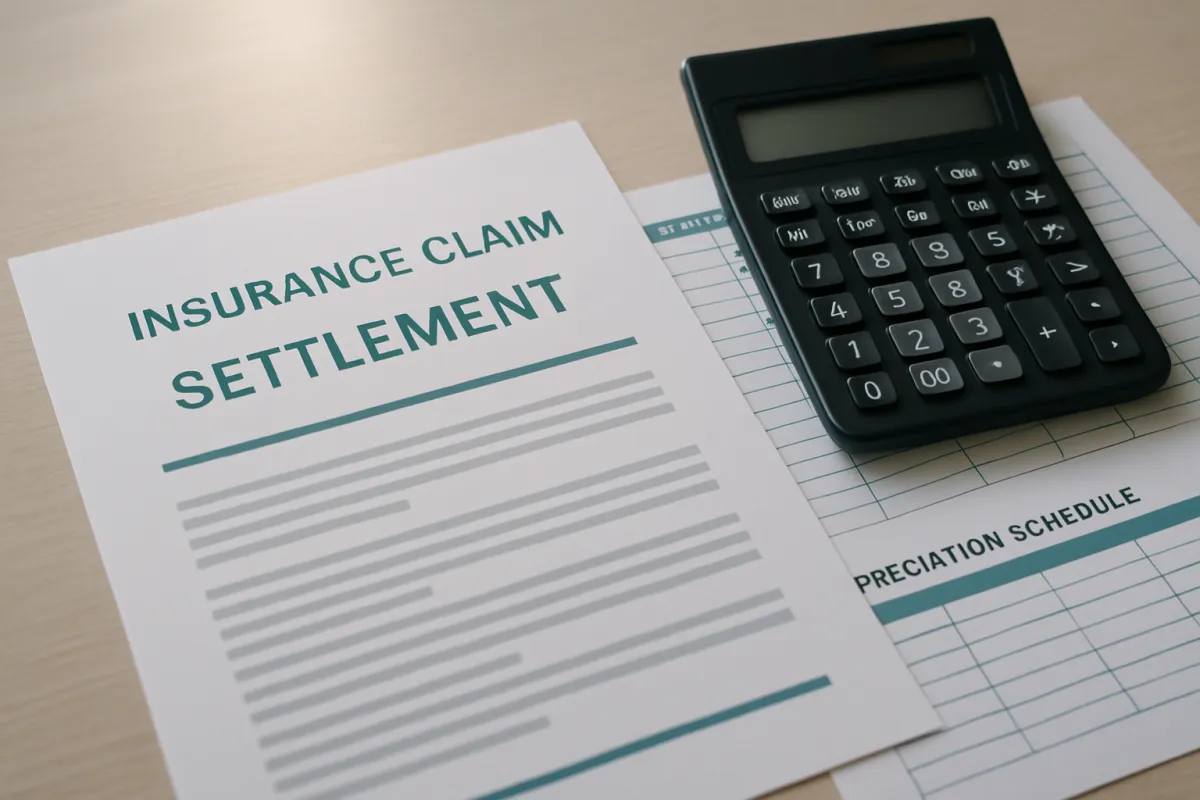
Your deductible applies once to the claim, and on a surge loss it is frequently a smaller share of the total reduction than depreciation is, which is the opposite of what most homeowners expect going in. An illustrative $1,000 deductible against an illustrative $2,857 actual cash value payout, after depreciation and any sub-limit, removes more than a third of what was left, which is a meaningful share even though the headline loss was $9,000. Our note on what a deductible is covers the general mechanic in full.
The same small-claim arithmetic that applies to any home insurance claim applies here. An illustrative 7% to 15% premium increase held for three to five years can, on a mid-sized policy, approach or exceed what a modest electronics claim actually recovers after depreciation and the deductible, a tradeoff our note on how much premiums rise after a claim covers in detail. A single destroyed television is worth running through the math before you call. A whole household of electronics lost in one event is usually worth filing regardless, since the recovered amount clears the arithmetic comfortably even after depreciation. Put your own figures into the companion below rather than guessing at the boundary.
Does a power surge claim raise your premium?
A paid claim of any kind is information an insurer prices future risk on, so some increase at the next renewal is the ordinary outcome rather than the exception, following the same general pattern our note on why home insurance goes up covers for claims generally. Surge and lightning claims are not typically treated as a sign of poor property maintenance the way, for instance, a plumbing claim sometimes is, so they tend to sit toward the middle of the range of claim types rather than the top, though this varies by carrier and by how many claims already sit on your record.
Frequency, as with any claim type, matters more than a single event. A homeowner in an area with frequent severe thunderstorms who files a surge claim every year or two is a different underwriting picture than one filing a single claim after a rare, severe storm, even though each individual loss might be identical. If surges are a recurring problem at your address, a whole-house surge protector is worth evaluating as much for what it does to your claims history as for what it does to a single bad night.
A worked example: the storm that took out one house’s electronics
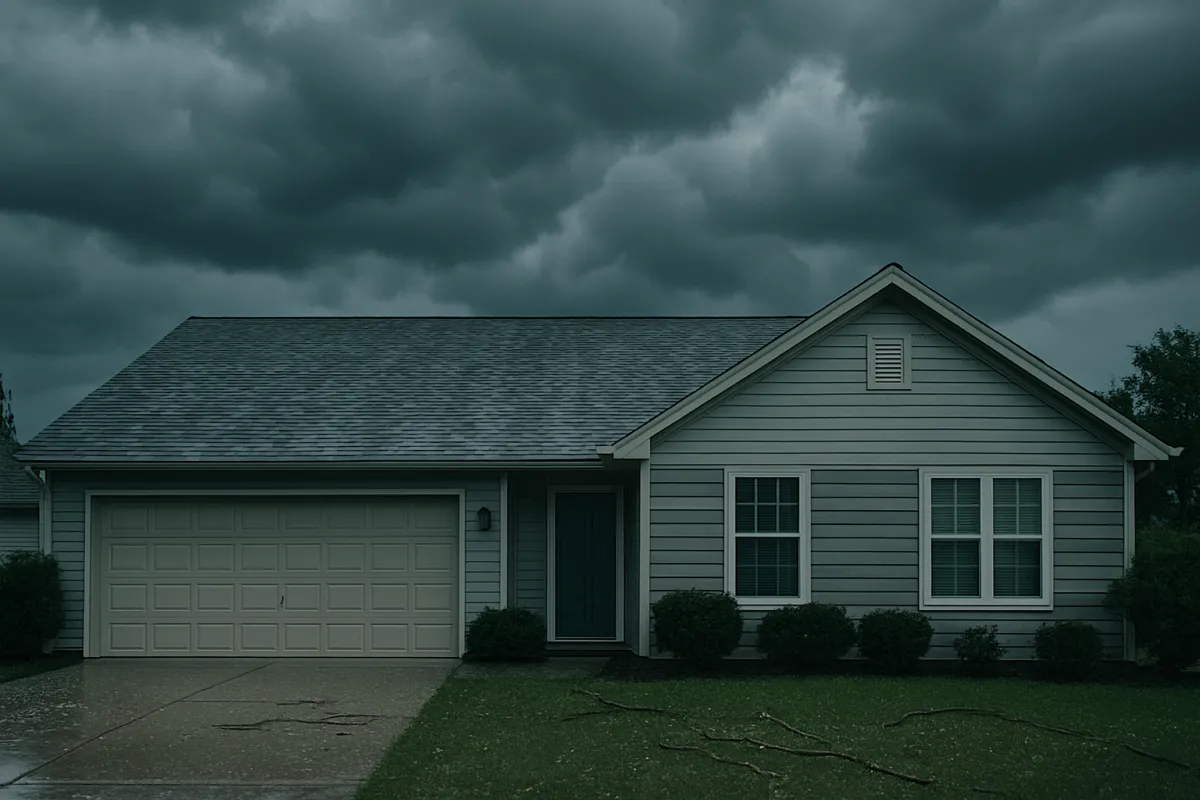
Put the pieces together on one illustrative household. A severe thunderstorm passes directly over the Castellanos home, with lightning activity confirmed by a regional weather service for the exact window the family’s power flickered. The following morning, the living room television, the home router, the refrigerator’s digital control panel, and the furnace’s circuit board are all dead. Nothing on the roof is scorched and no fire occurred. The family photographs everything, notes the storm timing, and calls their insurer the same day.
The damage, all illustrative, replacement cost new: a four-year-old television at $1,200, a three-year-old router at $150, a refrigerator control board repair at $650, and a furnace circuit board replacement at $900, for a total of $2,900 in this smaller example, alongside a larger $9,000 claim used in the chart above for a household running more electronics. Because the cause traces to a confirmed lightning event, the claim proceeds under the lightning peril rather than the narrower sub-limit that sometimes applies to grid-sourced surges. Actual cash value depreciation, averaged across the mixed ages of the items, removes roughly half of the replacement cost figure before the deductible is applied. On a $500 deductible, the household recovers a modest but real amount, well short of the cost to buy everything new, and the gap is depreciation rather than any denial.
The same night, no lightning recorded nearby
Rerun a similar event with one fact changed. No storm was reported anywhere near the house that night, no lightning activity was logged, and the family simply woke up to the same dead electronics with no explanation in hand. They call the utility, and the utility confirms a brief voltage anomaly was logged on the local grid at roughly the right time, tied to a switching operation at a nearby substation. This claim now proceeds under the artificially generated electrical current peril rather than lightning, and if the policy names a separate sub-limit for that peril, as many do, the payout is capped there regardless of what the overall personal property limit would otherwise allow.
Had the utility had no record at all, and had nobody heard or seen anything unusual that night, this same claim would have rested entirely on the homeowner’s account of several unrelated-looking electronics failing at once, a weaker position than either version above, though not an automatically denied one. The lesson sits in the contrast: the cause you can document changes which peril and which limit apply, sometimes before the depreciation and deductible even enter the picture. Switch the cause selector in the companion below and watch the same damage produce a different payout.
Common mistakes people make with surge claims
A handful of mistakes account for most of the disappointing outcomes on this type of claim. Throwing away damaged electronics before photographing them, because a dead television feels like trash rather than evidence, removes the single best piece of proof an adjuster can see. Assuming a surge claim will pay full replacement cost, when most contents claims settle on depreciated actual cash value, sets an expectation the settlement letter will not meet. Not checking whether your own policy names a sub-limit for the artificially generated electrical current peril, and being surprised by a cap on a large home office or media room claim, is a second common gap.
Skipping the utility call when there was no visible storm is a third, since many homeowners assume there is nothing to ask about and never discover the voltage anomaly that would have supported their claim. And treating a whole-house surge protector purchase purely as a premium-discount decision, rather than as loss prevention that also protects your claims history, undervalues what the device is actually for. Each mistake is avoidable with a few minutes of attention before or immediately after the loss.
The bottom line
Does home insurance cover power surge damage? Usually yes, through one of two perils that are standard on nearly every homeowners form: lightning for a direct or nearby strike, and a separate peril commonly worded as artificially generated electrical current for a grid-sourced surge. Coverage itself is rarely the obstacle. What actually shrinks the check is depreciation, since most contents claims settle on actual cash value and electronics lose paper value quickly, and a sub-limit that many forms attach specifically to the second peril, which can cap a home office or media room claim well below what the overall personal property limit would otherwise allow. Three actions follow directly. Read your own policy’s personal property section tonight for the exact sub-limit language and the settlement basis on contents. Document any surge loss the same week, including photographs, item ages, and a utility or weather record of the cause, rather than reconstructing it from memory later. And weigh a whole-house surge protector as loss prevention first and a premium discount second, since preventing the claim is worth more than any credit a discount could offer. Then size your own electronics and their ages in the companion below before the next storm, not after it.
This coverage note is educational reading about how standard homeowners, renters, and condo policies commonly treat power surge, lightning, and artificially generated electrical current damage in the United States, written for general understanding rather than as insurance, legal, or financial advice. Nothing here describes the contract you actually hold. Whether a specific surge loss is paid, which peril applies, whether a sub-limit is in effect, and how depreciation is calculated all depend on your policy form, its endorsements, your limits and deductible, and the law of your state, all of which differ substantially between carriers. Every dollar figure, percentage, age, and settlement amount above, including both versions of the worked example, is an invented illustration built to show how the arithmetic fits together, never a quote, a market rate, or a prediction of what any insurer will pay. Read your own personal property and conditions sections, and put the specifics in front of a licensed insurance professional who can see your actual documents before you rely on any figure here.
Frequently asked questions
Does home insurance cover power surge damage?
Usually yes, under one of two named perils that appear on nearly every standard homeowners form: lightning, and a separate peril commonly worded as sudden and accidental damage from an artificially generated electrical current. A direct lightning strike that fries a television or a furnace control board is normally a clean claim under the lightning peril. A surge that arrives through the wiring from the utility grid, with no lightning anywhere near the house, is typically handled under the artificially generated electrical current peril instead, and some forms attach a lower sub-limit to that peril specifically for electronics. Read your own policy's personal property section for the exact wording and any dollar cap before you assume either scenario pays in full.
Is lightning damage covered by homeowners insurance?
Yes, on essentially every standard homeowners policy. Lightning is one of the oldest and most consistently named perils in property insurance, predating most of the other named perils on a modern form, and it covers both a direct strike on the structure and the electrical surge a nearby strike sends through the wiring into your outlets and appliances. The structure, detached structures, and personal property all respond under their respective coverage parts, subject to your deductible. Where lightning claims get complicated is proving the strike happened at all when there is no scorch mark on the roof, which is why a surge with no visible structural damage still deserves documentation rather than a shrug.
Does insurance cover a power surge from the utility company, not lightning?
Generally yes, through the artificially generated electrical current peril rather than the lightning peril, and this is the distinction most homeowners have never heard named. The wording is written broadly enough to reach a grid switching spike, a transformer fault, or the surge that sometimes accompanies power being restored after an outage, not just a strike from the sky. The practical catch is that some forms apply a separate, lower sub-limit to property damaged this way, distinct from your overall personal property limit, so a home office full of electronics can hit that cap well before it hits your personal property limit. Confirm whether your own policy names a sub-limit for this peril specifically.
Does home insurance cover fried electronics and appliances?
Usually yes, up to whatever sub-limit and settlement basis your policy applies to the artificially generated electrical current peril or the lightning peril, whichever caused the loss. A fried television, a dead router, a ruined refrigerator control board, and a furnace circuit board are all typically eligible claims. The number that actually reaches your bank account is usually smaller than the replacement cost of the items, because most personal property claims settle on actual cash value unless you carry a replacement cost endorsement on contents, and electronics depreciate quickly. A five-year-old television is worth a fraction of a new one in an adjuster's depreciation table, even though it worked fine the morning before the surge.
What is artificially generated electrical current coverage?
It is the specific named peril, written in almost those words on many standard homeowners forms, that covers sudden and accidental damage caused by an abnormal electrical current generated within the power system rather than by a natural event like lightning. It exists because a damaging electrical spike can originate from a utility switching operation, a fault on a neighboring transformer, or an internal wiring problem, none of which is lightning, and the standard forms wanted a peril broad enough to reach those causes too. Many policies pair this peril with its own sub-limit for the personal property it damages, commonly cited in the low thousands of dollars, which is separate from and usually smaller than the overall personal property limit on the same policy.
Will a whole-house surge protector lower my premium?
Sometimes, though the discount is usually modest and far from universal. Some insurers offer a small premium credit for a permanently installed whole-house surge protection device at the electrical panel, and a few treat it as part of a broader smart-home or protective-device discount bundle. Availability, the size of the credit, and what documentation is required vary by carrier and state, so ask your own insurer directly rather than assuming the device pays for itself through the discount alone. The stronger case for installing one is loss prevention rather than pricing: a whole-house unit absorbs a surge before it reaches your outlets, which can be the difference between a minor claim and a house full of dead electronics.
How much does a power surge claim typically pay, and what about depreciation?
There is no single number, because it depends on what was damaged, how old it was, your deductible, and whether a sub-limit applies to the peril that caused the loss. The mechanism that surprises people most is depreciation: most personal property settlements use actual cash value unless you specifically carry a replacement cost endorsement on contents, and electronics are depreciated on a relatively short assumed useful life, so an illustrative four-year-old television might settle for well under half of what a new equivalent costs. Run your own figures, including the age of the damaged items, through the companion below rather than estimating from a friend's unrelated claim.
Do I need a police report or utility report for a surge claim?
A police report is not normally required, since a power surge is not a crime, but documentation of the cause still matters enormously to how smoothly the claim moves. Check whether your utility recorded an outage or a voltage event on your street around the time of the loss, since many utilities log this and will confirm it on request. Photograph every damaged item before you unplug or discard it, note the exact date and time you noticed the failure, and if a storm was involved, keep a record of any lightning activity reported for your area that night. A claim with no documented cause at all is the one most likely to stall while an adjuster tries to establish that the damage was sudden and accidental rather than a slow mechanical failure.

Hamza Hai is the editor of SumSured. She holds an MBA and reviews the site's articles against our editorial standards, checking that every figure is labelled for what it is, that nothing is presented as verified fact without a source the reader can check, and that the writing stays useful to a non-specialist.