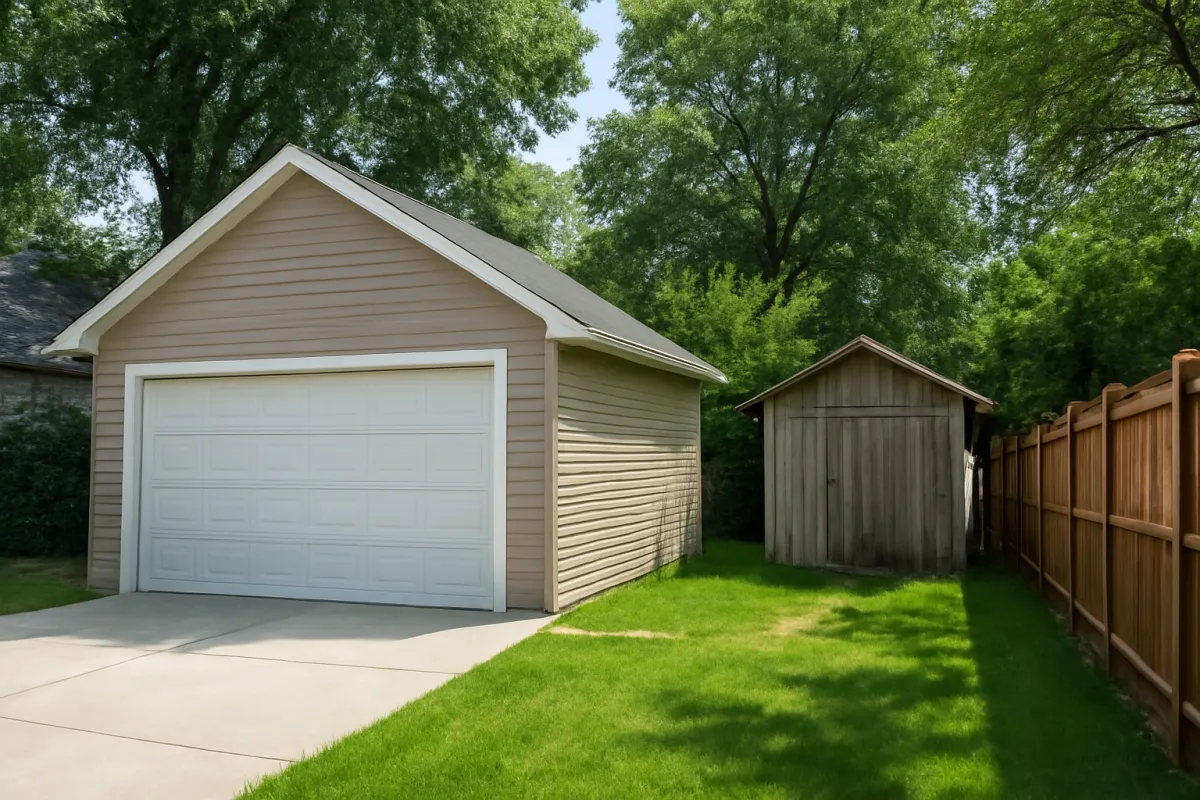
What's in this note
- The short answer: does home insurance cover an ADU or guest house?
- What counts as an ADU, a guest house, or an in-law suite
- Attached versus detached: why the structure’s connection to the main house matters
- Coverage A versus Coverage B: which part of the policy actually pays
- Why the Coverage B default percentage is usually too small for an ADU
- Raising your other-structures limit, or scheduling the ADU separately
- Building a new ADU: what changes at the moment it is finished
- Permits, code compliance, and why an unpermitted ADU is a real risk
- Renting the ADU out occasionally versus renting it long-term
- The line where you need landlord coverage instead
- Liability exposure a separate dwelling creates
- Flood, earthquake, and wildfire: perils that treat the ADU like any other structure
- Underwriting: does an ADU make a property harder or more expensive to insure
- Utilities, shared systems, and how a loss in the ADU affects the main house’s claim
- Insuring an ADU used as a home office or rental business
- What a declarations page shows for a property with an ADU
- Selling the house: what happens to ADU coverage
- Common mistakes homeowners make insuring an ADU
- A worked example: the Nakamura family’s backyard studio
- The bottom line
Short answer: Usually yes, but under a different limit than most owners expect. A detached ADU or guest house is typically insured as other structures, Coverage B, which many policies default to around 10% of the dwelling limit, often too small for a full accessory dwelling. An attached ADU sharing a wall or roofline with the main house is usually folded into Coverage A instead. Renting the ADU to a long-term tenant is the detail most likely to change which policy actually applies.
Does home insurance cover an ADU or guest house? For most owners, yes, in the sense that it is not excluded and does not require you to go hunting for an exotic standalone product. The harder and more useful question is whether the limit covering it was ever sized to what the structure is actually worth, and whether how you use it, family guests, an occasional short stay, or a tenant paying rent every month, still fits inside what a standard homeowners policy was built to do.
This coverage note works through both questions in order: which coverage part actually pays depending on whether the structure is attached or detached, why the standard other-structures default is frequently too small once a real accessory dwelling is involved, what changes the moment construction finishes, the permit question that quietly decides more claims than people expect, and the line between occasional and regular rental use that determines whether you need landlord coverage instead. It leans on our coverage note on other structures coverage for the mechanics of Coverage B and our coverage note on landlord insurance for what changes once a structure becomes a real rental. Size your own ADU in the companion below as you read.
Key takeaways
- A detached ADU or guest house is typically insured as other structures under Coverage B, commonly defaulted to around 10% of the dwelling limit, which is frequently too small for a real accessory dwelling.
- An attached ADU sharing a wall or roofline with the main house is usually folded into Coverage A, the same limit that insures the house itself.
- Occasional use by family or short-term guests generally stays inside an ordinary homeowners policy; renting the ADU to a long-term tenant is the detail most likely to require landlord coverage instead.
- An unpermitted ADU is genuinely risky to insure, since some carriers restrict or decline coverage once permit status surfaces, often during a claim rather than before one.
- A newly finished ADU adds real insurable value, so the limit needs raising at the moment construction completes, not whenever you happen to remember to call.
The short answer: does home insurance cover an ADU or guest house?
Compressed before it gets taken apart: in most ordinary situations, yes, a standard homeowners policy extends to an accessory dwelling unit, a guest house, or an in-law suite, without requiring a specialty policy just because the structure can sleep someone overnight. Where it lands inside the policy depends on physical connection to the main house rather than on what the structure is called locally. A detached unit is generally other structures, Coverage B. An attached one is generally folded into the dwelling, Coverage A.
The two things that actually put an ADU’s coverage at risk are rarely the existence of the structure itself. They are a limit that was never raised to reflect what the ADU costs to rebuild, and a use of the space, most commonly a long-term rental, that has quietly moved outside what a personal homeowners policy was priced and underwritten to cover. Our coverage note on what home insurance covers walks the full six-part policy structure this note draws on throughout.
What counts as an ADU, a guest house, or an in-law suite
The terminology varies by region and by who is using it, and insurers generally do not care which word you use. An accessory dwelling unit, commonly abbreviated ADU, is a secondary living space on the same lot as a main house, with its own kitchen or kitchenette, bathroom, and sleeping area, whether that is a converted garage, a basement apartment with its own entrance, or a free-standing structure built specifically for the purpose. A guest house or guest cottage is functionally similar, often built or marketed with overnight guests rather than a full-time resident in mind. An in-law suite or in-law cottage typically implies a family member living there, sometimes attached to the house and sometimes not.
For insurance purposes, none of those labels is what decides the coverage question. What decides it is whether the structure is physically attached to the main house, how it is actually used day to day, and whether its value and rebuild cost are reflected in the limits on your declarations page. A storage shed with a cot in it and a fully plumbed, permitted 600-square-foot cottage are both technically secondary structures, but they are nowhere near the same insurance question, and treating them as interchangeable is the first mistake worth avoiding.
Attached versus detached: why the structure’s connection to the main house matters
This is the single structural fact that decides which coverage part responds, and it has nothing to do with zoning, permits, or square footage. An ADU built as a true addition, sharing a wall or a roofline with the main house, or converted from a garage that is itself attached to the house, is commonly treated as part of the dwelling and insured under Coverage A, the same limit that covers the main structure. A free-standing unit, sitting in the backyard on its own foundation with no shared wall or connecting roof, is commonly treated as other structures under Coverage B instead.
The practical consequence runs in two directions. An attached ADU automatically benefits from the dwelling limit, which is typically the largest and most carefully sized number on the policy, so it rarely suffers from being underinsured on its own. A detached ADU instead depends on Coverage B, which many standard policies default to a modest percentage of the dwelling limit, our coverage note on other structures coverage covers that default in depth, and that percentage was designed with a fence, a shed, and a detached garage in mind, not a livable secondary residence.

Coverage A versus Coverage B: which part of the policy actually pays
Coverage A, dwelling coverage, is sized to the full replacement cost of the main structure at today’s construction prices, and an attached ADU rides along inside that same figure, which our coverage note on dwelling coverage explains in depth. Coverage B, other structures, is typically expressed as a percentage of the dwelling limit rather than priced to the actual rebuild cost of what stands on the lot, and it is meant to cover everything detached collectively: a fence, a driveway gate, a shed, a detached garage, and, if one exists, a detached ADU, all sharing the same single limit.
That shared-limit structure is worth sitting with for a moment. A detached ADU is not insured on its own dedicated number by default. It competes for coverage against every other detached structure on the property under one combined Coverage B limit, which means a property with a detached garage, a shed, and a detached ADU can find the limit exhausted by the ADU alone, leaving little or nothing for the rest if more than one structure is damaged in the same event.
Illustrative likelihood a standard policy responds, by ADU scenario
A rough, illustrative sense of how a standard homeowners policy tends to treat each scenario before any limit, deductible, or endorsement is applied. Actual outcomes depend on your policy form, your declared use of the structure, your state, and your carrier.
Bars are scaled to the ~95% top figure. The shape matters more than any single number: attachment and disclosed, declared use move a scenario far more than the existence of the structure itself.
Why the Coverage B default percentage is usually too small for an ADU
The default percentage most policies apply to other structures, commonly cited around 10% of the dwelling limit, was set with an ordinary mix of fences, sheds, and detached garages in mind, the same point our coverage note on other structures coverage makes about that default generally. A livable accessory dwelling unit is a different order of structure entirely. A modest studio ADU can easily cost tens of thousands of dollars to rebuild, and a larger one with a full kitchen and bathroom can approach or exceed what a small primary residence costs, numbers that a 10% Coverage B default sized against an average dwelling limit was never built to absorb.
The gap is invisible until a total loss, which is exactly the wrong time to discover it. A homeowner with a $400,000 dwelling limit and a default 10% Coverage B carries $40,000 of other structures coverage, shared across every detached structure on the property. If the ADU alone would cost $90,000 to rebuild, the shortfall is immediate and large the moment a fire, a storm, or any other covered peril takes the structure. Run your own dwelling limit and ADU rebuild estimate through the companion below to see your own gap in dollars rather than percentages.
Raising your other-structures limit, or scheduling the ADU separately
Two fixes address the gap, and which one fits depends on your insurer and the size of the structure. The more common one is simply raising the overall Coverage B percentage or dollar limit, which increases the shared pool available to the ADU and every other detached structure together. The other, available from some carriers once a detached structure’s value is significant enough, is scheduling or endorsing the ADU specifically, giving it its own stated limit separate from the catch-all other-structures figure that still covers the shed and the fence.
Scheduling is generally the cleaner answer once an ADU represents a meaningful share of the property’s total value, because it removes the competition between the ADU and every other detached structure for the same shared limit. Ask your insurer directly whether this option exists on your policy form, what documentation it requires, typically a contractor’s rebuild estimate or an appraisal, and how the premium compares to simply raising the overall Coverage B percentage instead.
Building a new ADU: what changes at the moment it is finished
A newly completed ADU is new insurable value standing on your lot that your existing policy, written before the structure existed, does not yet know about. The moment construction finishes and the unit is ready for occupancy is the moment to call your insurer, not sometime later when you happen to think of it. Reporting it prompts your insurer to adjust the Coverage B limit, or in some cases offer scheduling, and to price the premium to reflect the real value you have added to the property.
The cost side of this conversation follows the same proportional logic as any limit increase: adding a meaningful amount of rebuild value adds premium roughly in line with that increase, rather than in some fixed or unpredictable jump. What is genuinely risky is the gap between completion and disclosure, since a fire or a storm that strikes before you have called leaves you carrying a brand-new structure against an old limit that was never sized for it. Our note on documenting a home inventory is a reasonable template for the kind of photographic and cost record worth keeping on a new ADU from the day it is finished.
Permits, code compliance, and why an unpermitted ADU is a real risk
An ADU built or converted without the required permits creates a genuine and underappreciated insurance problem, separate from whatever zoning risk it creates with the local jurisdiction. Some insurers will knowingly write coverage on an unpermitted structure, sometimes at a restricted limit, sometimes with the structure specifically excluded from certain coverages. Others decline to insure it at all once permit status surfaces, and a claim, when an adjuster asks routine questions about the structure’s history, is one of the more common moments that status comes to light.
Beyond whether the claim pays at all, an unpermitted structure can complicate the repair itself if local code requires permitting as a condition of any rebuild, which can turn a straightforward repair into a dispute over what the policy is actually obligated to fund. The honest path is disclosure before a loss: tell your insurer the permit status of the ADU when you first report the structure, ask directly whether and how it affects your coverage, and if permits were never pulled, weigh the cost of bringing the structure into compliance against the risk of discovering the gap during a claim.

Renting the ADU out occasionally versus renting it long-term
How the ADU is actually used matters as much as how it is built, and the line that decides which policy applies is frequency and duration rather than the fact of renting at all. Occasional use, hosting family, letting a friend stay for a week, or an infrequent short-term booking, generally stays within the scope of an ordinary homeowners policy, though insurers vary in how they treat this and disclosing the pattern honestly is worth more than guessing where your own carrier draws the line.
Renting the ADU out regularly, as a standing arrangement with a long-term tenant paying rent month after month, is a meaningfully different risk, and it is the same shift our coverage note on landlord insurance describes for renting out any part of a property: a standard homeowners policy is priced and underwritten around owner-occupied, personal use, and letting a space out as regular income-producing rental moves it toward business use, which the policy was not built to cover at the same terms.
The line where you need landlord coverage instead
Our coverage note on landlord insurance works through why a standard homeowners policy commonly stops responding the day a structure becomes a regular rental, and an ADU crosses that line exactly the same way the main house would if you moved out and rented it. Once the ADU has a standing tenant, the practical options are typically a landlord or dwelling fire policy covering the ADU specifically, an endorsement that extends limited coverage to the rented structure if your current carrier offers one, or in some cases a combined policy structure a carrier that writes multi-unit risks can arrange.
The trigger is the arrangement, not the income. A single long-term lease on the ADU, even a modest one, generally moves it into landlord territory for insurance purposes, while hosting family rent-free or accepting an occasional short-term booking usually does not. When in doubt, describe the actual arrangement to your insurer in plain terms, rent amount, frequency, and whether it is the same occupant or a rotating cast of short stays, and let them tell you which side of the line it falls on rather than guessing.
Where an illustrative $480,000 property's rebuild value sits
One illustrative lot: a primary house, a detached ADU, and everything else detached, split by what each piece is worth to rebuild.
The ADU alone is 20% of this illustrative property's total rebuild value, yet a default 10% Coverage B figured off the dwelling limit would fund only a fraction of it. That gap is the whole argument for checking the number rather than assuming the default fits.
Liability exposure a separate dwelling creates
An occupied ADU, whether used by family or rented to a tenant, is also a liability exposure, not just a property one. Someone living in or visiting a second structure on your lot can be injured there, on the steps, in the kitchen, or on a shared walkway between the two buildings, and personal liability coverage, the same Coverage E our coverage note on personal liability coverage explains, generally extends to incidents on the property as a whole rather than only inside the main house.
What changes with a tenant rather than a family member is the nature of the relationship and, potentially, the coverage that actually applies. A paying tenant injured on a rented structure is more likely to pursue a claim, and a true rental arrangement is more likely to fall under a landlord policy’s liability section rather than your personal homeowners liability, which is one more reason the rental-use disclosure matters beyond the property coverage question alone.
Flood, earthquake, and wildfire: perils that treat the ADU like any other structure
Flood and earthquake are excluded from standard homeowners policies for the main house, and a detached ADU sitting on the same lot is excluded on exactly the same terms, not treated any more gently just because it is smaller or newer. Our coverage note on earthquake insurance and our coverage note on flood insurance cost both explain why these perils sit outside the standard form entirely. If you add an earthquake endorsement or a separate flood policy to protect the main house, confirm explicitly whether the ADU and any other detached structures are included in that same endorsement or policy, since some earthquake endorsements and flood policies set their own limits for detached structures separate from the main dwelling figure, mirroring the same other-structures pattern this note has described throughout.
Wildfire is handled differently, since fire, including wildfire, is generally a standard covered peril rather than an excluded one, but availability of coverage at all, for the main house and any detached ADU alike, has tightened in some high-hazard areas as carriers reassess the risk they are willing to write. A detached ADU built with defensible space and fire-resistant materials can sometimes help at underwriting the same way it would for the main house, though the specifics vary sharply by carrier and by state, and are worth raising directly with your insurer or agent if wildfire exposure is a real concern on your property.
Underwriting: does an ADU make a property harder or more expensive to insure
Adding a detached dwelling to a property is additional insurable value and additional complexity, and both of those facts show up somewhere in how an insurer prices and underwrites the risk. The value increase moves premium in the same straightforward, roughly proportional way any limit increase does. The complexity shows up less predictably: some carriers ask more underwriting questions about a property with an ADU, particularly around rental use and permit status, and a small number of carriers in some states are more cautious about writing multi-structure residential risks at all, preferring to leave that territory to landlord or dwelling fire forms even when the arrangement is personal rather than a true rental.
None of this makes an ADU uninsurable in any ordinary situation. It does mean that shopping the market with full, accurate information about the structure, its permit history, and how it is used tends to produce a more reliable quote than shopping with a vague description and hoping the details will not matter. Our note on choosing home insurance covers the general shopping discipline, and the same approach, three honest quotes at matched coverage, applies cleanly here.
Utilities, shared systems, and how a loss in the ADU affects the main house’s claim
Many ADUs share a water line, an electrical panel, or a sewer connection with the main house rather than having fully independent utilities, and a loss that starts in the ADU, a plumbing failure or an electrical fault, can affect both structures in a single event. This is generally handled as one occurrence touching two coverage parts, the dwelling and other structures, rather than as two separate claims, similar to how our coverage note on vandalism describes one incident crossing several coverage parts under a single deductible.
The practical implication is that documenting a loss involving the ADU should account for both structures from the start, even if the damage looks concentrated in one of them. A water leak that begins in a shared supply line and floods both the ADU and part of the main house’s foundation area is one claim with two damage locations, not two separate claims each needing to individually clear a deductible.
Insuring an ADU used as a home office or rental business
An ADU doubling as a home office, a studio for a side business, or workspace that clients occasionally visit raises the same business-use questions our coverage note on insuring a home-based business covers for business activity inside the main house. A home office used only by the owner generally stays within an ordinary homeowners policy, while regular client visits, business inventory, or employees working from the ADU can move parts of that activity outside standard coverage and toward a business owner’s policy or a specific endorsement.
The overlap with the rental question is real but distinct. A structure can be both a rented dwelling and, separately, the site of business activity if a tenant runs a business from it, and each use is evaluated on its own terms by an insurer. The common thread is the same one that runs through this entire note: describe the actual use of the ADU honestly to your insurer, and let the coverage conversation follow from the facts rather than from what seems like the simplest category to claim.
What a declarations page shows for a property with an ADU
A declarations page listing a Coverage B figure rarely states in plain language what that figure is meant to cover, and it is easy to assume the number reflects the ADU specifically when it is actually a shared pool across every detached structure on the lot. Our coverage note on reading a declarations page walks the document line by line, and the same discipline applies here: find the other structures limit, ask your insurer in writing whether the ADU is scheduled separately or shares that pool, and confirm whether any endorsement specific to the ADU, a rental endorsement or a scheduled structure endorsement, appears anywhere on the page.
If nothing on the declarations page names the ADU specifically, that is itself useful information. It generally means the structure is relying on the default Coverage B pool alongside everything else detached, which is the scenario this note has spent the most time on, and the one most worth double-checking against the structure’s actual rebuild cost.
Selling the house: what happens to ADU coverage
An ADU transfers with the real estate in a sale the same way the main house does, since it is part of the property rather than a separate insurable interest you could carry away with you. Your own policy, however, does not transfer. Coverage on both structures ends when your policy is cancelled or the sale closes, and the buyer needs their own policy in place before closing, with a dwelling and other-structures limit sized to include the ADU’s rebuild cost on their own declarations page rather than inheriting whatever figure you happened to be carrying.
Sellers have a genuine disclosure interest here beyond the ordinary real estate disclosures. Permit status, any rental history, and whether the ADU was ever the subject of a claim all affect what the buyer’s insurer will quote and, separately, what the buyer is legally permitted to do with the structure going forward. Being straightforward about all three tends to produce a smoother closing than letting a buyer’s insurer discover a surprise during underwriting.
Common mistakes homeowners make insuring an ADU
A handful of mistakes account for most of the gaps found in this category. Assuming a detached ADU is automatically covered to its full rebuild value because it sits on the same insured lot as the house is the most common, when in fact it is usually sharing a modest Coverage B pool sized for a shed and a fence. Forgetting to call the insurer when construction finishes is a close second, leaving a brand-new structure sitting against an old, unadjusted limit. Renting the ADU out regularly without disclosing the arrangement, and assuming the existing homeowners policy simply carries over, is the mistake most likely to produce an unpleasant surprise at claim time.
Skipping the permit question, and discovering the structure’s status only when an adjuster asks about it during a claim, is a fourth. And treating the ADU’s insurance as settled once it is mentioned to the insurer in passing, rather than confirming in writing how it is classified, what limit applies, and whether any rental use has been disclosed and accepted, leaves the real answer unconfirmed until the moment it matters most.
A worked example: the Nakamura family’s backyard studio
Put the pieces together on one illustrative household. The Nakamuras build a detached 600-square-foot studio in the backyard, fully permitted, with its own small kitchen and bathroom, intended mainly for visiting family and occasionally offered as a short paid stay through a booking platform a few weekends a year. Their dwelling limit is $420,000, and their policy carries the default 10% Coverage B, producing an illustrative $42,000 of other structures coverage shared across the new studio, an existing detached garage, and a fence.
The studio alone would cost an illustrative $95,000 to rebuild, and the garage and fence together represent another illustrative $22,000, for a combined $117,000 of detached rebuild value standing against a $42,000 shared limit, a shortfall of $75,000 on these figures. The Nakamuras call their insurer once the studio is finished, disclose the occasional paid stays honestly, and are told the occasional short-term use is acceptable under their current form with a modest premium adjustment, while the limit itself needs raising substantially to close the gap. They raise their Coverage B percentage and separately schedule the studio at its own appraised value, closing the shortfall and confirming in writing that the occasional short stays are an accepted, disclosed use rather than an undisclosed one.
The premium moves roughly in proportion to the added limit, an illustrative modest increase for closing a $75,000 gap, which the Nakamuras weigh against what an uninsured $75,000 shortfall would mean on the night the studio burns. They also ask, while they have their insurer on the phone, whether the occasional short-stay pattern needs to be reconfirmed annually or whether a material change, booking the studio every weekend instead of a few times a year, would need a fresh conversation. Getting that answer in writing before the pattern changes is cheaper than discovering the answer during a claim. Run your own dwelling limit, ADU cost, and rental pattern through the companion below to see where your own property stands.
The bottom line
Does home insurance cover an ADU or guest house? In most ordinary situations, yes, without requiring a specialty product simply because the structure exists. What actually decides whether that coverage is adequate is whether it is attached, which determines Coverage A or Coverage B, whether the shared other-structures limit was ever raised to reflect a real accessory dwelling rather than a shed, whether the permit history is clean and disclosed, and whether how you actually use the space, family, occasional guests, or a standing tenant, still fits inside a personal homeowners policy or has crossed into landlord territory. Three actions follow directly. Confirm in writing with your insurer whether your specific ADU is classified under Coverage A or Coverage B. Size the other-structures limit, or ask about scheduling the ADU separately, against its real rebuild cost rather than the policy’s default percentage. And describe the ADU’s actual use, permits included, honestly and in full, since disclosure before a loss is worth far more than any coverage detail discovered after one. Then run your own numbers in the companion below before you need to.
This coverage note is educational reading about how standard homeowners and landlord policies in the United States commonly treat accessory dwelling units, guest houses, and in-law suites, written for general understanding rather than as insurance, legal, or construction advice. Nothing here describes the contract you actually hold. Whether a specific structure is classified under Coverage A or Coverage B, what limit applies, whether a given rental pattern is covered or requires a separate policy, and how permit status affects a claim all depend on your policy form, its endorsements, your insurer’s underwriting rules, and the law and building code of your state and locality, all of which differ substantially. Every dollar figure, percentage, and rebuild cost above, including the Nakamura worked example, is an invented illustration built to show how the arithmetic fits together, never a quote, an appraisal, or a prediction of what any insurer or contractor will charge. Read your own declarations page and conditions, and put the specifics in front of a licensed insurance professional who can see your actual documents, and where zoning or permitting is uncertain, your local building department, before you build, rent, or insure an accessory dwelling.
Frequently asked questions
Does home insurance cover an ADU or guest house?
Usually yes, as part of the same homeowners policy that covers the main house, but under a different and often much smaller limit than most owners expect. A detached accessory dwelling unit, guest house, or in-law cottage is typically insured under other structures, Coverage B, which many standard policies default to a modest percentage of the dwelling limit, commonly cited around 10%. A full ADU can easily cost more to rebuild than that default percentage provides, so the real question is rarely whether it is covered at all but whether the limit is sized to what rebuilding it would actually cost. An attached ADU, one that shares a wall or roofline with the main house, is usually treated as part of the dwelling itself under Coverage A instead.
Is an ADU covered under Coverage A or Coverage B?
It depends on whether the structure is attached to or detached from the main house, and policies draw this line structurally rather than by what you call the space. An ADU built as an addition, over a garage that is itself attached to the house, or connected by a shared wall or roof is generally treated as part of the dwelling under Coverage A, the same limit that insures the main house. A free-standing ADU in the backyard, with no physical connection to the main structure, is generally treated as other structures under Coverage B, which commonly carries a separate and smaller limit. Confirm which category your own structure falls into with your insurer rather than assuming from its use.
Does renting out an ADU change my home insurance?
It can, and the effect depends heavily on how often and how long. Using an ADU for family, guests, or an occasional short stay is generally within the scope of an ordinary homeowners policy. Renting it out regularly as a long-term tenancy is a different risk category, and our coverage note on landlord insurance explains why a standard homeowners policy commonly stops responding the day a structure becomes a regular rental, regardless of whether that structure is the main house or a detached unit in the yard. Tell your insurer how the ADU is actually used, since an undisclosed rental use discovered after a claim is a far worse outcome than a modest premium adjustment discovered before one.
Do I need a separate policy for a detached guest house?
Not automatically. A detached guest house used for family, storage, or occasional guests is typically insured as other structures under your existing homeowners policy, with no separate policy required, though the limit may need raising. A separate landlord or dwelling fire policy becomes the relevant question once the structure is rented out regularly to a tenant who is not part of your household, since that crosses from personal to business use in most underwriting frameworks. Whether a standalone policy, an endorsement, or a dedicated multi-unit form fits your situation is a conversation to have with your insurer once you know how the space will actually be used.
Does building a new ADU raise my home insurance premium?
Generally yes, because you are adding insurable value to the property, and the size of the increase tracks the value added more than it tracks the fact of construction itself. A finished ADU that increases your other-structures or dwelling limit by an illustrative $80,000 to $150,000 of rebuild value adds premium roughly in proportion to that increase, following the same per-dollar pricing logic our coverage note on other structures coverage walks through. Tell your insurer as soon as construction finishes, not when you happen to think of it, since an unreported structure can mean an unfunded limit at exactly the moment you need it.
Is an attached ADU treated differently than a detached one?
Yes, and the physical connection, not the legal or zoning definition, is usually what decides it. An ADU built as a true addition with a shared wall or roofline, or converted from space already inside or directly attached to the main structure such as a garage conversion connected to the house, is commonly treated as part of the dwelling under Coverage A. A free-standing unit with its own foundation and no shared structure is commonly treated as other structures under Coverage B, with a separate and usually smaller limit. Ask your insurer directly how your specific structure is classified rather than assuming from how your local zoning code describes it.
Does home insurance cover an unpermitted ADU?
This is genuinely risky ground, and the honest answer is that it depends heavily on your insurer, your state, and whether the lack of permits surfaces before or after a claim. Some insurers will knowingly write coverage on an unpermitted structure, sometimes at a restricted limit or with specific exclusions. Others decline to cover it at all once they learn permits were never pulled, and a claim is one of the more common ways an insurer learns. Beyond the insurance question, an unpermitted structure can complicate a claim settlement if code compliance becomes part of the repair, and it can affect what you are legally allowed to rebuild after a total loss. Disclose the structure's permit status to your insurer rather than letting a claim be the moment it comes up.
What happens to ADU coverage if I sell the main house?
The ADU transfers with the property the same way the main house does, since it is part of the real estate being sold rather than a separate insurable interest, but your own policy does not transfer with it. Your coverage on both the main house and the ADU ends when the sale closes and your policy is cancelled or lapses, and the buyer needs their own policy in place before closing, sized to include the ADU's rebuild cost on their own declarations page. If you are selling, disclose the ADU's permit status and any rental history honestly, since both affect what the buyer's insurer will quote and what the buyer is legally allowed to do with the structure going forward.

Hamza Hai is the editor of SumSured. She holds an MBA and reviews the site's articles against our editorial standards, checking that every figure is labelled for what it is, that nothing is presented as verified fact without a source the reader can check, and that the writing stays useful to a non-specialist.