
What's in this note
- The short answer: does home insurance cover termites
- Why termite damage sits on the maintenance side
- Sudden and accidental: the test every peril must pass
- Where the pest exclusion usually lives in your policy
- What insurers mean by vermin, insects, and rodents
- Pest by pest: what a standard policy tends to say
- The collapse exception and how narrow it really is
- What collapse means in a policy, and what it does not
- Ensuing loss: when a pest starts something else
- Chewed wiring and the fire that follows
- Chewed pipes and a sudden escape of water
- Does home insurance cover carpenter ants and beetles
- Rodents, squirrels, bats, and the wild animal line
- Bed bugs, roaches, and the contents side of the question
- Why insurers treat pest damage as preventable
- How an adjuster dates the damage
- What dwelling coverage does and does not reach here
- Home warranties, pest bonds, and termite contracts
- Termites found during a home sale
- Pricing the gap you are carrying
- The deductible and how these claims actually pay
- Should you file a claim at all
- Preventing the loss your policy will not pay for
- A worked example: termite damage found in the joists
- Where this answer differs from our other coverage notes
- The bottom line
Short answer: Usually not. Standard homeowners policies commonly exclude damage caused by insects, vermin, and rodents, because an infestation is gradual and foreseeable rather than sudden and accidental, so termite repairs are normally your own cost. Two narrow exceptions exist: some forms carry a collapse provision that can respond when hidden insect damage causes a collapse, and ensuing loss, such as a fire or sudden water escape a pest causes, may be considered.
Does home insurance cover termites, and is carpenter ant damage covered by homeowners insurance too? Usually not, for either one, and that answer is worth stating plainly before anything else, because most of the coverage questions homeowners ask end in a qualified yes. Fire, theft, a burst pipe, a tree through the roof: standard policies are built to respond to those. Termites and most other pests sit on the opposite side of the line. A colony working through a floor joist is not an accident the policy insures against; it is a slow condition the insurer expects you to find and treat, which is why the exclusion for insects and vermin appears in essentially every standard form.
That does not mean the subject ends there. There are two genuine edges, and knowing them is the difference between accepting an $8,000 repair and missing a claim that would have paid. The first is a narrow collapse provision that can respond when hidden insect damage brings down part of a building. The second is ensuing loss, where a pest causes something the policy does cover, most commonly a fire from chewed wiring or a sudden escape of water from a gnawed line. This coverage note walks the exclusion, both edges, and what to do instead. Where a related peril has its own answer, it links our coverage note on what a policy actually covers and the companion below rather than restating them.
Key takeaways
- Standard homeowners policies commonly exclude damage caused by insects, vermin, and rodents, so termite damage is normally repaired at your own cost rather than through a claim.
- The reason is the sudden and accidental test: an infestation is gradual and foreseeable, which insurers classify as maintenance rather than an insurable accident.
- Some forms carry a narrow collapse provision that can respond when hidden insect damage causes a collapse, but the definitions are tight and it is not a general repair fund.
- Ensuing loss is the more useful edge: when a pest causes a fire or a sudden water escape, that resulting damage may be considered even though the chewed material is excluded.
- Because the policy will not pay, prevention is the actual coverage here, and a repeated inspection cost is usually small next to one structural repair.
The short answer: does home insurance cover termites
A standard homeowners policy does not cover termite damage, and it usually does not cover damage from other insects, rodents, or vermin either. The exclusion appears in the exclusions section of most forms, phrased around damage caused by insects, vermin, rodents, or birds (the Texas Department of Insurance’s home insurance guide lists termites, insects, rats, and mice among the losses most policies do not cover), and it removes both the destruction those creatures cause and, on many forms, the cost of getting rid of them. Whether your particular contract uses that phrasing is a question only your own policy answers, since wording is not standardized across insurers and forms. But the outcome most homeowners meet is the same: the repair bill is yours.
This inverts the answer several of our other coverage notes give, and the inversion is the point. Our note on fire damage starts from a yes because fire is a named peril on essentially every form. Our note on theft starts from a yes for the same reason. Termites start from a no, and everything interesting in the subject is about the two narrow places where the no softens. Read the rest of this note as a map of those places, not as a search for a way to make an ordinary infestation into a paid claim, because that route generally does not exist.
Why termite damage sits on the maintenance side
Every property policy draws a line between accidents and upkeep. On one side sit events that arrive without warning and that no reasonable amount of homeowner attention would have prevented: a storm, a fire, a thief, a pipe that splits at two in the morning. On the other sit conditions that develop slowly, that inspection would have caught, and that ordinary care is expected to manage: wear, rot, rust, settling, and pests. Insurance is priced for the first category. The second is treated as the cost of owning a building.
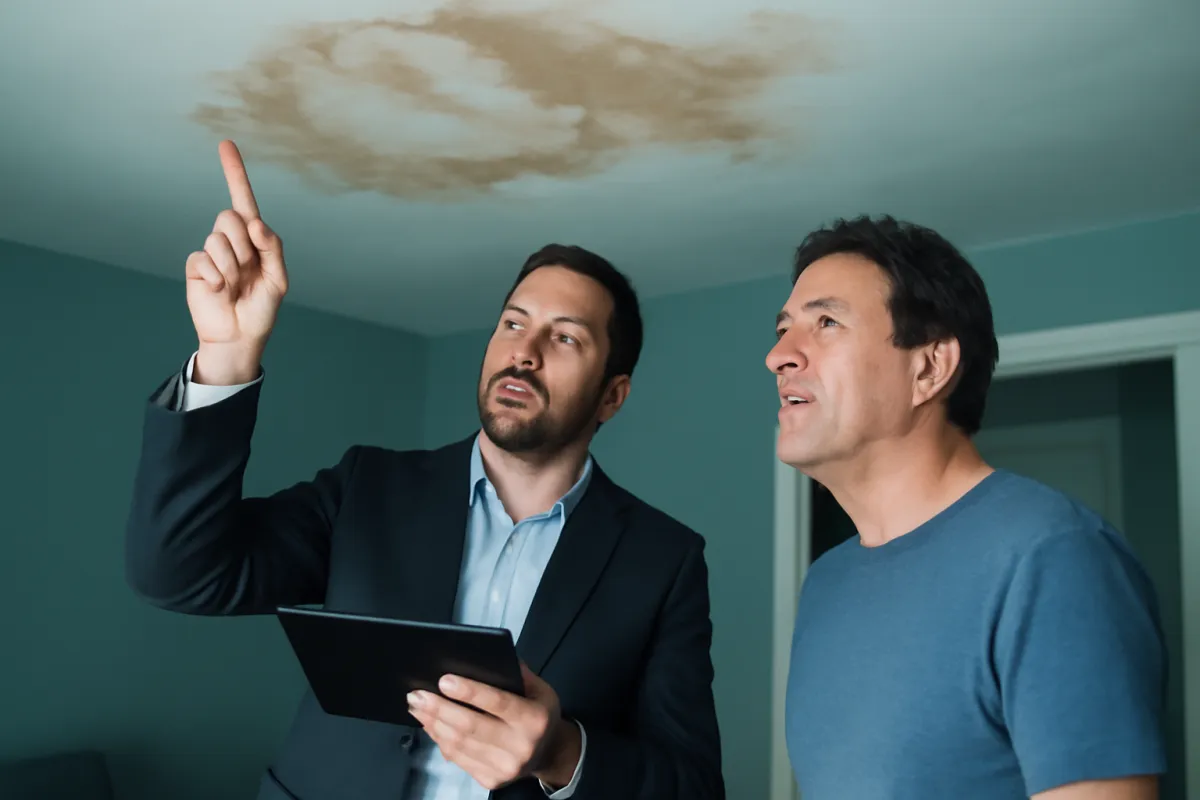
Termites land squarely in the second category by their nature. A colony does not damage a house in an instant; it consumes wood steadily, often for a long stretch, and often out of sight in a crawl space, a sill plate, or the base of a stud wall. By the time damage is visible, the process has usually been running long enough that an inspector could have found it earlier. That is precisely the profile insurers exclude, and it is the same reasoning behind the gradual leak denials in our coverage note on water damage and the humidity denials in our note on mold. Different creature, identical logic.
Sudden and accidental: the test every peril must pass
The phrase to keep in mind is sudden and accidental, because it is the filter most property claims pass through. Sudden means the loss happened at an identifiable moment rather than accumulating. Accidental means it was unintended and unexpected from your point of view. A pipe that bursts is both. A pipe that corroded over fifteen years until it wept is neither, which is why the same physical water can be paid or denied depending on the story behind it.
Apply that filter to an infestation and the answer falls out immediately. There is no moment. There is a season when swarmers appear, a period of feeding, and a day when someone finally notices a soft spot in the floor. The discovery is sudden; the damage is not, and policies are written to look at the damage rather than the discovery. Homeowners often argue the point sincerely, saying they had no idea and that finding it was a shock. That is true and it does not change the analysis, because the test asks when the damage occurred rather than when you learned about it. Use the companion below to see how that distinction reshapes a claim before you make the call.

Where the pest exclusion usually lives in your policy
If you want to check your own position, the place to look is the exclusions section of your policy form, not the declarations page. The declarations page lists your limits, deductibles, and endorsements, and our note on reading a declarations page walks it line by line, but the pest question is decided in the body of the policy where perils are excluded. Look for a heading along the lines of exclusions, or for a subsection on what is not covered under the dwelling and personal property sections.
Within that section, pest language commonly appears grouped with other gradual causes: wear and tear, deterioration, inherent vice, latent defect, rust, mold, settling, and smog (the Maryland Insurance Administration’s homeowners insurance consumer guide (PDF) lists neglect, wear and tear, and deterioration among the common exclusions). That grouping tells you more than the sentence itself, because it shows the insurer’s classification. Pests are filed with decay, not with disaster. Some forms then add a separate provision addressing collapse, and it is that later provision, rather than the exclusion, that creates the narrow opening covered below. Read the two together, because reading the exclusion alone makes the position look more absolute than it is, and reading the collapse provision alone makes it look far more generous.
What insurers mean by vermin, insects, and rodents
The words matter, because they set the boundary of the exclusion. Insects generally captures termites, carpenter ants, wood boring beetles, and the rest of the wood destroying category, along with nuisance insects that damage contents. Rodents typically captures mice, rats, squirrels, and other gnawing animals. Vermin is the broadest and vaguest of the three, historically used for small destructive animals generally, and it is the term that produces the most disputes because reasonable people read it differently.
Where the argument tends to happen is with animals that are not obviously vermin in everyday speech. Raccoons, bats, opossums, and larger wildlife occupy a genuine gray zone, and some forms deal with them through separate language while others fold them in. A few contracts distinguish between damage caused by animals that live in the house and damage caused by a wild animal that enters suddenly, which can produce different outcomes for a raccoon that moves into an attic versus a deer that comes through a window. Since the definitions are not standardized, the honest instruction is to read the definition in your own contract and ask a licensed agent how your insurer applies it.
Pest by pest: what a standard policy tends to say
Seeing the cases side by side makes the pattern easier to hold. The table below is general and illustrative, and your own policy wording, your state, and the facts an adjuster establishes control the real answer in any individual case.
| The situation | Typically covered? | Why |
|---|---|---|
| Termite damage to framing or floors | Usually no | Gradual insect damage, excluded as maintenance |
| Carpenter ants or wood boring beetles | Usually no | Same wood destroying insect category |
| Cost of exterminating the infestation | Usually no | Treatment is upkeep, not a covered loss |
| Rodents chewing wiring, ducts, or insulation | Usually no | Vermin damage sits inside the exclusion |
| Bed bugs or roaches in furniture | Usually no | Infestation of contents, not a covered peril |
| Fire that starts from chewed wiring | Often considered | Fire is a covered peril reached through ensuing loss |
| Sudden water escape from a gnawed pipe | Often considered | Accidental discharge of water, handled on water rules |
| Slow seepage from a small gnawed hole | Usually no | Gradual damage, same denial as any slow leak |
| Collapse from genuinely hidden insect damage | Sometimes | Only where a collapse provision exists and applies |
| Damage found during a home sale inspection | No | Preexisting condition, handled in the transaction |
The shape of that table is worth sitting with. Almost every row about the pest itself lands on no, and the rows that shift are the ones where the pest is only the first link in a chain that ends in something the policy names. That is the whole geometry of pest coverage: the creature is excluded, but a covered peril it triggers may not be.
Illustrative likelihood a standard policy responds, by pest scenario
A rough, illustrative sense of how a standard homeowners policy tends to treat each situation, before any limit or deductible is applied. These are teaching figures rather than measured rates, and actual outcomes depend on your policy wording, your state, and the facts an adjuster establishes.
Bars are scaled to the ~80% top figure. The gap between the top two bars and the bottom three is the entire lesson: what pays is the covered peril a pest set off, not the pest damage itself, and the collapse bar sits in between because it exists but rarely applies.
The collapse exception and how narrow it really is
Here is the edge people have usually heard about. Many homeowners forms include an additional coverage for collapse, and on some of those forms the listed causes include hidden damage from insects or vermin. Read at face value, that seems to reverse the exclusion. In practice it is far tighter, and it functions less as a termite remedy than as a catastrophic backstop for a building that has already failed structurally.
Three conditions typically narrow it. First, the damage generally has to have been hidden, meaning not visible on inspection and not known to you, which excludes the common case of a homeowner who saw signs and postponed dealing with them. Second, an actual collapse usually has to occur, and policies increasingly define that word for themselves rather than leaving it to ordinary usage. Third, the provision often sits with its own conditions and may not carry the full dwelling limit. Whether your form has this coverage at all, and what it would require, varies by insurer and by the edition of the form you were issued. Treat it as something to read carefully, never as a plan.
What collapse means in a policy, and what it does not
The definition is where most collapse arguments are actually decided. Older policies often left collapse undefined, and courts in various states filled the gap in ways that sometimes reached substantial structural impairment short of a building falling down. Insurers responded by writing definitions into newer forms, and those definitions commonly describe an abrupt falling down or caving in such that the building or the part in question cannot be occupied for its intended purpose. Under that kind of wording, a sagging floor, a bulging wall, a cracked beam, or a structure in danger of collapsing may not qualify, however alarming it looks.
Many definitions also add explicit carve outs. Settling, cracking, shrinking, bulging, and expansion frequently do not count as collapse on their own. Some forms state that a building standing is not in a state of collapse even if it shows evidence of decay or insect damage. The combined effect is that the provision usually reaches only genuine structural failure from damage nobody could reasonably have seen. If you are relying on it, you are relying on a very specific factual picture. Ask a licensed agent to walk your collapse provision and its definition with you while nothing is wrong, so you know what you actually hold.
Ensuing loss: when a pest starts something else
The second edge is more practically useful, and fewer homeowners know about it. Property policies frequently contain ensuing loss language, which addresses what happens when an excluded cause produces a covered peril. The general principle is that the excluded cause stays excluded, while the damage from the covered peril that followed may still be considered. It is the reason a policy can decline to pay for a defective part while paying for the damage the failure caused.
Applied to pests, it splits a loss into two questions instead of one. Question one: what did the animal itself damage? That part generally stays with you under the exclusion. Question two: did the animal’s work cause something the policy names as a peril? If it did, that second layer of damage may be evaluated on its own terms. The distinction sounds technical until you see the money involved, because the excluded portion is often the smaller number and the ensuing portion is often the larger one. Ensuing loss wording differs between forms, and some exclusions are drafted to bar the ensuing damage too, so this is a mechanism to ask about rather than a guarantee.
Chewed wiring and the fire that follows
This is the textbook ensuing loss case in the pest context. Rodents gnaw insulation off wiring, a short develops, and a fire starts. The chewed wiring is vermin damage and falls inside the exclusion, so rewiring what the animals ruined generally sits with you. The fire is a different matter, because fire is a named peril on essentially every standard form, and many policies would evaluate the fire damage to the structure and contents under the fire rules rather than dismissing the whole loss because a rodent was upstream of it.
That split can be dramatic in dollar terms. The wiring an animal damaged might be a modest repair, while a fire that spreads through a wall cavity can be a major structural and contents loss. Our coverage note on fire damage walks how a fire claim is scoped, including smoke damage and the water firefighters use. What this note adds is the upstream question an adjuster will also ask: was there a known rodent problem that went unaddressed? A documented history of ignoring an infestation can change the conversation, which is another reason dated inspection records are worth keeping.
Chewed pipes and a sudden escape of water
The water version follows the same two part structure. A rodent gnaws through a plastic supply line, the line lets go, and water escapes into the house. The pipe itself is pest damage and generally stays with you. The water damage that follows is assessed under the rules governing accidental discharge from plumbing, which our plumbing coverage note and water damage note set out in detail.
The decisive variable is how the water behaved. A line that fails and releases water quickly looks like the sudden accidental discharge policies are built for. A pinhole that weeps quietly behind a cabinet for two months looks like gradual damage, and gradual damage is denied whether a rodent or corrosion made the hole. So a pest can put you on either side of the water line depending on how fast the failure ran and how quickly you found it. The practical consequence is the same one that runs through our frozen pipes note: finding water fast is worth real money, and inexpensive leak sensors near supply lines are one of the few genuinely cheap protections in a house.
Does home insurance cover carpenter ants and beetles
Termites get the attention, but they are one member of a category, and the coverage answer for the rest of the category is the same. Carpenter ants excavate galleries in wood to nest rather than eating it, powderpost beetles tunnel through hardwood, and various borers work in structural timber. Whatever the biology, insurers treat them together as wood destroying insects, and the exclusion reaches the damage the same way it reaches termite damage.
Occasionally a homeowner hopes that a less familiar insect might slip past the exclusion because the policy does not name it. That is not how the language works, since exclusions are written by category rather than by species. Nor does it help that carpenter ants can hollow out a beam faster than people expect, because speed relative to other insects is not the same as sudden in the policy sense. The decision rule stays constant: gradual damage from a living creature working inside your structure is excluded, and the two edges described in this note are the only common routes around it. Everything else is a repair you fund yourself.
Rodents, squirrels, bats, and the wild animal line
Rodent damage is the second most common version of this question, and it is usually excluded for the same reason. Mice and rats damage insulation, ductwork, stored belongings, and wiring; squirrels do the same in attics and often add an entry hole in the roof or soffit. Under most forms all of that sits inside the vermin and rodent exclusion, including the cost of removing the animals and cleaning up after them.
The gray zone begins with larger wildlife. Some policies handle damage caused by animals differently depending on whether the animal is a domestic pet, a rodent or vermin, or a wild animal that got inside, and a few forms specifically address damage from birds or from wild animals entering a building. Raccoons and bats sit awkwardly between those categories, and outcomes vary. A related question, damage from an animal that never gets inside, usually resolves elsewhere: a squirrel that drops a branch is not the issue, whereas a whole limb coming down is covered by the rules in our tree damage note. For anything in the gray zone, the answer lives in your definitions section.
Bed bugs, roaches, and the contents side of the question
Not every pest question is structural. Bed bugs, cockroaches, moths, and pantry pests damage or contaminate belongings rather than framing, and the question shifts to Coverage C, the personal property side of the policy. The answer, though, does not shift. Infestation of contents is generally excluded on the same grounds, and a policy will not typically pay to replace a mattress and furniture after a bed bug infestation or to fund extermination.
That surprises renters in particular, because the reflex is to check the renters policy. Our renters insurance note explains what a renters policy does cover, and infestation is not usually part of it. In rented housing the practical route is generally the lease and local housing rules, which in many places place habitability duties on a landlord, and the corresponding landlord side is set out in our landlord insurance note. Those obligations vary substantially by jurisdiction and by lease, so the right step is a look at your lease and local tenancy rules rather than a claim. An insurance claim is rarely the tool that resolves this one.
Why insurers treat pest damage as preventable
It helps to see the underwriting logic rather than reading the exclusion as arbitrary. Insurance works by pooling low probability, high cost, unpredictable events. Everyone contributes a modest premium, and the unlucky few draw on the pool. That arrangement only holds when losses are genuinely uncertain and genuinely outside the policyholder’s control. Losses that are near universal over a long enough period, or that respond strongly to routine attention, break the model, because the premium would have to approach the cost of the loss itself.
Pest damage has exactly the characteristics that break it. Infestations are common across large parts of the country, they build slowly enough that inspection catches them, and treatment is far cheaper than repair. There is also an incentive problem: a homeowner who knows the policy pays for termite repair has less reason to keep an inspection contract current. Excluding the peril pushes the risk to the party best placed to control it, which is the owner standing next to the crawl space. You can disagree with the allocation and still find it useful to know why the industry made it, because it explains why no amount of arguing at claim time tends to move it.
How an adjuster dates the damage
If a pest question does reach an adjuster, usually because of an ensuing fire or water loss, expect the investigation to focus on timing. Adjusters look at the physical evidence for how long a condition has existed, and wood tells a fairly clear story. Galleries, frass, mud tubes, staining, and the pattern of deterioration all indicate duration. In a water loss they look at similar markers: mineral staining, swollen material, and the condition of surrounding surfaces.
They also look at what you knew. A previous inspection report noting activity, an estimate you obtained and did not act on, or correspondence about a problem all bear on whether damage was hidden or known, which matters enormously for any collapse argument. This is not an adversarial ambush; it is the same dating exercise described in our note on how a claim is filed, applied to a condition with a long timeline. The lesson for a homeowner is simple and unglamorous. Keep dated inspection reports and treatment records, because documents proving you have been diligent are worth more than any argument you can make afterwards.

What dwelling coverage does and does not reach here
It is worth placing this correctly against the structure of your policy, because homeowners sometimes assume a large dwelling limit implies broad protection for the building. Coverage A, described in our dwelling coverage note, sets the maximum the policy will pay to repair or rebuild the structure. It does not describe what causes are covered. A limit is a ceiling, not a promise, and the causes are governed by the perils and exclusions elsewhere in the form.
So a home with a generous dwelling limit and a standard exclusion set has no more termite protection than one with a modest limit. The limit becomes relevant only once a covered cause is established, which is why a fire that follows chewed wiring can reach deep into Coverage A while the chewed wiring itself reaches nothing. Keeping those two ideas separate, how much and for what, prevents most of the confusion in this subject and in the broader question our coverage overview answers. The companion below applies the same separation to your own numbers.
Home warranties, pest bonds, and termite contracts
If the policy will not pay, the natural next question is whether some other product will. Three get mentioned, and they do different things. A home warranty is a service contract for the breakdown of systems and appliances, and our home warranty comparison sets out the difference in full. Some warranty plans sell pest control as an optional add on, but that generally buys treatment visits rather than repair of damaged structure, so it does not close the gap this note is about.
A pest control contract, often called a termite bond, is the product actually aimed at the risk. These are sold by treatment companies and typically combine periodic inspection with treatment and some form of retreatment commitment if activity returns. A smaller number include a repair commitment, sometimes with a stated limit and usually with conditions about maintaining the contract and keeping the property in specified condition. Terms differ substantially between providers, so read the agreement rather than the brochure, and check what the repair commitment actually caps at. Third, some insurers offer endorsements addressing certain animal damage, which is worth asking about even though wood destroying insects are rarely included.
Termites found during a home sale
The transaction is where most people first meet this subject, and it is also where the most protection is available, because a buyer has leverage before closing that no policy provides afterwards. A wood destroying organism inspection, common in many markets and required in some financing situations, exists precisely because the risk is uninsurable through a homeowners policy. When an inspector reports active infestation or old damage, the finding moves into the negotiation: treatment before closing, repair, a price adjustment, a credit, or an informed decision to proceed as is.
What does not happen is a new homeowners policy retroactively covering the condition. Policies respond to losses occurring during the policy period, not to damage that predates the contract, and an insurer discovering substantial preexisting infestation may raise questions of its own, including at the inspection our home insurance inspection note describes. If you are buying, the meaningful protections are a thorough pest inspection, a written agreement on who fixes what, and enough time to verify the work. Customary practice and legal duties vary by state and by contract, so rely on your own agent, inspector, and attorney rather than on any general description.
Pricing the gap you are carrying
Since the loss is yours, the useful exercise is to size it rather than to worry about it. Two numbers do the work. The first is what a structural repair would plausibly cost at your house, which depends on where the damage would be, how accessible it is, and local labour rates, and which only a contractor looking at your property can give you honestly. The second is what a prevention plan would cost each year, which only a treatment company quoting your address can give you. This note deliberately supplies neither, because both vary far too much by region and by property for a printed figure to mean anything.
What the note can supply is the comparison. Run your own two numbers against each other over a realistic holding period. If a repair estimate is several times the ten year cost of inspection and treatment, prevention is the cheaper position even if you never see an insect, and that conclusion holds across a wide range of inputs. The companion below does exactly this arithmetic with your figures rather than invented ones, and it also shows how much of a pest related loss the policy would still leave with you when an ensuing peril is involved.
The deductible and how these claims actually pay
When an ensuing loss does bring a pest event into the policy, the payout has a distinctive shape worth understanding in advance. Two subtractions happen. First, the excluded portion, the damage the animal itself did, comes out of the covered amount entirely. Second, the deductible comes off what remains. So the policy pays the covered ensuing damage minus the deductible, and you absorb both the deductible and the entire excluded pest repair.
Work it with illustrative figures, which are examples rather than estimates for your home. Suppose rodents damage wiring, the repair for the wiring itself would be an illustrative $8,000, a fire follows and causes an illustrative $12,000 of damage to structure and contents, and the deductible is $1,000. The fire portion is the part evaluated under a covered peril, so the illustrative payout is $12,000 minus $1,000, or $11,000. You absorb the $1,000 deductible plus the $8,000 of excluded pest damage, or $9,000 of a $20,000 total event. Our deductible note runs the deductible half of this trade off in detail.
How an illustrative pest related loss splits up
An illustrative $20,000 total event: $8,000 of excluded damage the animals themselves caused, $12,000 of ensuing fire damage evaluated under a covered peril, and a $1,000 deductible. Figures are examples chosen to show the shape of the split, not estimates for any home.
The three slices sum to the full $20,000 event. Note what happens without the fire: the covered slice disappears, the excluded slice is the whole loss, and the deductible never comes into play because there is no claim to apply it to.
Should you file a claim at all
Where an ensuing loss is genuinely involved and the amounts are large, filing is usually the right move, because that is what the policy is for. The harder call is the small, ambiguous case: a modest amount of water from a gnawed line, or damage where the covered portion is not much bigger than your deductible. Filing has costs beyond the immediate outcome, and they are easy to underestimate.
A claim goes onto your loss history, where a future insurer can see it when you shop. It can cost a claims free discount and contribute to a renewal increase, and the mechanics of that are set out in our note on how a claim affects your premium. More than one claim in a short period can also feed into the decisions our non renewal note describes. So for a covered portion close to your deductible, self funding is often cheaper across several renewals than filing. Where a claim is filed and denied on exclusion grounds, our note on appealing a denial sets out how to ask for the specific policy language relied on.
Preventing the loss your policy will not pay for
Because prevention is the actual coverage here, it deserves more than a closing line. Wood destroying insects need three things: wood, moisture, and access. Removing any one of them makes a property meaningfully less attractive. Keep soil, mulch, and planting beds from piling against siding. Store firewood and lumber away from the foundation and off the ground. Fix leaking taps, downpipes, and dripping fixtures promptly, because damp wood is a magnet. Ventilate crawl spaces and basements, keep gutters clear so water drains away from the structure, and avoid direct wood to soil contact anywhere on the building.
Then add detection, because gradual damage is only cheap while it is small. A periodic inspection by a licensed pest professional is the single highest value habit in this whole subject, and a written report each time is both an early warning and evidence of diligence. Watch for the visible signs yourself between visits: mud tubes on foundation walls, discarded wings near windows in spring, floors or trim that sound hollow, and paint that bubbles over wood. None of this is insurance. It is what you do instead, and it is why the honest no at the start of this note is not the end of the story.
A worked example: termite damage found in the joists
Put it together on one illustrative household. The Alvarez family notices a floor that flexes near an exterior wall, pulls up a board, and finds termite damage running through two joists and a section of sill plate. A contractor scopes the structural repair at an illustrative $8,000. They call their insurer, and the answer is the one this note opened with: gradual insect damage is excluded, so the policy pays nothing and there is no deductible to apply because there is no claim. The $8,000 is theirs.
Now the counterfactual that shows the edges. Had the same house instead suffered a fire from rodent chewed wiring, with an illustrative $8,000 of chewed wiring and $12,000 of fire damage, the fire portion would have been the part evaluated under a covered peril, paying an illustrative $11,000 after their $1,000 deductible while the $8,000 of pest damage stayed with them. And had they been paying an illustrative $450 a year for an inspection and treatment plan, ten years of that plan would have cost $4,500, a little over half the single repair they are now funding in full. Run your own version in the companion below with your contractor’s estimate and your own quoted plan cost.
Where this answer differs from our other coverage notes
It is worth closing the loop on the inversion, because most readers arrive here after reading a sibling note that ended in yes. Fire, theft, vandalism, a burst pipe, and a tree through the roof are all events with a moment, and standard policies respond to moments. Our notes on fire damage and water damage spend most of their length on limits, settlement basis, and documentation, because coverage itself is rarely the fight.
Termites reverse the emphasis. Coverage is the fight, and it is generally already lost before it starts, so the useful content is about the two edges and about what you do instead of claiming. The closest sibling in spirit is our mold note, which turns on the same sudden versus gradual line, though mold at least has a covered pathway with a capped sub limit while pests mostly have none. Reading those notes together gives you the real map of a homeowners policy: a set of named accidents, surrounded by a large territory of maintenance the policy quietly leaves with you.
The bottom line
Does home insurance cover termites? Generally no, and that is the answer to plan around rather than argue with. Standard forms exclude damage from insects, vermin, and rodents because an infestation is gradual and preventable, which puts it on the maintenance side of the line that governs every property policy. Two edges soften the no. A narrow collapse provision may respond when genuinely hidden insect damage causes an actual collapse as the policy defines it, and ensuing loss language may bring in a fire or a sudden water escape a pest sets off, even though the chewed material itself stays excluded. Neither is a repair fund. What replaces the coverage is inspection, moisture control, and dated records, which cost a fraction of one structural repair. Read your own exclusions and collapse provisions, ask a licensed agent how your insurer applies them, and see how the split works on your own numbers with the companion below before a contractor ever hands you an estimate.
This coverage note is educational reading about how standard homeowners policies commonly treat termites and other pests, and it is not insurance, legal, or financial advice, nor a description of your particular contract. Exclusion wording, collapse definitions, and ensuing loss language differ between insurers, between policy forms, and between editions of the same form, and state law shapes how all of them are applied, so nothing above should be read as the language of your policy or as a statement that any specific situation would or would not be paid. Every repair figure, plan cost, deductible, and payout in this note is an illustrative example chosen to demonstrate how the exclusion and its edges work, not a price, a quote, or a prediction. Treatment costs, repair costs, and inspection fees vary by region and property and can only come from professionals looking at your own home. Before acting on anything here, open your full policy, read the exclusions and collapse provisions together, and confirm your position with a licensed insurance professional who can see your actual documents.
Frequently asked questions
Does home insurance cover termite damage?
Usually no. Standard homeowners policies are written to pay for sudden and accidental events, and termite damage is neither, since a colony works quietly over months or years inside wood you were expected to inspect and treat. Most forms carry an exclusion covering insects, vermin, and rodents that removes the damage those creatures cause, and insurers reason that pest control is ordinary upkeep rather than an insurable accident. That makes termite damage one of the few common household losses where the honest answer is that you pay for it yourself, unlike the fire, theft, and burst pipe cases our other coverage notes answer yes to. Exclusion wording is not identical across insurers or policy forms, so read your own exclusions section and ask a licensed agent how it applies to your home rather than assuming any general description fits your contract.
Why do insurers exclude termite and pest damage?
Because the loss fails the test every covered peril has to pass. Insurance is priced to spread the cost of abrupt, uncertain events across many policyholders, and an infestation is neither abrupt nor uncertain enough to work that way. Termites and other wood destroying insects arrive gradually, feed for a long stretch, and leave damage that grows steadily rather than appearing overnight. An insurer treating that as covered would effectively be selling a maintenance contract at property insurance prices, which would raise premiums for everyone. There is also a moral hazard argument: a homeowner who knows the policy pays has less reason to keep up inspections and treatment. So carriers push the risk back onto the owner, where routine prevention is the cheaper control. Your own policy language and state law govern how any of this applies, so confirm the specifics with a licensed professional.
What is the collapse exception for insect damage?
Some homeowners forms carry an additional coverage for collapse that can respond when a building or part of a building collapses because of hidden damage from insects or vermin, even though the insect damage itself is excluded. It is narrow, and worth understanding rather than counting on. The damage generally has to have been genuinely hidden, meaning not visible and not something you knew about, and the event usually has to meet the policy's own definition of collapse rather than the everyday sense of the word. Many modern forms define collapse tightly, and some exclude damage that was known or reasonably detectable. Whether this provision exists in your contract, and what it would require, varies by insurer and form. Read your collapse provision directly and have a licensed agent walk it with you before treating it as a safety net.
Does home insurance cover a fire caused by rodents chewing wiring?
The fire and the rodent damage are usually treated as two separate questions. The chewed wiring itself is the work of vermin and generally falls under the pest exclusion, so repairing what the animals damaged tends to sit with you. Fire, however, is a named peril on standard forms, and many policies contain ensuing loss language meaning that when an excluded cause sets off a covered peril, the damage from that covered peril can still be considered. In practice the burned structure and contents may be handled as a fire loss while the gnawed wiring stays excluded. This is a mechanism, not a promise: ensuing loss wording differs between forms and some exclusions are written to bar the ensuing damage as well. Our coverage note on fire damage walks the fire side, and your own policy language decides the outcome.
Does home insurance cover water damage from a pipe a pest chewed through?
The same two part logic applies. The chewed pipe is pest damage and generally stays with you, while the sudden escape of water that follows can be looked at under the water damage rules that govern any accidental discharge from plumbing. Sudden and accidental water release is commonly covered on standard forms, whereas water that seeped slowly from a small gnawed hole for weeks looks like gradual damage and is far more likely to be denied. So the speed of the escape and how quickly you noticed it matter as much as what caused the hole. Our water damage and plumbing coverage notes cover the source of water rules in full. Because ensuing loss language and water exclusions vary widely, treat this as the general shape of the analysis and confirm with a licensed agent reading your actual form.
Does a home warranty cover termites?
Generally not in the way people hope. A home warranty is a service contract covering the breakdown of systems and appliances, things like a failed water heater or a dead air conditioning compressor, rather than structural damage from insects. Some plans sell pest control as an optional add on, but that usually buys treatment visits rather than repair of damaged framing. The product that actually addresses termites is a pest control contract, sometimes called a termite bond, sold by a treatment company rather than an insurer. Those agreements typically combine periodic inspection and treatment with some form of retreatment promise, and a smaller number include a repair commitment with its own limits and conditions. Our note comparing a home warranty with home insurance sets out what each product does. Read any bond's own terms closely, since coverage varies by provider.
Who pays for termite damage found during a home sale?
Almost always the parties to the sale rather than an insurer, which is why the wood destroying organism inspection matters so much. When an inspector finds active infestation or past damage before closing, the finding usually becomes a negotiation: the seller treats and repairs, the price is adjusted, a credit is given, or the buyer accepts the condition knowingly. Once the sale closes, a new homeowners policy will not retroactively cover damage that existed beforehand, and an insurer that later discovers preexisting infestation may raise questions about the condition of the home at inspection. Buyers therefore get the most protection from a thorough pest inspection and a clear written agreement on who fixes what, not from the insurance policy. Rules and customary practice differ by state and contract, so rely on your own agent, inspector, and attorney.
How do I protect a home against the termite gap?
By treating it as a maintenance problem, because that is exactly how the policy treats it. Keep an annual or periodic inspection by a licensed pest professional on the calendar, since the damage is gradual and early detection is the whole game. Reduce the conditions that attract wood destroying insects: keep soil and mulch away from siding, move firewood and lumber off the foundation, fix leaks and damp crawl spaces, clear gutters so water drains away, and keep wood parts of the structure from touching the ground. Ask a treatment company what a prevention plan and a repair backed bond would cost, then compare that yearly figure with what a single structural repair would cost you out of pocket. Keep dated inspection reports as well, since they demonstrate diligence if a related claim ever turns on whether damage was known.

Hamza Hai is the editor of SumSured. She holds an MBA and reviews the site's articles against our editorial standards, checking that every figure is labelled for what it is, that nothing is presented as verified fact without a source the reader can check, and that the writing stays useful to a non-specialist.