What's in this note
- What dwelling coverage (Coverage A) actually is
- What dwelling coverage includes
- What dwelling coverage does not include
- Attached versus detached: where Coverage A ends
- The land is never insured
- How much dwelling coverage you need: rebuild cost, not market value
- Replacement cost vs market value on the structure
- What actually drives your rebuild cost
- How insurers calculate your dwelling coverage
- Replacement cost vs actual cash value on the dwelling
- Extended and guaranteed replacement cost
- The 80 percent rule and coinsurance
- Dwelling coverage versus the other coverages (A through D)
- Coverage B: other structures
- Coverage C: personal property
- Coverage D: loss of use
- How to read your dwelling coverage on the declarations page
- What each settlement basis pays on the same loss
- Being underinsured: how the gap opens
- Ordinance or law: the rebuild cost the limit forgets
- How to estimate your dwelling coverage
- Common dwelling coverage mistakes
- A worked example: sizing Coverage A on one home
- The bottom line
Short answer: Dwelling coverage, Coverage A on a home insurance policy, pays to repair or rebuild the physical structure of your home after a covered loss: the frame, roof, walls, floors, foundation, and built-in systems. It does not cover the land, your belongings, or detached structures. Size it to replacement cost at today's construction prices, not market value or purchase price, because most other coverages are set as a percentage of the dwelling limit.
What is dwelling coverage? Dwelling coverage, listed as Coverage A on a home insurance policy, is the part that pays to repair or rebuild the physical structure of your home after a covered loss. It is the coverage that responds to the fire, the storm, or the tree through the roof, and it is built around one number, the dwelling limit, that quietly governs most of the rest of your policy. Get that number right and the policy does what people imagine insurance does. Get it wrong, and a covered loss can still leave you paying to rebuild part of your own house.
This coverage note works through Coverage A end to end: what dwelling coverage is and what it includes, the line between the structure it covers and the land, belongings, and detached structures it does not, how much of it you actually need, and the settlement bases (replacement cost, actual cash value, and the extended and guaranteed variants) that decide how a claim pays. It also places dwelling coverage next to the other coverages on a home policy so you can see where each one starts and stops. You can get a starting rebuild figure for your own home in about a minute with our replacement-cost estimator.
Key takeaways
- Dwelling coverage (Coverage A) pays to repair or rebuild the physical structure of your home: the frame, roof, walls, floors, foundation, and built-in systems.
- It does not cover the land, your belongings, or detached structures, which sit under other parts of the policy. Anything attached to the house is generally part of the dwelling.
- Size it to replacement cost, what it costs to rebuild at today's construction prices, not to market value or your purchase price. The two can differ dramatically.
- Whether the dwelling is written on a replacement cost or actual cash value basis decides whether a claim pays enough to rebuild, and extended or guaranteed replacement cost adds a cushion above the limit.
- The dwelling limit is the anchor number: most other coverages are set as a percentage of it, so an error here shrinks the whole policy.
What dwelling coverage (Coverage A) actually is
Dwelling coverage is the part of a home insurance policy that insures the building itself. On a standard homeowners policy the coverages are labeled with letters, and dwelling coverage is Coverage A, the first one listed on your declarations page and usually the largest dollar figure on it. Its job is narrow and specific: if a covered peril damages or destroys the physical structure of your home, dwelling coverage pays to repair or rebuild it, up to the dwelling limit and after your deductible.
The reason Coverage A sits first and largest is that everything else on the policy tends to be built on top of it. Personal property, other structures, and loss of use are all commonly expressed as percentages of the dwelling limit, so the dwelling amount is not just one coverage among several, it is the anchor the rest of the policy is calculated from. That is why this note keeps returning to the dwelling limit as the number that matters most. A home policy with the wrong dwelling amount is a policy with the wrong everything, because the error propagates through every layer that keys off it. Our coverage note on what home insurance covers walks the full set of letters; this note stays on Coverage A and goes deep.
What dwelling coverage includes
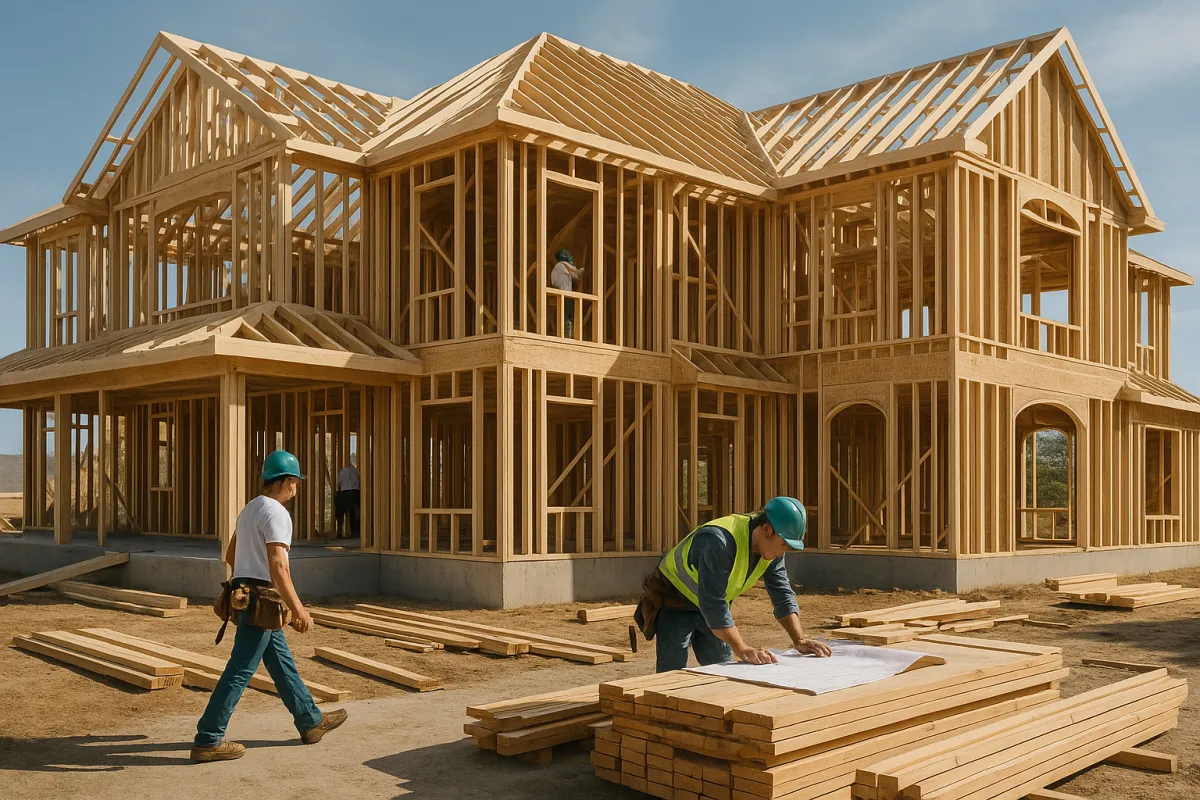
Dwelling coverage includes the house and the things that are permanently part of it. Picture what would be left standing if you could lift out everything you own and carry it away: the frame, the roof, the exterior and interior walls, the floors, the foundation, the ceilings, the windows and doors. All of that is the dwelling. So are the systems built into the structure, the electrical wiring, the plumbing, the heating and cooling equipment, and the ductwork that runs through the walls.
Built-in features come along with the structure too. Kitchen cabinets, countertops, built-in appliances such as a wall oven or dishwasher, installed light fixtures, and permanently attached flooring are generally part of the dwelling rather than personal property, because they are fixed to the house rather than sitting in it. The test that usually decides is attachment: if removing the item would damage the structure or leave a hole, it tends to be dwelling; if you could pick it up and take it when you move, it tends to be personal property. Attached structures follow the same logic, which is the subject of the next section.

What dwelling coverage does not include
Just as important as what Coverage A covers is what it leaves to other coverages, because the gaps are where people get surprised. Dwelling coverage does not cover your personal belongings. The furniture, clothing, electronics, and everything else inside the house are insured under personal property coverage, a separate layer with its own limit. It does not cover detached structures, which fall under other structures coverage. And it does not cover the land your home sits on, which is never insured at all, for reasons the next sections explain.
Dwelling coverage is also not a maintenance warranty. It responds to sudden, accidental damage from covered perils, not to wear and tear, gradual deterioration, or the normal aging of the house. A roof that simply wears out over decades is a maintenance expense, not a claim; a roof torn off by a windstorm is a covered dwelling loss. The same line separates a slow, long-ignored leak, which reads as neglected maintenance and is typically excluded, from a pipe that bursts suddenly, which is generally covered. And certain perils are excluded from standard policies entirely, most notably flood and earthquake, which require their own coverage regardless of how the dwelling is written. Knowing the edges of Coverage A before a loss is what turns an unpleasant surprise into an informed expectation.
Attached versus detached: where Coverage A ends
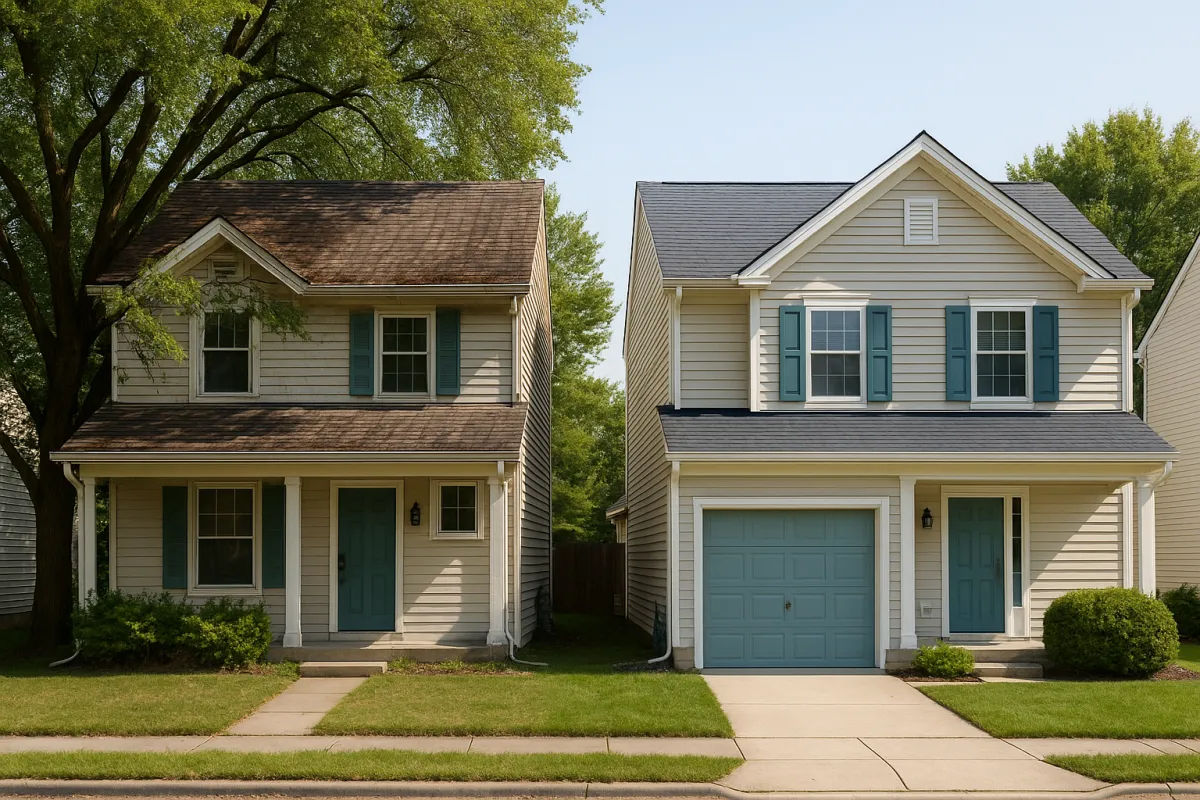
The cleanest way to know whether something is covered by dwelling coverage or by other structures coverage is to ask whether it is attached to the house. Attached structures are generally part of the dwelling. An attached garage that shares a wall with the house, an attached deck or porch, a sunroom built onto the back, a carport fixed to the structure: these are covered under Coverage A because they are physically part of the building the dwelling limit is meant to rebuild.
Detached structures are not. A freestanding garage at the end of the driveway, a garden shed, a backyard studio, a gazebo, a fence, or a detached workshop are insured under other structures coverage (Coverage B), a separate limit that is usually a percentage of the dwelling amount. The distinction sounds like a technicality until a claim lands on the wrong side of it. A homeowner who assumes a large detached garage is covered by the same generous dwelling limit as the house can find it is actually insured under a much smaller other-structures percentage. The rule is worth memorizing because it decides which limit, and which amount of money, answers a given loss: attached to the house means dwelling, standing on its own means other structures.
The land is never insured
One of the most useful facts about dwelling coverage is also one of the least intuitive: you do not insure the land, only the structure on it. When a home is destroyed, the lot it sits on is still there. The ground does not burn, wash away in a house fire, or need to be repurchased. What has to be rebuilt is the building, so that is what dwelling coverage prices and pays for.
This single fact is why market value is the wrong number to insure to, and it deserves to be stated plainly because so much confusion flows from missing it. The price a buyer would pay for your property bundles together the structure and the land, and in many markets the land and location are a large share of that price. Insurance has no reason to cover the land, because a covered loss never destroys it. Strip the land out of the equation and what remains is the cost to reconstruct the building, which is the replacement cost, and which is what your dwelling limit should reflect. A reader who internalizes only one idea from this note should keep this one: dwelling coverage insures a building, not a piece of real estate, and the building is the only part a loss can take from you.
How much dwelling coverage you need: rebuild cost, not market value
The right amount of dwelling coverage is your home’s replacement cost, the amount it would take to rebuild the physical structure from the foundation up at current construction prices. Not what you paid for the house. Not what it would sell for today. What a contractor would charge to reconstruct the same home where it stands, at the labor and material prices that apply now.
The reason follows directly from what dwelling coverage is for. A covered total loss leaves you with the cost of rebuilding a house, and that bill is set by construction, not by the real estate market. Insure to the market value and you can miss in either direction. If land and location dominate your home’s price, market value overshoots the rebuild cost and you pay premiums on coverage a loss can never use. If your home is a modest older structure with expensive-to-reproduce craftsmanship in an inexpensive area, market value can undershoot the rebuild cost, and a total loss leaves you short of the money to rebuild. Only replacement cost measures the thing dwelling coverage actually has to pay for. Sizing every layer of a policy, and where the other numbers come from, is the subject of our coverage note on how much home insurance you need; for Coverage A specifically, the rebuild cost is the whole answer.
Replacement cost vs market value on the structure
Because the gap between rebuild cost and market value causes so much underinsurance and overinsurance, it is worth sitting with the two numbers side by side. Market value answers the question a buyer asks: what is this property worth to own. It includes the structure, the land, the neighborhood, the school district, and the mood of the local market. Replacement cost answers the question your insurer will actually face: what does it cost to put this specific building back. It includes construction only.
Neither number is a good proxy for the other, and the direction of the gap depends on the home. In an expensive metropolitan market, a fairly ordinary house can command a high price almost entirely because of where it sits, and cost far less than that price to rebuild. In a cheaper rural market, a large or intricately built home can cost more to reconstruct than it would ever sell for. Both situations are common, and both punish an owner who insured to the wrong figure. The practical takeaway is to stop thinking about the sale price entirely when you set your dwelling limit and to think only about the construction estimate. The sale price is a fact about the market; the dwelling limit is a fact about the building.
What actually drives your rebuild cost
Since replacement cost is a construction estimate, it moves with the things that drive construction. The largest single driver is size: the square footage that has to be rebuilt, multiplied by a local cost per square foot that varies by region and changes over time. That base figure is where most of the number comes from, which is why a rough rebuild estimate starts with size times a local building rate.
On top of that base, several factors push the estimate up or down. The quality and complexity of the build matter: custom finishes, detailed trim, high-end materials, vaulted ceilings, and unusual architecture all cost more to reproduce than plain builder-grade construction. The home’s systems and features add cost, from the number of bathrooms and their fixtures to specialized heating, wiring, and built-ins. The age of the home can hide costs, because older homes may use materials that are expensive to match and may trigger code-upgrade requirements on a rebuild that the original construction never had to meet. Site conditions play a role, since a difficult or hard-to-access lot slows and raises the cost of construction. And local labor and material prices, which shift year to year and can spike sharply after a regional disaster, set the rates that everything else is multiplied by. Because these drivers change, a rebuild estimate is not a one-time calculation but a number that drifts, which is exactly how careful owners become underinsured without doing anything wrong.
How insurers calculate your dwelling coverage
When you buy or renew a policy, the insurer does not usually ask you for a rebuild figure and take it on faith. It estimates one, using a replacement cost valuation tool that takes in your home’s characteristics and returns an estimated cost to rebuild. The inputs are the drivers from the previous section: square footage, number of stories, construction type and exterior materials, roof type, the count and quality of bathrooms and kitchens, foundation type, and any custom or high-end features the insurer knows about, all priced against local construction costs.
The accuracy of that estimate depends entirely on how accurately your home’s details went into it. A valuation tool told your home has standard finishes will underprice a house full of custom work, and a tool that never heard about a finished basement or a renovated kitchen will estimate the house as it was, not as it is. This is why it pays to make sure the insurer knows about quality levels, renovations, and features when the policy is written, and to update them when the home changes. You can sanity-check the insurer’s figure independently: a local builder or appraiser can estimate rebuild cost per square foot in your area, and multiplying that by your home’s size gives a second opinion on the dwelling limit. The insurer’s number is a reasonable starting point, not an unquestionable one, and the cost of the estimate being wrong lands on you, not on the tool.

Replacement cost vs actual cash value on the dwelling
The dwelling limit tells you the ceiling of what a policy will pay, but the settlement basis tells you how the payout is calculated up to that ceiling, and the two most common bases produce very different checks. Replacement cost value pays what it costs to repair or rebuild with comparable new materials at current prices, without deducting for age or wear, up to your limit and after the deductible. Actual cash value pays that replacement cost minus depreciation for the age and condition of what was damaged.
On the structure, that difference is most visible in components that age visibly, and the roof is the classic example. Rebuild a roof under a replacement cost basis and the policy pays for a comparable new roof. Settle the same roof under actual cash value and the payout is reduced for the roof’s age, which on a roof partway through its life can be a substantial cut, leaving you to fund the difference. The same logic applies to siding, flooring, and other structural elements that wear over time. Most owners want their dwelling written on a replacement cost basis for exactly this reason, and it is worth confirming rather than assuming, because some policies, or some components within a policy such as the roof, are written on an actual cash value basis by default. Our note on actual cash value versus replacement cost works this distinction in depth on both the structure and your belongings.
Extended and guaranteed replacement cost
Even a dwelling written on a replacement cost basis has a ceiling, the dwelling limit, and a total loss that costs more than the limit leaves the excess with you. Two provisions exist to soften that edge, and they are among the most valuable upgrades a home policy offers for their price. Extended replacement cost pays above your dwelling limit, typically up to a further percentage cushion, if the rebuild costs more than the coverage amount. Guaranteed replacement cost goes further and pays whatever the rebuild actually costs, with no stated ceiling.
Both provisions address the same failure mode: the estimate that turns out too low, especially after a widespread disaster. When a wildfire or hurricane destroys many homes in a region at once, local labor and material prices can spike exactly when everyone is trying to rebuild, and a dwelling limit that was adequate the day before the disaster can fall short the day after, through no error of yours. An extended replacement cost cushion absorbs that overrun up to its percentage; guaranteed replacement cost absorbs it entirely. For the modest additional premium these provisions typically cost, they convert a rebuild estimate that was merely close into one that did not have to be perfect, which is precisely the kind of protection insurance is for. Availability and the exact terms vary by insurer, so it is worth asking which your policy offers.
The 80 percent rule and coinsurance
Here is the mechanism that turns a little underinsurance into real money lost, and it applies even when you never suffer a total loss. Many homeowners policies tie full settlement to a condition: that your dwelling coverage equals at least a stated share of the home’s full replacement cost. Meet the share your own policy names and partial claims, which are far more common than total losses, are paid normally up to your limits. Fall below it and a coinsurance provision can reduce the payout on claims in proportion to how far short your coverage falls. The version most commonly described sets that share at eighty percent, and this note uses eighty percent as its illustration throughout. Whether the condition applies to your policy at all, what share it names, and how any reduction is calculated are settled by your own policy form and by your state, so read your declarations page and policy wording, or ask your insurer to point you at the clause, rather than trusting a rule of thumb quoted anywhere, including here.
The cruel part is that this penalty applies to partial losses, not just catastrophic ones. A kitchen fire with a repair bill well inside your dwelling limit can still be paid at a reduced rate if your overall dwelling coverage sits below the share your policy requires, because the reduction is about the ratio of your coverage to full replacement cost, not about the size of the individual claim. Homeowners tend to discover this at the claim, which is the worst possible moment to learn it. The defense is straightforward: keep your dwelling limit at, or comfortably above, the threshold against a current and honest rebuild estimate, and revisit the number as construction costs move rather than letting the policy renew on autopilot for years. An extended replacement cost provision helps here too, giving the estimate room to be a little low without dropping you under the line.
Dwelling coverage versus the other coverages (A through D)
Dwelling coverage is the foundation, but it is only one of the lettered coverages on a homeowners policy, and seeing them together makes clear where each one starts and stops. The table below lays out the four property coverages, what each insures, and how it is typically sized. The dwelling limit is the reference the others are measured against, which is the practical reason getting Coverage A right matters so much: it sizes the whole stack.
| Coverage | What it covers | How it is typically sized |
|---|---|---|
| A: Dwelling | The physical structure of your home and anything attached to it: frame, roof, walls, floors, foundation, built-in systems and fixtures | Set to the home’s full replacement (rebuild) cost |
| B: Other structures | Detached structures on the property: a separate garage, shed, fence, gazebo, or backyard studio | Commonly a percentage of the dwelling limit, often around 10% |
| C: Personal property | Your belongings inside the home: furniture, clothing, electronics, kitchenware, and other contents | Commonly a percentage of the dwelling limit, often 50% to 70% |
| D: Loss of use | Extra living costs if the home is uninhabitable during repairs: temporary housing, higher food and living expenses | Commonly a percentage of the dwelling limit, often around 20% |
Because Coverages B, C, and D are so often expressed as percentages of the dwelling limit, an error in Coverage A does not stay contained: it shrinks other structures, personal property, and loss of use along with it. That cascade is why this note treats the dwelling amount as the master number. The next three sections take each of the other coverages in turn, so the boundaries with dwelling coverage are unmistakable.
Coverage B: other structures
Other structures coverage insures the buildings and installations on your property that are not attached to the main house. The detached garage, the storage shed, the backyard studio, the fence, the gazebo, the detached workshop, the driveway gate: all of these sit under Coverage B rather than Coverage A, precisely because they stand apart from the dwelling. It is usually included automatically and set as a percentage of the dwelling limit, commonly in the neighborhood of ten percent, without you having to ask for it.
The percentage default is where the coverage can quietly fall short. A property with a large detached garage, an expensive fence line, an outbuilding, or a substantial backyard structure can hold far more value in other structures than the standard percentage of the dwelling limit would rebuild. Because the amount is derived from the dwelling figure rather than from an inventory of what actually stands on the lot, nobody checks it against reality unless prompted. A short walk around the property, totaling what it would cost to rebuild each detached structure at current prices and comparing that to the other-structures limit, is the check that catches the gap. Where the number falls short, the limit can usually be raised for a modest premium, which is far cheaper than discovering the shortfall after a storm flattens the detached garage.
Coverage C: personal property
Personal property coverage, Coverage C, insures your belongings, everything you would take with you if you moved. Furniture, clothing, electronics, appliances that are not built in, kitchenware, tools, and the contents of every closet and drawer fall here, not under dwelling coverage. This is the layer that draws the sharpest line against Coverage A: the house is the dwelling, the stuff inside it is personal property, and the two are insured separately with separate limits.
Personal property is typically set as a percentage of the dwelling limit, often somewhere between fifty and seventy percent, and most owners accept that default without ever checking whether it matches what they own. The only honest way to size it is a home inventory, a room-by-room accounting of what it would cost to replace your belongings new. People are consistently surprised by the total, because a household accumulates value in small increments nobody adds up. Two further details matter: personal property can be written on a replacement cost or an actual cash value basis, just like the dwelling, and certain categories such as jewelry, cash, and collectibles carry sublimits that cap how much the policy pays for them regardless of the overall limit. Because these are separate topics from Coverage A, this note only flags them; the point here is simply that your belongings are not part of dwelling coverage.
Coverage D: loss of use
Loss of use coverage, Coverage D, pays the extra costs of living somewhere else while your home is repaired or rebuilt after a covered loss. If a fire makes the house uninhabitable, you still need somewhere to live, and that somewhere costs money: a rental, higher food costs, extra commuting, the difference between your normal expenses and your displaced ones. Loss of use, sometimes called additional living expenses, covers that difference for the period the home cannot be lived in.
It is easy to overlook because it does not repair anything you can point to, but it can be a substantial sum, because it is tied to how long a rebuild takes, and full rebuilds routinely run many months. After a widespread disaster, when every contractor in the region is booked, timelines stretch further, and a household displaced for close to a year accumulates a large bill. Loss of use is typically set as a percentage of the dwelling limit, often around twenty percent, which means, like the other layers, it inherits any error in the dwelling figure. When you review a policy, it is worth looking at the loss-of-use limit and asking honestly whether it would fund a long displacement in your area. It is the quiet coverage you actually live on if the dwelling coverage is ever called into action.
How to read your dwelling coverage on the declarations page
All of this becomes concrete on one document: the declarations page, the summary sheet at the front of your policy that lists your coverages and their limits. Dwelling coverage appears there, usually labeled Coverage A or simply Dwelling, with a dollar amount next to it. That amount is your dwelling limit, the maximum the policy will pay to rebuild the structure, and it is the number to check first when you review a policy.
Reading the page with intent takes a few minutes and answers the questions that matter. Compare the Coverage A amount to a current rebuild estimate, not to your home’s market value and not to the figure from when you first bought the policy. Look for how the dwelling is settled, replacement cost or actual cash value, and check whether any component such as the roof is settled differently. Look for an extended or guaranteed replacement cost endorsement, and for an inflation-adjustment provision that nudges the limit up each year. Note the deductible that applies to a dwelling claim, and watch for separate percentage-based deductibles for wind or hail, which are calculated as a percentage of the dwelling limit and can be much larger than a flat deductible. The declarations page is where an abstract policy becomes a set of specific numbers you can check against your actual house.

What each settlement basis pays on the same loss
The dwelling limit and the settlement basis interact, and it helps to see how much of a rebuild each basis actually delivers on the same loss. The chart below is illustrative: it compares, for one hypothetical loss, roughly how much of the full rebuild cost each common approach pays before your deductible. The point is not the exact percentages, which vary by policy and by how depreciated the damaged components are, but the ordering, which holds broadly.
How much of a rebuild each settlement basis pays
Illustrative share of full rebuild cost paid on the same loss, before deductible. Every policy differs.
Actual cash value deducts depreciation, so it pays a fraction of the rebuild on aged components. Replacement cost pays the full rebuild up to your limit, and the extended and guaranteed provisions add a cushion above it. Bars are scaled to a full-rebuild-plus reference.
Read from top to bottom, the chart is the case for setting the dwelling on a replacement cost basis and adding an extended or guaranteed cushion where offered. Actual cash value is the cheapest to buy and the thinnest at a claim, because depreciation on an aged structure can carve the payout well below the rebuild cost. Replacement cost restores the full rebuild, but only up to the limit, which is why the limit has to be accurate. The extended and guaranteed provisions exist for the day the accurate limit still turns out too low.
Being underinsured: how the gap opens
Underinsurance on the dwelling is rarely a careless decision; it is usually drift. A homeowner buys a policy with a reasonable rebuild estimate, and then time passes. Construction costs rise steadily, and occasionally jump, especially after regional disasters when demand for labor and materials spikes. A renovation adds a bathroom or finishes a basement, raising the true rebuild cost by an amount the policy never heard about. Meanwhile the dwelling limit stays frozen where it was set, and the gap between what the policy would pay and what a rebuild would cost widens quietly, year by year.
The layers of a home policy, sized off the dwelling limit
Illustrative shares of total coverage value in a standard policy. Every policy differs.
Because the other coverages are set as percentages of the dwelling limit, an error in Coverage A shrinks the entire stack, not just the structure coverage.
The consequences of the gap show up in two ways. On a total loss, the policy pays only up to the dwelling limit, so a rebuild that costs more than the limit leaves the difference with you at the moment you can least afford it. On partial losses, the coinsurance mechanism can reduce payouts if the frozen limit has slipped below the share your policy requires. Both are invisible while premiums are being paid and decisive when a claim arrives, which is why the gap is so dangerous: nothing about the monthly bill signals that the coverage no longer matches the house. The fix costs an hour every year or two, re-estimating the rebuild cost, reporting renovations, and letting the limit track reality, ideally with an extended replacement cost provision absorbing whatever error remains.
Ordinance or law: the rebuild cost the limit forgets
A quiet gap sits between what a loss destroys and what a modern rebuild actually costs, and its name is ordinance or law coverage. When an older home is rebuilt, local building codes usually require the new structure to meet current standards: updated wiring, modern plumbing, storm-resistant construction, added insulation, and sometimes the demolition and removal of undamaged portions that no longer comply. A standard dwelling limit pays to rebuild what was there, not to satisfy code requirements the original house never met, so the difference can land on the homeowner precisely when the budget is already stretched.
Ordinance or law coverage closes that gap, typically added as an endorsement or included up to a stated percentage of the dwelling limit. The older the home and the stricter the local code, the more it matters, because a house built decades ago can trigger substantial upgrade costs on a rebuild that a newer home would not. It is one of the coverages people never think about until a partial rebuild reveals it, and one of the cheaper ones to shore up beforehand. When you review your dwelling coverage, it is worth asking what the policy currently allows for code upgrades and weighing that against the age of your home and the likelihood that a rebuild would trigger meaningful code work.
How to estimate your dwelling coverage
So how do you actually arrive at the number? Several paths converge on it, and using more than one is the best defense against a bad estimate. The insurer’s replacement cost valuation tool is the starting point, and its output is only as good as the home details fed into it, so make sure it knows about your home’s size, construction type, quality level, and any renovations. For an independent check, a local builder or appraiser can estimate the rebuild cost per square foot in your area, which multiplied by your home’s size gives a second opinion the insurer’s tool cannot override.
Between formal reviews, apply the drift logic from earlier: nudge the estimate upward with construction inflation, and update it after any renovation that adds structure. And use a structured tool to keep yourself honest. Our replacement-cost estimator walks through the size, quality, and feature inputs that drive the number and returns a rebuild figure you can compare against your current dwelling limit. Treat any single estimate as informed rather than exact, because no tool can see every custom finish, hard-to-match material, or local cost spike, which is precisely why extended and guaranteed replacement cost provisions exist as a cushion. The goal is not decimal precision, which no estimate has; it is to land near the true rebuild cost, on the safe side of the eighty percent line, with a provision absorbing whatever error remains.
Common dwelling coverage mistakes
The same handful of errors accounts for most of the pain at claim time.
- Insuring to market value or purchase price. The rebuild cost is the bill; the sale price, which includes land and location, is irrelevant to it in both directions.
- Letting the dwelling limit drift. Construction inflation plus a frozen limit equals quiet underinsurance and a coinsurance problem under whatever share your policy requires.
- Assuming actual cash value pays to rebuild. On an aged structure, depreciation can carve an actual cash value payout well below the cost of a rebuild, especially on the roof.
- Confusing dwelling with the whole policy. Coverage A is the structure only; belongings, detached structures, and living costs are separate coverages with their own limits.
- Overlooking code-upgrade costs. Without ordinance or law coverage, a rebuild that must meet current codes can cost more than the dwelling limit allows.
- Skipping the extended replacement cushion. For a small premium, it is the difference between an estimate that has to be perfect and one that only has to be close.
Every one of these is invisible while premiums are being paid and decisive when a claim arrives, which is exactly why they persist. Checking them costs an evening; each one, left uncorrected, can cost a meaningful share of a rebuild.
A worked example: sizing Coverage A on one home
To make the pieces concrete, walk through one illustrative home. Suppose a 2,000 square foot house in an area where local rebuild costs run an illustrative $200 per square foot. Size times rate gives a rebuild estimate of about $400,000, and that figure, not the home’s market price, is the dwelling limit the policy should carry. If this home would sell for $550,000 because the lot and location are valuable, insuring to that sale price would waste premium on $150,000 of coverage a loss can never use, since the land does not burn. If instead it would sell for $320,000 in a soft market, insuring to that sale price would leave the owner $80,000 short of a rebuild after a total loss. The rebuild estimate is the only figure that sizes Coverage A correctly.
From that $400,000 dwelling limit, the rest of the policy follows: other structures at roughly ten percent, personal property at perhaps sixty percent, loss of use at around twenty percent, each a percentage of the dwelling figure. Now layer on the settlement basis. On a replacement cost basis, a covered total loss pays up to the $400,000 limit; on an actual cash value basis, an aged roof and dated systems would be depreciated first, paying less. Add an extended replacement cost provision at twenty-five percent and the limit is effectively backed to about $500,000 before the owner is exposed, which is the cushion that matters if a regional disaster spikes construction costs. Run your own home’s size and local rebuild rate through our replacement-cost estimator to get the equivalent numbers for your house, then compare the result to the Coverage A amount on your declarations page.
The bottom line
Dwelling coverage is the part of a home insurance policy that rebuilds the physical structure of your home, and it is the number the rest of the policy is built on. Insure it to replacement cost, what it costs to rebuild at today’s construction prices, rather than to market value or purchase price, because the land is never at risk and never needs to be repurchased. Keep the dwelling limit current so drift and your policy’s replacement-cost condition never catch you, write the coverage on a replacement cost basis, and add an extended or guaranteed replacement cost provision as cheap insurance on your estimate. Know the edges of Coverage A, that it covers the structure and what is attached to it but not the land, your belongings, or detached structures, so nothing about a claim surprises you. Do that, and dwelling coverage stops being a line on a page you pay for on faith and becomes what it was always meant to be: the money that actually puts your house back.
SumSured publishes coverage notes like this one for education, not as insurance advice. Policies differ, and the coverage structures, settlement bases, percentages, and dollar figures described above are illustrations rather than quotes or promises of how any specific claim will pay. Coverage A terms, the availability of extended or guaranteed replacement cost, and how a roof or other aged component is settled all vary by insurer and by state. Treat everything here as a prompt for better questions, then confirm your own dwelling limit, settlement basis, and endorsements against your policy declarations and with a licensed insurance professional before making coverage decisions.
Frequently asked questions
What is dwelling coverage?
Dwelling coverage, listed as Coverage A on a standard home insurance policy, is the part that pays to repair or rebuild the physical structure of your home after a covered loss. It covers the house itself: the frame, roof, walls, floors, foundation, and the systems built into it such as wiring, plumbing, and permanently installed fixtures. It does not cover the land, your belongings, or, in most policies, detached structures like a separate garage, which fall under other parts of the policy. The dwelling coverage amount, called the dwelling limit, is the single most important number on your policy because most other coverages are calculated as a percentage of it.
What does dwelling coverage cover?
Dwelling coverage covers the structure of your home and the things permanently attached to it. That includes the roof, exterior and interior walls, floors, foundation, built-in appliances, cabinets, countertops, and the home's core systems for electricity, plumbing, and heating and cooling. An attached garage, an attached deck, and a built-in porch are generally covered under the dwelling because they are part of the structure. What it does not cover is your personal belongings, which fall under personal property coverage, or the land your home sits on, which is never insured because it does not need to be rebuilt.
How much dwelling coverage do I need?
You need enough dwelling coverage to fully rebuild your home at current construction prices, which is its replacement cost, not its market value or purchase price. Market value includes the land and the neighborhood, which do not have to be rebuilt after a fire, so it is the wrong number to insure to. The replacement cost is what a contractor would charge to reconstruct the same house where it stands, using today's labor and material prices. Because construction costs rise over time, the right amount is a moving target that should be reviewed periodically rather than set once and forgotten.
What is the difference between dwelling coverage and replacement cost?
They describe different things. Dwelling coverage is the category on your policy that insures the structure, and the dwelling limit is the dollar amount of that coverage. Replacement cost is a method of valuing a loss: it pays what it costs to rebuild or repair at current prices, without deducting for depreciation. Your dwelling coverage can be written on a replacement cost basis or an actual cash value basis, and the difference decides whether a claim pays enough to rebuild. Most owners want dwelling coverage set to a replacement cost basis with a limit that matches a current rebuild estimate.
Does dwelling coverage include the roof?
Yes, the roof is part of the physical structure and is covered under dwelling coverage. How much a roof claim actually pays depends on whether your policy settles the dwelling on a replacement cost basis or an actual cash value basis. On a replacement cost basis, a covered roof loss is paid at the cost to install a comparable new roof, subject to your deductible. On an actual cash value basis, the payout is reduced for the roof's age and wear, which on an older roof can be a large reduction. Some policies also apply a separate roof settlement schedule, so it is worth confirming how yours treats roof age.
What is the difference between dwelling coverage and other structures coverage?
Dwelling coverage (Coverage A) insures the main house and anything attached to it, while other structures coverage (Coverage B) insures structures on your property that are not attached to the house. A detached garage, a standalone shed, a fence, a gazebo, or a backyard studio fall under other structures, not the dwelling. Other structures coverage is commonly set as a percentage of your dwelling limit, often around ten percent, and applied automatically. If you have expensive detached structures, that default percentage may fall short of what it would cost to rebuild them, which is worth checking against reality.
What happens if my dwelling coverage is too low?
If your dwelling limit is below your home's replacement cost, you are underinsured, and the shortfall surfaces at the worst possible moment, after a loss. On a total loss, the policy pays only up to the limit, so a rebuild that costs more than the limit leaves the difference with you. Underinsurance can also trigger a coinsurance penalty on partial claims: many policies condition full settlement on your carrying at least a stated share of full replacement cost, and falling below the share your own policy names can reduce the payout on even a small claim. The version most commonly described sets that share at eighty percent, but the exact share, and whether the condition applies at all, are set by your policy form and your state, so check your own wording rather than a rule of thumb. The fix is to keep the dwelling limit matched to a current rebuild estimate and to consider an extended or guaranteed replacement cost provision as a cushion.
Is dwelling coverage the same as homeowners insurance?
No. Dwelling coverage is one part of a homeowners insurance policy, not the whole thing. A standard policy bundles several coverages together: dwelling (Coverage A) for the structure, other structures (Coverage B), personal property (Coverage C) for your belongings, loss of use (Coverage D) for living costs during a rebuild, plus personal liability and medical payments coverages. Dwelling coverage is the foundation the others are often sized from, but a complete homeowners policy is the full stack, and each layer answers a different kind of loss.

Hamza Hai is the editor of SumSured. She holds an MBA and reviews the site's articles against our editorial standards, checking that every figure is labelled for what it is, that nothing is presented as verified fact without a source the reader can check, and that the writing stays useful to a non-specialist.