What's in this note
- Why a carrier inspects a home at all
- The four moments an inspection gets ordered
- Who actually shows up and who they work for
- The exterior-only drive-by inspection
- Aerial and satellite imagery review
- The interior walkthrough
- The four-point inspection
- The wind mitigation inspection
- What the inspector records about the roof
- Electrical panels and wiring
- Plumbing supply lines and the water heater
- Heating source, chimneys and secondary heat
- Trip, fall and liability hazards
- Trampolines, pools and dogs
- Detached structures, fences and outbuildings
- Evidence of business use
- The replacement-cost estimate the visit produces
- What happens when the estimate raises your dwelling limit
- The common findings list
- The repair-or-non-renew letter
- How long you typically get to cure
- A worked example: one re-inspection priced
- How to prepare for the visit
- How to dispute a finding you believe is wrong
- What an inspection does not decide
- The bottom line
Short answer: Expect a home insurance inspection to be a routine underwriting check, not a claim investigation, usually triggered by a new policy, a re-inspection cycle, or an aerial image. It comes as exterior-only, aerial review, a full interior walkthrough, or a four-point and wind mitigation report. It produces a condition report and a replacement-cost estimate that can raise your dwelling limit, and a findings letter commonly asks for repairs within thirty to ninety days.
The letter arrives with no warning and no claim behind it. Your insurance company is sending someone to inspect the house. For most homeowners the immediate reading is that something has gone wrong, that a neighbour reported something, or that the policy is about to be pulled. Almost always none of that is true. An underwriting inspection is a routine part of how carriers verify what they are insuring, and the majority of them end with nothing more than a slightly adjusted dwelling limit and a renewal that looks much like the last one.
The visits that do produce work are worth understanding in advance, because the findings letter that follows tends to arrive with a deadline attached and very little explanation of what the deadline means. This coverage note covers why an inspection gets ordered at all, the four different kinds you might get and how far each one goes, exactly what the inspector writes down about the roof, the panel, the plumbing, the heating, and the yard, what the replacement-cost estimate produced by the visit does to your coverage amount, what the repair-or-non-renew letter is actually asking for, how much time you typically get, how to prepare, and how to push back on a finding you think is wrong.
It sits alongside our note on reading a declarations page line by line, which shows where the numbers an inspection changes are printed, and our note on why home insurance premiums rise, which covers the other things moving your rate at the same time. Price your own version in the companion below as you read.
Key takeaways
- An inspection is an underwriting exercise, not a claim investigation, and the usual triggers are a new policy, a periodic re-inspection cycle, a coverage or rating change, or something an aerial image flagged.
- The visit produces two separate outputs that get confused with each other: a condition report listing findings, and a replacement-cost estimate that can raise your dwelling limit and your premium without any finding at all.
- Four formats exist and they are not interchangeable: exterior-only, aerial imagery review, full interior walkthrough, and the specialised four-point and wind mitigation reports common in older housing stock and coastal states.
- A findings letter usually asks for repairs within a stated window, commonly cited in a thirty to ninety day range, with non-renewal held in reserve rather than applied immediately, but the actual period is the one printed on your own notice.
- Most disputes turn on a fact rather than a judgement, and a dated permit, an invoice, a data plate photograph, or a licensed contractor's letter resolves more findings than argument does.
Why a carrier inspects a home at all
An insurance policy is a promise priced from a description. When a policy is written, almost everything the carrier knows about your house came from an application, a public records lookup, and a rating model. The square footage, the year built, the roof age, the construction type, and the condition are all assertions until somebody checks them. An inspection is the check.
There is a second purpose that gets less attention and matters more to your wallet. The carrier needs a defensible estimate of what it would cost to rebuild the structure, because that number sets Coverage A and therefore sets a large share of the premium. Desktop valuation models produce a figure from square footage and a regional cost index. An inspector standing in the kitchen can see whether the finishes are builder grade or custom, whether the ceilings are eight feet or twelve, and whether the detached garage is a shed or a second building.
The third purpose is exposure control. Carriers manage aggregate risk across whole books of business, and condition problems that were acceptable a decade ago are frequently no longer acceptable now. Roof age rules have tightened in many markets. Certain electrical panel types are refused outright by carriers that once wrote them. None of that is personal, and understanding it as portfolio management rather than as judgement of your housekeeping makes the letter that follows much easier to read.
The four moments an inspection gets ordered
The first is new business. A policy written for the first time on a property the carrier has never seen is the most common trigger of all, and the inspection typically happens in the first thirty to sixty days after the policy incepts. During that initial window most states give the carrier broad latitude to cancel for underwriting reasons, which is exactly why the inspection is scheduled then.
The second is the periodic re-inspection. Carriers cycle through existing policies on a schedule, often weighted toward older homes, higher-value homes, and properties in areas with elevated loss experience. If you have held the same policy for years and an inspector suddenly appears, this is usually why. Nothing about your account changed. Your turn came up.
The third is a change on the policy. A large increase in the dwelling limit, an addition or renovation, a change of occupancy from owner-occupied to rented, a new pool, or a switch in how the property is used will often prompt a look. Our note on landlord insurance covers the occupancy question, which is one of the changes most likely to trigger both an inspection and a re-rate, and our note on vandalism coverage covers what happens to the policy when a property is reported as standing empty.
The fourth is an image flag. Carriers now review aerial and satellite imagery at scale, and an automated read of your roof or your yard can put your address on a list for a physical visit.
Who actually shows up and who they work for
The person at your door is usually not an employee of your insurance company. Most carriers outsource underwriting inspections to national inspection vendors, who in turn use local contractors paid per assignment. That matters for two practical reasons.
The first is that the inspector has no authority to decide anything. They record observations, take photographs, complete a standardised form, and submit it. The decision about what happens next is made by an underwriter who was never at your house and who is reading the form and the photographs. Arguing with the inspector on the doorstep achieves nothing, because they are not the audience for the argument. Being helpful, however, achieves quite a lot, since ambiguity that goes unexplained tends to get recorded as a concern.
The second is that the inspector is not a licensed home inspector performing a buyer’s inspection, and the report is not that document. An underwriting inspection is shorter, narrower, and driven by a checklist the carrier designed around the losses it pays. It will not tell you your dishwasher is failing. It may well record that the handrail on the back steps is loose, because that is a liability claim waiting to happen and a buyer’s inspection cares about it far less.
The exterior-only drive-by inspection
The lightest format is an exterior survey, sometimes called a drive-by or a curbside inspection. The inspector never enters the house and frequently never speaks to you. They photograph the front, the sides where accessible, and the rear if the property allows, then complete a form covering the roof covering and its apparent condition, the siding, the foundation where visible, the gutters, the driveway and walkways, the fencing, any detached structures, the trees near the roofline, and anything in the yard that reads as a liability item.
Because it is cheap, the exterior inspection is used heavily. It is also the one most likely to produce a finding based on a limited view. An inspector standing at the kerb cannot see the rear slope of a hip roof, cannot tell a repaired section from an original one, and cannot see that the peeling trim they photographed was scheduled for painting next month.
That limitation cuts both ways and is worth remembering when a finding arrives. If the report says the roof shows deterioration and you replaced the rear slope two years ago, the inspector may simply not have seen it. Supplying the invoice is not a confrontation. It is filling a gap in a survey that was never designed to be complete. Our note on roof replacement coverage covers what happens to that roof once a claim rather than an inspection is involved.
Aerial and satellite imagery review
The newest and least visible format involves no inspector at all. Carriers buy high-resolution aerial imagery, often flown regularly over populated areas, and run automated analysis across it. The models are trained to identify roof material, roof shape, apparent staining or granule loss, missing or lifted shingles, tarps, debris, swimming pools, trampolines, solar arrays, outbuildings, and vegetation overhang.
The output is a property condition score and a set of flags, and the flags are what reach a human. Some carriers act on them directly with a letter. Others use them to prioritise which addresses get a physical visit, which is why an image review is a common precursor to an inspector arriving.
Two things about imagery review deserve emphasis. It is a top-down view, so it sees the roof extremely well and everything else poorly, which is why roof findings dominate this channel. And it is a snapshot from a specific date, which may be months or years old. A roof replaced last spring can still be flagged from imagery flown the previous summer.
If a finding arrives that you believe is out of date, the date of the imagery is a fair question to ask, and a dated permit or a roofer’s invoice from after that date is usually the fastest resolution. Nothing about an automated flag is a determination.
The interior walkthrough
The full inspection includes the interior, and this is the one that produces the replacement-cost estimate. The inspector will want to see the electrical panel, the water heater, the heating equipment, under-sink plumbing, the attic access if there is one, and enough of the living space to characterise the finishes.
They are measuring and classifying rather than judging your décor. Room counts, ceiling heights, the presence of a fireplace, whether the kitchen has stone or laminate counters, whether the floors are hardwood or carpet, whether the bathrooms have been updated, whether there is a finished basement. Each of those feeds a cost line in the estimating software, and collectively they decide whether the rebuild figure lands near the bottom or the top of the range for a house your size.
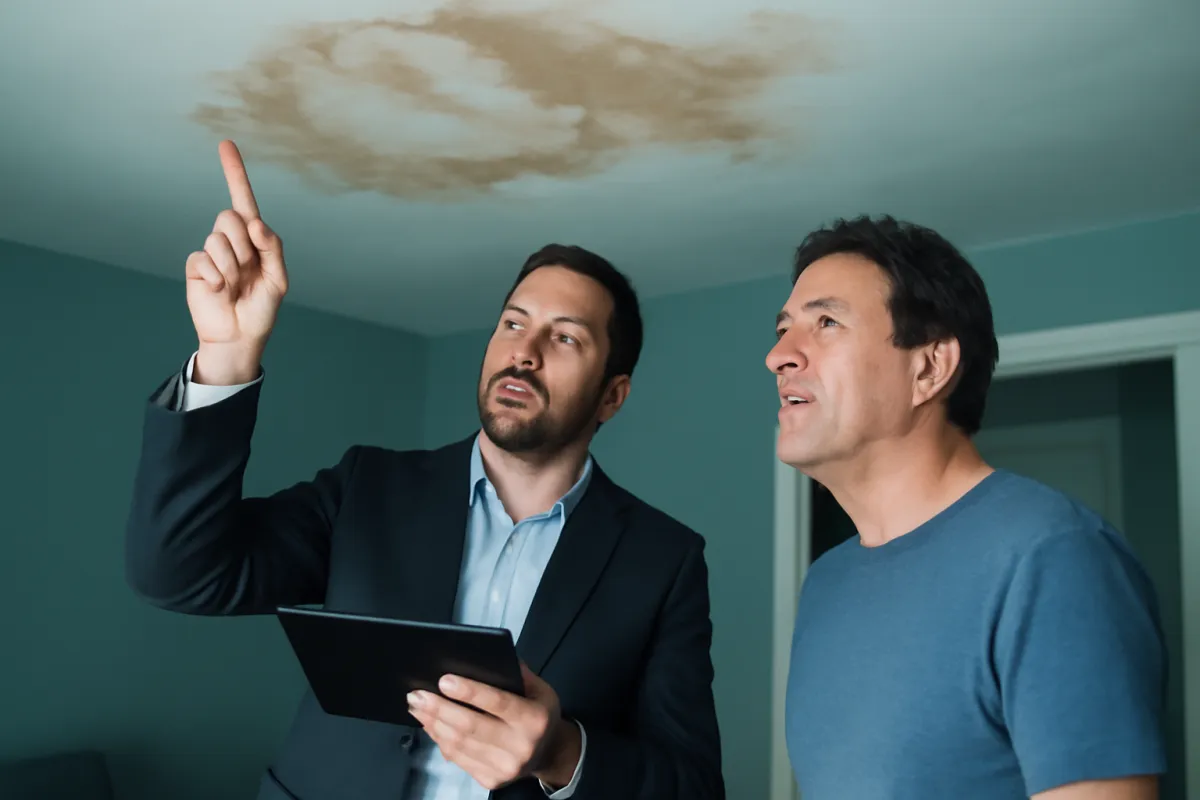
They are also looking for condition and hazard items that an exterior survey cannot reach: water staining on ceilings, evidence of past leaks, obvious mould growth, overloaded circuits, missing smoke alarms, unsafe stairs, and signs that the property is being used for something other than a residence.
Expect the visit to take longer than you assumed and to involve a lot of photographs. Expect the photographs to be of systems and rooms rather than of your belongings. If you have high-value items, the inspection is not the record of them, and our note on scheduled personal property covers the endorsement that is.
The four-point inspection
In older housing stock, particularly in states where insurers have pulled back sharply, a four-point inspection is frequently required before a policy will be written at all. The age threshold varies by carrier and by state and is often cited somewhere around thirty years, but treat that as typical rather than as a rule, because some carriers apply it at twenty-five and others at forty.
The report covers four systems and nothing else. The roof: material, approximate age, remaining service life, and visible condition. The electrical: panel manufacturer and type, amperage, wiring type, and the presence of anything the carrier refuses. The plumbing: supply line material, drain material, water heater age and condition, and evidence of leaks. And the heating and cooling: type, age, and condition.
The narrowness is the point. Those four systems generate a large share of the severe claims that carriers pay on older homes, and a policy can be underwritten reasonably well from their condition alone. It is a condition report, not a valuation, so it does not set your dwelling limit and it says nothing about the rest of the house.
A four-point is often ordered by you rather than by the carrier, arranged through a licensed inspector and paid for out of pocket, with the cost commonly cited somewhere in an illustrative $100 to $200 range that varies widely by market. Ask your agent what your carrier will accept and how recent it must be before you book anything.
The wind mitigation inspection
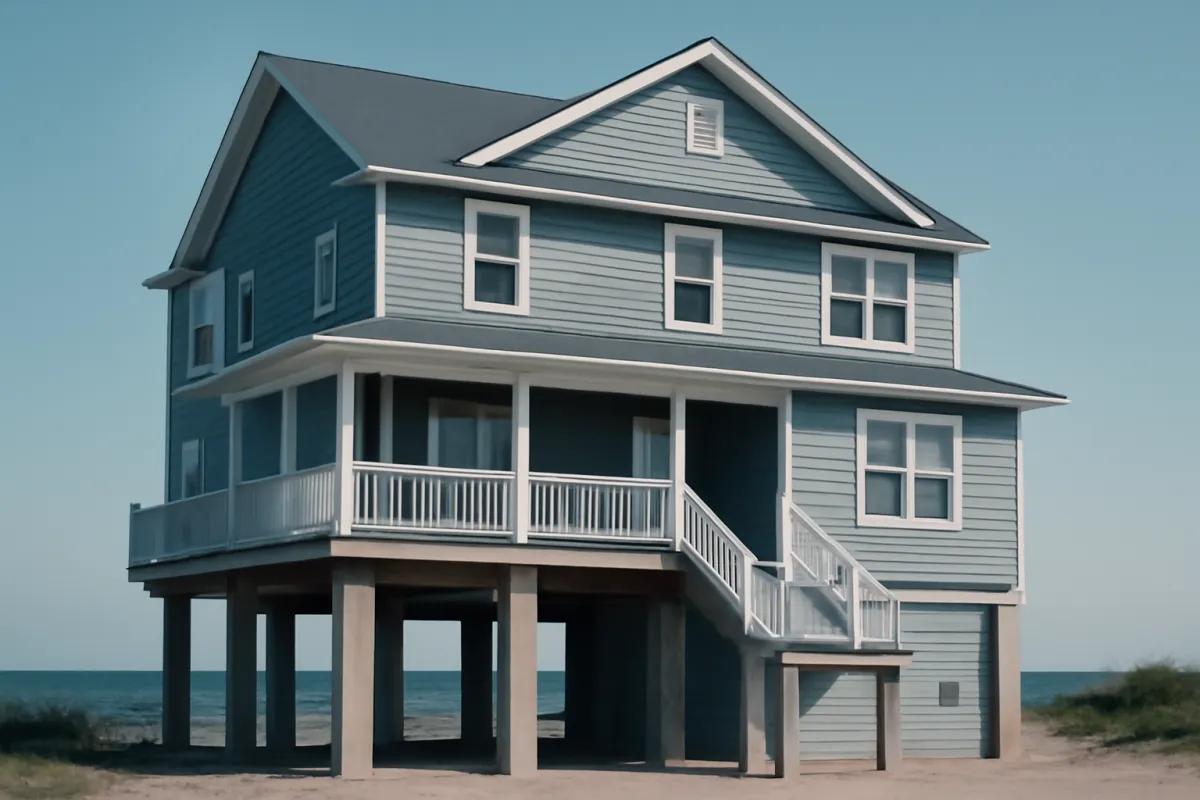
The wind mitigation report is the one inspection homeowners sometimes want. It documents the features of a structure that resist wind uplift and water intrusion, and in several hurricane-exposed states insurers apply premium credits for them.
The categories are consistent. Roof covering and whether it meets current code for wind. Roof deck attachment, meaning the nails or staples holding the sheathing to the trusses. Roof-to-wall connection, the metal straps or clips tying the roof structure down. Roof geometry, since a hip roof sheds wind loads better than a gable. Secondary water resistance, an additional barrier under the covering. And opening protection, meaning shutters or rated glazing on windows and doors.
Where credits exist they can be meaningful, and a report that documents strong features sometimes pays for itself in a single renewal. Where the features are absent, the report may earn nothing at all, and the honest position is that this is a lottery whose odds depend on your building rather than on your paperwork.
Two cautions. Credits are a function of state regulation and each carrier’s filed rates rather than a universal discount, so ask whether yours are credited before paying. And a wind mitigation report does not change your hurricane or wind deductible, which is a separate structure covered in our note on wind and hail deductibles.
What the inspector records about the roof
The roof is the dominant item in almost every underwriting inspection, and it produces more findings than everything else combined. The report captures material, approximate age, shape, layers, and condition, and each of those can independently trigger a requirement.
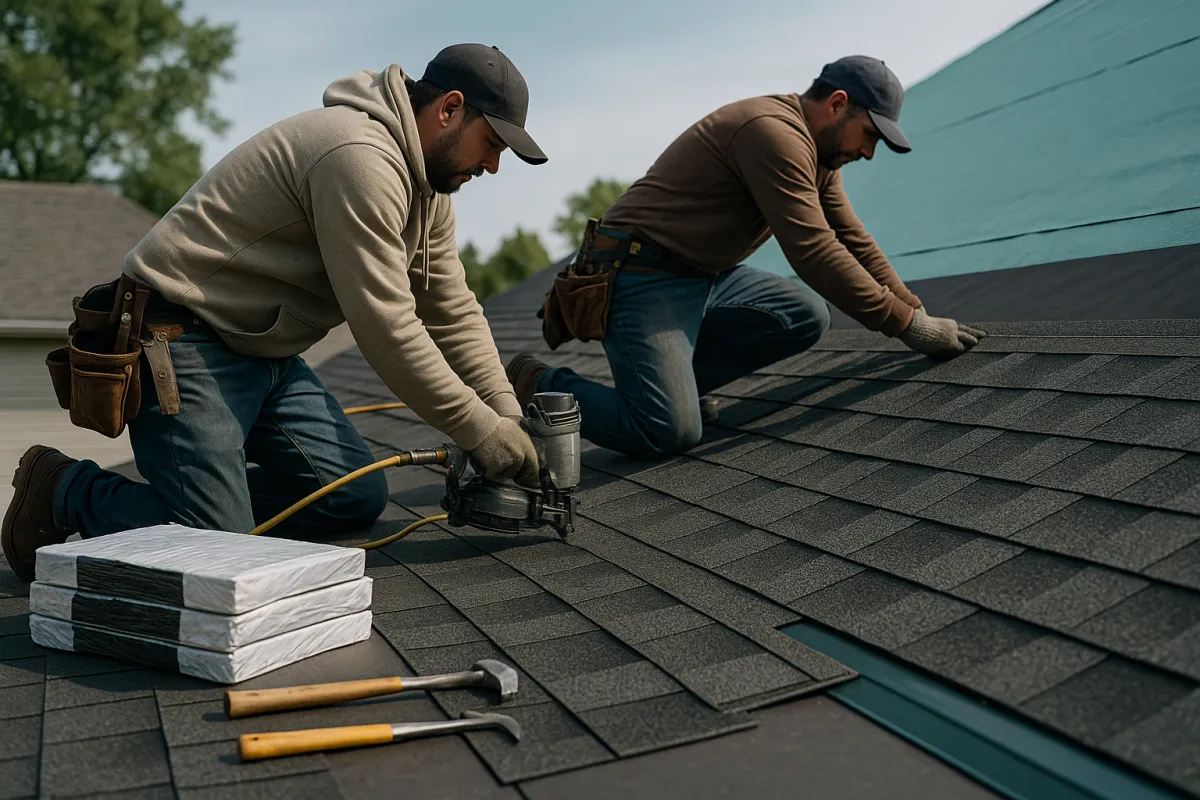
Age is the one that decides most outcomes. Many carriers now apply a maximum age for a roof they will insure on a replacement-cost basis, and beyond that age they either move the roof to actual cash value settlement, apply a separate roof deductible, or decline the risk. The cutoffs vary enormously by carrier, by state, by roof material, and by year, and anyone quoting you a universal number is guessing. Read the requirement on your own notice.
Condition is judged from visible evidence: granule loss, cupping or curling, missing or lifted shingles, exposed underlayment, patched sections, moss growth, damaged flashing at chimneys and valleys, and sagging in the deck line. Layers matter because a second layer over an existing roof is refused by some carriers and shortens service life.
The distinction between an ageing roof and a damaged roof is worth holding onto. Damage from a covered peril is a claim. Age and wear are maintenance and are never a claim. Our note on whether a leaking roof is covered works through that line, which is the same line the inspector is drawing.
Electrical panels and wiring
The electrical section of an inspection is short and consequential. The inspector photographs the panel, the label inside the door, the breakers, and the service entrance, and records the panel type, the amperage, and the branch wiring material.
Certain panel types are refused by a large share of carriers, on the basis of a long-standing view that particular designs fail to trip reliably. The carrier’s position is usually not that the panel is definitely dangerous but that it will not underwrite the possibility, and the requirement is replacement rather than repair. This is one of the least negotiable findings in the whole report.
Wiring material matters similarly. Knob and tube wiring and aluminium branch wiring both draw requirements from many carriers, sometimes replacement, sometimes remediation by an approved method with an electrician’s certification. Service size is a lesser issue, though a very small service on a house with modern loads occasionally gets flagged.
The rest is condition: open knockouts, double-tapped breakers, exposed splices without a box, extension cords used as permanent wiring, and missing covers. Those are usually inexpensive to correct and are exactly the sort of finding an electrician can clear in an afternoon with an invoice you can send in. Price the cure against your renewal in the companion below.
Plumbing supply lines and the water heater
Water is the peril carriers pay most often, so the plumbing section carries real weight. The inspector records the supply line material, the drain material, the water heater’s age and condition, and any visible evidence of leaks or past repairs.
Supply material is the headline. Galvanised steel supply lines corrode from the inside and are widely treated as an elevated risk on older homes. Polybutylene supply lines are refused outright by many carriers. Copper and modern flexible plastic supply systems generally pass without comment.
Water heater age is the quiet one. Inspectors read the serial number on the data plate to date the unit, and a tank past its typical service life, commonly cited somewhere around ten to twelve years, frequently produces either a replacement requirement or a recommendation. The reason is straightforward: a tank that fails releases its full contents into the building.
The inspector also looks for staining under sinks, corrosion at valves, missing drip pans, and evidence of previous water damage that has been repaired but not disclosed. Our note on plumbing coverage covers what the policy does and does not pay for when one of these fails, and our note on frozen pipes covers the seasonal version of the same failure.
Heating source, chimneys and secondary heat
The heating section asks what heats the building, how old the equipment is, and whether anything unusual is being used. Central systems fuelled by gas, oil, or electricity are recorded and largely uncontroversial unless the equipment is visibly failing or well past service life.
Secondary and alternative heat sources attract far more attention. Wood stoves and pellet stoves commonly require documentation that the installation was permitted and meets clearance requirements, and some carriers ask for a professional inspection certificate. Space heaters used as a primary heat source are a serious finding. Fireplaces are recorded, and an inspector will note a missing or damaged chimney cap, cracked masonry, or evidence of creosote.
Oil tanks are their own category. An above-ground tank inside a basement is usually straightforward. A buried oil tank raises a pollution liability question that some carriers will not accept at all, and an abandoned buried tank frequently requires documented decommissioning.
The underlying logic is consistent with everything else in the report. The carrier is not assessing comfort. It is asking which of the things in this building has historically started fires or released contaminants, and whether the version installed here is the documented kind or the improvised kind.
Trip, fall and liability hazards
The liability half of the inspection is easy to underestimate, because none of it threatens the building. It threatens Coverage E, the personal liability part of the policy, which is covered in our note on homeowners liability coverage.
The list is mundane and repeats across almost every report. Loose, missing, or non-compliant handrails on stairs and decks. Cracked or heaved walkways and driveways. Broken or missing steps. Decks with visible rot, inadequate railing height, or wide baluster spacing. Uncovered window wells. Trees with dead limbs over the roof, the driveway, or a neighbour’s property. Debris accumulation in the yard.
Each item is individually trivial and collectively meaningful, because the claims they generate are injury claims rather than property claims, and injury claims are the expensive kind. A handrail costing an illustrative few hundred dollars to correct sits in front of a liability exposure that runs to six figures if somebody falls down the stairs it was supposed to protect.
These are also the findings most easily cured and most cheaply documented. A photograph of the corrected item, dated, with an invoice if a contractor did the work, closes most of them. They are worth fixing on their own merits regardless of what your carrier does next.
Trampolines, pools and dogs
A separate category of finding concerns things you own on purpose that the carrier prices as elevated liability. Swimming pools, hot tubs, trampolines, playground equipment, and certain dogs all appear on underwriting guidelines, and the treatment ranges from a surcharge, to a requirement, to a refusal to write the risk.
Pools generally attract requirements rather than refusals. A permanent barrier of a stated height, a self-closing and self-latching gate, and sometimes an alarm or a safety cover are common conditions, with the specifics driven by local code as much as by the carrier. Diving boards and slides are refused by some carriers even where the pool itself is acceptable.
Trampolines sit at the harsher end. Many carriers exclude trampoline liability entirely, some require netting and anchoring, and some decline the household. The economics are not mysterious, since trampoline injury claims are frequent and severe.
Dogs are handled by breed and by bite history rather than by inspection, but an inspector recording a dog on the property can prompt an underwriting question. Our note on dog bite coverage covers how that exposure is usually treated. In every case, the honest move is disclosure before the inspection rather than discovery during it.
Illustrative cost to cure, by common inspection finding
One illustrative household's quoted repair costs for the findings that most often appear on an underwriting inspection report. Bars are scaled to the largest item. Real costs vary enormously by market, by contractor, and by the size and access of the property.
Each width is the item divided by the $14,000 roof, so the chart is really a statement about one finding. The roof alone is larger than the other six put together, which is why roof age dominates every conversation about inspection outcomes and why the cheap findings at the bottom are the ones worth clearing immediately rather than arguing about.
Detached structures, fences and outbuildings
Everything on the lot that is not the house sits under Coverage B, other structures, and the inspection is frequently the first time a carrier learns what is actually there. Detached garages, workshops, barns, sheds, carports, gazebos, fences, retaining walls, and permanent play structures all get recorded and photographed.
Two things follow from that. The first is valuation. Coverage B is commonly written as a percentage of the dwelling limit, often cited around ten percent, and that default is fine for a household with a small shed and badly short for one with a detached garage and two hundred feet of fencing. An inspection that documents the outbuildings often produces a recommendation to raise the percentage or to schedule a specific structure.
The second is condition. A collapsing barn, a retaining wall with visible failure, or a rotting fence is a finding in its own right, and an outbuilding in poor repair sometimes attracts a requirement to demolish or repair it rather than to insure it.
Detached structures also carry liability weight out of proportion to their value. An unlocked shed containing tools, a treehouse, or an unsecured outbuilding on an unfenced lot are all attractive nuisance concerns. Our note on dwelling coverage sets out where Coverage A stops and Coverage B begins, which is the boundary the inspector is drawing.
Evidence of business use
One of the quieter things an inspector is looking for is whether the property is being used for something other than a residence. Signage, commercial vehicles, stock or inventory in a garage, a separate business entrance, client parking, a workshop with commercial equipment, or a room configured as a treatment or consulting space all get noted.
The reason is that a standard homeowners policy contains meaningful restrictions on business property and business liability. Business property kept at home usually carries a small special limit, and liability arising out of a business pursuit is typically excluded outright. A carrier that discovers unreported business use at inspection is discovering an exposure it never priced.
The outcome is rarely dramatic. Most commonly the carrier asks you to confirm the use and either adds an endorsement, refers you to a separate business policy, or in some cases declines to continue the homeowners policy where the use is substantially commercial. Our note on insuring a home-based business covers the endorsements that resolve this.
The mistake to avoid is treating the question as intrusive and answering evasively. An undisclosed business use discovered at claim time rather than at inspection time is a far worse conversation, because that is the version where the exclusion is applied to a loss instead of to an application.
The replacement-cost estimate the visit produces
The estimate is the output most homeowners do not know is coming, and it is the one most likely to change their premium. Using measurements and finish observations from the visit, the inspector completes a valuation worksheet in the carrier’s estimating software, which prices the cost to rebuild the structure at current local labour and material costs.
That figure is not your market value and not your purchase price. It excludes the land entirely, which is why a rebuild estimate can sit well below a sale price in an expensive area and well above one in a cheap one. It includes items buyers never think about: debris removal, demolition of what is left standing, permits and plan review, engineering and architectural fees, and the cost of building to whatever code is current rather than the code the house was built under.
Illustrative build-up of a $412,000 replacement-cost estimate
How one illustrative inspection-derived rebuild figure divides across its components. Segment shares are each component divided by the $412,000 total and sum to 100. The split on a real estimate depends on local costs, the finishes recorded, and what the carrier's estimating software includes.
The two segments on the right are the ones a desktop model estimates poorly and an inspector measures directly, which is the whole reason the visit changes the number. Together they are an illustrative $58,000, almost exactly the gap between the old limit and the new one in the worked example below.
What happens when the estimate raises your dwelling limit
If the estimate lands above your current Coverage A, the carrier will normally raise the limit to match at the next renewal, and the premium moves with it. This is not a penalty and it is not tied to any finding. It is the carrier correcting a number it now believes was wrong.
The arithmetic is close to proportional. On an illustrative policy costing $2,150 a year for $358,000 of dwelling coverage, the implied rate is about $6.01 per $1,000 of limit. Re-estimated at $412,000, the same rate produces roughly $2,474, an increase of about $324 a year, or fifteen percent. Every one of those figures is an illustration rather than a quote.
Two responses are worth separating. If the estimate is wrong, dispute the estimate, which is a factual argument about square footage, finish grade, or included structures. If the estimate is right, the increase is the price of being correctly insured, and the alternative is carrying a limit that funds an illustrative eighty-seven percent of your own rebuild.
Where a genuine affordability problem exists, the lever is usually the deductible or the discounts rather than the limit, which is covered in our note on lowering a home insurance premium and our note on choosing a deductible. Run your own version in the companion below.
The common findings list
Across the whole market the findings that appear most often are remarkably consistent, and knowing the list lets you walk your own property before anyone else does.
Roof age and roof condition lead by a wide margin. After that: peeling or failed exterior paint and exposed wood; damaged, missing, or loose siding; gutters detached or full; cracked or heaved walkways and driveways; missing or loose handrails; deck rot and inadequate railings; overhanging or dead tree limbs; debris and stored materials in the yard; an unfenced or inadequately fenced pool; a trampoline; unsafe electrical work; an outdated panel type; galvanised or polybutylene supply lines; a water heater past service life; missing smoke or carbon monoxide alarms; an undocumented wood stove; and evidence of water intrusion.
Notice how many of those are maintenance items rather than structural defects. The typical inspection finding is not a house falling down. It is a house where four or five deferred jobs have accumulated, each of which a carrier can point to as a foreseeable claim.
Notice also that most of them are visible from your own driveway if you look at the property the way an inspector does rather than the way an owner does. That reframing is the single most useful preparation available, and it costs nothing.
The repair-or-non-renew letter
When findings come back, the usual next document is a letter listing the items, stating what must be done about each, and giving a date. The tone is often blunter than the underlying position, and the letter is frequently read as a cancellation when it is not one.
Read the letter for three things. Which items are requirements and which are recommendations, because the two are usually mixed in the same list and only one carries consequences. What proof is being asked for, since some items need a contractor invoice, some need a photograph, and some need a certification from a licensed trade. And what the stated consequence is: non-renewal at the anniversary, cancellation within the initial underwriting window, a surcharge, a removed discount, or a coverage restriction such as moving the roof to actual cash value settlement.
That last outcome deserves attention, because it is easy to accept without understanding. A roof moved to actual cash value settlement is still insured, but a claim pays the depreciated value rather than the cost of a new roof, which on an old covering can be a small fraction. Our note on actual cash value versus replacement cost works through what that changes at claim time.
Reply in writing, even if you also call. A documented response inside the deadline is what protects you.

How long you typically get to cure
Cure periods are set by the carrier and constrained by state law, and the honest answer is that they vary. Windows commonly cited fall somewhere in a thirty to ninety day range, with shorter periods for items the carrier treats as immediate safety concerns and longer ones for large work like a roof. Your own window is printed on your own notice and nothing on this page overrides it.
Several practical points hold across most versions. The clock usually runs from the date of the letter rather than the date you opened it, so the effective window is shorter than it looks. Extensions are frequently granted when you ask before the deadline and can show a signed contract and a scheduled date, and rarely granted after it. Partial completion documented on time is treated far better than complete silence.
Work that depends on trades in high demand is the practical risk. After a regional weather event, roofers and electricians book out for months, and a sixty day window can be impossible to meet through no fault of yours. That is precisely the situation where a contract with a scheduled start date, sent in before the deadline, does the work.
If the deadline genuinely cannot be met and no extension is available, start shopping early rather than late, using our note on switching home insurance. A lapse is worse than a move, as our note on what happens when home insurance lapses sets out.
A worked example: one re-inspection priced
The Brennan household has held the same policy for nine years on a house they bought used. The dwelling limit is an illustrative $358,000 and the annual premium is an illustrative $2,150. A periodic re-inspection is ordered, an inspector visits, and both outputs come back at once.
The valuation output raises the replacement-cost estimate to an illustrative $412,000, an increase of $54,000, or about fifteen percent. Most of that gap is the two components a desktop model handles poorly: the kitchen and bathroom finishes the walkthrough recorded, and the detached garage and fencing the carrier had never valued.
The condition output lists four requirements. The roof is nineteen years old with visible granule loss, and the carrier will not renew on a replacement-cost basis without it being replaced, quoted at an illustrative $14,000. The panel is a type the carrier no longer accepts, quoted at $2,600. The pool has no self-latching gate, quoted at $3,400 with an alarm. The back steps have a loose handrail, quoted at $650. Total cure: an illustrative $20,650, against a sixty day window, or about $344 for every day of it.
The premium consequence of the valuation alone is an increase from $2,150 to roughly $2,474, about $324 a year. The Brennans’ first-year cost of this inspection is therefore an illustrative $20,974, of which ninety-eight percent is work on the house and two percent is insurance.
That ratio is the useful part. Reframed, the letter is not really an insurance event. It is nine years of deferred maintenance arriving with a deadline attached, and the roof is three quarters of it. Change the inputs to your own in the companion below.
How to prepare for the visit
Preparation is not staging. It is removing ambiguity, because ambiguity gets recorded as concern.
Walk the property first with the findings list above in hand and fix what is trivially fixable: clear debris, cut back limbs touching the roof, tighten or replace a loose handrail, clean the gutters, and put a fresh battery in every smoke alarm. Those items cost an afternoon and remove several lines from the report.
Assemble documentation before the appointment rather than after the letter. Dated invoices and permits for the roof, the panel, the water heater, the furnace, and any rewiring. Certificates for a wood stove installation. Pool barrier compliance paperwork if you have it. A recent four-point or wind mitigation report if one exists. Handing the inspector a folder is legitimate and helpful, because the report has fields for exactly these facts.
Make access straightforward. Clear the front of the electrical panel, unlock the gate, secure the dog somewhere the inspector will not need to pass, make sure the attic hatch and the crawlspace are reachable, and be present if you can. Answer questions plainly, including the awkward ones about business use, tenants, or a trampoline you were hoping went unnoticed. An inspector who has to guess writes down the guess.
How to dispute a finding you believe is wrong
Start by getting the document. Ask your agent or the carrier for the inspection report and the photographs, and ask for the valuation worksheet separately if the dispute is about the estimate. You cannot argue with a conclusion you have not read, and in a surprising number of cases the report says something different from what the letter summarised.
Separate factual errors from judgements, because they need different responses. A factual error is a wrong roof age, a panel identified as a type it is not, a square footage that includes an unfinished basement, a structure attributed to your lot that belongs to a neighbour, or a photograph taken at the wrong address. Those are corrected with evidence: a dated permit, a contractor invoice, a clear photograph of a data plate or panel label, a survey, or an appraisal.
A judgement is a view about condition, and the counterweight is a better-qualified view. A letter from a licensed roofer stating remaining service life, or from an electrician certifying a panel, carries weight that your own opinion does not.
Keep it in writing, reference the notice and its deadline, send everything to the address the notice names, and copy your agent. If the carrier will not move and you believe it is acting outside its own filed rules, your state insurance department accepts consumer complaints. Our note on appealing a denied claim covers a different process with a very similar discipline.
What an inspection does not decide
Several things get attributed to the inspection that it has no power over, and separating them makes the whole process less alarming.
It does not decide your claim history or your rate class. Those come from your record and the carrier’s filed rating plan, not from a visit. It does not create coverage, so an inspector noting a feature does not mean the policy insures it, and it does not remove coverage either, since only the policy wording and the endorsements do that.
It is not a safety certification. A home that passes an underwriting inspection has been judged acceptable to insure at a price, which is a much narrower statement than being judged safe, and no part of the report should be relied on as an assurance about the building.
It also does not replace your own record of what you own. The inspector photographs systems and rooms, not belongings, and none of it functions as a contents inventory at claim time. That job is yours, and our note on creating a home inventory covers doing it properly. Separately, an inspection is not a claim, so an inspection alone does not sit on your loss history the way our note on premium increases after a claim describes.
The bottom line
A home insurance inspection is an underwriting exercise with two outputs that arrive together and get confused with each other. One is a condition report that may produce a list of repairs with a deadline. The other is a replacement-cost estimate that can raise your dwelling limit and your premium without any finding at all, which is what happened to the illustrative Brennan household above, where a $358,000 limit re-estimated at $412,000 added about $324 a year while the actual cost of the visit, $20,650 of deferred maintenance led by a $14,000 roof, had nothing to do with insurance at all. Four things follow. Read your notice for which items are requirements rather than recommendations, what proof each needs, and the exact date, because none of that is standard across carriers. Fix the cheap findings immediately and negotiate only on the expensive ones, since a documented handrail and a cleared gutter cost less than the argument. Get a signed contract with a scheduled date in front of the carrier before the window closes if a roof or a panel cannot be done in time, because extensions are granted before deadlines and almost never after. And when a finding is simply a wrong fact, answer it with a dated document rather than with an opinion. Then price your own version in the companion below before the letter arrives rather than after.
This coverage note is educational reading about how underwriting inspections, four-point reports, wind mitigation reports, and replacement-cost valuations are commonly handled by home insurers in the United States, written for general understanding rather than as insurance, legal, engineering, or construction advice. It does not describe the carrier you are insured with or the notice you received. Inspection triggers, report formats, roof age limits, accepted panel and supply-line materials, pool barrier requirements, cure periods, notice periods, and the permitted grounds for cancellation and non-renewal are set by individual carrier underwriting guidelines and by state law and regulation, all of which differ substantially and change over time, so every requirement described here is presented as typical and varying rather than as universal. Every dollar amount, percentage, rate per thousand, repair quote, premium, and deadline above, including the entire Brennan re-inspection, is an invented illustration built to show how the arithmetic fits together, never a quote, a market rate, or a prediction of what any insurer will require or charge. Whether a wind mitigation report earns a credit depends on your state’s regulation and your carrier’s filed rates rather than on the report existing. Electrical, roofing, plumbing, chimney, and pool barrier work carry real safety and code obligations this note does not address and should be carried out by appropriately licensed trades. Read the notice you were sent in full, keep your response inside its deadline, and put your own documents in front of a licensed insurance professional, and where a dispute cannot be resolved, your state insurance department.
Frequently asked questions
Why is my insurance company inspecting my house?
In most cases nothing has gone wrong. Carriers commonly order an inspection when a policy is first written, on a periodic re-inspection cycle for existing policies, when something on the account changes such as a large coverage increase or a renovation, or when aerial imagery of the property shows something the underwriter wants a human to look at. The visit is an underwriting exercise rather than a claim, and its two jobs are to confirm the condition of the property and to produce a replacement-cost estimate for the dwelling. The frequency and the triggers vary by carrier, by state, and by the age of the home, so the only reliable explanation of yours is the notice you received or a call to your agent.
Do I have to be home for a home insurance inspection?
For an exterior-only inspection, usually not, and many are done without contacting you at all beyond a courtesy notice. For an interior walkthrough or a four-point inspection you generally do need to provide access, because the inspector has to see the electrical panel, the water heater, and the heating equipment. Refusing access is normally treated as a failure to cooperate with an underwriting requirement rather than as a neutral choice, and the common outcome is that the policy is not written or is not renewed. If the appointment is inconvenient, ask to reschedule rather than declining, and confirm what the inspector will need to reach.
Can my insurance be cancelled after an inspection?
It can, though non-renewal is the far more common outcome than mid-term cancellation. Most states restrict the reasons a carrier can cancel a policy that has been in force beyond an initial underwriting window, while allowing the carrier to decline to renew at the anniversary with advance written notice. In practice an inspection that turns up serious condition problems usually produces a letter listing what must be repaired and by when, with non-renewal held in reserve if the repairs are not made or documented. The rules on notice periods and permitted reasons are set by state law and vary widely, so read the notice you were sent and check your state insurance department's published consumer information.
How long does a home insurance inspection take?
An exterior-only inspection is often over in fifteen or twenty minutes and may happen without you knowing, since the inspector is photographing the roof, the siding, the grounds, and the outbuildings from the yard and the street. An interior walkthrough with a replacement-cost estimate typically runs somewhere in the region of forty-five minutes to a couple of hours depending on the size of the home. A four-point inspection is usually shorter, because it is limited to four systems. These are typical ranges rather than standards, and an inspector who finds something unclear will spend longer on it.
What is a four-point inspection?
A four-point inspection is a short report covering four systems only: the roof, the electrical system, the plumbing, and the heating and cooling. It is commonly required on older homes, with the age threshold varying by carrier and by state and often cited somewhere around thirty years, and it exists because those four systems generate a large share of claims when they reach the end of their service life. The report records the age, the type, and the visible condition of each, and it is a condition report rather than a valuation. It does not cover the whole house, so a clean four-point does not mean the rest of the property passed anything.
What is a wind mitigation inspection and can it lower my premium?
A wind mitigation inspection documents the features of a building that resist wind uplift and water intrusion: the shape of the roof, how the roof deck is attached, how the roof structure is connected to the walls, the presence of a secondary water barrier, and whether openings are protected. It is most common in hurricane-exposed coastal states, and in several of them insurers are required or strongly incentivised to apply credits for the features it documents. Where those credits exist they can be substantial, but they are a function of state regulation and each carrier's filed rates rather than a universal discount, and a home with none of the features may earn nothing at all. Ask your carrier whether the report is credited in your state before paying for one.
Can an inspection raise my premium?
Yes, and the most common route is not a penalty but a number. The inspector produces a replacement-cost estimate for the dwelling, and if it lands above the Coverage A limit you are currently carrying, the carrier will normally raise that limit to match, which raises the premium proportionally. In an illustrative case where a $358,000 dwelling limit is re-estimated at $412,000 on a policy costing $2,150 a year, the premium rises to roughly $2,474, an increase of about $324. Condition findings can also remove a discount or add a surcharge. All of these figures are illustrative rather than quotes, and your own rate depends on your carrier's filed rating plan.
Can I dispute an inspection finding?
Yes, and disputes are more often resolved than homeowners expect, because most findings are observations that better evidence can correct. Ask for the inspection report and the photographs first, since you cannot argue with a conclusion you have not read. If a fact is wrong, such as the age of a roof or the type of a panel, supply documentation: a dated permit, a contractor invoice, a manufacturer data plate photograph, or a letter from a licensed contractor who has looked at the item. If the disagreement is about the replacement-cost estimate rather than the condition, ask for the estimate worksheet and check the inputs. Keep it in writing, meet the deadline in the notice, and involve your agent early.

Hamza Hai is the editor of SumSured. She holds an MBA and reviews the site's articles against our editorial standards, checking that every figure is labelled for what it is, that nothing is presented as verified fact without a source the reader can check, and that the writing stays useful to a non-specialist.