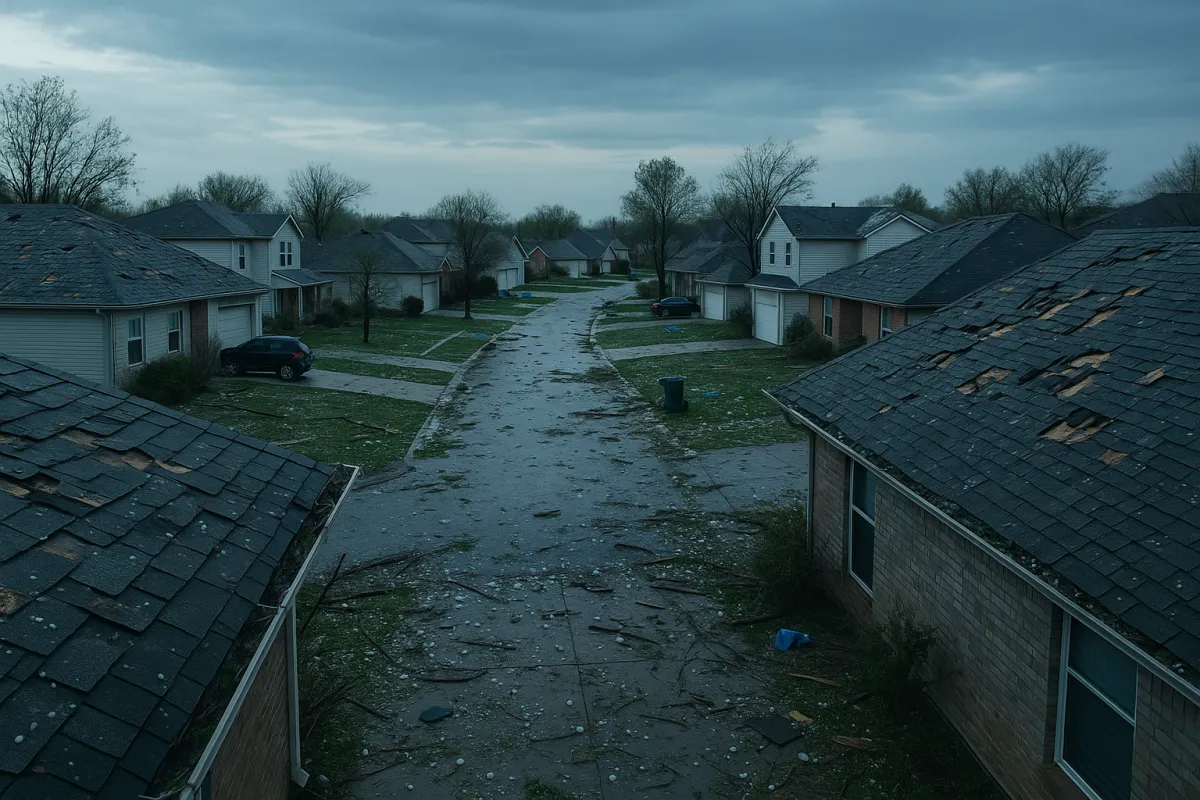
What's in this note
- The short answer: does home insurance cover tree damage?
- The rule that decides every tree claim: peril plus a struck structure
- When home insurance covers tree damage
- Does home insurance cover tree removal?
- The tree removal sublimit: the cap that surprises people
- When home insurance does not cover tree damage
- The tree that falls and hits nothing
- Diseased, dead, or neglected trees
- Preventive tree removal is on you
- Your tree versus your neighbor’s tree: whose policy pays?
- What counts as an insured structure for tree damage
- The deductible on a tree damage claim
- How tree damage is paid: structure, removal, and contents
- How to file a tree damage claim
- Documenting the damage before cleanup
- Preventing tree damage: pruning and inspection
- When a tree threatens: acting before it falls
- Tree damage from ice, snow, and wind
- A worked example: one storm-felled tree, start to finish
- How much coverage you need for tree damage
- Tree damage versus water, mold, and storm claims
- The bottom line
Short answer: Usually yes when a covered peril such as wind, a storm, lightning, or ice brings a tree down onto an insured structure like your house, garage, or fence; the policy then commonly pays to repair the structure and, up to a modest per-tree sublimit of an illustrative few hundred to about a thousand dollars, to remove the tree. A tree that falls and hits nothing, or was dead or neglected, is generally not covered.
Does home insurance cover tree damage? Usually yes when a tree falls because of a covered peril and lands on an insured structure, and in that same situation the answer to does home insurance cover tree removal is often yes too, commonly up to a modest per-tree sublimit. A tree that falls and hits nothing, or one that comes down because it was diseased or neglected, is a very different and usually uncovered story. The peril and what the tree hits decide almost everything.
This coverage note walks each of those cases in turn: the storm-felled tree through a roof that a standard policy commonly pays, the removal that is covered only up to a small cap, the yard tree that hits nothing and is usually your cost, the diseased tree the insurer treats as maintenance, and the tangled question of whose policy responds when the tree was your neighbor’s. It links our sibling notes as it goes, our coverage note on what a policy actually covers for the full picture, our water-damage note for the rain that gets in after a tree opens the roof, our storm-damage documentation walkthrough for building the claim, and our deductible note for what comes off every payout. You can pressure-test your own numbers with the companion below as you read.
Key takeaways
- Home insurance commonly covers tree damage when a covered peril, such as wind, a storm, lightning, or ice, brings a tree down onto an insured structure like your house, garage, or fence.
- Tree removal is usually covered only when the tree strikes an insured structure, and then only up to a modest per-tree sublimit, an illustrative few hundred to about a thousand dollars.
- A tree that falls and hits nothing is generally not covered for removal, with the common exception of a tree blocking your driveway or an accessibility ramp.
- A diseased, dead, or neglected tree that falls is usually treated as a maintenance issue and denied, because the owner could have removed the hazard beforehand.
- When a neighbor's tree lands on your home, your own policy usually responds, and every covered claim still has your deductible taken off the top.
The short answer: does home insurance cover tree damage?
Here is the whole subject in one paragraph before we take it apart. A standard homeowners policy is built to pay for sudden, accidental, unexpected damage to your buildings, so when a tree is brought down by a covered peril and strikes an insured structure, the policy commonly pays to repair the structure and, up to a small sublimit, to remove the tree. When a tree comes down a different way, by simply falling in the yard and hitting nothing, or by failing because it was dead or neglected, the standard policy generally does not pay, either because there is no damaged structure to trigger coverage or because the loss falls on the maintenance side of the line. Coverage is not really about the tree; it is about the peril that felled it and the structure it hit.
Hold that frame as you read, because every section below is a variation on it. The covered cases share a signature: a sudden weather peril, a struck building, a claim filed promptly. The uncovered cases share the opposite one: no structure damaged, or a hazard the owner could have seen and removed. Our broader coverage note on what home insurance covers sets tree damage inside the standard perils and exclusions, but for trees specifically, the peril and the point of impact are the entire game. Every dollar figure in this note is illustrative, chosen to show the shape of a payout rather than to quote your policy.
The rule that decides every tree claim: peril plus a struck structure
Two conditions have to line up for a standard policy to pay a tree claim, and understanding them explains almost every outcome. The first is a covered peril: the tree has to come down from something the policy insures against, such as wind, a windstorm, lightning, hail, or the weight of ice, snow, or sleet. The second is a struck insured structure: the tree has to actually damage a building the policy covers, most often the house itself, but also a detached garage, a shed, or a fence. When both conditions are present, you have a covered loss, and the repair of the structure plus a capped amount of removal is commonly paid.
Miss either condition and the claim usually falls apart. A tree felled by a covered peril that lands harmlessly in the yard fails the second test: there is a peril but no struck structure, so there is generally nothing for the structure coverage to pay. A tree that fails from rot or disease fails the first test: even if it crushes your garage, the insurer can argue the cause was neglect rather than a sudden covered peril. This two-part rule, a covered peril plus a struck insured structure, is the lens for the rest of this note. Keep it in mind and most of the confusing cases resolve themselves.
When home insurance covers tree damage
The covered category is reassuringly broad as long as both conditions are met. Commonly covered scenarios include a windstorm that snaps a tree onto your roof, a lightning strike that splits a tree that then falls on the house, an ice storm whose weight brings limbs down through a skylight, and a healthy tree toppled by a storm onto your detached garage or fence. In each case a covered peril did the felling and an insured structure took the hit, which is exactly the event the policy is written for. The repair to the structure comes out of your dwelling coverage, or your other-structures coverage for a detached garage, shed, or fence.
Coverage also usually extends beyond the obvious crushed roof. If the fallen tree opens the roof or a wall and rain pours in during the same event, that resulting interior water damage is commonly covered too, because it follows directly from the sudden covered peril, the same logic our water-damage note explains for storm-driven roof leaks. Belongings inside that were damaged by the tree or the water that followed are typically covered under your personal-property limit. So one storm-felled tree can trigger three coverages at once: the structure, the removal sublimit, and your contents. The companion below shows roughly what a covered tree loss of a given size pays after your deductible and inside the removal cap.
Does home insurance cover tree removal?
Does home insurance cover tree removal? Yes, but in a deliberately narrow way that catches many homeowners off guard. Removal of a fallen tree is commonly covered only when the tree struck an insured structure, and even then only up to a modest per-tree sublimit rather than the full cost of the job. So the storm tree that crashes through your roof is usually removed on the policy, up to that cap, while the identical tree that falls two feet short and lands on the lawn is usually your cost to clear. The trigger for removal coverage is the same struck-structure condition that triggers the repair coverage.
There is one widely shared exception worth knowing: many policies also cover removal, up to the same sublimit, when a fallen tree blocks your driveway or blocks a ramp built for someone with a disability, even if it did not damage a building. That exception exists because a blocked driveway or accessibility ramp is a real access problem, not just landscaping. Outside those cases, a downed tree that hit nothing is treated as yard cleanup you pay for yourself. The companion below lets you toggle the scenario and watch the removal verdict flip, which mirrors exactly how a real policy draws this line: the same tree, a completely different outcome, decided by what it landed on.
The tree removal sublimit: the cap that surprises people
The tree-removal sublimit is where a covered claim can still leave a painful gap, so it deserves its own section. A sublimit is a smaller cap that sits inside your broader coverage and applies to one specific thing, and debris or tree removal is a classic example. Many policies cap what they will pay to remove a fallen tree at an illustrative few hundred dollars up to around a thousand per tree, sometimes with a separate ceiling per incident when several trees come down in the same storm. That cap is frequently well below the real cost of removing a large hardwood, especially one wound through a roof, a fence, and power lines, where the job can run into several thousand dollars.
The practical consequence is that even a fully covered tree claim can leave you paying part of the removal out of pocket. Picture a mature oak, illustrative removal cost around fourteen hundred dollars, felled by a storm onto your roof, with a policy that caps tree removal at a thousand dollars per tree. The structure repair is covered up to your dwelling limit, but the removal is paid only to the thousand-dollar cap, leaving the remaining few hundred dollars as your cost on top of your deductible. This is why the sublimit is the single number to look up on your declarations page before storm season. The companion below shows exactly how much of your removal quote falls inside the cap and how much spills over to you.
When home insurance does not cover tree damage
The uncovered category is where the expensive surprises live, and it follows directly from the two-part rule. A standard policy generally will not pay when: a tree falls and does not strike an insured structure, so there is no covered damage and usually no removal; a tree comes down because it was dead, diseased, rotting, or visibly neglected, which reads as a maintenance failure rather than a sudden peril; you want a healthy tree removed for your own reasons, which is preventive landscaping, not a claim; or tree roots slowly damage a pipe, a foundation, or a driveway, which is gradual damage the policy excludes. The connecting logic is consistent: no struck structure, or a slow and foreseeable problem the owner should have managed.
The dangerous exclusions are the ones people assume are covered until the claim is denied. A homeowner watches a storm drop a big tree across the back lawn and assumes the policy will at least pay to haul it away, only to learn that a tree hitting nothing is generally not covered. Another lets an obviously dying tree stand for years, and when it finally falls on the house, the insurer dates the decay and argues neglect. Knowing this list in advance is the difference between managing the risk, by removing hazards and understanding the sublimit, and discovering the gap at the worst possible moment. The next sections take the three most common uncovered cases one at a time.
Illustrative likelihood of coverage by tree scenario
A rough, illustrative sense of how a standard homeowners policy tends to treat each tree scenario. Actual outcomes depend on your policy language, the condition of the tree, and the facts of the loss.
Bars are scaled to the ~90% top figure. The pattern is the whole lesson: a struck insured structure clusters near the top, while a tree that hits nothing or fell from neglect sits near the bottom, and the driveway or ramp exception lifts an otherwise uncovered removal partway up.
The tree that falls and hits nothing
The most common source of confusion is the tree that falls in the yard and damages no building. From the homeowner’s side it feels like a covered event: a storm blew, a big tree came down, there is an obvious mess and a real removal bill. But from the policy’s side there is no struck insured structure, so the second half of the two-part rule is missing, and a standard policy usually will not pay to remove it. The tree as a plant is treated as landscaping, which carries its own narrow coverage rather than the structure limit. So a healthy tree dropped across an empty stretch of lawn is typically your cost to clear.
The exception that softens this is worth repeating because it saves some claims: many policies still cover removal, up to the same modest sublimit, when the fallen tree blocks your driveway or an accessibility ramp. The reasoning is that a blocked driveway or ramp is a genuine access problem rather than mere yard cleanup. So the exact same tree can be uncovered lying on the lawn and covered lying across the driveway, which is the kind of fine line that makes reading your own policy worthwhile. If a tree does fall clear of everything, weigh the removal cost against your deductible before you even think about filing, because a yard-only removal is rarely both covered and above your deductible.
Diseased, dead, or neglected trees
The second big uncovered case is the tree that failed because it was in poor condition. A diseased, dead, rotting, or visibly leaning tree that falls is generally treated as a maintenance problem, because the insurer reasons that a homeowner who could see the hazard had the chance to remove it and did not. That logic mirrors the sudden-versus-gradual line that runs through the rest of a homeowners policy: sudden accidents are covered, foreseeable and preventable failures are not. If an adjuster inspects a fallen tree and finds obvious rot, hollowing, fungal growth, or a long-standing lean, the loss can be recharacterized from a storm event to a neglected hazard and denied.

This is where routine attention earns its keep. Even in a genuine storm, the burden can shift to you to show the tree was healthy before it fell, so a maintenance record and dated photos of your trees in good condition help a real weather loss read as sudden rather than neglected. The flip side is the opportunity: if you can see a tree is dying or dangerously close to the house, removing it on your own schedule is ordinary maintenance that costs a known amount, while waiting for it to fall risks both an uncovered removal and uncovered structure damage. Hazard trees are one of the few risks in this whole subject that you can simply eliminate before a claim is ever in question.
Preventive tree removal is on you
The third uncovered case is the simplest: cutting down a healthy tree you just want gone is never a claim. If a tree is too close to the house, drops too many leaves, blocks your light, or worries you in high wind, removing it is preventive landscaping and comes entirely out of your own pocket. A homeowners policy is not a maintenance contract, and it does not reimburse the ordinary care and improvement of your property. This holds even when the removal is genuinely smart risk management, such as taking down a large tree leaning toward a bedroom before a storm can do it for you.
That does not make preventive removal a bad idea; it makes it a cost worth comparing against the risk. Removing a hazardous tree on your schedule, at a known price, is often far cheaper than the combined bill of an uncovered structure loss plus a removal that only partly falls inside the sublimit. Think of it as buying down a risk the policy will not fully absorb. The line to remember is clean: the policy may pay, within limits, after a covered peril fells a tree onto a structure, but it never pays to remove a standing tree, however sensible that removal is. Budget preventive tree work the way you budget a new roof or a furnace, as ownership cost rather than an insurable event.
Your tree versus your neighbor’s tree: whose policy pays?
One of the most counterintuitive rules in this whole subject is what happens when the tree was your neighbor’s. When a neighbor’s tree falls onto your home during a storm, your own homeowners policy generally responds, repairing your structure and, within the sublimit, removing the part of the tree on your property, minus your deductible. It feels backward that your policy pays for their tree, but the principle is that a healthy tree brought down by weather is an act of nature, and each owner’s policy covers the property the falling object actually damaged. Fault normally does not enter into it, so there is usually no one to bill.
The picture changes only when negligence is genuinely in play. If you had told your neighbor in writing that their tree was dead or dangerous, and they did nothing before it fell, their liability coverage may become the responsible party, because at that point the failure was foreseeable and ignored. That is the exception, not the rule, and it hinges on documentation: a dated written notice, ideally with photos, is what turns a weather event into a negligence question. In practice, file with your own insurer first so your repair is not delayed, and let the carriers pursue any recovery between themselves through a process called subrogation. The same logic runs in reverse if your tree falls on their house, so keeping your own trees healthy protects you from a liability claim as much as a property one.
What counts as an insured structure for tree damage
Because removal and repair both hinge on a struck insured structure, it helps to know what counts as one. Your house is the obvious case, covered under your dwelling limit. Detached structures such as a garage, a shed, a gazebo, a fence, or a carport are typically covered under a separate other-structures limit, often set at around ten percent of your dwelling coverage, which our coverage note breaks down. A tree that hits any of these usually triggers both the repair of that structure and the removal sublimit, the same way a strike on the main house does.
Where it gets murkier is the things people assume are structures but the policy may treat differently. A tree crushing a detached fence is commonly covered, but the same tree flattening ornamental shrubs, a garden bed, or the lawn is landscaping, which carries its own small and separate limit rather than structure coverage. A car crushed in the driveway is not a home-insurance structure at all; that damage would fall under the comprehensive coverage on your auto policy instead. Knowing which bucket a given target falls into tells you which coverage, if any, responds, and it explains why a tree can produce a paid structure claim and an unpaid landscaping loss in the same fall.
The deductible on a tree damage claim
Even a fully covered tree loss does not pay from the first dollar, because your deductible sits between you and every claim. On a covered structure loss of an illustrative ten thousand dollars with a one thousand dollar deductible, the policy pays nine thousand and you absorb the first thousand. The deductible applies to the structure repair, and the small removal sublimit typically layers on top within its own cap, so your out-of-pocket on a tree claim is often your deductible plus whatever removal cost spills over the sublimit. Choosing your deductible level is a genuine trade-off that our deductible note runs in full: a higher deductible lowers your premium but raises what you pay when a loss occurs.
The deductible matters even more on the small end of tree claims. Many tree losses are modest, a removal bill and some minor roof or fence repair, which puts them close to the deductible line where filing barely pays. A yard-only removal of an illustrative twelve hundred dollars, on a one thousand dollar deductible, recovers almost nothing even in the rare case it is covered, and it can still cost you a claims-free discount. Our note on how a claim affects your premium, our claim-cost note, shows why a small tree claim is often cheaper to self-fund than to file. The companion below subtracts your deductible from a covered loss and caps the removal at your sublimit, so you can see the net recovery before you ever call.
How tree damage is paid: structure, removal, and contents
A single covered tree loss can draw on three different parts of your policy, and knowing which pays for what keeps your expectations accurate. The structure repair, the crushed roof, the broken rafters, the smashed fence, comes out of your dwelling coverage for the house or your other-structures coverage for a detached building, subject to your deductible and, for an older roof, possibly settled at depreciated actual cash value rather than replacement cost. The tree removal comes out of the separate debris-removal sublimit, capped at that small per-tree figure regardless of the real removal cost. Any belongings damaged by the tree or the rain that followed come out of your personal-property limit.
Those three pieces settle on different terms, which is why one tree claim can feel like several claims at once. The structure repair may be large but is bounded by your dwelling limit and can be reduced by depreciation on old materials, the ground our actual cash value note covers. The removal is small and hard-capped by the sublimit. The contents are paid at either replacement cost or depreciated value depending on your policy setting. Because the removal cap is often the tightest constraint, a claim can be fully covered on paper yet still leave you paying part of the removal. The companion below splits a tree loss into the structure payout after your deductible and the removal payout inside your sublimit, so the whole picture is on one screen.
How to file a tree damage claim
Filing a tree claim well is mostly about the first few hours and staying safe while you document. The steps, in order: first, keep everyone away from downed power lines and unstable limbs, and never try to remove a large tree tangled in wires yourself, because that is a utility and professional job, not a homeowner one. Second, document everything before you touch it, photographing and filming the fallen tree, the struck structure from several angles, and any interior damage, since undocumented damage is hard to get paid for later. Third, take reasonable emergency steps to prevent further loss, such as tarping an open roof or covering broken windows, and keep every receipt, because that mitigation is commonly reimbursable.

Fourth, notify your insurer promptly, ideally the same day, and ask two specific questions: what is my tree-removal sublimit, and what is my deductible on this loss. Those two numbers tell you how much of the removal and repair you will actually recover before you commit to any contractor. Do not authorize a full, expensive removal before you understand the sublimit, because you may be paying for a large job the policy caps at a few hundred dollars. Keep the file organized with a dated timeline, an inventory of any damaged belongings, and copies of every estimate and communication, exactly the discipline our storm-damage documentation walkthrough lays out step by step. The companion below gives you a quick read on whether your scenario is likely covered and what a covered loss pays, so you walk into the call already knowing the shape of the outcome.
Documenting the damage before cleanup
The instinct after a tree falls is to clear the mess immediately, but a few minutes of documentation first protects the whole claim. Insurers pay for damage they can verify, so photographs and video taken before any cleanup are the backbone of a tree claim. Capture the fallen tree in place, the point of impact on the structure, wide shots that show the scene, and close shots of specific damage, then move inside and document any ceiling, wall, or contents damage the tree or the following rain caused. If it is safe, note the weather that day and keep any local storm reports, because tying the fall to a specific covered peril is what satisfies the first half of the two-part rule.
Preserve evidence of the tree’s condition too, since a healthy-tree fall is a stronger claim than one an adjuster can call neglect. Photos that show sound, living wood at the break, rather than rot or hollowing, help establish that a covered peril, not decay, brought the tree down. Do not dispose of the tree or begin permanent repairs before the adjuster has seen the loss or released you to proceed, though emergency tarping and safety work are expected and encouraged. Keep a simple written log of when the tree fell, what you did, and what you spent on emergency mitigation. This is the same documentation habit that carries every property claim, and our storm-damage walkthrough turns it into a repeatable checklist you can follow in the moment.
Preventing tree damage: pruning and inspection
The cheapest tree claim is the one that never happens, and tree damage is unusually preventable compared with most home perils. Regular pruning keeps a canopy balanced and removes the dead, weak, and overextended limbs that are the first to break in wind or under ice, which lowers the odds of a limb coming through your roof. Thinning an overgrown crown lets wind pass through rather than pushing against a solid sail of foliage, and clearing branches away from the roofline and power lines removes the paths damage travels. A tree professional, an arborist, can spot structural weaknesses, cavities, and root problems that are invisible from the ground.
Inspection is the other half of prevention, and it doubles as claim protection. Walking your property a couple of times a year, and especially after major storms, to look for leaning trunks, cracks, dead limbs, fungal growth at the base, and roots lifting out of the soil, catches hazards while they are still cheap to address. Any tree showing those signs, particularly one within falling distance of the house, is a candidate for professional evaluation and possibly removal on your own schedule. This upkeep does double duty: it reduces the chance of a loss, and it builds the maintenance record that helps a genuine storm claim read as sudden rather than neglected. Prevention is almost always cheaper than a deductible plus an over-the-sublimit removal bill.
When a tree threatens: acting before it falls
Sometimes the hazard is obvious well before any storm, and knowing what to do with a clearly dangerous tree can save both a house and a claim dispute. A tree that is dead, deeply cracked, leaning sharply toward the house, or lifting its roots is a hazard you generally cannot insure your way around, because if it falls the insurer may well call the loss neglect. The right move is to have it evaluated and, if warranted, removed promptly at your own cost, treating that removal as risk reduction rather than a loss you can claim. Acting early converts an uninsurable risk into a known, manageable expense.
The situation is different when the threatening tree is your neighbor’s. If a neighbor’s tree is visibly dead or dangerous and overhangs your property, put your concern in writing, keep a dated copy, and ideally include photographs, because that written notice is exactly what can shift responsibility to their liability coverage if the tree later falls. You generally may trim branches that cross onto your side up to the property line, within local rules, but you cannot enter their yard or fell their tree without permission. Handling a known hazard before it fails, on either side of the fence, is the single most effective thing you can do, since no policy fully absorbs a tree everyone could see was going to fall.
Tree damage from ice, snow, and wind
The perils that fell trees deserve a closer look, because most of them are covered and the exceptions are narrow. Wind and windstorm are the leading cause of covered tree losses, and a healthy tree or large limb blown onto your house is the textbook paid claim. The weight of ice, snow, and sleet is likewise a covered peril on most policies, so a limb that snaps under an ice load and crashes through a skylight is commonly covered. Lightning that strikes and splits a tree, which then falls on the structure, is covered as well, and lightning damage more broadly is one of the clearest covered perils on any homeowners form.
The narrow exceptions come back to condition and cause. A tree that a windstorm topples is covered if it was sound, but if the same wind merely finishes off a tree that was already rotten, the insurer can argue the underlying cause was decay rather than wind. Frozen ground and gradual soil movement that slowly tilt a tree over months are not a sudden peril and generally are not covered. And a tree brought down by a peril your policy specifically excludes, such as a flood or an earthquake, may fall outside standard coverage unless you carry the separate policy for that peril, the same gap our water-damage note describes for rising water. The rule holds: a sudden covered peril plus a struck structure pays, and a slow or excluded cause does not.
A worked example: one storm-felled tree, start to finish
Put the pieces together on one illustrative home. During a summer windstorm, a mature maple in the Ortega family’s yard is blown over and crashes onto the back corner of their roof, opening a hole through which rain soaks the ceiling below. The structure repair is assessed at an illustrative ten thousand dollars, the tree removal is quoted at fourteen hundred dollars, and a modest amount of interior damage rounds the picture. The Ortegas carry a one thousand dollar deductible, and their policy caps tree removal at a thousand dollars per tree. Because a windstorm is a covered peril and the tree struck an insured structure, this is a covered loss.
Now the money. The structure repair is paid minus the deductible, so on the ten thousand dollar assessment the policy pays nine thousand and the Ortegas absorb the first thousand. The removal is covered, but only up to the thousand dollar sublimit, so of the fourteen hundred dollar removal bill the policy pays a thousand and the Ortegas cover the remaining four hundred. All told, on a combined loss of eleven thousand four hundred dollars, the policy pays ten thousand and the family absorbs fourteen hundred, their thousand dollar deductible plus the four hundred that spilled over the removal cap. Had the identical tree fallen two feet short and hit nothing, the standard policy would likely have paid nothing at all, and the entire removal would have been theirs. Same tree, same storm, opposite outcome, decided by what it hit. Run your own version in the companion below by setting the structure estimate, the removal cost, the deductible, the sublimit, and the scenario.
What a covered tree-damage claim payout looks like
An illustrative storm-felled tree: $10,000 structure repair plus a $1,400 removal quote, on a $1,000 deductible and a $1,000 per-tree removal sublimit. The slices show who pays what.
The three slices sum to the full $11,400 loss. Note that even a fully covered tree claim reaches you in pieces: the deductible never comes back, and the removal cap can leave part of the removal bill with you no matter how large the covered structure repair is.
How much coverage you need for tree damage
Tree damage does not have its own broad limit; the structure half is paid out of your existing dwelling and other-structures coverage, which means sizing those correctly is how you make sure a serious tree loss is fully paid. If your dwelling limit reflects the true rebuild cost, a tree that caves in a large section of roof and requires structural work has room to be paid in full. If the dwelling limit is short, a big tree loss can bump against it or trigger the underinsurance penalty, the same eighty percent trap that afflicts any large claim. The rebuild figure is the anchor, and our coverage-sizing note walks how to set it, starting from our replacement-cost estimator.
The removal half is a different problem, because it is governed by that small fixed sublimit rather than by how much coverage you buy. You cannot size your way out of a low removal cap the way you size a dwelling limit; the fix, if your area has many large trees near the house, is to ask your insurer whether a higher debris-removal limit is available and what it costs. It is also worth confirming whether your other-structures limit is adequate for a detached garage or a long fence line that a falling tree could destroy, since that limit is often a modest percentage of the dwelling coverage. Set the dwelling and other-structures limits to cover a serious loss, know your removal sublimit going in, and you have closed the two gaps a tree can expose.
Tree damage versus water, mold, and storm claims
Tree damage sits at the intersection of several other coverage questions, and keeping the categories straight prevents confusion when one event triggers more than one. A tree through the roof is often how the rain gets in, so the interior water that follows is a water-damage question, covered when it stems from the sudden storm opening the way our water-damage note explains, and not to be confused with flood, which is rising water from outside, is never covered on a standard policy, and when it does strike is claimed through the separate flood insurance claim process on its own policy and deadlines. If that water sits and mold grows, the mold is handled under its own usually small cap, the subject of our mold coverage note, and fast drying is what keeps a mold loss from eating into that thin limit.
The documentation is the common thread across all of these. Whether the claim is the tree, the water that followed, or the mold that came after, the same discipline of photographing before cleanup, tying the loss to a covered peril, and reporting promptly is what gets it paid, which is why our storm-damage documentation walkthrough applies to every one of them. Think of the tree as the triggering event and the water, mold, and structure damage as the coverages it can set off, each with its own rules and limits. Getting the categories right before a loss is what tells you which coverages you actually have and where the gaps sit, and our broader coverage note maps all of them together.
The bottom line
Does home insurance cover tree damage? It covers the structure when a covered peril, wind, a storm, lightning, or the weight of ice or snow, brings a tree down onto an insured building, and does home insurance cover tree removal in that same case, yes, but only up to a small per-tree sublimit that often leaves part of a large removal with you. It does not cover a tree that falls and hits nothing, beyond the narrow driveway and ramp exception, and it does not cover a diseased or neglected tree the insurer treats as a maintenance failure. The peril and what the tree hit decide the answer, which is why one fallen tree is paid and an identical one is denied. Look up your removal sublimit and your deductible before storm season, size your dwelling and other-structures limits to a serious loss with our coverage-sizing note, and remove the obvious hazard trees on your own schedule rather than waiting for a claim that may not come. When a tree does fall, stay safe, document before you clear, and report it fast, and use the companion below to know the likely outcome before you call.
This coverage note is educational reading about how standard homeowners policies commonly treat fallen trees and tree removal, not insurance, legal, or financial advice, and it does not describe your specific policy. Whether any particular tree loss is paid turns on the peril that felled the tree, the condition it was in, the structure it struck, the exact wording and sublimits of your policy, the endorsements you carry, and the laws of your state, all of which vary widely between insurers and forms. Every likelihood, dollar figure, deductible, sublimit, and payout above is an illustrative example chosen to show how the peril-plus-struck-structure rule works, not a quote or a promise of how any claim will be paid. Removal caps, other-structures limits, and the rare negligence cases where a neighbor’s policy responds differ sharply from one policy to the next. Before relying on anything here, open your declarations page and full policy, read the perils, exclusions, and debris-removal language together, and confirm the details with a licensed insurance professional who can see your actual documents.
Frequently asked questions
Does home insurance cover tree removal?
Usually yes, but only in a narrow way and up to a small cap. A standard homeowners policy commonly covers removing a fallen tree when it came down from a covered peril, such as wind, a storm, lightning, or the weight of ice or snow, and then struck an insured structure like your house, garage, or fence. In that case removal is typically paid up to a modest per-tree sublimit, an illustrative few hundred to about a thousand dollars, which is far below what removing a large tree can cost. A tree that falls and hits nothing is generally not covered for removal, with the common exception that many policies still pay to clear a tree blocking your driveway or an accessibility ramp. Treat every figure here as illustrative and confirm your own sublimit with your insurer.
Does homeowners insurance cover a tree that falls and hits nothing?
Generally no, and this surprises a lot of homeowners. If a tree falls in your yard from wind or a storm but does not damage an insured structure, a standard policy usually will not pay to remove it, because the coverage is tied to protecting buildings, not landscaping. The most common exception is that many policies still cover removal, up to the same modest sublimit, when the fallen tree blocks your driveway or a ramp built for someone with a disability. The tree itself as a plant is treated as landscaping, which carries its own separate and limited coverage rather than the structure limit. So a healthy tree that drops across an empty part of the yard is typically your cost to clear, illustrative figures aside.
Whose insurance pays when a neighbor's tree falls on my house?
Usually your own policy, which feels backward but follows a consistent logic. When a neighbor's tree falls onto your home during a storm, your homeowners policy generally responds to repair your structure and, within the sublimit, remove the part of the tree on your property, minus your deductible. Fault normally does not enter into it, because a healthy tree brought down by weather is treated as an act of nature rather than negligence. The picture can shift if you had warned your neighbor in writing that their tree was dead or dangerous and they did nothing, in which case their liability coverage may come into play, but that is the exception, not the rule. Document the damage, file with your own insurer first, and let the carriers sort out any recovery between themselves.
What is the tree removal sublimit on a home insurance policy?
A sublimit is a smaller cap that sits inside your overall coverage and applies to a specific thing, and tree or debris removal is a classic example. Many policies limit what they will pay to remove a fallen tree to an illustrative few hundred dollars up to around a thousand per tree, sometimes with a separate ceiling per incident when several trees come down at once. That cap is often well below the real cost of removing a large hardwood, especially one tangled in a roof or power lines, so the sublimit can leave a real gap even on a covered claim. The number is not universal and varies widely between insurers and forms, so the only figure that matters is the one on your own declarations page. Check it before a storm, not after.
Does home insurance cover a diseased or dead tree that falls?
Usually not, because a diseased, dead, or visibly neglected tree that falls is treated as a maintenance problem rather than a sudden accident. Insurers reason that a homeowner who could see a tree was rotting, leaning, or dying had the chance to remove it and did not, which pushes the loss onto the owner. If that same dead tree falls onto your house, the damage to the structure may still be argued either way depending on the facts, but the removal of a tree that failed from neglect is a hard case to win. This is why the condition of your trees is part of home maintenance, not just landscaping. Removing a hazardous tree before it falls is far cheaper than an uncovered claim afterward, and it protects the claims you might genuinely need.
Will a tree damage claim raise my home insurance premium?
It can, though a single weather-driven tree claim is usually treated more gently than a water or liability claim. Because a tree falling in a storm is an act of nature rather than something within your control, one such claim often carries less of a surcharge than a repeat or preventable loss, but it still lands on your CLUE claims history and can cost you a claims-free discount. If a whole region is hit by the same storm, insurers see a wave of similar claims and may raise rates area-wide regardless of your individual file. Our note on how a claim affects your premium walks the surcharge math and the file-or-not decision for smaller losses. For a modest removal cost close to your deductible, self-funding is often cheaper over several years than filing.
Does home insurance cover damage from tree roots?
Usually not, because damage from tree roots growing into pipes, a foundation, or a driveway happens gradually over years, and gradual damage is the classic maintenance exclusion rather than a sudden covered peril. Roots that crack a sewer line or lift a slab are treated the way insurers treat any slow, foreseeable deterioration: as the homeowner's responsibility to prevent through upkeep. The same policy that would pay for a tree suddenly crashing through your roof will typically decline the slow structural damage its roots cause underground. Some resulting damage may be argued in narrow cases, but root intrusion as a rule is not a covered event. Preventive planting distance and periodic inspection are the real defenses, since no standard policy is written to absorb this.
How do I file a tree damage claim?
Start with safety, then documentation, then a prompt call to your insurer. First, keep everyone away from downed lines and unstable limbs, and do not try to remove a large tree tangled in wires yourself. Second, photograph and film the fallen tree, the struck structure, and the interior damage before you move anything or begin cleanup, because undocumented damage is hard to get paid for later. Third, take reasonable emergency steps to prevent further loss, such as tarping an open roof, and keep the receipts, since that mitigation is often reimbursable. Fourth, notify your insurer promptly, ask about your tree-removal sublimit and deductible, and wait for guidance before authorizing a full removal so the covered portion is handled correctly.

Hamza Hai is the editor of SumSured. She holds an MBA and reviews the site's articles against our editorial standards, checking that every figure is labelled for what it is, that nothing is presented as verified fact without a source the reader can check, and that the writing stays useful to a non-specialist.