
What's in this note
- The short answer: why home insurance is so expensive
- Expensive and increasing are two different questions
- How an insurer builds your premium
- Rebuild cost: the anchor under every premium
- Location risk: the multiplier you cannot move
- Reinsurance and the hard market behind your quote
- Claims history and the CLUE report
- The roof: the feature insurers weigh most
- Home age, construction, and systems
- Coverage choices: limits, endorsements, and settlement basis
- The deductible: the lever you control directly
- Credit-based insurance scores and the quiet rating inputs
- Why is my home insurance quote so high compared to my neighbors
- Why the same house gets wildly different quotes
- The best ways to lower home insurance costs
- What not to cut when the premium hurts
- A worked example: decomposing one expensive premium
- When an expensive premium is telling the truth
- How to audit your own premium in fifteen minutes
- The bottom line
Short answer: Why is home insurance so expensive? Because it prices a full rebuild, and rising construction costs, growing catastrophe losses, and sharply repriced reinsurance have pushed every major input upward at once. Your own premium is that market multiplied by your rebuild cost, location risk, claims history, roof age, home characteristics, and the limits and deductible you chose. Treat a high quote as a diagnosis: check the dwelling limit against a real rebuild figure, then compare three quotes.
Home insurance has become one of those bills people open braced. Whether it is a first quote that lands far above what the budget assumed or a premium that keeps climbing past what the house seems worth, the question is the same: why is home insurance so expensive? The unsatisfying answer printed on the bill is a single number. The useful answer is a stack of drivers, some about your house, some about your location, some about your record, and some about choices sitting on your own policy, each contributing a measurable share of the total.
This coverage note takes the number apart. It separates the two different complaints hiding inside the question, an expensive price level versus a rising one, then walks the drivers in honest order of weight: rebuild cost, location and catastrophe risk, reinsurance, claims history, the roof, the house itself, and the coverage choices you control. It closes with the levers that genuinely lower the bill and the cuts that only pretend to. Along the way it leans on our coverage note on cost by home value for the base math, our deductible note for the fastest lever, and our coverage note on the declaration page for reading what you are actually paying for. Pull a rebuild figure from our replacement-cost estimator first, because every driver below is priced against it.
Key takeaways
- Home insurance is expensive because it prices a full rebuild: rising construction costs, catastrophe losses, and repriced reinsurance have pushed every major input upward at once.
- Your own premium is set by a stack of drivers: rebuild cost, location risk, claims history, roof age, home characteristics, and the limits and deductible on the policy itself.
- A high quote is a diagnosis, not a verdict: check the dwelling limit against a real rebuild figure, then compare three quotes at identical coverage before concluding the price is fair.
- The levers that actually lower the bill are shopping, a higher deductible backed by savings, bundling, discounts, roof timing, and claim discipline, roughly in that order.
- Never cut the dwelling limit below rebuild cost or drop to actual cash value on contents to chase a cheaper premium: both convert a visible saving into a hidden gap.
The short answer: why home insurance is so expensive
Home insurance is expensive because the promise behind it is expensive. A standard policy agrees to rebuild your house after a covered loss, refit your belongings, house your family somewhere else during the work, and defend your finances against liability claims. The largest of those promises, the rebuild, is priced against current construction labor and materials, and both have climbed substantially in recent years. When the cost to build a house rises, the cost to promise a house rises with it, even for a homeowner who never files a claim.
On top of that base, three forces have pushed the whole market upward at once. Severe weather losses, from hurricanes and hail to wildfire, have grown and cluster in ways that hit entire regions of policies together. Reinsurance, the insurance that insurers buy to survive those clustered losses, has repriced sharply, and that cost flows into every premium. And in the hardest-hit regions, some carriers have pulled back from writing new business, which thins competition exactly where prices are already highest. Your individual premium is then your personal slice of all this: the market forces multiplied by your house, your location, your record, and your coverage choices. The rest of this coverage note walks those multipliers one at a time.
Expensive and increasing are two different questions
Before decomposing the price, separate two complaints that sound identical and are not. “Why is my home insurance so high” is a question about the level: whether the number itself is fair for this house, in this place, at this coverage. “Why did my home insurance go up” is a question about the change: what moved between last year’s renewal and this one. The drivers overlap, but the diagnosis and the response differ, and mixing them up wastes effort.
If your complaint is the change, a renewal that jumped, our coverage note on why home insurance went up is the sibling built for it: it walks reinsurance repricing, catastrophe loss years, rebuild-cost indexing, and post-claim surcharges in renewal order. This coverage note takes the level question: why the number is big in the first place, whether a quote that shocked you is actually mispriced, and which parts of the total you can move. The two reads pair naturally, because a high level and a rising level usually share ancestry. A homeowner who understands what the premium is made of can tell a justified increase from a lazy one, and a homeowner who knows why the level is high knows which lever to pull first when it climbs.
How an insurer builds your premium
Underneath every quote is the same basic machine. The insurer estimates what your house would cost to rebuild, attaches the derived coverages that scale from it, then multiplies by rating factors that express how likely this particular policy is to generate claims and how big those claims would be. Location factors capture wind, hail, wildfire, crime, and distance to a fire station. Property factors capture roof age, construction type, home age, and systems. Household factors capture claims history and, where states permit, a credit-based insurance score. Coverage factors capture your limits, deductible, endorsements, and settlement basis. The output is your premium, plus the insurer’s expenses and its own reinsurance load.
The practical insight is that the machine multiplies rather than adds. A large rebuild cost times a high-risk location times an old roof compounds, which is how two premiums for similar-looking houses end up differing by multiples rather than percentages. It also means relief compounds the same way: improving one heavy factor lowers everything it multiplies. The chart below makes the point with one illustrative house priced three ways.
One illustrative house, three risk profiles
Illustrative annual premiums for the same $400,000 rebuild at a $1,000 deductible, varying only location risk and roof age. Bars scaled to the highest profile.
All three figures are illustrative, built from the same base premium with location and roof multipliers applied. Real pricing varies by carrier, state, and year; the shape, not the dollars, is the lesson.
Rebuild cost: the anchor under every premium
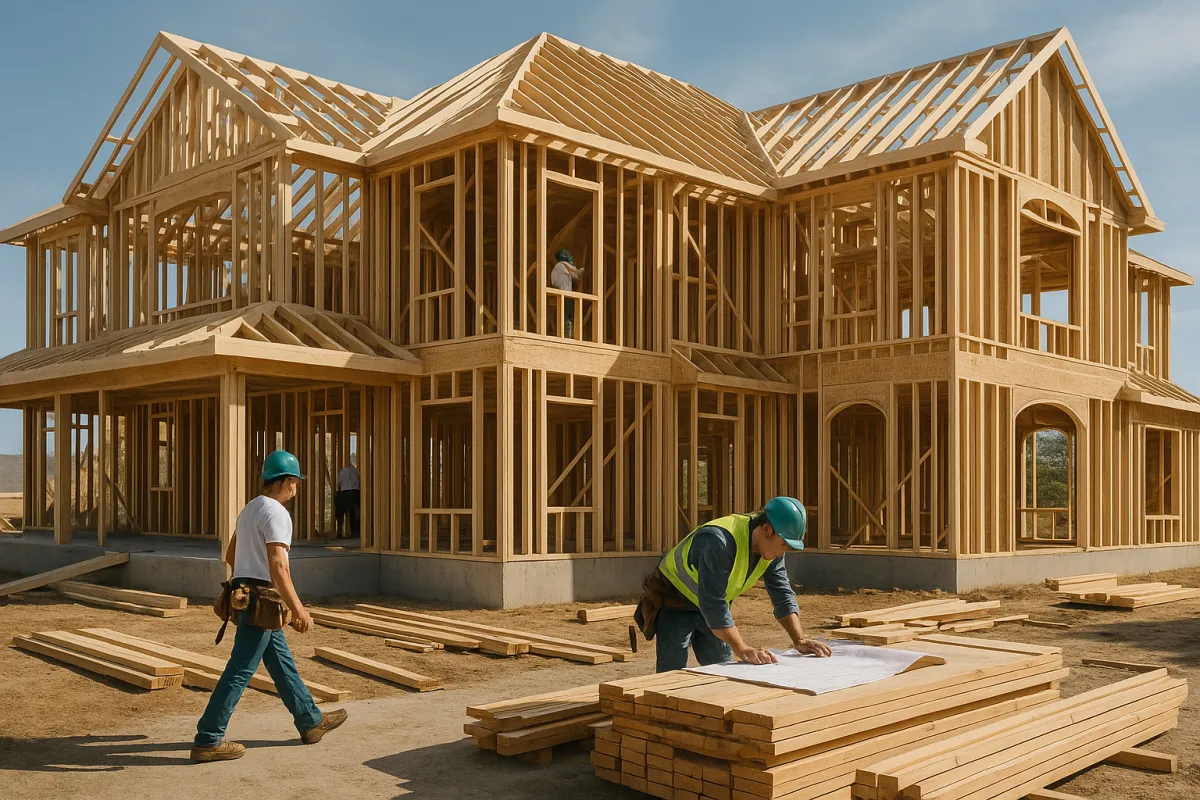
The first and heaviest input is what it would cost to rebuild your house today, with current labor and current materials. This is the figure your dwelling limit should track, and it is not the market price of the home, which includes land that cannot burn, and not your mortgage balance, which measures debt. Construction costs have risen enough in recent years that rebuild figures, and the premiums resting on them, have climbed even for houses whose market value went sideways. A bigger, more finished, more complicated house costs more to rebuild, and therefore more to insure, in a direct and unavoidable way.
This anchor explains a large share of “why is my quote so high” surprises. The insurer’s replacement-cost software may have priced your square footage, finishes, and local build cost higher than you assumed, and the dwelling limit on the quote is the place to check first. Read that line the way our coverage note on the declaration page walks it, then compare it against an independent anchor from our replacement-cost estimator. If the limit is inflated beyond any realistic rebuild, correcting it lowers the premium honestly. If the limit is realistic and the number still stings, the house genuinely costs that much to promise, and the savings will have to come from the other drivers below. Our coverage note on cost by home value shows how the premium scales along this line.
Location risk: the multiplier you cannot move
The second heavy driver is where the house stands. Insurers price the perils your address is exposed to: hurricane wind on the coasts, hail in the middle of the country, wildfire in the dry hills, tornado alleys, freeze belts, and, more locally, crime rates and the distance to a fire hydrant and a staffed fire station. These factors multiply the base premium, and in catastrophe-exposed regions the multiplier is large, because the insurer is pricing not just your claim but the possibility of thousands of claims arriving in the same week.
This is the driver behind the widest premium gaps in the country. The same illustrative house can cost a fraction in a calm inland suburb of what it costs on a hurricane coast, and neither number is a mistake; they price genuinely different promises. It is also the driver you can do least about, short of moving. What you can do is manage its edges: wind mitigation features and impact-rated roofing earn credits in many storm-prone areas, defensible space matters in wildfire zones, and the percentage wind or hurricane deductibles common in exposed regions deserve deliberate attention, since they quietly shift catastrophe cost back onto you. If your quote shock is mostly location, the productive response is shopping widely, because carriers differ most in exactly the regions they price most nervously. Note that one location peril never appears in this premium at all: flood is excluded from every standard policy, and if your address needs it, our note on how much flood insurance is prices that separate line item by risk zone.
Reinsurance and the hard market behind your quote
Behind your insurer stands another layer of the industry most homeowners never see: reinsurance, the coverage insurance companies buy so that a catastrophic season does not sink them. Reinsurers absorb slices of large clustered losses, and after years of heavy catastrophes their prices have risen substantially. That cost is a real input to your premium, as genuine as lumber, and when reinsurance repriced upward across the market, homeowner premiums followed even in regions that had a quiet year.
This matters for the “so expensive” question because it explains the part of the bill no personal virtue can reduce. A claims-free household with a new roof in a modest house still pays a share of the market-wide catastrophe load, because the insurer’s cost of standing behind every policy went up. It also explains why premiums across whole states rose together, and why some carriers stopped writing in certain regions entirely: when reinsurance for an area costs more than the premiums there can carry, insurers retreat, and thinner competition keeps prices firm. None of this is visible on your declaration page, but it is present in every line of it. The honest takeaway is that some fraction of today’s expense is the market, not you, which is exactly why comparing multiple carriers, who carry different reinsurance costs and appetites, remains the most reliable response.
Claims history and the CLUE report
The third driver is your record. Most insurers report claims to CLUE, the Comprehensive Loss Underwriting Exchange, an industry database consulted when pricing new and renewing business, and entries generally remain visible for several years. A recent claim commonly ends claims-free discounts and adds a surcharge; multiple claims in a short window can push a household outside some carriers’ appetite altogether, which raises prices by shrinking your market. Even claims on a house you previously owned, or claims by a home’s previous owner, can surface in underwriting and color a quote.
The practical discipline this creates is claim selectivity. A claim slightly above your deductible is often a poor trade: you recover a small amount now and may repay it several times over through years of surcharged renewals. Our deductible note runs the small-claim arithmetic in detail, and the summary is to reserve claims for losses large enough that the payout clearly outweighs the pricing tail. If your premium is high and you suspect your record is why, you can request your own CLUE report and check it for errors, since misattributed or outdated entries do occur and can be disputed. And time helps: as claims age past the window insurers weigh, the surcharge fades, which is a reason to re-shop a year or two after a claim rather than assuming the penalty is permanent.
The roof: the feature insurers weigh most
Among the physical features of the house, the roof carries the most pricing weight at many carriers, because it is the component most exposed to wind and hail and the most common source of water intrusion. An aging roof fails more often, and when it fails it lets weather into everything below it, so insurers respond along a spectrum: surcharges as the roof passes age thresholds, settlement of roof claims at depreciated actual cash value instead of replacement cost, mandatory inspections, and at the far end, declining to quote the home at all. A quote that seems inexplicably high on an older house is very often, at bottom, a roof quote.

The lever here works both directions. A newer roof, and especially an impact-rated one in hail country or a wind-mitigated one on the coast, can earn credits that are meaningful in exposed regions. Replacing a healthy roof purely to cut the premium rarely pays back quickly, since the discount arrives over years while the roof bill arrives at once; but when a replacement is due anyway, choosing rated materials and documenting the work for your carrier improves the insurance math alongside the house. If your roof is approaching the age where your carrier’s treatment changes, ask directly what the threshold is and how settlement terms shift, because that conversation is cheaper before a hailstorm than after one.
Home age, construction, and systems
Beyond the roof, the house itself carries a set of quieter rating factors. Older homes tend to cost more to insure: their electrical, plumbing, and heating systems are statistically likelier to cause losses, their materials and details cost more to reproduce, and ordinance requirements can force upgrades during repairs. Construction type matters too, with masonry generally pricing better against wind and fire than frame in many regions. Square footage, custom finishes, complex rooflines, and features like pools or wood stoves each nudge the number, some through rebuild cost and some through liability or fire risk.
Some of these factors reward maintenance with real discounts. Updated wiring, plumbing, and heating can improve pricing on an older home, and documented updates are worth reporting when you shop, since quotes on old houses often assume original systems until told otherwise. Protective devices, from monitored alarms to automatic water shutoff valves, earn credits at many carriers, and water sensors in particular target the most frequent everyday claim source in many books of business. None of these levers rivals location or rebuild cost in weight, but they are the drivers a homeowner can actually improve without moving, and on an expensive policy a few percentage points each is real money. When comparing quotes, make sure every carrier is pricing the same updated facts, because an insurer that does not know about the rewire is charging you for the old one.
Coverage choices: limits, endorsements, and settlement basis
A meaningful slice of an expensive premium is not risk at all; it is the breadth of what you bought. The dwelling limit sets the scale of everything, as covered above, and the derived limits for other structures, contents, and loss of use ride on it. Liability limits, endorsements like sewer backup, scheduled valuables, ordinance or law coverage, and equipment breakdown each add premium, and replacement-cost settlement on contents and roof costs more than depreciated actual cash value, because it promises more. Two quotes that look far apart are frequently just two different policies wearing the same house.
This is why the first response to an expensive quote is an audit, not a reaction. Read the quote or your current declaration page line by line: is the dwelling limit realistic against a rebuild anchor from the estimator, are the endorsements ones you chose and still want, is the settlement basis what you intend to be paid on? Sometimes the audit finds honest fat, coverage you never chose or no longer need, and trimming it is free savings. Just as often it finds that the expensive quote is the one actually covering you, while the cheap comparison quietly carries a lower limit or thinner settlement terms. Breadth you understand and chose is not a problem to fix, whatever the total says; breadth you never chose is the cheapest thing on the page to correct.
The deductible: the lever you control directly
The deductible is the one big pricing input that is purely your decision. It is the amount you absorb on every covered claim before the insurer pays, and it prices inversely: a higher deductible means a lower premium, because you have taken the first slice of every loss off the insurer’s book. Moving from an illustrative $500 to $1,000, or $1,000 to $2,500, commonly trims a noticeable percentage from the annual bill, and the trim repeats every year you hold the policy.
The honest test for raising it is your emergency fund: the deductible only belongs at a level you could pay tonight without borrowing. The break-even arithmetic is simple and worth actually doing: the extra out-of-pocket exposure divided by the annual saving equals the number of claim-free years that pay for one claim, and since most households go many years between claims, the math often favors the higher figure for anyone with reserves. Our deductible note walks the levels, the percentage wind deductibles that behave very differently, and the emergency-fund test in full. For the purposes of the expense question, the point is narrower: if your premium is high and your deductible is low, you are paying the insurer to handle small losses you could handle yourself, and that is the most reversible expense on the page.
Credit-based insurance scores and the quiet rating inputs
Some drivers never appear on any page you are shown. In most states, carriers may use a credit-based insurance score, built from credit data and found by insurers to correlate with claim frequency, and where permitted it can move a premium substantially in either direction. Several states restrict or prohibit the practice, so whether it touches you depends on where you live. Insurers also weigh tenure and prior coverage: a gap in coverage history reads as risk at many carriers, and long-held policies sometimes drift upward on the quiet assumption that loyal customers do not shop, a pattern worth knowing by name, the loyalty penalty.
There is also simple staleness. A premium can be high because the facts underneath it are old: a security system never reported, a paid-off mortgage still generating lender requirements, a home office rider outliving the job, a teenage driver discount situation on a bundled policy that changed. None of these quiet inputs is individually dramatic, but they share a property: they only get corrected when you actively re-shop or ask. That is the deeper reason periodic shopping lowers bills even when nothing visible changed. A fresh quote forces every input to be restated at today’s truth, while a renewal mostly rolls yesterday’s assumptions forward with an increase on top.
Why is my home insurance quote so high compared to my neighbors
The neighbor comparison feels like evidence and usually is not. Insurers price the house, the household, and the history, not the street, so two doors apart can hide a different rebuild cost, square footage, roof age, construction type, claims record, insurance score, carrier, and above all a different policy: limits, deductible, endorsements, and settlement basis rarely match across a fence. A neighbor quoting a lower bill is often describing a leaner promise, an older figure, or an escrowed number they have not read closely, and almost never a like-for-like price on your house.
The comparison that actually diagnoses your situation is three fresh quotes on your own home at identical coverage. Fix the dwelling limit at a realistic rebuild figure, hold the deductible and endorsements constant, and let carriers compete on the same promise. If the quotes cluster, the market has spoken about what your risk costs, and the savings hunt should move to the levers in the next section. If they spread widely, and spreads of hundreds of dollars at identical coverage are common, you have found the cheapest honest carrier for your profile, and the expensive quote was answering a question about that insurer’s appetite, not about your house. Either way you have replaced folklore with data, which is the only cure for the neighbor number.
Why the same house gets wildly different quotes
The spread between carriers deserves its own explanation, because it is the most counterintuitive part of insurance pricing. Each insurer runs its own rating model, weighs the same factors differently, carries different reinsurance costs, and has a different appetite for your region, your roof age, and your claims profile. A carrier hungry to grow in your state prices aggressively; a carrier burned by recent losses there prices defensively or declines. Your quote is not a measurement of your house; it is one company’s answer to whether it wants your particular risk at this particular moment.

This is why shopping is not a one-time chore but the standing answer to the expense question. The carrier that priced you best three years ago may not price you best today, because models, appetites, and reinsurance costs all moved. It is also why a single shocking quote proves nothing: it may simply be the wrong company for your profile. The discipline is to compare at identical coverage, normalize every quote to the same rebuild figure and deductible, and read the endorsements list on each, because the cheapest headline frequently belongs to the thinnest policy. Done that way, once every year or two, shopping converts the market’s chaos from a threat into a discount.
The best ways to lower home insurance costs
Every driver above implies a lever, so here they are in one place, roughly ordered by typical impact. First, shop: three or more quotes at identical coverage, normalized to a realistic rebuild figure, every year or two and after any big renewal jump. Second, raise the deductible to the highest level your emergency fund genuinely covers, using the break-even math in our deductible note. Third, bundle home and auto where the combined total actually beats the best separates, which it often does but not always. Fourth, harvest discounts deliberately: protective devices, water shutoff valves, monitored alarms, claims-free credits, payment-method and paperless credits, and any mitigation credit your region offers.
Fifth, manage the roof strategically: know your carrier’s age thresholds, document any replacement, and choose rated materials when a replacement is due anyway. Sixth, practice claim discipline, self-funding losses barely above the deductible so your CLUE record stays clean and your claims-free pricing survives. Seventh, keep the facts fresh: report system updates, correct a stale dwelling limit against the estimator, and drop endorsements that outlived their purpose. Our coverage note on lowering your premium walks each lever step by step with the order of operations. None of them is dramatic alone; stacked, they commonly move an expensive premium by a meaningful percentage without thinning the protection, which is the entire point.
What not to cut when the premium hurts
The savings list has a shadow side: cuts that lower the bill by quietly lowering the promise. The first is the dwelling limit. Trimming it below a realistic rebuild cost saves premium in exact proportion to how underinsured it leaves you, and the discovery arrives at the worst possible moment, after a total loss, when the policy pays out to a limit that cannot rebuild the house. The second is settlement basis: sliding contents or roof from replacement cost to actual cash value converts every future claim into a depreciated one, which is a real cost hidden until claim time. Our coverage note on cost by home value shows how modest the premium difference usually is against how large the claim difference can be.
The third false economy is dropping endorsements that map to your actual risks, sewer backup in a basement house being the classic. The fourth is chasing the cheapest quote without reading it, which is usually just buying one of the first three cuts unknowingly. And the fifth is letting required coverage lapse to save cash flow, which triggers consequences well beyond the premium, as our coverage note on insurance lapses walks in detail. The test for any cut is simple: would you still make it if you knew a large claim was coming next year? Cuts that survive that question, like a higher deductible backed by savings, are strategy. Cuts that do not are just a claim-time loss purchased in advance at a discount.
A worked example: decomposing one expensive premium
Put the machine together on one illustrative household. The Barros own a home with a $400,000 rebuild cost in a hail-prone suburb, with a 16-year-old roof and a $1,000 deductible. An illustrative base premium for that rebuild in an average location might run $1,750. Their location multiplier, call it 1.6 for the hail corridor, lifts it to $2,800. The aging roof adds a 1.25 surcharge factor, landing at $3,500 a year, double the base, with not one dollar of it mysterious: it is the same house, priced through where it stands and what covers it.
Now run the levers. They cannot move the suburb, but three quotes at identical coverage find a carrier writing their area more hungrily, an illustrative 12 percent below their renewal. Their emergency fund comfortably holds $2,500, so they raise the deductible and trim further. The roof is due within two years regardless; they schedule an impact-rated replacement and ask each carrier in advance what credit and settlement treatment it earns, converting a surcharge into a modest discount going forward. They skip a small claim for a cracked window that barely clears the deductible, keeping their claims-free pricing intact. No single move is heroic, and the location cost never disappears, but stacked they bring an illustrative $3,500 down toward the mid-$2,000s at identical coverage. The premium is still not cheap. It is, finally, explained, and every remaining dollar is buying something they chose.
When an expensive premium is telling the truth
After the audit and the shopping, some premiums remain high, and it is worth saying plainly that a high premium is not automatically a wrong one. A large house in a catastrophe-exposed region with current construction costs is genuinely expensive to promise, and the alternative readings are worse: a suspiciously cheap policy on the same risk is usually thin, and no policy at all converts a bad year into a ruinous one. The premium is the visible cost of an invisible transfer; the question is whether the transfer is sized honestly, not whether the number is comfortable.
The stackbar below shows where an illustrative premium dollar goes, and it clarifies what you are actually buying. Most of the dollar funds the structural promise and the catastrophe load, the two things a household cannot self-insure. If the audit confirms your limits are realistic, your deductible is at your true capacity, your discounts are harvested, and the market has been shopped, then the remaining bill is the honest price of moving rebuild risk off your family’s balance sheet. At that point the productive frame shifts from cutting the premium to budgeting it, and to revisiting the market on a schedule so the number stays honest over time.
Where an illustrative premium dollar goes
An illustrative decomposition of a homeowners premium into the promises and loads it funds. Shares are invented to show structure, not any carrier's actual ledger.
The split is illustrative only. The lesson is proportion: most of the dollar funds the rebuild promise and the catastrophe load, which is why rebuild cost and location dominate every pricing conversation.
How to audit your own premium in fifteen minutes
Compress everything above into one sitting. Minute one to five: pull your declaration page and a rebuild anchor from our replacement-cost estimator, and compare the dwelling limit against it, since an inflated limit overprices everything and a lagging one underinsures you. Minutes five to eight: read the deductible lines, translate any percentage wind deductible into dollars, and ask whether the flat deductible sits at your emergency fund’s honest capacity. Minutes eight to eleven: read the endorsements list and settlement basis, flagging anything you did not choose, do not understand, or no longer need.
Minutes eleven to fifteen: list your unharvested facts, the new roof, the updated wiring, the water sensors, the alarm, the discounts you cannot see on the page, and book the two follow-ups that do the heavy lifting: a call to your carrier about the flagged lines and missing credits, and a shopping pass at three carriers at identical coverage. That is the entire audit. It answers “why is my home insurance so expensive” for your specific policy, in your specific place, with your specific record, which no article’s illustrative numbers can do. Most households that run it find something: a stale fact, an unchosen coverage, a missing credit, or a carrier that wants their business more than the incumbent does.
The bottom line
Why is home insurance so expensive? Because it prices a full rebuild at today’s construction costs, multiplied by where the house stands, funded through a reinsurance market that has repriced sharply, and adjusted for your roof, your record, and the breadth of coverage on the page. The level is set by a stack of multipliers: rebuild cost and location carry the most weight, claims history and the roof follow, and your own coverage choices, limits, deductible, endorsements, and settlement basis, make up the slice you control directly. A shocking quote is a diagnosis to run, not a verdict to accept: check the dwelling limit against a real rebuild figure, compare three quotes at identical coverage, and read what each is actually promising. Then pull the honest levers, shopping, deductible, bundling, discounts, roof timing, and claim discipline, and refuse the false ones that cut the promise to flatter the price. Our coverage note on lowering your premium sequences the levers, our deductible note prices the biggest one, and our coverage note on why premiums rise picks up the story at renewal. An expensive premium you understand line by line is a bill; an expensive premium you cannot explain is the one costing you money.
This coverage note is educational background on how homeowners premiums are commonly built, not insurance, financial, or legal advice, and it cannot price any real policy. Every dollar figure, percentage, multiplier, and decomposition above is illustrative, invented to show how pricing factors relate rather than to describe any carrier’s actual rates, and rating practices, including the use of credit-based insurance scores, vary by insurer, state, and year. Your own quotes, declaration page, and policy language are the only sources that state what you pay and why, and decisions about limits, deductibles, or coverage changes belong in a conversation with a licensed insurance professional who can see your actual documents and market.
Frequently asked questions
Why is home insurance so expensive?
Because the policy promises to rebuild an entire house, and everything that makes rebuilding costly makes the promise costly. The biggest drivers are the rebuild cost of your specific home, the catastrophe risk of your location, the price your insurer pays for its own reinsurance, your claims history, the age and condition of your roof, and the coverage choices on your policy such as limits, deductible, and settlement basis. Construction labor and materials have become more expensive, severe weather losses have grown, and reinsurance has repriced upward, so all of the big inputs have moved in the same direction at once. Any single figure you see quoted is illustrative; your own mix of house, location, and record sets your actual number.
Why is my home insurance quote so high compared to what I expected?
Usually because one or two heavy factors are working against you rather than because the quote is wrong. A quote commonly runs high when the rebuild cost the insurer calculated is larger than you assumed, when the property sits in a wind, hail, wildfire, or other catastrophe zone, when the roof is old enough to trigger surcharges, when prior claims appear on your CLUE report, or when the quote includes broader coverage than you compared it against. Before reacting, check the dwelling limit and deductible on the quote against a realistic rebuild figure, then get two more quotes at identical coverage. If all three land in the same range, the market is telling you what your risk costs; if one is far lower at the same coverage, that carrier simply prices your profile better.
Does my claims history make home insurance more expensive?
It commonly does, and for longer than most people expect. Claims are typically reported to CLUE, an industry loss database insurers consult when quoting you, and entries generally remain visible for several years. A recent claim can end claims-free discounts and add surcharges, and multiple claims in a short window can push a household out of some carriers' appetite entirely, which shrinks the competitive market for your business. This is why filing small claims barely above your deductible is often a poor trade: the recovery is modest and the pricing consequences can repeat for years. Reserve claims for losses large enough that the payout clearly outweighs the future premium cost, and treat the exact surcharge math as varying by insurer and state.
Why is home insurance so expensive in some states?
Because catastrophe exposure is priced into every policy in the region, not just the ones that flooded, burned, or lost roofs. Hurricane coasts, hail corridors, and wildfire zones generate large clustered losses, and insurers fund those losses partly through reinsurance, which has repriced sharply after heavy catastrophe years. In hard-hit states some carriers have also reduced how much business they write, and less competition tends to mean higher prices for everyone who remains. The result is that two identical houses in different states can carry premiums that differ by multiples, entirely because of where they stand. The figures in this coverage note are illustrative; regional pricing varies by carrier and year.
What are the best ways to lower home insurance costs?
The reliable levers, roughly in order of impact, are shopping at least three carriers at identical coverage, raising your deductible if your emergency fund can absorb it, bundling home and auto where the combined price actually wins, claiming every discount you qualify for including protective devices and claims-free credits, addressing the roof when it approaches the age carriers surcharge, and avoiding small claims that would mark your record. What you should not do is cut the dwelling limit below a realistic rebuild cost or quietly drop to actual cash value on contents, because both trade a visible saving for a hidden gap. Every saving figure you see is illustrative; the only numbers that matter are real quotes at coverage you have verified line by line.
Does an old roof make home insurance more expensive?
Frequently, yes, and the roof is often the single home feature carriers weigh most heavily. An aging roof is more likely to fail in wind and hail and more likely to leak, so many insurers apply surcharges as a roof passes certain age thresholds, settle older roofs at depreciated actual cash value instead of replacement cost, or decline to quote the home at all. A newer or impact-rated roof can earn meaningful credits in storm-prone areas. Replacing a roof purely to cut the premium rarely pays back quickly, but if a replacement is due anyway, the insurance effect improves the math. Ask carriers how they treat your roof's exact age and material before assuming, since thresholds vary widely.
Is it worth raising my deductible to lower my premium?
Often, if and only if your emergency fund could absorb the higher figure tonight without borrowing. Moving from an illustrative $1,000 deductible to $2,500 commonly trims a noticeable slice off the annual premium, and the saving repeats every year while claims are rare. The trade is that every future claim pays you less by exactly the difference, so the move only makes sense with cash reserves behind it. Run the break-even: divide the extra out-of-pocket exposure by the annual saving to see how many claim-free years pay for one claim. Our deductible note walks that arithmetic in detail, and the honest answer depends on your savings, not on the premium alone.
Why is my home insurance so high when my neighbor pays less?
Because insurers price the house, the household, and the history, not just the street. Two neighboring homes can differ in rebuild cost, square footage, roof age, construction type, claims record, credit-based insurance score where states permit its use, chosen limits, deductible, endorsements, and carrier, and each difference moves the premium. Your neighbor may also simply be describing a leaner policy: a higher deductible, actual cash value on contents, or a lower dwelling limit can make a headline number look better while covering less. The useful comparison is not your neighbor's bill but three fresh quotes on your own home at identical coverage, which shows what the market really charges for your specific risk.

Hamza Hai is the editor of SumSured. She holds an MBA and reviews the site's articles against our editorial standards, checking that every figure is labelled for what it is, that nothing is presented as verified fact without a source the reader can check, and that the writing stays useful to a non-specialist.