What's in this note
- The short answer: what flood insurance costs and who must buy it
- The critical gap: your homeowners policy excludes flood
- What flood insurance actually is: NFIP versus private
- Illustrative annual premium ranges by risk zone
- Is flood insurance expensive?
- What actually drives the price
- How flood zones work: the zone letters
- Flood zone insurance cost: a by-zone price table
- The 100-year-flood concept, decoded
- The mandatory-purchase rule
- Why a flood quote arrives as two prices: building and contents
- The 30-day waiting period gotcha
- Why even low-risk homes flood
- Elevation certificates and how they cut premiums
- Private flood versus NFIP: the tradeoffs
- NFIP versus private flood insurance at a glance
- How to lower your flood premium
- How flood premiums are billed and escrowed
- What flood insurance does not cover
- Flood insurance for renters
- A worked example: one home in a moderate zone
- The bottom line
Short answer: On the illustrative model this coverage note prices from end to end, a policy with $250,000 of building coverage and $100,000 of contents at a $1,000 deductible costs about $500 a year in a minimal-risk X zone, about $1,400 in a moderate-risk AE zone, and about $3,200 on a high-risk coastal VE lot. Those are figures from one illustration, not market averages; your zone, elevation, limits, and deductible set the real number.
How much is flood insurance? The one-sentence answer, on the illustrative model this coverage note prices from end to end: about $500 a year in a minimal-risk X zone, about $1,400 in a moderate-risk AE zone, and about $3,200 on a high-risk coastal VE lot, which is roughly $42, $117, and $267 a month. Those are figures from one worked illustration rather than a market average, and only an NFIP participating agent or a private insurer pricing your exact address produces a real number. Ask a homeowner whether they are covered for a flood and you will usually get a confident yes, followed a beat later by an uncertain “wait, am I?” That hesitation is the whole subject in miniature. Almost everyone assumes their homeowners policy has them covered when the water rises, and almost everyone is wrong, because a standard policy excludes flood entirely and always has. The result is a coverage gap measured in tens of thousands of dollars that sits silently under millions of homes until the day a river, a storm surge, or an overwhelmed storm drain turns a street into a channel.
This coverage note answers the price question: how much does flood insurance cost, and what moves that number for one address rather than another. It gives illustrative annual premium ranges by risk zone (heavily caveated, because the spread is enormous), then walks who the mandatory-purchase rule sweeps in and who is quietly gambling without cover. Along the way this note explains what flood insurance is, how the National Flood Insurance Program compares to the growing private market, what drives the price, how flood zones and the “100-year flood” language actually work, the mandatory-purchase rule, the two separate coverage limits, the 30-day waiting-period trap, and the levers that lower the bill. The single most important link to hold onto is our coverage note on what home insurance covers, because the reason this whole separate product exists is that your standard policy leaves flood out. You can anchor a rebuild number with our replacement-cost estimator before you price a flood policy against it.
If your question is how much coverage to carry rather than what it costs, that is a different question with a different answer, and it has its own note: how much flood insurance do I need sizes the building and contents limits, shows where the program ceilings bite, and works through what to do when a rebuild figure sits above them. Everything below this line is about price.
Key takeaways
- A standard homeowners policy never covers flood: rising water from outside the home is always excluded and needs a separate flood policy.
- On this note's illustrative model, the same policy runs about $500 a year in a minimal-risk zone, about $1,400 in a moderate-risk AE zone, and about $3,200 on a high-risk coastal lot.
- Flood coverage is often mandatory: a federally backed mortgage on a home in a high-risk zone (a Special Flood Hazard Area) almost always triggers a purchase requirement.
- A flood policy has two separate limits, building and contents, and most new policies carry a 30-day waiting period before they take effect.
- A large share of flood claims come from homes outside high-risk zones, so "not required" is very different from "not needed."
The short answer: what flood insurance costs and who must buy it
Here is the whole subject compressed before we unpack it. How much does flood insurance cost per year? On the single illustrative model this coverage note prices from end to end, one policy with $250,000 of building coverage and $100,000 of contents at a $1,000 deductible costs about $500 a year in a minimal-risk X zone, about $850 where the risk is low to moderate, about $1,400 in a moderate-risk AE zone, and about $3,200 on a high-risk coastal VE lot. That is a spread of more than six to one on identical coverage, which is why no national average is worth quoting here. What moves that price is a short list: the flood zone you sit in, your home’s elevation measured against the expected flood level, the amount of building and contents coverage you choose, and the deductible you agree to carry. As for whether you need it: if you carry a federally backed mortgage in a high-risk zone, you almost certainly must, and if you do not, it is optional but often prudent, because flood is excluded from your homeowners policy and a large share of claims come from lower-risk areas.
Hold two facts in mind as you read. First, flood is a distinct product, priced and pooled separately from your homeowners policy, not an add-on to it. Second, the number you will actually pay depends on specifics that a national average cannot capture, so treat every figure in this note as illustrative and get a real quote for your address. The rest of this coverage note walks the gap, the product, the price drivers, and the decision, and closes with a worked example on one moderate-zone home.
The critical gap: your homeowners policy excludes flood
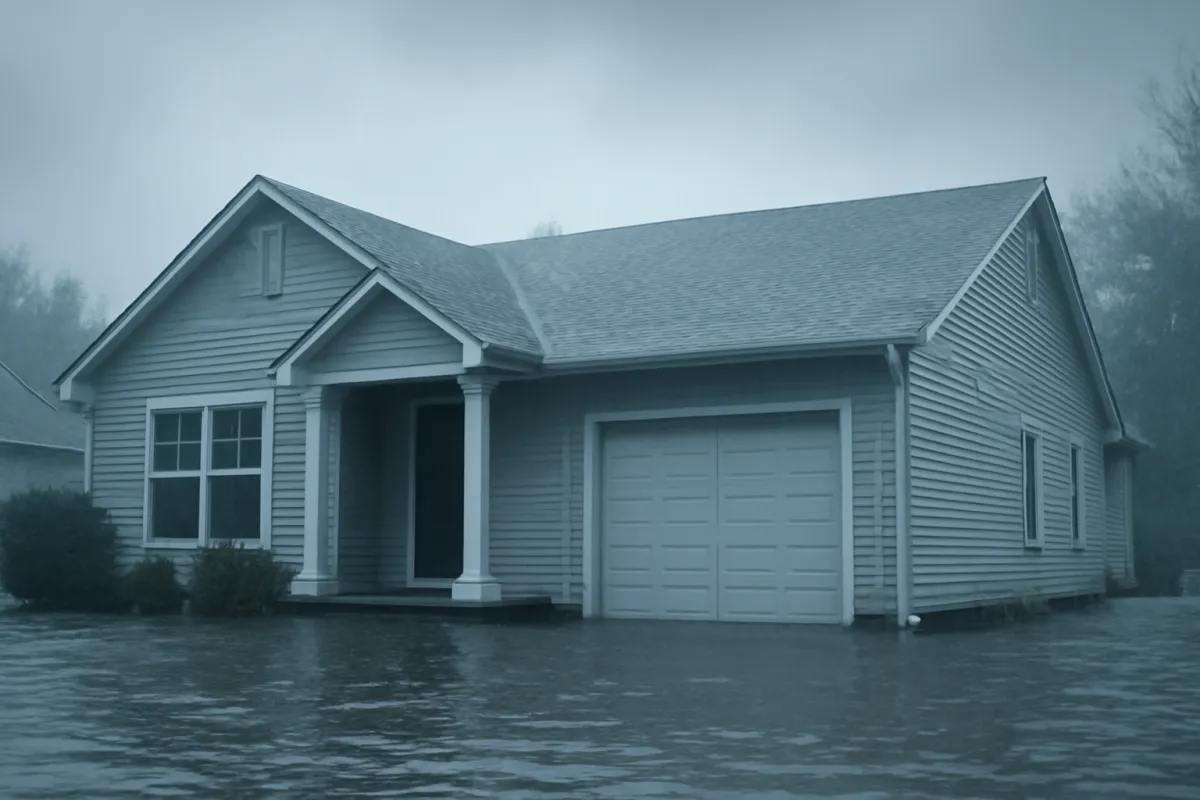
Start with the fact that makes flood insurance necessary at all: a standard homeowners policy does not cover flood, and it never has. Flood means water that rises from outside the home, whether from an overflowing river, a coastal storm surge, a flash flood down a hillside, or water pooling in the street from a drainage system overwhelmed by heavy rain. Every standard policy excludes that water explicitly, and it excludes it no matter how sudden, severe, or unforeseeable the event was. Our coverage note on what home insurance covers lists flood at the top of the exclusions page precisely because it is the most expensive gap most homeowners never realize they have.
The cruel wrinkle is the water-source distinction, and it denies more claims than almost anything else. A pipe that bursts inside your wall and soaks the floor is commonly covered, because it is sudden internal water damage. Identical-looking water on the same floor that arrived from a flooded street is not covered, because it is flood. Same wet floor, same repair bill, opposite outcome, decided entirely by where the water came from. This is why “I have homeowners insurance” is not an answer to “am I covered for flooding.” The two are separate policies solving separate problems, and closing the gap means buying the second one on purpose.

What flood insurance actually is: NFIP versus private
Flood insurance is a standalone policy that pays for direct physical damage to your home and belongings caused by flooding, and it comes from two broad sources. The first is the National Flood Insurance Program (NFIP), a federal program administered under the Federal Emergency Management Agency (FEMA’s flood insurance page) that has underwritten most residential flood coverage for decades. NFIP coverage is standardized, available almost everywhere a community participates in the program, and priced under a federal rating system. Its building coverage and its contents coverage each stop at a fixed federal ceiling for a single-family home, figures the program publishes and revises over time, so confirm the current caps with a participating agent rather than trusting a number quoted anywhere, including here. Those ceilings touch the price only in that they bound how much coverage the program will sell you at all. Whether your own rebuild figure clears them is a sizing question, and our note on how much flood insurance do I need answers it rather than this one.
The second source is private flood insurance, a market that has grown rapidly as insurers have gained confidence in modeling flood risk. Private insurers set their own limits, deductibles, and premiums, and they can offer coverage above the NFIP caps, sometimes lower prices for lower-risk homes, and features the NFIP omits, such as additional living expenses during a rebuild or replacement-cost contents. The practical point is that most buyers now have a genuine choice, and pricing the same home through the NFIP and through one or two private insurers can produce meaningfully different numbers. We compare the two more fully below, but the headline is that flood insurance is no longer a single government product with a single price.
Illustrative annual premium ranges by risk zone
Because the price swings so widely, the most useful way to see it is by risk zone rather than as one average. The chart below sketches illustrative annual premiums across four rough risk bands for a typical single-family home. These are deliberately round, heavily caveated figures meant to show the shape of the relationship, not to quote your address: the actual number depends on your specific elevation, coverage amounts, deductible, and insurer, and it can land well outside these bands in either direction. Every band is the same illustrative policy, $250,000 of building coverage and $100,000 of contents at a $1,000 deductible, repriced for a different zone, which is exactly what the estimator on this page does with your own figures.
Illustrative annual flood premium by risk zone
Rough annual premium bands for a typical single-family home, by broad risk level. Illustrative only: your quote depends on elevation, coverage, deductible, and insurer.
Bars are scaled to the high-risk figure. The same policy costs more than six times as much on the last bar as on the first, which is why any single average premium is close to useless for an individual home: wherever the middle of that range sits, almost nobody sits there with it.
Read the chart as a warning against averages. A homeowner in a minimal-risk zone who hears one national number may overpay in their head and skip coverage they could have had for a fraction of it, while a coastal owner who hears that same number will be shocked by the real quote. The zone you sit in, and your elevation within it, does more to set the price than any other single factor, which is why the next several sections are about how zones and elevation work. Run your own coverage amounts through our replacement-cost estimator first, since the building limit you choose is one of the inputs that moves these bands.
Is flood insurance expensive?
Is flood insurance expensive is the question homeowners circle back to once they learn their standard policy leaves flood out, and the honest answer is that it depends entirely on where you sit. For a home in a minimal-risk B, C, or X zone, the cost of flood insurance is often modest, an illustrative $500 a year through a lower-cost preferred-risk policy, which is far less than most people fear before they get a quote. For a high-risk coastal home in a V zone, the same coverage prices at an illustrative $3,200, which genuinely is expensive, because the premium is pricing a real and frequent risk. Between those extremes sit the moderate zones at an illustrative $850 to $1,400, and as the chart above shows the spread is wide enough that no single average describes an individual home, so the label “expensive” only means anything once you know your zone.
The more useful way to judge whether flood insurance is expensive is to weigh the premium against what it protects. A flood can inflict tens of thousands of dollars of damage that your homeowners policy will decline in full, so even a four-figure premium in a high-risk zone can be inexpensive relative to the loss it covers. In a low-risk zone, where a preferred-risk policy costs an illustrative $500 a year, about $42 a month, the math is easier still: the cost of flood insurance is small, and a large share of all claims come from exactly those lower-risk areas. Whether the number feels expensive matters less than whether you could absorb an uninsured flood out of pocket, and for most households the premium is the cheaper side of that comparison. Every figure here is illustrative, so confirm current NFIP and private quotes for your specific address before you decide.
What actually drives the price
Five factors do most of the work in a flood premium, and understanding them turns a mysterious quote into a set of levers. The first is your flood zone, the mapped risk category for your location, which is the single biggest driver. The second is elevation, specifically the height of your lowest floor relative to the level a serious flood is expected to reach, because a home even a foot or two higher floods less often and less deeply. The third is how much coverage you buy: the building limit and the contents limit are priced separately and both scale the premium. The fourth is your deductible, where a higher figure lowers the premium in exchange for absorbing more of a loss yourself. The fifth is the type of policy and insurer, NFIP or private, since the two markets rate the same home differently.
Notice that most of these are within your influence, at least partly. You cannot move your house out of a floodplain, but you can raise it, add flood vents, move mechanical systems upward, choose your coverage amounts and deductible deliberately, and shop the NFIP against private quotes. The mistake is to treat a flood premium as a fixed toll rather than a priced reflection of risk you can sometimes reduce. The sections on elevation certificates and on lowering the premium turn each of these drivers into a concrete action.
How flood zones work: the zone letters
Flood zones are the mapped risk categories that the federal government assigns to every parcel of land, published on Flood Insurance Rate Maps, and they use a letter system worth learning. Zones labeled with an A (such as A, AE, or AO) are high-risk areas along rivers, lakes, and inland water, expected to face significant flooding. Zones labeled with a V (such as V or VE) are high-risk coastal areas exposed not just to rising water but to wave action and storm surge, which is why they are the most expensive to insure. Together the A and V zones make up what is formally called the Special Flood Hazard Area, the high-risk designation that triggers most insurance requirements.
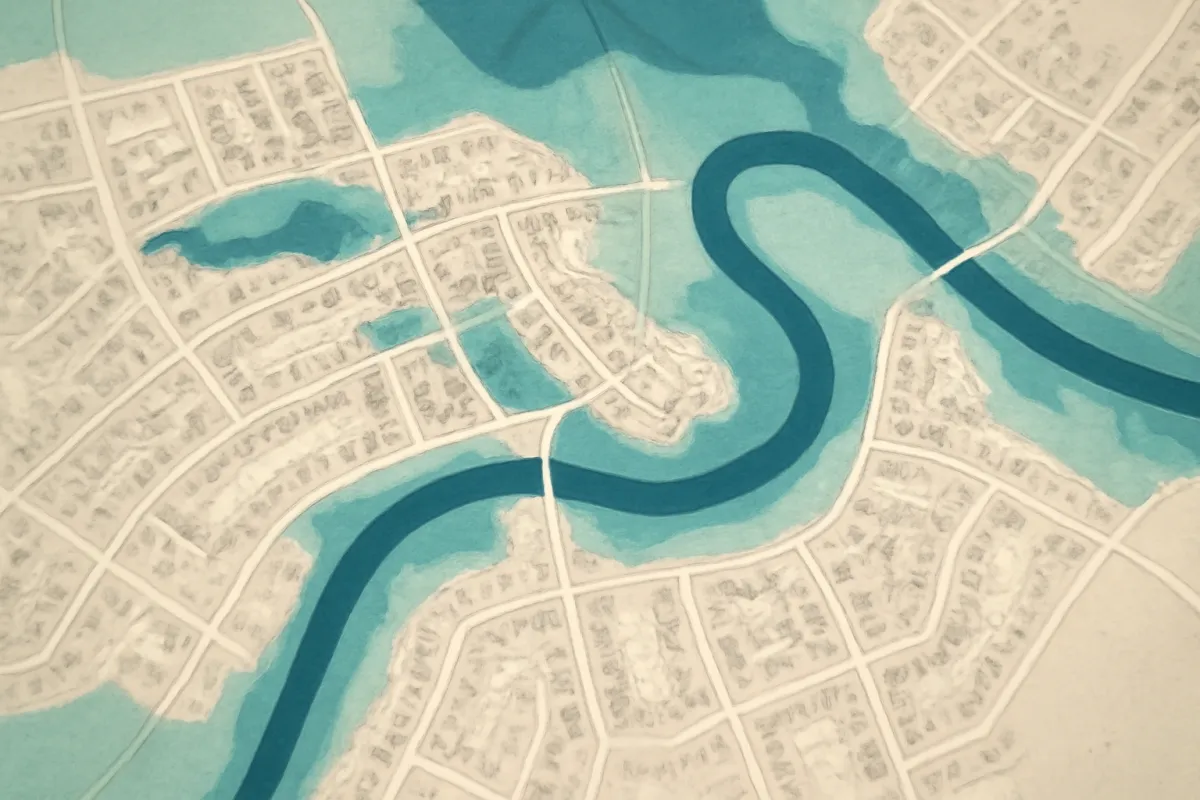
Zones labeled B, C, or X (sometimes shaded X) are the moderate-to-minimal-risk areas outside the Special Flood Hazard Area. This is where the dangerous complacency lives, because “minimal risk” reads to most people as “no risk,” and it is not: X zones still flood, just less often, and homes there are eligible for lower-cost preferred-risk policies precisely because the risk is real but reduced. The letter on your map is the starting point for both your premium and any mandatory-purchase requirement, so knowing your zone is the first thing to look up. Zone designations can also change when maps are revised, which occasionally moves a home into or out of a requirement overnight.
Flood zone insurance cost: a by-zone price table
Flood zone insurance cost is easier to hold in your head as a table than as a paragraph, because the letter on your map does more to set the number than anything else on the quote. Every row below prices the identical illustrative policy, $250,000 of building coverage and $100,000 of contents at a $1,000 deductible, and simply moves it from one zone to another. These come from one model built for this coverage note. They are not market averages, not rates, and not quotes.
| Flood zone | What the letter means | Illustrative annual premium | Roughly per month | Purchase usually required with a federally backed mortgage? |
|---|---|---|---|---|
| X (unshaded), B, C | Minimal risk, outside the Special Flood Hazard Area, eligible for a lower-cost preferred-risk policy | ~$500 | ~$42 | No |
| X (shaded) | Moderate risk, between the 1 percent and the 0.2 percent annual chance flood levels | ~$850 | ~$71 | No |
| A, AE, AO, AH | High risk along rivers, lakes, and inland water, inside the Special Flood Hazard Area | ~$1,400 | ~$117 | Yes |
| V, VE | High risk coastal, exposed to wave action and storm surge as well as rising water | ~$3,200 | ~$267 | Yes |
Three things the table is doing, and one it is not. It shows that moving the same coverage from the minimal-risk row to the coastal row multiplies the price by more than six, so your zone letter is the first thing to look up before you form any expectation about cost. It shows that the purchase requirement flips at the Special Flood Hazard Area boundary rather than easing in gradually, which is why a single map revision can turn an optional policy into a mandatory one. And it gives the monthly equivalent, because that is how most households judge affordability even though a flood premium is almost always billed once a year. What the table is not doing is quoting you. Two homes in the same AE zone can price very differently on elevation alone, which the elevation section below explains, and our note on flood insurance for high-risk areas covers what carrying coverage in an A or V zone involves in practice. Sketch your own rebuild figure with our replacement-cost estimator, then read the row your map actually puts you in.
The 100-year-flood concept, decoded
The phrase you will run into constantly is the “100-year flood,” and it is one of the most misunderstood terms in the whole subject. It does not mean a flood that happens once a century, and it certainly does not mean that if one occurred last year you are safe for ninety-nine more. It is a statement of annual probability: a 100-year flood level is the flood that has a 1 percent chance of being reached or exceeded in any given year. That is why the high-risk Special Flood Hazard Area is also called the 1 percent annual chance floodplain, which is the same idea stated more honestly.
Compound that 1 percent annual chance over the length of a mortgage and the picture sharpens. A 1 percent yearly probability works out to roughly a 26 percent chance of at least one such flood over a 30-year period, which is far higher than “100-year” makes it sound. There is also a 500-year flood, the 0.2 percent annual chance level, used to define a moderate-risk band. The lesson is to translate the marketing-sounding label back into annual odds and then into mortgage-length odds, because the honest numbers make the case for coverage far better than the reassuring name does.
The mandatory-purchase rule
For many homeowners the decision is not theirs to make, and that is by design. Under federal law, if you have a mortgage from a federally regulated or insured lender, and your home sits in a high-risk Special Flood Hazard Area (an A or V zone), the lender is required to make you carry flood insurance for the life of the loan, at least up to the outstanding loan balance or the maximum available NFIP coverage, whichever is less. This is the mandatory-purchase requirement (the NFIP’s FloodSmart eligibility page describes it), and it is why a huge share of flood policies exist: the buyer did not weigh the risk and opt in, the closing paperwork required it.
Two things about the rule surprise people. First, it is tied to the zone and the mortgage, not to your personal sense of risk, so a home that has never flooded in living memory can still trigger the requirement if the map says high risk. Second, the requirement is a floor and not a ceiling: the lender protects the loan balance, which can sit well below the cost to rebuild, so the mandated amount is a compliance figure rather than a coverage plan. How far apart those two numbers sit, and what to carry instead, is the sizing question, and our note on how much flood insurance do I need answers it end to end. For price, the thing to take from the rule is simply that a mandated policy is rated exactly like an optional one: zone, elevation, limits, deductible, nothing else.
Why a flood quote arrives as two prices: building and contents
A flood quote almost never arrives as one number, because a flood policy is not one bucket of money. Building coverage prices the structure. Contents coverage prices your belongings. Each line carries its own rate and its own limit, so the two are added rather than blended, and moving one leaves the other where it was. On the illustrative policy priced throughout this note, the building line comes to about $1,050 a year in an AE zone and the contents line to about $350, which is where the $1,400 total in the table comes from. Leaving contents off deletes that second line from the bill entirely, which is the fastest way to make two quotes look different when the coverage is what differs. What amount belongs on each line is a separate question from what each line costs, and it is worked through in our flood coverage sizing note.
The split matters for the price in two ways. First, a lender that requires flood insurance typically requires only building coverage, so the contents line is elective rather than fixed, and a quote with contents left off is not comparable to one that includes it. Ask which lines a quote contains before you set two of them side by side. Second, the chart below shows how that illustrative building-and-contents premium divides, with the structure taking the larger share because it is the more expensive thing to repair.
A flood policy's coverage split, illustratively
Rough share of one illustrative building-and-contents flood premium. Exact splits vary by home, elevation, and how much contents coverage you add.
The building slice dominates because rebuilding the structure is the larger exposure: on the illustrative AE-zone policy that is about $1,050 of the $1,400 total. A renter, who insures no building, pays only the contents slice, about $350, which is why renter flood coverage is comparatively inexpensive.
The 30-day waiting period gotcha
Here is the timing trap that catches people every storm season: a new flood policy usually does not take effect the day you buy it. Under the NFIP there is typically a waiting period, commonly described as 30 days (see FloodSmart’s buy-a-policy page), between purchase and the start of coverage, with only narrow exceptions, such as a policy bought in connection with the closing of a new mortgage or certain situations tied to a flood-map revision. The program sets the current period and the list of exceptions and both can change, so ask the agent writing the policy to confirm your effective date in writing. The purpose is to stop people from buying coverage only when a flood is already bearing down, which would break the insurance pool, but the effect is that procrastination has a hard deadline you cannot beat.
The practical consequence is blunt. If a hurricane is three days offshore and you have never bought flood insurance, it is too late: a policy purchased today will not be in force when the surge arrives. Flood coverage has to be arranged as a standing part of your protection, months before any specific threat, the way you would not wait for smoke to buy a fire policy. Private flood insurers sometimes offer shorter waiting periods, which can matter if you are buying under time pressure, but the safe mental model is that flood coverage is something you put in place well ahead of the season and keep in place, not something you switch on when the forecast turns.
Why even low-risk homes flood
The most important myth to puncture is that flooding is a problem only for homes in the high-risk zones. It is not, and the pattern in flood claims is what makes the point: a large share of them come from properties outside the high-risk Special Flood Hazard Area. The current share is published by the program and moves from year to year, so ask a participating agent for the figure rather than trusting a number quoted anywhere, including here. What does not move is the direction, and the direction is that the share is big enough to make “not required” a poor reason to go without. Those are the moderate-to-minimal-risk B, C, and X zones, the places where owners are least likely to carry coverage because no lender forced them to and the map told them the risk was low.
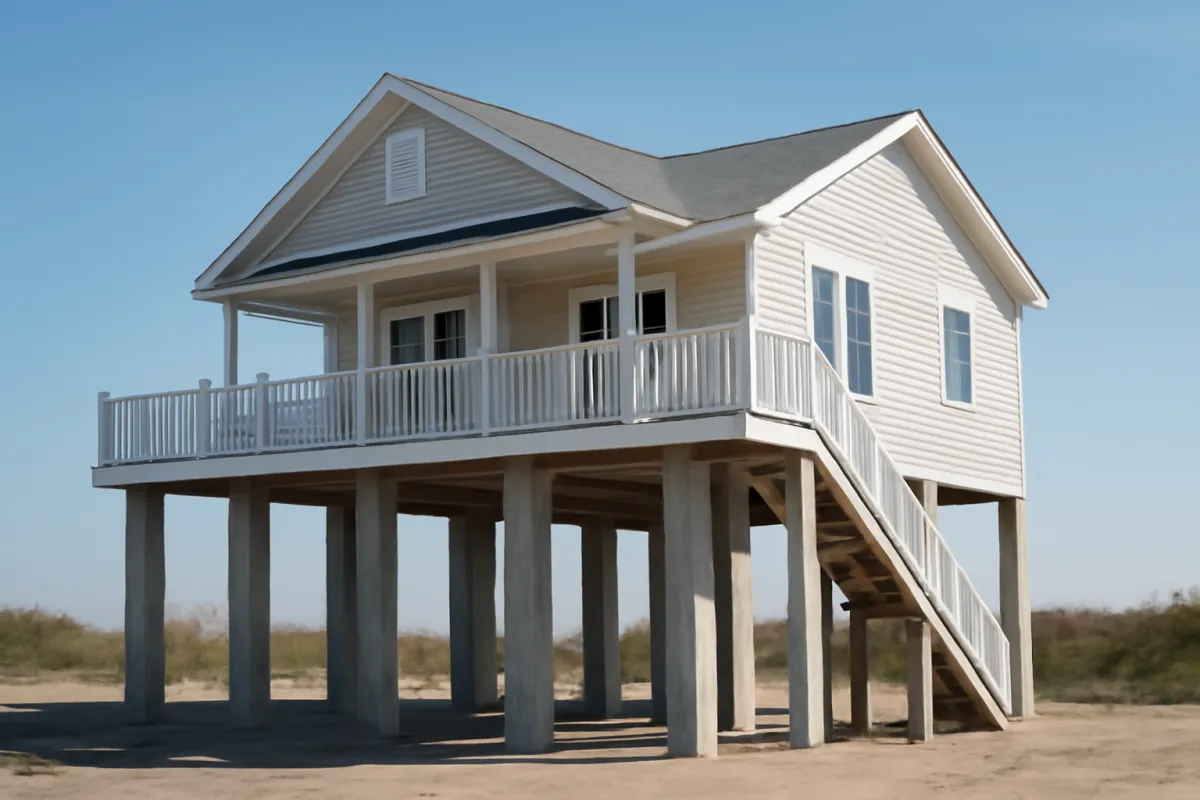
The reasons low-risk homes still flood are ordinary. A few hours of unusually intense rainfall can overwhelm storm drains and pool water into homes that sit nowhere near a river. New pavement and development upstream can change where water goes, sending it toward homes that were dry for decades. Aging infrastructure, a clogged culvert, a flash flood on normally placid ground, all of it produces flooding well outside the mapped high-risk areas. The takeaway is not that everyone faces equal risk, they do not, but that a low-risk designation means lower odds, not zero, and homes in those zones qualify for lower-cost preferred-risk policies precisely so that carrying coverage is affordable. Optional is not the same as unnecessary.
Elevation certificates and how they cut premiums
In a high-risk zone, the elevation of your lowest floor relative to the expected flood level is one of the biggest factors in your premium, and an elevation certificate is the document that proves it. An elevation certificate (FloodSmart’s elevation certificate page) is a form completed by a licensed surveyor or engineer that records the precise elevations of your home and the surrounding ground, letting the insurer compare your lowest floor to the base flood elevation, the height the 1 percent annual chance flood is expected to reach. A home whose lowest floor sits above that level floods less often and less deeply, and the premium can reflect that with a substantial reduction.
Elevation cuts the premium because it directly reduces expected losses, and it does so in two ways. First, an existing home that already sits high relative to the flood level may be paying more than it needs to simply because no one has documented the elevation, so obtaining a certificate can lower an existing bill. Second, physically raising a home, or building a new one above the flood level, moves it into a cheaper rating for the life of the structure. The same logic rewards other mitigation, like installing flood vents in an enclosure so water can flow through rather than build up pressure, and relocating the furnace, water heater, and electrical panel above the expected flood height. These are capital projects, not free, but in a high-risk zone the premium savings can pay back a meaningful share over time.
Private flood versus NFIP: the tradeoffs
With a real private market now competing alongside the NFIP, the choice between them is worth making deliberately rather than defaulting. The NFIP’s strengths are availability and standardization: it is offered almost everywhere a community participates, its terms are consistent, and it does not decline homes for being high risk. Its weaknesses are the coverage ceilings, a fixed federal maximum on the building limit and a separate, lower one on contents, which can leave an expensive home underinsured, and the absence of features like loss-of-use coverage for living expenses during a rebuild.
Private flood insurers can often improve on those points. They can write higher limits that actually match a large home’s rebuild cost, sometimes price lower-risk homes more cheaply than the federal rate, offer replacement-cost rather than depreciated contents settlement, and add coverages the NFIP omits. The tradeoffs are that private availability and appetite vary by insurer and can change, some private policies have their own conditions and may not satisfy every lender automatically, and continuity matters, since dropping an NFIP policy for a private one and later trying to return can affect pricing. The sensible move for most buyers is to get an NFIP quote and one or two private quotes for the same coverage and compare them directly on price, limits, and terms, the same shop-around discipline our deductible note applies to homeowners coverage.
NFIP versus private flood insurance at a glance
Because the two markets differ on the same handful of dimensions again and again, a side-by-side view makes the comparison concrete. Every entry below describes the common shape of each market, not the terms of any specific policy, and private terms in particular vary by insurer, so treat the table as a checklist of questions to ask rather than a promise of what any quote will say.
| Dimension | NFIP policy (common shape) | Private flood policy (common shape) |
|---|---|---|
| Building coverage cap | A fixed federal maximum per single-family home, published by the program | Insurer-set, often available well above the federal ceiling |
| Contents coverage cap | A separate, lower federal maximum | Insurer-set, frequently higher limits offered |
| Contents settlement basis | Typically actual cash value (depreciated) | Replacement cost often available |
| Additional living expenses | Generally not included | Sometimes included or offered as an option |
| Waiting period | Typically 30 days, with narrow exceptions | Varies by insurer, sometimes shorter |
| Availability | Almost anywhere the community participates, regardless of risk | Varies by insurer appetite, and can change |
| Pricing basis | Federal per-address rating system | Each insurer's own catastrophe models |
The practical use of the table is the shopping script it implies: get an NFIP quote as the baseline, then ask one or two private insurers for the same building and contents limits and compare line by line on caps, settlement basis, living expenses, waiting period, and price. A private policy that wins on three of those lines can still lose on lender acceptance or long-term availability, so confirm both before switching, and remember that every figure above is illustrative and only a real quote for your address decides the comparison.
How to lower your flood premium
Several levers can bring a flood premium down, and they map directly onto the price drivers. The first and largest, in a high-risk zone, is elevation and mitigation: documenting a favorable elevation with a certificate, raising the structure, adding flood vents, and moving mechanical systems above the flood level all reduce expected losses and therefore the premium. The second is the deductible: choosing a higher deductible lowers the annual cost in exchange for absorbing more of a loss yourself, exactly the tradeoff our deductible note walks in full for homeowners policies, and the same break-even logic applies. On the illustrative model used here, stepping from a $1,000 deductible to a $5,000 one trims the AE-zone premium from about $1,400 to about $1,120, a saving of $280 a year bought by putting $4,000 more of your own money at stake, which takes roughly fourteen claim-free years to pay for itself.
The third lever is coverage amounts: buying only the building and contents limits you actually need, rather than rounding up out of habit, keeps the premium proportional to your real exposure, though never trim below what a serious flood would cost you. The fourth is your community’s participation in the Community Rating System, a program that gives policyholders in towns that invest in floodplain management a discount on NFIP premiums, so it is worth asking whether your community qualifies. The fifth is shopping the NFIP against private quotes, since the two markets price the same home differently. Every figure here is illustrative and the savings depend on your specific home, but the pattern is consistent: reduce the risk, or match the coverage to it, and the premium follows.
How flood premiums are billed and escrowed
A flood premium is normally an annual number rather than a monthly one, and that billing fact confuses more budgets than the price itself. Most flood policies are written for a twelve month term and billed once, up front, for the year ahead. Dividing the illustrative $1,400 AE-zone premium from the table above into a tidy $117 a month is a useful way to think about the cost, but it is not usually how the money leaves your account. If you are buying the policy yourself, expect one bill covering the whole year, arriving on the policy anniversary rather than alongside your mortgage statement, and plan the cash flow around that single hit rather than around a monthly average.
The picture changes when a lender is involved. Where flood coverage is required as a condition of the loan, the servicer commonly collects it through your escrow account alongside property taxes and your homeowners premium, which does turn the annual figure into a monthly line on your payment. The servicer pays the flood insurer at renewal and spreads the cost across the following twelve payments. That is convenient until the premium moves. A repriced renewal creates an escrow shortage, and the servicer recovers it by raising the monthly payment, sometimes by more than the premium increase itself, because it is rebuilding the cushion at the same time. A flood premium change therefore reaches you as a mortgage payment change, months after the fact and with no obvious label on it.
Two habits stop that from ambushing you. The first is to read the renewal notice instead of filing it, because it names next year’s premium while there is still time to shop an NFIP quote against a private one or to document an elevation that would lower the figure. The second is to read the annual escrow analysis your servicer sends, which is where a flood repricing actually surfaces on your payment. If you change insurers partway through a term, expect a refund of unearned premium from the outgoing carrier, a fresh charge from the new one, and an escrow account that takes a cycle to settle, the same servicer notification sequence our note on switching home insurance walks in full. Price the coverage with our replacement-cost estimator open, so the limit driving the bill is a number you chose rather than one you inherited from the previous owner’s policy.
What flood insurance does not cover
A flood policy is not unlimited, and knowing its boundaries prevents the same claim-time surprise that the homeowners exclusions cause. Flood insurance covers direct physical damage from flooding, but it typically does not pay for the things around the flood. Additional living expenses, the cost of staying elsewhere while your home is repaired, are generally not covered under a standard NFIP policy, though some private policies add it. Damage to property outside the building, such as decks, patios, landscaping, fences, hot tubs, and swimming pools, is usually excluded or sharply limited. A vehicle damaged by flood is not a flood-policy claim, it belongs to the comprehensive portion of your auto insurance.
Basements and below-grade areas carry their own limitations that catch people off guard. The NFIP restricts coverage in basements and enclosures below the lowest elevated floor, generally covering structural elements and certain mechanical systems but not finished walls, floor coverings, or personal belongings kept down there. Damage from moisture, mold, or mildew that could have been prevented is excluded, as is loss caused by earth movement even when a flood set it off in some cases. And the caps are real: once building damage exceeds the policy limit, the excess is uninsured. The lesson mirrors our coverage note on what home insurance covers: read the exclusions alongside the coverages, because what a policy leaves out is as decisive as what it includes. And if rising water has already been inside your home, our step-by-step walkthrough of the flood insurance claim process covers the documentation and deadlines that decide how much of a covered loss you actually collect.
Flood insurance for renters
Renters own no building, so they never need building coverage, but their belongings sit in exactly the same water a homeowner’s do, and this is the gap renters most often miss. A landlord’s insurance covers the landlord’s structure, not a tenant’s possessions, and a standard renters policy excludes flood for the same structural reason a homeowners policy does. That leaves a renter’s furniture, electronics, clothing, and everything else exposed to a flood with no coverage at all unless they buy a contents-only flood policy.
Contents-only flood coverage is comparatively inexpensive precisely because it insures no structure, only the belongings, which is the smaller slice of the coverage split shown earlier. For a renter in a ground-floor apartment, a basement unit, or anywhere flooding is plausible, it can be a modest premium standing between a flood and the total loss of everything they own. The decision mirrors the homeowner’s: it is not about legal requirement, since renters are rarely forced to buy it, but about whether you could replace a household of belongings out of pocket after a flood. For most renters, particularly at ground level, the honest answer argues for at least pricing a contents-only policy.
A worked example: one home in a moderate zone
Put the pieces together on one illustrative home. The Delgados own a single-family house whose Flood Insurance Rate Map panel places it in an AE zone, a high-risk area along a nearby creek, so their federally backed mortgage requires flood coverage. They have already settled what limits to carry, an illustrative $250,000 of building coverage and $100,000 of contents, and that decision is the subject of our flood coverage sizing note rather than of this one. What they want here is the price of those limits.
On the model priced throughout this note, the building line comes to about $1,050 a year and the contents line to about $350, for a total near $1,400, or roughly $117 a month if you spread it across the year even though the bill arrives once. The building line is 75 percent of that total, exactly the split the chart above shows. Then the levers. Moving to a $5,000 deductible takes the total to about $1,120, a saving of $280 a year bought with $4,000 more of their own money at stake in a claim. Documenting a lowest floor above the base flood elevation with an elevation certificate can move the number further, and how much further depends on the measured elevation rather than on any figure this note could supply. And because the same policy on the same house in a minimal-risk X zone would price near $500, the Delgados can see plainly that they are paying for the creek and not for the house. Every number here comes from one illustration. Their real premium comes from an NFIP participating agent and one or two private quotes for their exact address, and so does yours.
The bottom line
How much does flood insurance cost? On the illustrative model priced throughout this coverage note, about $500 a year in a minimal-risk zone, about $850 where risk is low to moderate, about $1,400 in a moderate-risk AE zone, and about $3,200 on a high-risk coastal VE lot, set mostly by your zone, elevation, coverage amounts, and deductible. Do you have to buy it? If you have a federally backed mortgage in a high-risk zone, you almost certainly do, and if you do not, it is optional but frequently wise, because your homeowners policy excludes flood entirely and a large share of claims come from lower-risk areas. Remember the two separate limits, building and contents, and the 30-day waiting period that makes procrastination costly. Learn your flood zone first, because it moves the price more than anything else you can look up, translate the “100-year flood” label into real mortgage-length odds, weigh an NFIP quote against private quotes, and use elevation and deductible as your main levers. Start from our coverage note on what home insurance covers to see why flood sits outside your standard policy, size the deductible tradeoff with our deductible note, and anchor a rebuild figure with our replacement-cost estimator before you price anything. And if the open question is how much coverage to carry rather than what it costs, that is the sizing question, and our note on how much flood insurance do I need answers it end to end.
This coverage note is educational reading about how flood insurance is priced and structured, not insurance, legal, or financial advice, and it does not describe or quote your specific policy. Every premium, coverage limit, deductible, zone example, and dollar figure above is illustrative, chosen to show how the pieces relate rather than to state what any insurer would charge for your home, and real flood premiums are set by your exact location, elevation, coverage amounts, and the program or insurer you choose. Flood-zone maps, mandatory-purchase requirements, program coverage caps, waiting periods, and the availability and terms of private flood insurance change over time and differ by community, state, and property, and only an actual quote and your own policy language govern your coverage. Before relying on anything here, look up your flood zone, obtain quotes for your address, and confirm the details with a licensed insurance professional who can assess your specific flood risk.
Frequently asked questions
How much does flood insurance cost per year?
There is no single number, and any national average hides more than it shows. On the illustrative model this coverage note prices from end to end, one policy with $250,000 of building coverage and $100,000 of contents at a $1,000 deductible runs about $500 a year in a minimal-risk X zone, about $850 where the risk is low to moderate, about $1,400 in a moderate-risk AE zone, and about $3,200 on a high-risk coastal VE lot, which is roughly $42, $71, $117, and $267 a month. Those figures come from one model built to show the shape of the relationship, not from market data and not from any rate table. The price is driven by your flood zone, your home's elevation relative to the expected flood level, how much building and contents coverage you buy, and your deductible, so get a real quote from an NFIP participating agent and at least one private insurer before you budget anything.
Does homeowners insurance cover flood damage?
No. A standard homeowners policy explicitly excludes flood, meaning water that rises from outside the home: an overflowing river, a storm surge, a flash flood, or water pooling from an overwhelmed drainage system in heavy rain. This is the single most expensive misunderstanding in home insurance, because the exclusion applies no matter how sudden or unexpected the flooding was. Flood coverage is a completely separate policy, historically through the National Flood Insurance Program and increasingly through private flood insurers. Our coverage note on what home insurance covers walks the exclusion in full, and the practical takeaway is that if rising water is a risk where you live, you need a distinct flood policy on top of your homeowners coverage.
Why is flood insurance a separate policy from home insurance?
Flood risk is geographically concentrated and catastrophically correlated, which breaks the math that ordinary insurance relies on. When a river overtops its banks or a hurricane pushes a storm surge inland, it does not damage one home at random, it damages thousands of neighboring homes at once, so the losses cannot be spread across a broad pool the way a scattered fire or theft can. That is why flood was pulled out of standard policies decades ago and pooled separately, first through the federal National Flood Insurance Program and now alongside a growing private flood market. The structural reason is the same reason earthquake is also excluded: some perils are too concentrated to fund inside a general policy.
What is the flood insurance waiting period?
Most new flood policies do not take effect immediately. Under the National Flood Insurance Program there is typically a waiting period, commonly described as 30 days, between the day you buy the policy and the day coverage begins, with a few narrow exceptions such as a policy purchased in connection with a new mortgage or certain map changes. The program sets the current period and the exceptions to it, so confirm your effective date with the agent writing the policy rather than assuming it. This is the gotcha that catches people every storm season: buying flood coverage the week a hurricane is forecast does not work, because the policy will not be in force when the water arrives. Private flood policies sometimes offer shorter waiting periods, but the safe assumption is that flood coverage must be arranged well ahead of any known threat, not in response to one.
How can I lower my flood insurance premium?
The largest single lever is elevation: raising the lowest floor of the home above the expected flood level, documented with an elevation certificate, can cut premiums substantially in a high-risk zone. Choosing a higher deductible lowers the premium in exchange for more out-of-pocket cost at claim time, the same tradeoff our deductible note walks for homeowners coverage. Other mitigation, such as installing flood vents in an enclosure, moving utilities and mechanical systems above the flood level, and, if your community participates, benefiting from the Community Rating System discount, can all reduce the number. Shopping an NFIP quote against private flood quotes is also worth doing, since the two markets price the same home differently. Every saving here is illustrative and depends on your specific home and insurer.
Do renters need flood insurance?
Renters do not own the building, so they never need building coverage, but their belongings are exposed to flood exactly like a homeowner's, and a landlord's policy does not cover a tenant's possessions. A renter's flood policy provides contents-only coverage, which pays to replace furniture, clothing, electronics, and other belongings damaged by rising water, up to the limit you select. It is usually inexpensive relative to a full building-and-contents policy because there is no structure to insure. If you rent a ground-floor or basement unit, or live anywhere flooding is plausible, contents-only flood coverage is worth pricing, because standard renters insurance excludes flood for the same reason a homeowners policy does.
Is flood insurance expensive?
It depends almost entirely on your flood zone. On the illustrative model used throughout this coverage note, the same policy costs about $500 a year in a minimal-risk B, C, or X zone through a lower-cost preferred-risk policy, about $1,400 in a moderate-risk AE zone, and about $3,200 in a high-risk coastal V zone, a spread of more than six to one on identical coverage. That spread is the reason no single average premium tells an individual homeowner anything useful. The better test is whether the premium is expensive relative to what it protects: a flood can cause tens of thousands of dollars of damage your homeowners policy will not pay, so even a higher premium is often cheaper than the uninsured loss. Treat these figures as illustrative and confirm current NFIP and private quotes for your address.
What is the typical cost of flood insurance?
There is no typical number worth quoting, because the spread is too wide for an average to carry meaning. On this coverage note's illustrative model, the cost of flood insurance for a single-family home carrying $250,000 of building coverage and $100,000 of contents runs from about $500 a year in a low-risk zone to about $3,200 in a high-risk coastal zone, with the moderate-risk zones between them near $850 to $1,400. How much is flood insurance for your home specifically depends on your flood zone, your elevation relative to the expected flood level, how much building and contents coverage you buy, and your deductible. Every figure here comes from one illustration rather than from market data, so get real NFIP and private quotes for your exact address before you budget anything.
How much does flood insurance cost in an AE zone versus a VE zone?
The zone letter is the biggest single lever on the price, and the gap between the two high-risk families is wide. On this coverage note's illustrative model, the same policy, $250,000 of building coverage and $100,000 of contents at a $1,000 deductible, prices near $1,400 a year in an AE zone and near $3,200 in a VE zone. The reason is what each zone is exposed to: an AE zone is high-risk inland flooding along rivers, lakes, and creeks, while a VE zone adds coastal wave action and storm surge on top of rising water, which does far more structural damage to a building. Within either zone, elevation moves the number substantially, so two neighbors on the same map panel can pay very different premiums. These figures are illustrative and drawn from one model rather than from any rate schedule, so confirm your own zone on the official map and get quotes for your address.

Hamza Hai is the editor of SumSured. She holds an MBA and reviews the site's articles against our editorial standards, checking that every figure is labelled for what it is, that nothing is presented as verified fact without a source the reader can check, and that the writing stays useful to a non-specialist.