What's in this note
- Why age alone is not the real factor
- The HO-8 policy form
- Actual cash value vs functional replacement cost on an HO-8
- What insurers actually flag, in order
- Oil tanks and secondary heating systems
- The four-point inspection
- When a standard carrier declines: the high-risk and specialty market
- Updates that reopen the standard market
- Weighing the cost of updating against accepting the alternative
- Historic designation: a separate consideration
- What else drives the premium beyond the flagged systems
- Finding an agent who actually works with older homes
- Getting a quote: what to have ready
- Checklist before you close
- A worked example
- If you already own the home and get non-renewed
- Common mistakes on an older home
- Shopping more than one option before you decide
- The bottom line
An older home carries a kind of risk a standard insurance underwriting model was not built around: original systems that were perfectly normal when installed and are now exactly the kind of thing that drives claims. Insuring one well is less about the home’s age on a calendar and more about four specific systems insurers actually look at, the wiring, the plumbing, the roof, and the electrical panel, plus whatever a prior owner did or did not update along the way.
This coverage note works through what changes when a home is old enough to draw this kind of scrutiny: the HO-8 policy form built specifically for this situation, how its settlement basis differs from a standard HO-3, the specific systems insurers flag and why, the high-risk and specialty market that exists when a standard carrier says no, and the updates that most reliably move a home back toward standard coverage, whether you are buying the home now or already own it and are facing a non-renewal. Run your own numbers through the home insurance estimator as you read, and use the companion above to see how your own home’s systems translate into an illustrative underwriting picture.
The short answer: older homes draw closer underwriting scrutiny because of specific systems, original wiring, outdated plumbing materials, an aging roof, an outdated electrical panel, or an oil tank, not because of age on its own. A standard HO-3 remains available to many older homes, especially ones with updated systems; where it is not, an HO-8 policy or a high-risk or excess-and-surplus carrier typically fills the gap, often settling losses on an actual cash value or functional replacement cost basis rather than a full like-kind replacement cost. Updating the flagged systems is usually the fastest route back to standard coverage and standard pricing.
Key takeaways
- Insurers underwrite specific systems, wiring type, plumbing material, roof age, electrical panel, and oil tanks, not the home's age by itself, so two homes built the same year can be treated very differently.
- An HO-8 policy exists for homes where full replacement cost would significantly exceed market value, and it commonly settles claims on actual cash value or functional replacement cost rather than a like-kind replacement basis.
- A four-point inspection, covering the roof, electrical, plumbing, and HVAC, is the underwriting tool insurers most often use on an older home specifically.
- When a standard carrier declines an older home, a high-risk or excess-and-surplus carrier is typically the fallback, generally at a higher price and sometimes with narrower terms.
- Updating the flagged system, rewiring, repiping, a new panel, or a new roof, is usually the most reliable way to move a home back toward standard market eligibility and standard pricing.
Why age alone is not the real factor
Calling this topic “older home insurance” is a slight misnomer, because the calendar age of a structure is not what an insurer’s underwriting model actually prices. What the model prices is the condition of a short list of systems that are statistically responsible for most of the claims that come from older housing stock: wiring that predates modern grounding and circuit protection standards, plumbing materials known to corrode or degrade in specific, predictable ways, a roof approaching or past the point where it reliably sheds water, and an electrical panel that cannot safely support a modern household’s load. A fifty-year-old home that has been rewired, repiped, reroofed, and had its panel replaced can underwrite like a much newer one. A thirty-year-old home that still has its original systems can draw the same scrutiny as a home twice its age.
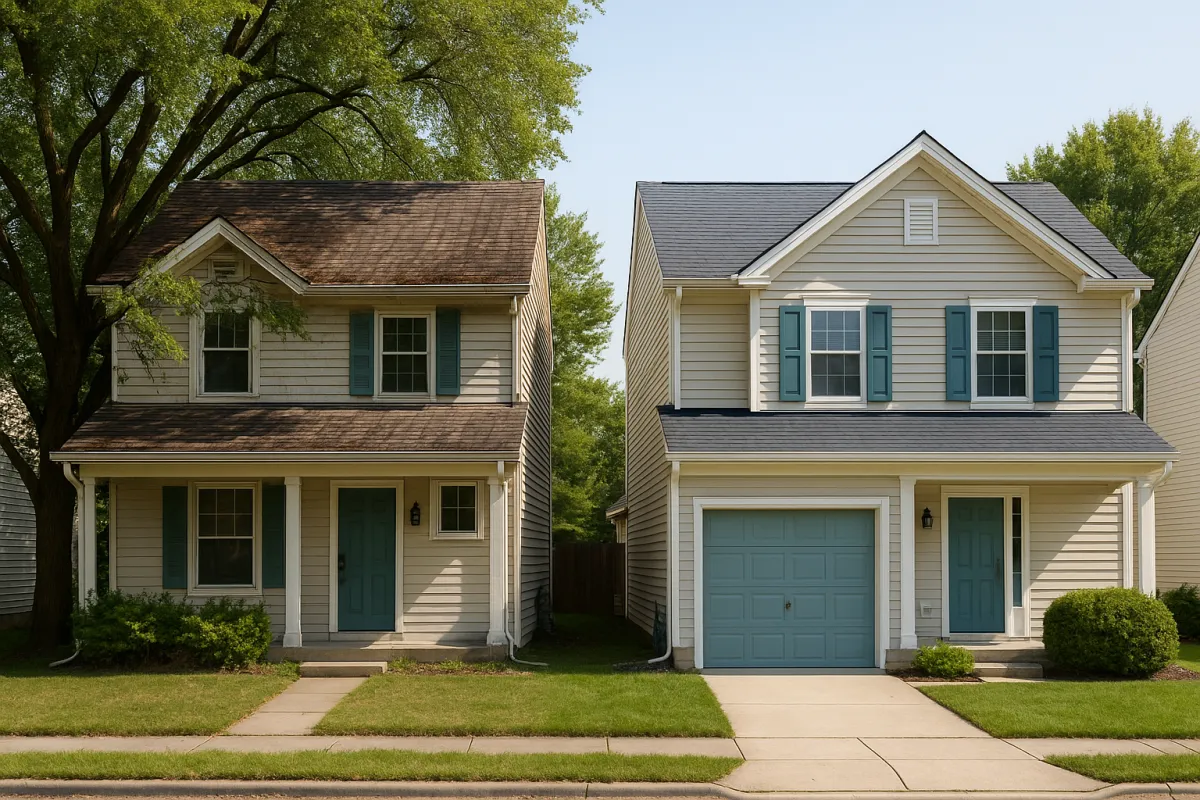
This is also why two neighbors on the same street, in homes built in the same development year by the same builder, can end up with meaningfully different insurance outcomes. One owner replaced the roof and the panel during an unrelated renovation a decade ago; the other has done nothing structural since move-in. The homes look identical from the sidewalk and read very differently to an underwriter who actually asks about what is behind the walls and on the roof.
The HO-8 policy form
The HO-8 is a specialized homeowners policy form built specifically for situations where insuring a home at full replacement cost, meaning what it would actually cost to rebuild it from the ground up matching the original materials, craftsmanship, and architectural detail, would run significantly higher than the home’s market value. This is common in older and historic housing stock, where period materials, custom millwork, plaster walls, and construction methods no longer in general use would be expensive to replicate exactly, far more expensive than the home would sell for on the open market. Our note on HO-3 versus HO-5 insurance covers the two standard forms most homes use; the HO-8 exists as a third, narrower option built around this specific replacement-cost mismatch rather than around named perils versus open perils, which is the distinction between HO-3 and HO-5, and it is worth not confusing the two kinds of comparison when you are shopping.
An HO-8 is typically a named-perils policy, covering a defined list of causes of loss rather than every cause except an excluded list, and it commonly carries narrower personal property coverage than a standard form as well. It is not a better or a worse policy in the abstract, it is a policy built for a specific mismatch between rebuild cost and market value, and it is usually not the first option offered, a standard HO-3 remains the starting point for most older homes until something about the specific property rules it out.

Actual cash value vs functional replacement cost on an HO-8
The settlement basis is where an HO-8 most noticeably differs from a standard policy, and it is worth understanding before you need to file a claim rather than after. Actual cash value pays the replacement cost of damaged property minus depreciation for its age and condition, and our note on actual cash value versus replacement cost covers the mechanics in general; on an older structure, or on original materials that have genuinely aged, that depreciation deduction can be substantial, sometimes leaving a real gap between the payout and the cost of a quality repair.
Some HO-8 policies instead offer functional replacement cost, which pays to repair or rebuild using materials and methods that serve the same function as the original without insisting on an exact match, modern vinyl or fiber cement siding in place of original wood clapboard, for example, and generally without the same depreciation deduction actual cash value applies. Functional replacement cost sits between actual cash value and a full like-kind replacement cost, and which basis a specific HO-8 policy actually uses is a question to ask directly, since the terminology and the exact mechanics are not standardized across every insurer offering this form.
What insurers actually flag, in order
Four categories account for most of the scrutiny an older home receives, and understanding what is being evaluated inside each one makes the underwriting process far less mysterious.
Wiring is usually first. Knob-and-tube wiring, an early wiring method using individual conductors supported on ceramic knobs and run through ceramic tubes, lacks a grounding conductor and was not designed for the electrical load a modern household places on a circuit, and many insurers decline to write a home that still has active knob-and-tube wiring at all. Ungrounded or early aluminum branch wiring from a later era carries its own documented fire risk at connection points and draws similarly close scrutiny. Our note on fire damage coverage touches on how an undisclosed wiring issue can affect a claim; from an underwriting perspective, the more direct effect is simply that many standard carriers will not offer a policy at all until the wiring is updated.
Plumbing is second. Galvanized steel pipe corrodes from the inside over decades until it restricts flow and eventually fails, and polybutylene pipe, used widely for a period before being discontinued, has a documented history of failing at its fittings. Our note on plumbing coverage explains how insurers treat the damage these materials cause once they fail; underwriting is the earlier stage, where the presence of either material can itself be the reason a standard carrier declines or requires an update first.
What most often drives a decline or a surcharge on an older home
An illustrative weighting of the systems insurers most commonly flag on an older property. Invented proportions chosen to show the shape of underwriting attention, not measured data from any insurer.
Which factor matters most varies by insurer and by region. The order shown reflects how often each category is reported as a reason for decline or added underwriting conditions, not a formula any single carrier publishes.
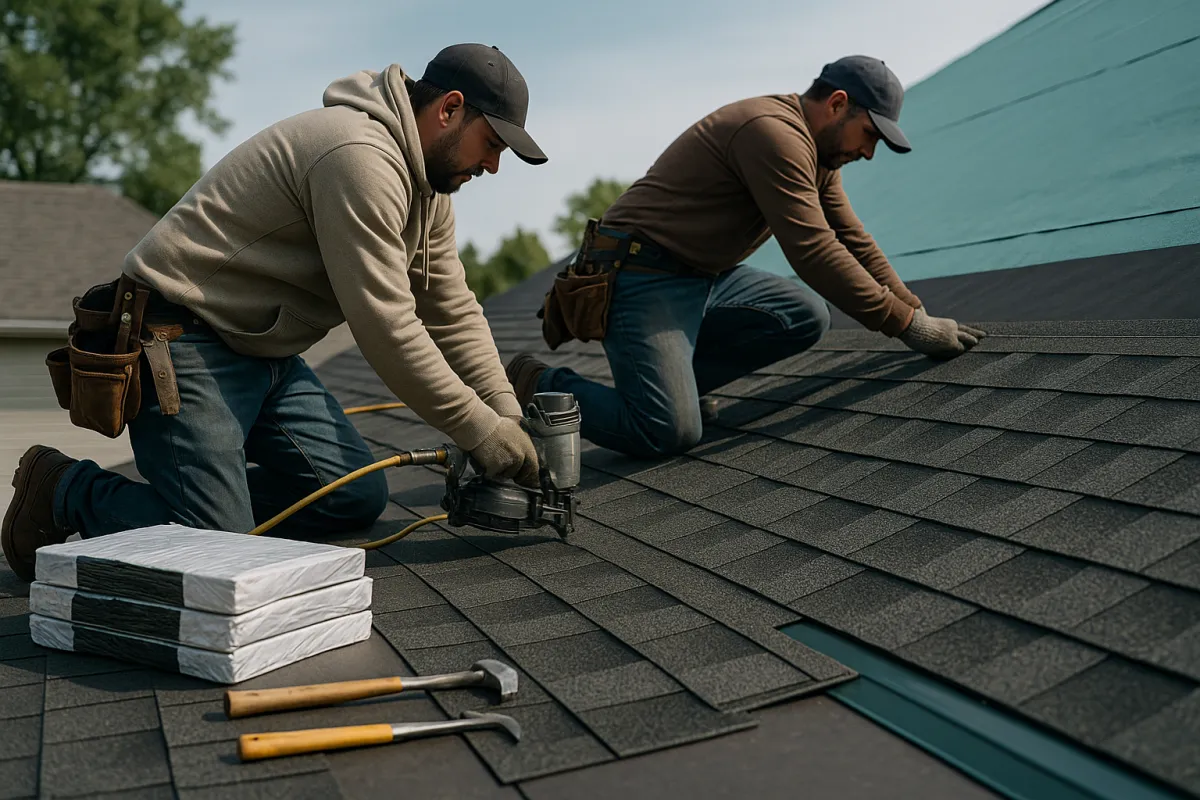
Roof age and condition comes third, and it is often the single most time-sensitive factor, since a roof’s service life is finite in a way that can be estimated fairly precisely once the material and installation date are known. Our note on roof replacement coverage covers how claims and settlement basis treat an aging roof directly; from the underwriting side, a roof that has crossed a carrier’s acceptable age threshold is a common trigger for non-renewal or a required replacement before a new policy is written, which our note on home insurance non-renewal covers in more general terms.
The electrical panel is fourth, and it matters independently of the home’s branch wiring. An outdated panel, particularly certain older panel brands with a documented history of breaker failure, or a panel that is simply undersized for a modern household’s electrical load, can be flagged on its own even in a home where the branch wiring itself has already been updated.
Oil tanks and secondary heating systems
An older home is more likely than a newer one to have, or to have once had, an oil heating system, and the tank itself is its own underwriting category separate from the furnace or boiler it feeds. An above-ground tank located inside a basement is generally the most straightforward case for an insurer to accept. A buried tank raises a pollution liability question many carriers will not accept at all, since a leaking buried tank can contaminate soil and groundwater in a way that triggers environmental remediation costs far beyond ordinary property damage, and an abandoned buried tank frequently requires documented decommissioning before a standard carrier will write the policy. Our note on home insurance inspections covers how an inspector evaluates oil tanks and other secondary heat sources such as wood stoves in more depth; the underwriting consequence is the same pattern as wiring and plumbing, a known higher-risk feature that some standard carriers decline outright regardless of how well-maintained it otherwise appears.
The four-point inspection
Think of it as the insurer’s own short list: the four systems in an older home that experience has taught underwriters are worth paying an inspector to look at closely, rather than every system a full inspection would cover.
Many insurers require a four-point inspection specifically on older homes, a focused review of the roof, electrical, plumbing, and HVAC systems rather than a full top-to-bottom home inspection. It exists because those four systems are disproportionately responsible for the claims and underwriting declines that older housing stock generates, and a focused inspection is faster and cheaper to obtain than a full buyer’s inspection while still answering the specific questions an underwriter needs resolved. A four-point inspection commissioned for insurance purposes is a different document from, and does not replace, a full home inspection a buyer would commission before purchase for their own due diligence, and the two are often confused by first-time older-home buyers who assume one covers the other.
When a standard carrier declines: the high-risk and specialty market
When a home’s flagged systems fall outside a standard carrier’s underwriting guidelines, the typical next step is the high-risk or excess-and-surplus insurance market, carriers that specifically write coverage for properties standard insurers decline, generally at a higher premium and sometimes with narrower coverage or higher deductibles on the specific peril the flagged system relates to. This is a different market segment from the high-value or specialty programs built for expensive homes; it exists for the opposite reason, a property’s specific risk profile rather than its size or value, though the two markets occasionally overlap when an older home is also an expensive one.
Placement in this market is most often handled through an independent agent who regularly works with excess-and-surplus carriers, since standard captive agents and direct-to-consumer channels typically do not have access to this part of the market at all. Getting declined by one standard carrier does not mean every standard carrier will decline the same home, since underwriting guidelines vary meaningfully between insurers, so checking more than one standard option before moving to the specialty market is worth the extra step.
Updates that reopen the standard market
The most reliable path back to standard coverage and standard pricing is addressing the specific flagged system directly, and each of the main categories has a fairly well understood fix. Rewiring a home to remove active knob-and-tube or problematic aluminum wiring, generally performed by a licensed electrician and documented with a permit and a final inspection, is usually the single highest-impact update for a home that was declined specifically for its wiring. Repiping away from galvanized or polybutylene plumbing similarly addresses the plumbing-specific decline. Replacing an aging roof resets the clock on the factor most carriers weight most heavily after wiring, and replacing an outdated electrical panel addresses that category independently of the branch wiring itself.
Document every such update with permits, licensed contractor invoices, and any final inspection paperwork, and provide it to your insurer or agent directly rather than assuming the improvement will be discovered automatically at the next renewal, since most insurers do not reinspect a home proactively and rely on the policyholder to report material changes.

Weighing the cost of updating against accepting the alternative
Rewiring, repiping, a new panel, and a new roof are all real expenses, and for an owner who has just closed on an older home, the idea of immediately spending more on top of the purchase price can be unwelcome. The honest comparison is not the update cost against zero, it is the update cost against the ongoing premium difference between a high-risk or HO-8 policy and standard coverage, compounded over the years you expect to own the home, plus the claims-settlement difference between actual cash value or functional replacement cost and full replacement cost if the flagged system is ever actually involved in a loss.
Settlement basis on an aging roof: HO-8 or high-risk policy vs standard HO-3
An illustrative comparison of what each settlement basis pays on the same covered roof loss. Invented figures chosen to show the shape of the difference, not a quote for any real claim.
The split shown is an illustrative planning example for an aging roof specifically, since depreciation grows with a roof's age. A newer roof under the same HO-8 or high-risk policy would show a smaller gap.
For many owners, updating the single most impactful flagged system, usually the wiring if it is still original, pays for itself within a handful of years through the premium difference alone, before even counting the claims-settlement improvement. For an owner planning a short hold period, or one who has already budgeted for the update as part of a broader renovation, accepting HO-8 or high-risk pricing temporarily while the work is scheduled can be the more practical sequencing.
There is also a sequencing question worth thinking through deliberately rather than tackling whichever system feels most urgent first. Wiring tends to offer the largest underwriting payoff per dollar spent, since it is the factor most likely to cause an outright decline rather than just a surcharge. Roof replacement often has the clearest, most predictable cost and the most immediate effect on both price and eligibility, since a roof’s remaining service life is simple for an underwriter to verify. Plumbing and panel upgrades tend to matter more at the margin, closing a surcharge rather than opening a decline, which makes them reasonable to schedule alongside a planned renovation rather than rush ahead of it.
Historic designation: a separate consideration
A home with a historic landmark designation or located in a historic district adds a layer that is separate from, but related to, the systems-based underwriting discussed above. Some insurers view documented historic status favorably, since the designation often comes with maintenance standards and sometimes access to preservation grant programs. It can also complicate and raise the cost of repairs, since many designations legally restrict repair materials, methods, or require approved contractors, which can make even a fully insured repair cost more than an equivalent repair on a non-designated home would. This is precisely the gap that ordinance-or-law coverage, discussed in our note on dwelling coverage, exists to help close, and it is worth confirming the specific limit on a historic property rather than assuming the standard default is enough.
What else drives the premium beyond the flagged systems
Once the major systems are accounted for, either accepted as-is, updated, or priced into a high-risk or HO-8 policy, the remaining premium drivers on an older home are broadly the same ones that apply to any property. Location matters through the perils the area faces and local rebuilding costs, which our note on why home insurance is so expensive covers generally. Claims history matters, both the home’s own prior claims and the buyer’s personal history if available. Coverage choices, the dwelling limit, the deductible, and any endorsements, move the number the same way they would on a newer home.
One older-home-specific factor is worth calling out: rebuild cost per square foot tends to run higher on an older home with period architectural detail, plaster walls, built-in millwork, or an unusual footprint than on a comparably sized newer home with simpler, more standardized construction, since matching or functionally replacing those features costs more than replicating a modern tract-built structure. Our note on dwelling coverage covers how a rebuild cost estimate is built on any home; an older home’s estimate deserves specific attention to these detail-driven cost factors rather than a generic per-square-foot shortcut.
Finding an agent who actually works with older homes
Not every agent or carrier representative has deep familiarity with the specific underwriting quirks of older housing stock, and an agent who primarily places policies on new construction in a growing suburb may not know which local carriers still accept active knob-and-tube wiring, or which excess-and-surplus markets are available in your state for a buried oil tank. An independent agent who specifically works in a market with a meaningful inventory of older or historic homes, a long-established city neighborhood or a region known for its older housing stock, has generally already built relationships with the standard carriers most willing to underwrite these properties and with the specialty carriers that serve as the fallback.
Asking a prospective agent directly how often they place coverage on homes of a similar age and condition to yours is a reasonable screening question, and an agent who answers vaguely or seems unfamiliar with terms like four-point inspection or functional replacement cost is a signal to keep shopping for representation before you shop for the policy itself.
Getting a quote: what to have ready
Shopping insurance for an older home moves faster, and produces a more accurate price, when you arrive with real documentation about the home’s systems rather than letting the insurer discover everything through its own inspection process. Have the wiring type on hand if known, original, partially updated, or fully updated, along with any electrician documentation if work has been done. Have the plumbing material, original galvanized or polybutylene, partially repiped, or fully repiped, with similar documentation. Have the roof’s installation date and material. Have the electrical panel’s age and brand if known, since certain older panel brands draw specific attention. And have documentation for any oil tank, including whether it is above or below ground and, if it has been removed or decommissioned, the paperwork confirming that.
A seller’s disclosure statement, a prior inspection report, or a recent four-point inspection commissioned by a previous owner can supply much of this information even before you commission your own, and providing it upfront to every carrier you quote saves the delay of each one discovering the same facts independently during underwriting.
Checklist before you close
Confirm insurability, or at least gather preliminary guidance from an agent, before your financing contingency and inspection period expire, since discovering a coverage problem after those windows close narrows your options considerably. Request a four-point inspection early in the process if your lender or insurer is likely to require one, rather than waiting until underwriting asks for it. Ask every carrier you quote the same specific questions: which systems, if any, are the reason for a decline or a surcharge, whether the offered policy is a standard HO-3 or an HO-8, and if it is an HO-8, which settlement basis applies. And build the cost of any likely near-term update, rewiring, repiping, a new roof, into your overall purchase budget rather than treating it as a surprise expense discovered only after the underwriting process flags it.
A worked example
An illustrative buyer closes on a 1948 home with its original knob-and-tube wiring still active in roughly a third of the house, original galvanized plumbing, and a roof installed twenty-two years earlier. Their first standard carrier declines outright, citing the wiring. A second standard carrier offers coverage contingent on a licensed electrician’s inspection and a stated timeline to complete rewiring. Rather than wait, the buyer places coverage through an excess-and-surplus carrier at closing, at a premium running meaningfully above what the standard quote would have been, with the roof’s settlement basis set at actual cash value given its age.
Within the first year, the buyer completes a full rewiring with a licensed electrician, pulls the permit, and obtains the final inspection sign-off. They provide that documentation to their agent, who shops the standard market again. Two standard carriers now accept the home, one still flagging the galvanized plumbing with a modest surcharge, the other offering a standard rate contingent on repiping within a stated window. The buyer selects the surcharged option for now rather than repiping immediately, planning the plumbing work alongside a kitchen renovation already on their calendar, and revisits the policy again once that work is done. Run your own version of this sequencing through the home insurance estimator as you plan which update to prioritize first.
If you already own the home and get non-renewed
Everything above assumes a buyer evaluating a purchase, but the same underwriting logic applies to an owner who has lived in an older home for years and receives a non-renewal notice, often after a carrier updates its underwriting guidelines, acquires a book of business it did not originally underwrite, or simply reassesses an aging roof or an outdated panel it had previously accepted. Our note on home insurance non-renewal covers the general process and timeline; the older-home-specific point is that the notice itself usually tells you which system triggered it, and that information is the fastest route to deciding whether to update the flagged system, shop the standard market with a different carrier, or move temporarily to a high-risk or HO-8 policy while you plan the update.
An owner facing non-renewal has one advantage a first-time buyer does not: direct knowledge of the home’s actual maintenance history, which systems have already been quietly addressed over the years even without a formal insurance-driven upgrade, and which repair receipts and permits already exist to document it. Gathering that documentation before calling a new carrier, rather than after a decline, generally produces a better outcome.
Common mistakes on an older home
- Assuming age alone is the issue rather than identifying the specific systems an insurer will actually flag, which wastes time shopping carriers that were never going to accept the home as-is regardless of price.
- Skipping the pre-offer insurance check. Confirming insurability, or at least getting a sense of it, before finalizing a purchase avoids discovering a coverage problem after closing when the options narrow.
- Not documenting completed upgrades. A rewiring or repiping job that is never reported to the insurer continues to price, or to be declined, as if the original system were still in place.
- Accepting an HO-8’s settlement basis without reading it. Actual cash value and functional replacement cost pay differently, and assuming either one applies without confirming it leaves a real gap at claim time.
- Treating a historic designation as purely a cost driver or purely a benefit when it is genuinely both, depending on the insurer and the specific restriction involved.
- Delaying a four-point inspection past whatever window the insurer specified, which can jeopardize the policy that was written contingent on it.
- Assuming a prior owner’s upgrade transferred with full documentation. A repiping or rewiring job completed years before a purchase may be real and sound but undocumented, which leaves a new buyer with the same proof burden as if the work had never happened until the paperwork is tracked down.
- Comparing an HO-8 or high-risk quote to a standard quote on price alone, without weighing the narrower coverage, the named-perils structure, and the settlement basis differences that usually come with the higher premium.
Shopping more than one option before you decide
Because underwriting guidelines genuinely differ between carriers, and because the high-risk and HO-8 market is not a single monolithic option but a range of carriers with their own appetites and pricing, getting more than one quote matters even more on an older home than it does on a typical one. Our note on how to choose home insurance covers the general comparison process; on an older property the comparison should specifically include at least one standard carrier’s current answer, since underwriting guidelines change over time and a home declined two years ago may be acceptable today even without any update, and at least one quote through an independent agent who places excess-and-surplus business regularly, since that channel is where the broadest set of older-home-friendly options tends to live.
The bottom line
Insuring an older home comes down to four specific systems, wiring, plumbing, roof condition, and the electrical panel, plus whatever oil tank or secondary heat source the home carries, far more than it comes down to the home’s age on a calendar. A standard HO-3 remains available to many older homes, particularly ones with updated systems, and where it is not, an HO-8 policy or a high-risk and excess-and-surplus carrier typically fills the gap, usually at a higher price and with an actual cash value or functional replacement cost settlement basis rather than full like-kind replacement cost. Identify which specific system is driving your own underwriting picture, confirm the settlement basis on any HO-8 or specialty policy before you need it, and treat the highest-impact update, most often the wiring, as both a safety project and an insurance decision that can reopen standard coverage and standard pricing once it is done, rather than as two separate projects competing for the same budget line. Size your own numbers in the home insurance estimator as you plan which system to address first, and revisit the comparison again after any major update, since a rewiring or repiping project finished this year can change which carriers are willing to write the policy next year.
This coverage note explains how insurance for older and historic homes commonly works in the United States and is general information only, not insurance, financial, legal, or construction advice. Every dollar figure, percentage, and scenario above is an illustrative planning example, not a quote, a price, or a recommendation for any real property. Underwriting guidelines, acceptable wiring and plumbing materials, roof age thresholds, HO-8 availability and settlement basis, and high-risk market pricing vary by insurer, by state, and by individual home, and change over time. Have your home’s systems evaluated by licensed professionals, confirm current underwriting requirements with carriers directly, and speak with a licensed insurance professional before buying, updating, or insuring an older property.
Frequently asked questions
Why is it harder to get homeowners insurance on an older home?
It usually is not about age on its own, it is about what commonly accompanies age: original wiring types like knob-and-tube or ungrounded aluminum, outdated plumbing materials like galvanized steel or polybutylene, an aging roof nearing or past the end of its service life, an outdated electrical panel, or an oil tank, especially a buried one. Insurers price and underwrite based on what a system is actually likely to fail or ignite, not on the year the home was built, so two homes of the same age can be treated very differently depending on whether those specific systems have been updated.
What is an HO-8 policy and when is it used?
An HO-8 is a specialized homeowners policy form built for older or historic homes where the full replacement cost to rebuild, matching original materials, craftsmanship, and architectural detail, would significantly exceed the home's actual market value. Rather than insuring to a replacement cost that may never reflect how the home would actually be rebuilt, an HO-8 commonly settles covered losses on an actual cash value or a functional replacement cost basis, repairing or rebuilding with materials functionally equivalent to the original rather than identical to it. It is a narrower policy than a standard HO-3 and is typically used only when a standard form is not a good fit for the specific home.
What is the difference between actual cash value and functional replacement cost on an HO-8?
Actual cash value pays the replacement cost of damaged property minus depreciation for age and condition, which on an older structure or its original materials can be a substantial reduction. Functional replacement cost, which some HO-8 policies offer instead, pays to repair or rebuild using materials and methods that serve the same function as the original, such as modern siding in place of original wood clapboard, without insisting on an exact match, and without the same depreciation deduction actual cash value applies. Which basis a specific HO-8 policy uses varies by insurer, so confirm it directly rather than assuming either one applies.
Can I get standard HO-3 coverage on an older home instead of an HO-8?
Often yes, and many older homes insure on a standard HO-3 without any issue, particularly if major systems, wiring, plumbing, the roof, and the electrical panel, have been updated at some point in the home's history. The HO-8 and the high-risk or excess-and-surplus market generally come into play when a standard insurer's underwriting guidelines decline the home outright because of a specific flagged system, or when the home's replacement cost genuinely would exceed its market value by a wide margin. Ask a standard carrier directly before assuming an older home automatically requires a specialty policy.
Does replacing old wiring or plumbing actually lower my insurance cost or improve my options?
It commonly does both, though the specific effect varies by insurer and by how far out of favor the original system had fallen. Replacing knob-and-tube or ungrounded aluminum wiring with modern wiring, repiping away from galvanized or polybutylene plumbing, upgrading an outdated electrical panel, or replacing an aging roof can each reopen access to the standard market for a home that was previously limited to a high-risk or specialty carrier, and can lower the premium within the standard market as well, since the underlying claim risk the insurer was pricing for has genuinely gone down. Document any such upgrade with permits and receipts and provide them to your insurer or agent directly rather than assuming the improvement will be noticed automatically.
What is a four-point inspection and why do older homes need one?
A four-point inspection is a focused review of a home's roof, electrical, plumbing, and HVAC systems, commonly required by insurers specifically for older homes rather than for every property, since those four systems are the ones most likely to have aged-out components that drive claims. It is narrower than a full home inspection a buyer commissions before purchase and is specifically built around what an insurer needs to underwrite the policy. Our note on home insurance inspections covers what inspectors generally look for in more depth; a four-point inspection applies that same logic to the four systems insurers weigh most heavily on an older property.
Will my homeowners insurance be affected if my home has historic landmark status?
It can be, in both directions. Some insurers view landmark or historic district status favorably, since it often comes with documented maintenance standards and sometimes maintenance grant programs. It can also complicate claims and raise costs, since many historic designations legally restrict repairs to specific materials, methods, or approved contractors, which can make even an insured repair more expensive than an equivalent repair on a non-designated home, a gap ordinance-or-law coverage is built to help close. Confirm with your insurer how a landmark designation specifically affects your policy and your claims process rather than assuming it works the same as an undesignated older home.
What should I ask an insurer before buying an older home?
Ask whether the home's current wiring type, plumbing materials, roof age, electrical panel, and any oil tank are acceptable to that insurer's standard underwriting guidelines, since any one of them can be the deciding factor on its own. Ask whether a four-point inspection will be required before binding and how soon after closing it needs to be completed. Ask whether the policy offered is a standard HO-3 or an HO-8, and if it is an HO-8, which settlement basis it uses. And ask what specific upgrade, if any, would move the home back toward standard market eligibility, since that answer tells you whether a future renovation is also an insurance decision.

Hamza Hai is the editor of SumSured. She holds an MBA and reviews the site's articles against our editorial standards, checking that every figure is labelled for what it is, that nothing is presented as verified fact without a source the reader can check, and that the writing stays useful to a non-specialist.