
What's in this note
- Why the cause matters more than the crack
- What sudden, covered damage to a foundation actually looks like
- The earth movement exclusion: why settling is never covered
- Does earthquake insurance fill the gap?
- Tree roots and the gradual-damage problem
- Poor drainage and long-term water pooling
- Crawl spaces and basements: where foundation trouble shows up first
- Does a home warranty cover foundation damage?
- Foundation damage in a newly built home: builder warranty vs homeowners insurance
- How a paid foundation claim affects your next renewal
- Condo and renters insurance: does this even apply to you?
- Questions to ask a structural engineer before you call your insurer
- Can you appeal a denied foundation claim?
- How a foundation damage claim actually gets investigated
- What a foundation repair typically costs, and why coverage status matters so much
- A worked example: two cracked foundations on the same street
- Preventive steps that actually protect a foundation
- Common mistakes homeowners make with foundation claims
- Shopping for insurance on a home with a history of foundation repair
- The bottom line
Short answer: Sometimes. Home insurance commonly covers foundation damage caused by a sudden, accidental, covered event, a pipe that bursts suddenly under the slab, a fire, or an explosion, for example, minus your deductible. It almost never covers foundation damage from earth movement, soil settling, tree root intrusion, or long-term poor drainage, because those are either standard exclusions or read as gradual, foreseeable damage. The cause an engineer identifies, not the crack itself, decides the claim.
Does home insurance cover foundation damage? Sometimes, and the honest answer turns almost entirely on one question: what caused it. A sudden pipe burst under the slab and a slowly settling foundation can produce an identical-looking crack in the same wall, and one of those claims gets paid while the other gets denied, every time, because the policy is not reading the crack, it is reading the cause behind it.
This coverage note walks that distinction in full: which causes of foundation damage a standard policy commonly pays for, which ones are excluded and why, how claims actually get decided, and what the earth-movement exclusion has in common with the earthquake exclusion our earthquake insurance note covers in depth. It links our sibling notes throughout, our coverage note on water damage for the sudden-versus-gradual line this whole subject rests on, our coverage note on plumbing for the burst-pipe side specifically, and our coverage note on tree damage for the root-intrusion side. You can size your own dwelling limit in our replacement-cost estimator while you read.
Key takeaways
- Foundation damage from a sudden, accidental, covered event, a burst pipe under the slab, a fire, an explosion, is commonly covered minus your deductible.
- Foundation damage from earth movement, soil settling, or subsidence is excluded on essentially every standard policy, the same exclusion that makes earthquake insurance a separate product.
- Gradual causes, a slow leak, tree root intrusion, long-term poor drainage, are treated as maintenance failures and almost always denied.
- A structural engineer's written assessment of the cause is usually the single piece of evidence that decides a foundation claim.
- Earthquake insurance covers foundation damage from seismic shaking specifically; it does not restore coverage for ordinary settling or drainage-related movement.
Why the cause matters more than the crack
A homeowner looking at a cracked foundation wall is looking at a symptom, not a cause, and a policy does not pay or deny based on what a crack looks like. It pays or denies based on the mechanism that produced it: sudden and accidental, or slow and foreseeable. This is the same organizing principle that governs water damage, wind damage, and nearly every other category of homeowners claim, applied here to the one structural element every other system in the house ultimately rests on.
The practical consequence is that two homeowners with visually identical foundation cracks can have completely different claim outcomes, and neither outcome is arbitrary. One crack traces to a specific day a supply line failed and flooded the soil beneath the slab. The other traces to three years of a lawn sprinkler head aimed slightly wrong, slowly saturating the same patch of ground every summer. The policy was never confused about which of those it covers; it simply requires an engineer to establish which story is true.
What sudden, covered damage to a foundation actually looks like
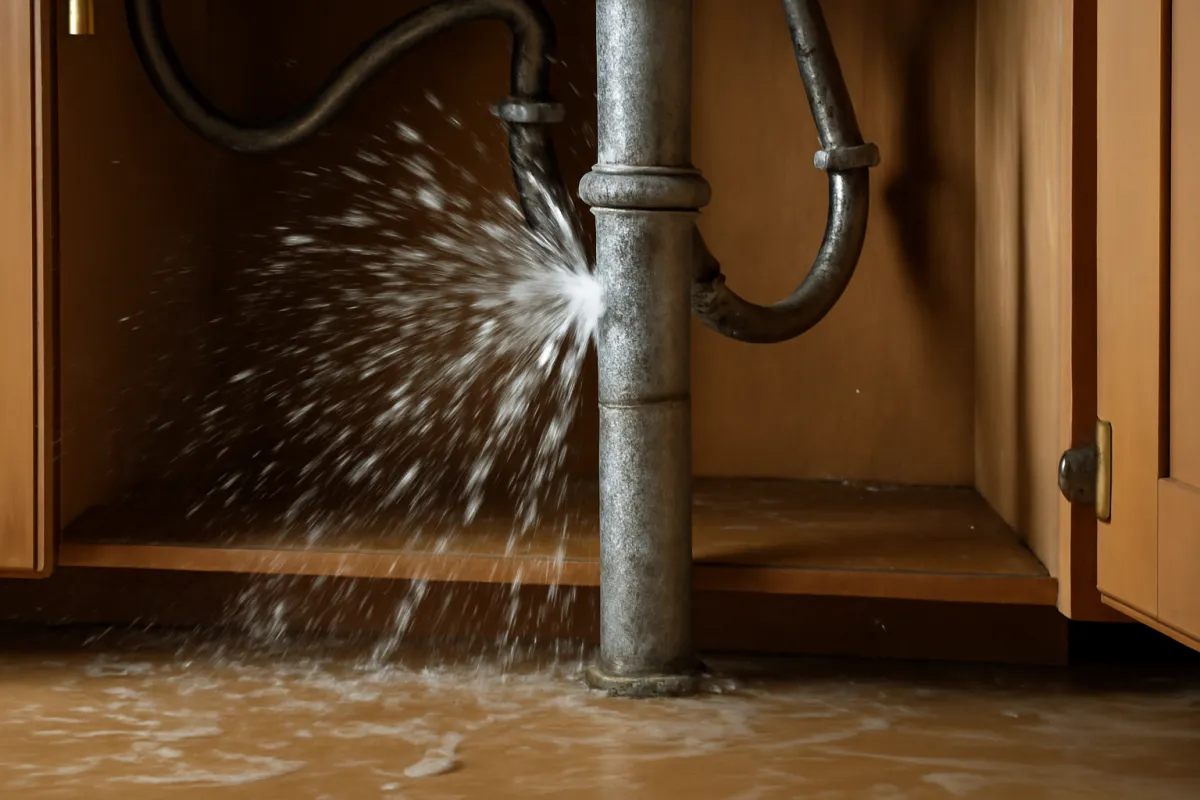
A standard homeowners policy typically covers the dwelling, foundation included, on either an open-perils or named-perils basis depending on the form, meaning sudden accidental damage from a covered cause is paid unless a specific exclusion applies. Applied to a foundation, the clearest example is a water supply line or sewer line that suddenly fails underground or under a slab, releasing a large volume of water in a short period and undermining the soil supporting the structure. A fire that burns hot enough to damage the structure down to the foundation, an explosion, and in some policies a vehicle impact can all trigger coverage the same way.
The thread connecting every covered example is an identifiable single event with a specific date, not a condition that accumulated. If you can point to the day it happened, whether from your own memory, a plumber’s invoice, or a storm report, the damage reads as sudden. If the honest answer is “sometime over the last few years,” the damage reads as gradual, and gradual almost never pays regardless of how the foundation ultimately looks.
The earth movement exclusion: why settling is never covered
Every standard homeowners policy in common use excludes earth movement, a broad category that sweeps in earthquake, landslide, mudslide, subsidence, sinkhole collapse, and the ordinary settling or shifting of soil under a foundation, regardless of what caused the ground to move. This is the same exclusion our earthquake insurance note covers in full, and the logic behind it is identical here: these losses are geographically concentrated and correlated across many properties at once, which is a fundamentally different risk to price and fund than an ordinary household accident.
Applied to a foundation specifically, this means expansive clay soil that swells when wet and shrinks when dry, cycling with the seasons and slowly cracking a foundation over years, is excluded exactly the same way a landslide is excluded, even though nobody would call ordinary soil cycling a catastrophe. Ground that was never properly compacted before construction, slowly settling under the weight of the house for a decade, falls in the same excluded category. No endorsement on a standard homeowners policy reaches this; it requires a separate earthquake policy, and even that product is built for seismic shaking rather than ordinary settling, a distinction covered in the next section.
Does earthquake insurance fill the gap?
Earthquake insurance covers foundation damage from seismic shaking specifically: a quake that cracks a foundation, racks a frame off its footing, or damages a cripple wall is the kind of loss this standalone product or endorsement exists to pay, subject to its own limit and its characteristic percentage deductible. What it does not do is restore coverage for foundation movement from causes other than seismic activity. Soil that settles gradually from poor drainage, clay that cycles with the seasons, or ground that compacts slowly under a structure’s own weight remains excluded even on a property that carries earthquake coverage, because the product is built around shaking, not around slow soil mechanics.
This distinction trips people up because both exclusions share the word “earth movement” in policy language, leading some homeowners to assume earthquake coverage is a general fix for anything involving the ground. It is not. If your foundation concern is seasonal soil cycling rather than seismic risk, earthquake insurance is very likely the wrong product for the problem you actually have, and a conversation with a structural engineer about soil-specific remediation is probably more useful than an insurance purchase.
Tree roots and the gradual-damage problem
Tree roots that grow into or under a foundation, cracking a slab or heaving a footing as they expand, cause damage the same way a slow leak does: gradually, over years, with no single identifiable date anything happened. Our coverage note on tree damage covers this exclusion in more depth, but the foundation-specific version follows the identical logic. A standard policy that pays without hesitation when a tree suddenly crashes through a roof during a storm will typically deny the slow structural damage the same tree’s roots cause underground, because the two events could not be more different in how insurers classify them.
The practical defense is preventive rather than insurance-based: planting trees at a distance appropriate to their mature root spread, periodic inspection for early heaving or cracking near large trees, and root barriers in cases where a valuable mature tree sits closer to the foundation than ideal. None of this is insurance, and none of it should be mistaken for insurance, but it is the only lever that actually works against a peril the policy was never going to pay for in the first place.
Poor drainage and long-term water pooling
Water that pools against a foundation for years because of poor grading, a clogged or absent gutter system, or a downspout that dumps water right at the foundation wall instead of away from it causes damage through the same gradual mechanism as a slow leak or a creeping tree root. Over time, saturated soil against a foundation wall can contribute to cracking, bowing, or water intrusion through the wall itself, and because the cause developed over months or years rather than in a single event, it is treated as the homeowner’s maintenance responsibility rather than a covered peril.
This is one of the more frustrating categories for homeowners, because the fix is often inexpensive relative to the eventual damage: regrading soil to slope away from the foundation, extending downspouts several feet from the wall, and clearing gutters on a seasonal schedule. Catching and correcting poor drainage early is cheap. A foundation repair after years of unaddressed pooling is not, and the policy will not bridge that gap no matter how the final bill looks.

Crawl spaces and basements: where foundation trouble shows up first
A below-grade space, a basement or a crawl space, is almost always where foundation trouble becomes visible before it shows up anywhere else in the house, simply because that is the part of the structure closest to the soil and the moisture causing the problem. A damp patch on a foundation wall, a musty smell that was not there last season, or standing water after a heavy rain are all worth investigating immediately rather than waiting for a crack to appear somewhere more visible, since by the time drywall upstairs shows a problem the underlying cause has often been active for a long time.
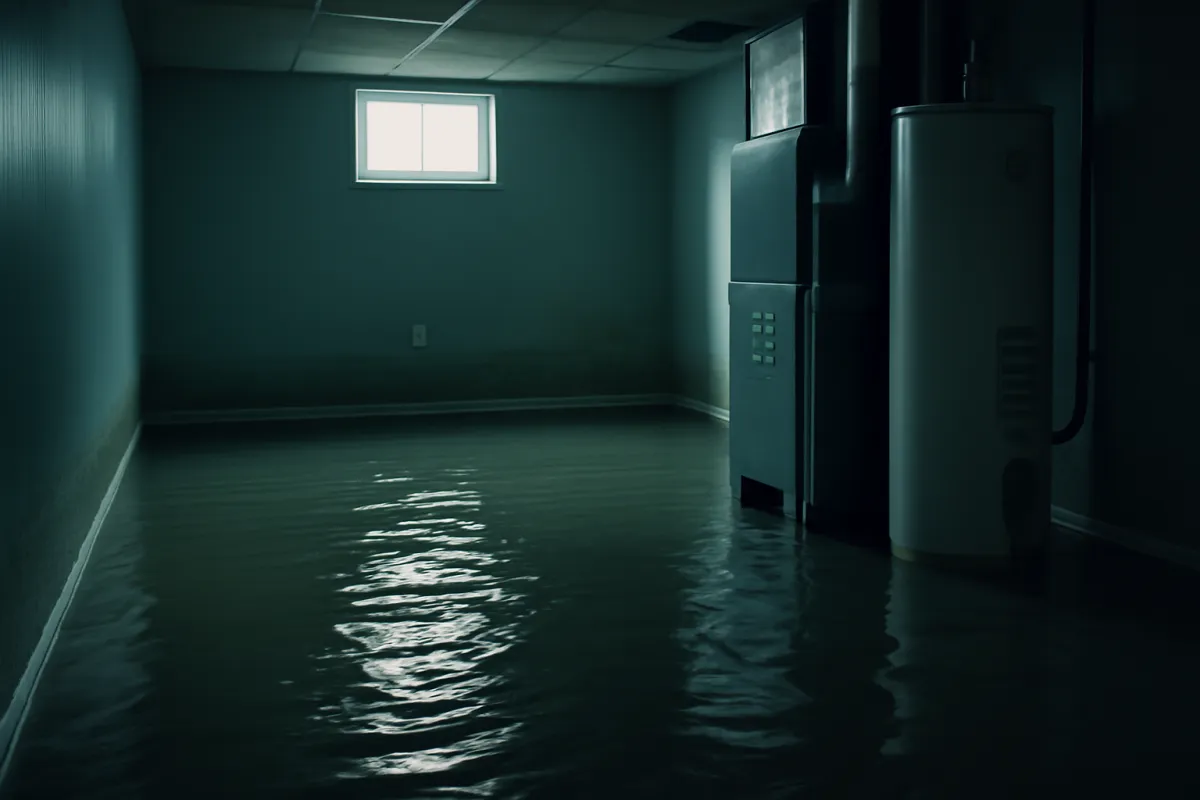
Routine basement and crawl space checks, especially after heavy rain or during the first and last hard freezes of the season, catch exactly the kind of early signal that makes the difference between a sudden, documented, potentially covered event and a slow, undocumented one that reads as gradual by the time anyone notices it. Keep a simple habit of looking, and keep dated photos of what you see, even when nothing looks wrong yet.
A crawl space in particular is easy to neglect simply because it is harder to access than a finished basement, and that neglect is exactly what turns a small, cheaply fixed issue into a large one. A vapor barrier that has torn, a sump pump that has quietly stopped working, or a foundation vent that lets in more moisture than it should are all common, inexpensive-to-fix conditions that, left unaddressed for a year or more, start to look a great deal like the gradual moisture problems this note keeps returning to. Twice a year, with a flashlight, is a low enough bar that there is rarely a good excuse to skip it.
Does a home warranty cover foundation damage?
A home warranty is a different product from homeowners insurance and answers a different question, and foundation damage sits in a gap between the two that catches a lot of owners off guard. Our home warranty versus home insurance note covers the broader distinction, but the foundation-specific version is this: a home warranty typically covers the repair or replacement of system components and appliances that fail from ordinary wear, a water heater, an HVAC system, sometimes plumbing lines, while structural coverage for the foundation itself is either excluded entirely or available only as a narrow, separately priced add-on with its own strict conditions.
In practice, this means a homeowner hoping a warranty will pick up where insurance leaves off on gradual foundation settling is usually disappointed twice: insurance denies it as earth movement, and the warranty either does not cover structural components at all or covers them only under conditions, like proof of a covered mechanical failure causing the damage, that ordinary soil settling does not meet. Read a warranty’s structural provisions as skeptically as you read a policy’s earth-movement exclusion, because the gap between what people assume these products cover and what they actually cover is wide on this specific question.
Foundation damage in a newly built home: builder warranty vs homeowners insurance
A new construction home adds a third product to the mix: the builder’s warranty, sometimes called a structural warranty, which many builders provide for a period of years, commonly longer for major structural components than for finishes and systems. If foundation cracking or settling appears within that window and traces to a construction defect, improper compaction of the soil before the foundation was poured, inadequate reinforcement, a pour that did not meet code, the builder’s warranty is often the correct and more complete remedy, not a homeowners insurance claim, since construction defects are typically excluded from standard policies entirely.
The distinction that matters is defect versus ordinary condition. A foundation that cracks because the builder never properly compacted the soil before pouring is a defect claim against the builder. A foundation on a well-built, code-compliant new home that later shifts because of naturally expansive regional soil is the same earth-movement exclusion that applies to any home, new or old. If your new home shows foundation problems, get a structural engineer’s assessment before deciding which product, warranty or insurance, actually applies, since the two cover genuinely different failures and filing with the wrong one wastes time you may not have left on the warranty clock.
How a paid foundation claim affects your next renewal
A paid foundation claim, like most higher-dollar claims, can affect your standing with your insurer at renewal, sometimes through a direct surcharge, sometimes through the loss of a claims-free discount, and in some cases through a non-renewal decision if the claim pattern or the underlying soil condition on the property concerns the insurer going forward. Our note on how a claim affects your premium and our note on non-renewal both cover the general mechanics that apply here as they would to any sizable paid claim.
Foundation claims carry one additional wrinkle worth knowing: because the repair itself can be extensive and sometimes requires ongoing monitoring, some insurers ask about the remediation method and any warranty the repair contractor provided when underwriting your next renewal or when you shop for a new policy. Keep the engineer’s report, the repair contractor’s final documentation, and any warranty paperwork together permanently, not just through the claim itself, since a future insurer may ask for exactly this history before writing a new policy on the property.
Condo and renters insurance: does this even apply to you?
If you live in a condo or you rent, the foundation question looks different, and usually simpler, because you are typically not the one responsible for insuring the building’s structure at all. On a condo, the building’s foundation and common structural elements are ordinarily insured under the association’s master policy, not your individual HO-6 walls-in policy, a distinction our condo insurance note covers in full. Your own policy focuses on your unit’s interior finishes, your belongings, and your liability, not the structure beneath the building.
Renters are even further removed from this question, since a tenant has no ownership interest in the structure at all, foundation included, and renters insurance, covered in our note on what renters insurance is, is built entirely around personal property and liability rather than the building itself. If you are a condo owner or a renter reading this note because of cracking you have noticed, the right first call is your association or your landlord, not your own individual policy.
Questions to ask a structural engineer before you call your insurer
Getting the engineer’s assessment right before you ever contact your insurer puts you in a far stronger position, whichever way the finding goes. Ask the engineer to state the probable cause as specifically as possible in writing, not just “foundation movement” but the actual mechanism, soil type, moisture pattern, a specific pipe or fixture, since a vague report gives an adjuster room to default toward the excluded interpretation. Ask whether the evidence is consistent with a single identifiable event or a condition that developed over an extended period, and ask the engineer to explain how they reached that conclusion in terms you can repeat accurately to your insurer.
Ask about the recommended repair method and a realistic cost range, since this shapes both your own budgeting and the conversation with your insurer regardless of whether the claim is covered. If the finding is genuinely ambiguous, some evidence of a sudden contributing event alongside a longer-term soil condition, ask the engineer directly whether a sudden covered event accelerated or worsened an underlying gradual problem, since this exact fact pattern sometimes supports a partial claim depending on your policy’s specific wording and your insurer’s practice.
Can you appeal a denied foundation claim?
A denial is not necessarily the end of the conversation, particularly when you believe the engineer’s finding was incomplete or when you obtain a second independent assessment that reaches a different conclusion. Our note on appealing a denied insurance claim walks the general appeal process step by step, and it applies to a foundation denial the same way it would to any other coverage dispute.
The practical lever that tends to matter most on a foundation appeal specifically is a second, independent engineer’s report, ideally from an engineer with no relationship to your insurer, addressing the same cause question directly and, where the two assessments actually disagree, explaining why. An appeal built on frustration alone rarely moves an adjuster; an appeal built on a credible second opinion that directly contradicts the first engineer’s reasoning sometimes does. Keep the appeal focused on the specific factual question, what caused the movement, rather than on the size of the bill, since the bill was never the disputed fact in the first place.
How a foundation damage claim actually gets investigated
A foundation claim almost always involves more scrutiny than a typical water or wind claim, because the dollar amounts tend to run higher and because the sudden-versus-gradual question is harder to answer from a visual inspection alone. Expect your insurer to send an adjuster and, in many cases, require or request an independent structural engineer’s report establishing the probable cause of the damage. That report is doing the real work of deciding your claim; the adjuster’s job afterward is largely applying the policy terms to whatever the engineer concludes.
Your own documentation matters alongside the engineer’s report, not instead of it. Photographs showing when a crack first appeared, any plumber or contractor invoices tied to a specific failure date, and a clear, honest timeline of what you noticed and when all strengthen the sudden-event version of events if that is genuinely what happened. Inventing a timeline that does not match the physical evidence is both unlikely to work, since engineers can often date water intrusion and crack patterns with reasonable confidence, and a serious problem in its own right if discovered, since misrepresenting a claim can jeopardize coverage well beyond the single denial.
What a foundation repair typically costs, and why coverage status matters so much
Foundation repairs span an enormous range depending on severity, from cosmetic crack injection costing a few thousand dollars to full underpinning or structural stabilization running into the tens of thousands. The number that actually matters to a homeowner is not the repair estimate alone, it is the repair estimate against whatever your policy decides to pay, and for foundation damage specifically that gap is often either nearly the full deductible or the entire bill, with very little middle ground.
Illustrative out-of-pocket cost on a foundation repair, by cause
A rough, illustrative sense of how little or how much of a foundation repair bill a homeowner is left holding, depending on what an engineer determines caused the damage. These are teaching figures on an illustrative $1,500 deductible, not quoted claims, and your own policy and your own engineer's findings are what actually decide your situation.
Bars show out-of-pocket cost, not total repair cost. The sudden, covered cause leaves the homeowner holding roughly the deductible alone; every gradual, excluded cause leaves the homeowner holding the entire bill, which is the single biggest reason the cause determination matters more than the repair estimate itself.
A worked example: two cracked foundations on the same street
The Alvarez family notices a crack running along their basement foundation wall and calls in a structural engineer, who estimates an illustrative $21,000 repair and attributes the movement to expansive clay soil that has been swelling and shrinking with the seasons for years, a textbook earth-movement finding. Their insurer denies the claim, citing the standard earth-movement exclusion, and the Alvarez family pays the full $21,000 out of pocket, since no endorsement on their policy reaches this cause.
Two streets over, their neighbor discovers a similar-looking crack after noticing a damp patch in the basement. An engineer traces it to a water heater supply line that suddenly failed three weeks earlier, saturating the soil beneath that section of the foundation, an illustrative $18,500 total repair. Because the cause was sudden and accidental, the insurer pays $17,000 after the $1,500 deductible, leaving the neighbor with a fraction of what the Alvarez family absorbed on a repair of a similar size. Same street, same-looking crack, completely different outcome, because the engineer’s finding, not the crack, is what each policy actually read. Run your own version of this arithmetic in the companion below.
What typically causes foundation damage claims, illustrative split
An illustrative sense of which causes drive foundation-related claims and inquiries, most of which standard policies exclude. Figures are a teaching example chosen to show the shape of the split, not a market statistic.
The single largest slice, soil movement, is also the one standard policies exclude outright regardless of cause, which is the main reason foundation claims get denied more often than most other categories of homeowners claim.
Preventive steps that actually protect a foundation
Because so much of foundation damage falls outside what insurance was ever going to pay for, prevention does more real work here than in almost any other part of a homeowners policy. Maintain consistent soil moisture around the foundation where practical, since wild swings between bone-dry and saturated soil are what drive the worst seasonal cracking in expansive clay regions. Keep gutters clear and downspouts extended several feet from the foundation wall, grade soil to slope away from the structure, and address any standing water near the foundation promptly rather than letting it become a routine feature of the yard.
Watch for early warning signs rather than waiting for a dramatic crack: doors and windows that start sticking, hairline cracks in interior drywall near the ceiling, or a noticeably uneven floor are all worth a professional look well before the damage becomes the kind of five-figure repair this note has been discussing. Catching movement early sometimes allows for a less invasive, less expensive fix, and it always produces better documentation if a sudden covered event later complicates the picture.
None of this preventive routine costs much compared with the repairs it heads off, and unlike a claim, prevention never requires anyone to argue about cause. A homeowner who regrades a yard, extends a downspout, and checks a crawl space twice a year is not managing an insurance relationship, they are managing the one part of the house that insurance was mostly never going to help with, which is exactly why the effort is worth making regardless of what any policy says.
Common mistakes homeowners make with foundation claims
A handful of patterns show up repeatedly in denied or underpaid foundation claims. Assuming any foundation damage is covered simply because it is expensive and feels like it should be is the most common, and it is simply not how the policy reads the loss. Waiting months to report visible cracking, hoping it stabilizes or trying to save money by delaying, is a close second, since delay itself tends to read as evidence the condition was gradual rather than sudden, even when part of the damage genuinely did start with a sudden event.
Skipping an independent structural engineer and relying solely on a contractor’s repair estimate is a third mistake, since a contractor is pricing the fix, not establishing the cause, and the cause is what the claim actually turns on. A fourth is not reading the earth-movement exclusion in your own policy before a problem arises, which leaves a homeowner discovering the scope of the gap for the first time at the worst possible moment, mid-claim, rather than while there was still time to budget or plan around it.
Shopping for insurance on a home with a history of foundation repair
Buying or insuring a home that has already had foundation work done, whether covered by a prior claim or paid out of pocket as a gradual exclusion, raises its own set of questions worth settling before you commit to a policy. Insurers commonly ask directly about prior foundation repairs on an application, and an honest, complete answer, including the engineer’s original finding and the repair method used, generally produces a smoother underwriting process than an incomplete one that a later claims-history pull contradicts.
Ask a prospective insurer specifically whether a documented, professionally repaired foundation issue affects your eligibility or your premium, since practices vary considerably: some insurers treat a properly repaired and warrantied foundation as a resolved issue with little ongoing effect, while others price in some ongoing caution regardless of the repair quality. Keep every piece of documentation from the original engineer’s report through the final repair invoice and any transferable warranty, since a well-documented history is consistently the strongest asset a homeowner has when shopping coverage on a property with any structural history at all. A thin or missing paper trail, by contrast, tends to make an underwriter assume the worst rather than the best about a repair nobody can actually verify.
The bottom line
Foundation damage is covered when the cause is sudden, accidental, and traceable to a specific covered event, and it is excluded when the cause is earth movement, settling, tree roots, or long-term drainage problems that developed gradually over months or years. The crack itself never decides the claim; a structural engineer’s assessment of the cause does, which is why the single most valuable thing a homeowner can do, before a problem appears and again the moment one does, is get that cause established clearly, in writing, rather than guessing at it from the shape of a crack alone. Know your policy’s earth-movement exclusion before you need it, document any sudden event immediately and thoroughly, and treat genuinely gradual risks, soil cycling, nearby tree roots, poor drainage, as a maintenance and prevention problem rather than an insurance one, because that is exactly how your policy was always going to treat them. Size your dwelling limit in the replacement-cost estimator, and bring a specific engineer’s report, not a general question, to a licensed insurance professional if you are ever deciding whether to file. A little preparation before that conversation, the right document in hand instead of a photo of a crack and a guess, is consistently what separates a fast, clean claim decision from a drawn-out dispute over a cause nobody established clearly from the start.
This coverage note describes how standard homeowners policies commonly treat foundation damage in the United States and is general educational information only, not insurance, legal, or engineering advice, nor a description of your particular policy. Earth-movement exclusion wording, named-perils lists, claims investigation practices, and the treatment of borderline sudden-versus-gradual causes differ by insurer and by state, so nothing above should be read as the language of your own contract. Every dollar figure and percentage in this note is an illustrative teaching example chosen to show how the comparison works, not an estimate for any specific property or repair. Before assuming any foundation damage is or is not covered, get an independent structural engineer’s assessment of the cause and confirm your position with a licensed insurance professional who can see your actual policy and the property.
Frequently asked questions
Does home insurance cover foundation damage?
Sometimes, and the deciding factor is almost always the cause rather than the damage itself. A standard homeowners policy commonly covers foundation damage when it results from a sudden, accidental, covered peril, a pipe that bursts suddenly under the slab, a fire, or a covered water heater failure, for example. It almost never covers foundation damage from earth movement, soil settling, tree root intrusion, or long-term poor drainage, because those are either specifically excluded perils or read as gradual, foreseeable damage the policy expects an owner to prevent. The same cracked foundation can be a paid claim or a flat denial depending entirely on what an engineer determines caused it.
Does home insurance cover foundation cracks?
It depends on why the crack formed, not on the crack itself. A foundation crack that appears suddenly after a specific covered event, a pipe bursting underneath the slab and saturating the soil, for instance, can be part of a covered claim for the resulting damage. A foundation crack that developed gradually from expansive soil shrinking and swelling across seasons, from a slow-growing tree root, or from years of water pooling against the structure is treated as earth movement or gradual damage, both standard exclusions. An engineer's assessment of the cause, not the appearance of the crack, is what an adjuster relies on to decide.
What causes of foundation damage does homeowners insurance actually cover?
The short list is sudden, accidental, named or open perils striking the foundation the same way they would any other part of the dwelling: a sudden plumbing failure that floods the soil beneath a slab, a fire that damages the structure down to its foundation, an explosion, or in some policies a vehicle that crashes into the house. The common thread is suddenness and an identifiable single event rather than a condition that developed over months or years. If you cannot point to a specific day something happened, the cause is more likely to read as gradual, and gradual is the category standard policies almost never pay for.
Is foundation settling covered by home insurance?
No, not on a standard homeowners policy. Settling, along with the broader category of earth movement, earthquake, landslide, subsidence, and the slow shift of soil under a structure, is excluded on essentially every standard form in common use, regardless of how the ground came to move. This is the same exclusion that makes earthquake insurance a separate product rather than a built-in coverage, and it applies whether the cause is seismic shaking, expansive clay soil cycling with the seasons, or ground that was never properly compacted before the home was built. No endorsement on a standard homeowners policy restores this coverage; only a separate earthquake or specialty earth-movement policy addresses it, and even those are built for seismic shaking rather than ordinary settling.
Does homeowners insurance cover foundation damage caused by a plumbing leak?
It depends on whether the leak was sudden or gradual, which is the same distinction that governs every water damage claim. A supply line that suddenly bursts under a slab and saturates the soil, undermining the foundation, is generally treated as a sudden accidental loss and commonly covered, minus your deductible. A slow leak that has been seeping for months or years before anyone noticed is treated as gradual damage and a maintenance failure, and is almost always denied, along with any foundation movement it caused. The practical difference often comes down to how quickly you discover and report the leak and what documentation shows about how long it had been running.
Does home insurance cover foundation damage from tree roots?
Usually not. Tree roots that grow into or under a foundation and cause cracking or heaving do so gradually, over years, which places this squarely in the same gradual-damage exclusion that denies slow leaks and long-term wear. A standard policy that would pay without hesitation for a tree suddenly crashing through your roof will typically decline the slow structural damage its roots cause underground, because the two events are treated completely differently: one is sudden and accidental, the other is foreseeable deterioration a property owner is expected to prevent through maintenance and preventive planting distance.
How do I get a foundation damage claim approved?
Start by documenting everything before any repair work begins: photograph the cracking or damage from multiple angles, note when you first noticed it, and get a structural engineer's written assessment of the likely cause, since that assessment is usually the single most important piece of evidence in how the claim is decided. Report the claim promptly rather than waiting to see if the damage worsens, since delay itself can be read as evidence of a gradual, known condition. If the engineer's finding points to a sudden, identifiable event, a specific day a pipe failed, a specific storm, that is the version of the story most likely to be paid; if it points to soil conditions or long-term seepage, prepare for a denial and ask your insurer to explain the specific exclusion in writing.
Does earthquake insurance cover foundation damage?
Yes, when the damage results from seismic shaking, which is exactly the gap earthquake insurance exists to fill. A standalone earthquake policy or endorsement typically covers the structure, foundation included, framing, bolting connections, and cripple walls, against damage from an earthquake, up to the policy limit and after the percentage deductible common to this coverage. It does not extend to foundation settling or earth movement from causes other than seismic activity, such as expansive soil cycling with the seasons or poor drainage, which remain excluded even with earthquake coverage in place. Our earthquake insurance note covers this product and its percentage deductible in full.

Hamza Hai is the editor of SumSured. She holds an MBA and reviews the site's articles against our editorial standards, checking that every figure is labelled for what it is, that nothing is presented as verified fact without a source the reader can check, and that the writing stays useful to a non-specialist.