What's in this note
- What counts as a vacant home for insurance purposes
- Vacant vs unoccupied vs second home: the definitions that actually matter
- Why your standard homeowners policy stops responding after a stated window
- The vacancy clause: how it actually works
- What a dedicated vacant home policy covers
- Named perils vs open perils on a vacant home policy
- What a vacant home policy typically excludes
- What drives the cost of vacant home insurance
- Common reasons a home sits vacant
- Vacant during a renovation: a different product for a different exposure
- Freeze, burst pipes, and the maintenance duty on an empty house
- Theft and vandalism exposure on a vacant property
- How insurers verify vacancy, and why disclosure matters
- Vacant home insurance for landlords between tenants
- Vacant home insurance for an inherited or estate property
- Shortening the vacancy risk: inspections, monitoring, and what lowers the premium
- How to buy a vacant home insurance policy
- A worked example: the Reyes family’s inherited house
- Common mistakes that leave a vacant home underinsured or uninsured
- Questions to ask before buying a vacant home policy
- The bottom line
Short answer: A standard homeowners policy keeps paying for most perils for a limited window, commonly cited as thirty or sixty consecutive days of continuous vacancy, and then suspends or restricts coverage for theft, vandalism, glass breakage, and several water and freeze-related losses. A dedicated vacant home policy is the product built for an empty house beyond that window: usually named-perils coverage, usually a higher premium than an occupied home would carry, and usually a shorter list of what it actually pays for. Every dollar figure in this note is an illustrative teaching number, not a quote, and your own policy's vacancy clause is the only document that actually governs your situation.
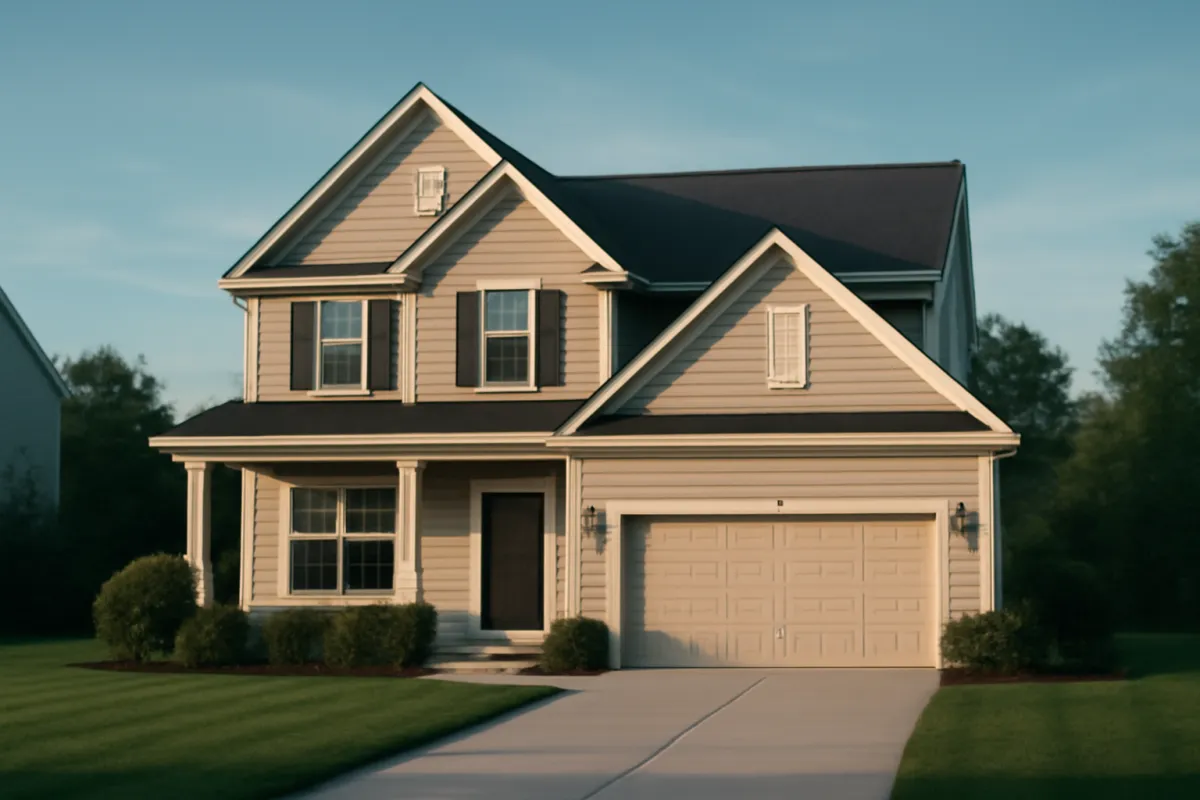
Vacant home insurance is the product nobody thinks about until a house they own sits empty, an inherited property waiting on an estate, a listing that has not sold, a renovation that gutted the place, a rental between tenants, and the standard policy that quietly covered it for years starts behaving differently. The coverage does not disappear the day the house empties out. It narrows, on a schedule most owners have never read, until a loss that would have been paid without question six months earlier gets a very different answer.
This coverage note walks the whole subject: what counts as vacant for insurance purposes, why standard policies restrict coverage after a stated window, what a dedicated vacant home policy actually covers and excludes, what drives its cost, and the practical steps that protect a property sitting empty for any reason. It leans on our coverage note on second home insurance for the related but distinct question of a property that is used personally rather than genuinely empty, and our coverage note on landlord insurance for the rental side of vacancy between tenants. You can size the structure side of the number in our replacement-cost estimator while you read.
Key takeaways
- Most standard homeowners policies restrict or suspend coverage for specific perils, commonly theft, vandalism, and freeze damage, after a stated vacancy window, often thirty or sixty consecutive days.
- A dedicated vacant home policy is usually written on a named-perils basis, covering a shorter specific list rather than everything except what is excluded.
- Vacant home insurance commonly costs more than an otherwise similar occupied policy, because an unchecked property raises the odds of a slow-developing loss running undiscovered.
- Vacant, unoccupied, and second-home are different insurance categories with different thresholds; conflating them is one of the most common coverage mistakes owners make.
- Disclosing vacancy to your insurer before a loss, not after one, is the single cheapest thing you can do to protect coverage on an empty property.
What counts as a vacant home for insurance purposes
Insurers generally define a vacant home as one with no furniture, no occupants, and no ongoing household activity, a property that is genuinely empty rather than simply unoccupied at the moment. An unoccupied home, by contrast, is one where someone still lives, furniture and belongings are still present, but nobody happens to be physically present right now, an owner traveling, a tenant between visits, a seasonal gap. The distinction matters because many policies treat these two conditions differently, and a property that is furnished but temporarily empty may fare better under a standard vacancy clause than one that is genuinely stripped bare.
The practical test insurers apply is usually some combination of whether the home is furnished, whether anyone is using it as a residence, and how many consecutive days that condition has lasted. None of those three questions has a universal answer that applies to every policy, which is exactly why reading your own declarations page and policy wording matters more here than almost anywhere else in a homeowners contract.
Vacant vs unoccupied vs second home: the definitions that actually matter
These three terms get used loosely in conversation and mean three different things to an insurer. A second home is actively used and furnished, visited regularly, simply not occupied every single day the way a primary residence is; our second home insurance note covers that category in full. An unoccupied home still has furniture and belongings and is still someone’s residence, just temporarily empty of people. A vacant home has neither furniture nor an occupant and is not functioning as anyone’s residence at all.
Insurers commonly apply the strictest rules to genuinely vacant property, because the absence of both furniture and a routine presence removes two separate signals that would otherwise catch a developing problem early: nobody notices the smell, nobody hears the drip, and nobody is there to interrupt an intruder. A property manager, a neighbor doing informal checks, or a scheduled inspection routine can partially substitute for that missing presence, which is why insurers ask about exactly this kind of arrangement when underwriting vacant risk.
Why your standard homeowners policy stops responding after a stated window
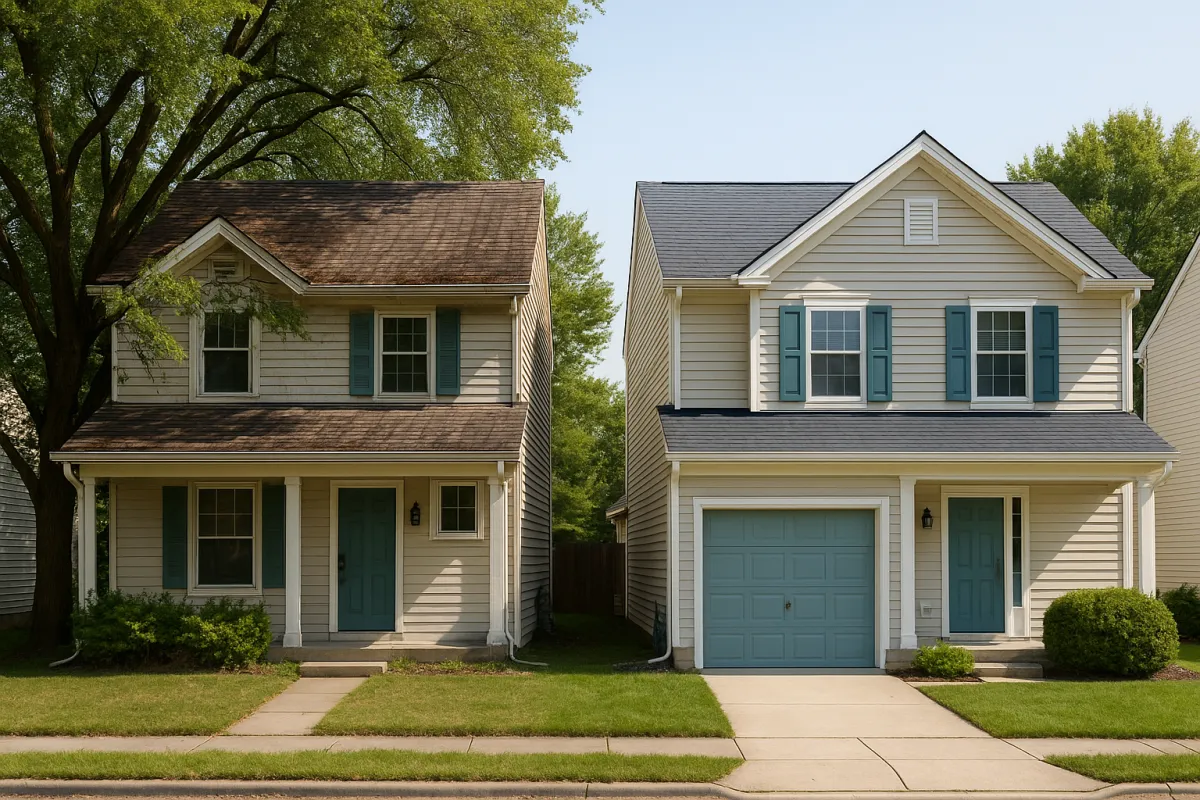
A standard homeowners policy is priced on the assumption that someone lives in the home and would notice most problems quickly. When a property sits continuously empty past a stated number of days, commonly cited as thirty or sixty depending on the insurer and the state, that assumption stops holding, and the policy’s vacancy clause responds by narrowing what it covers rather than canceling the policy outright. This is the mechanism, not a punishment: the insurer is not angry that the house is empty, it is pricing the fact that a developing loss now has far longer to run before anyone discovers it.
The perils most commonly affected are theft, vandalism, glass breakage, and water damage from a plumbing, heating, air conditioning, or sprinkler system, the kinds of losses that specifically benefit from someone being present to notice them early. Fire and a handful of catastrophic perils often keep responding regardless of occupancy, because a fire is usually discovered by a neighbor or a smoke alarm rather than by someone living inside. Read your own clause for the exact list, since generalizing from a different insurer’s wording is a common and avoidable mistake.
The vacancy clause: how it actually works
A vacancy clause is the specific policy language that ties coverage for certain perils to how many consecutive days the home has sat empty. It typically runs on a rolling basis tied to continuous vacancy, meaning a brief visit or a period of active use can reset the clock, though exactly what counts as resetting it varies by insurer and is worth confirming directly rather than assuming. Some policies state the threshold explicitly on the declarations page or in an endorsement; others bury it in the policy conditions, which is the more common and more frustrating case.
The practical response is not to memorize a number you read somewhere else, it is to pull your own policy, find the vacancy or unoccupancy provision, and note exactly what it requires: the day count, which perils are affected, and whether any exception exists for a documented inspection routine or a vacant-home endorsement layered on top of the standard policy. Our coverage note on reading a declarations page walks the document this clause usually lives inside.
What a dedicated vacant home policy covers
Once a property moves past the point where a standard policy reliably responds, a dedicated vacant or unoccupied dwelling policy is the product built for the gap. These policies exist specifically to insure the structure during an extended empty period, and they are available through many standard-market insurers as an endorsement on an existing policy and through specialty and surplus-lines carriers as a standalone product when the standard market will not write the risk.
At minimum, expect a vacant home policy to cover the dwelling structure against fire and a defined list of named perils, generally including windstorm, hail, lightning, and explosion, with theft, vandalism, and water damage from plumbing or heating systems appearing on some policies and excluded or sharply limited on others. The specific list on your quote is the only one that matters, which is why reading it line by line before buying is worth the time it takes.
Named perils vs open perils on a vacant home policy
A standard HO-3 homeowners policy typically covers the dwelling on an open-perils basis, meaning any sudden accidental cause of loss is covered unless the policy specifically excludes it, which puts the burden of proof on the insurer to point to an exclusion rather than on you to prove coverage exists. A vacant home policy is commonly written the opposite way, on a named-perils basis, meaning only the perils specifically listed in the policy are covered and anything not named is simply not covered, full stop.
That structural difference is the single most important thing to understand about buying vacant home insurance, because it changes how you read the contract. On an open-perils policy, you scan the exclusions to understand your gaps. On a named-perils policy, you scan the covered-perils list itself, because everything absent from that list is excluded by omission rather than by an explicit exclusion clause you can point to and argue against.
What a vacant home policy typically excludes
Beyond the perils simply left off a named-perils list, several coverages that come standard on an occupied homeowners policy are commonly reduced or absent on a vacant home policy. Personal property coverage is typically minimal or absent, since there is usually little of value to insure inside a genuinely empty house. Loss of use, the coverage that pays for alternate living expenses after a covered loss, is typically absent entirely, since nobody was displaced from a home nobody was living in. Liability coverage may still be present but is worth confirming specifically, since a vacant home still carries exposure if someone, a trespasser, an inspector, a contractor, is injured on the property.
The standard exclusions that apply to every homeowners-style policy still apply here unchanged: flood needs its own separate policy, earthquake needs its own separate policy or endorsement, and gradual damage from neglect, wear, or long-term seepage is excluded the same way it would be on an occupied home. A vacant structure actually raises the odds of this specific exclusion mattering, since gradual problems have far longer to develop before anyone notices.
Illustrative annual premium by reason a home sits vacant
A rough, illustrative sense of how premium tends to move across common reasons a home sits empty, on an otherwise similar property. These are teaching figures, not quoted rates, and actual premiums depend on your insurer, your state, your property, and the specifics of your vacancy.
Bars are scaled to the ~$3,900 top figure. A home gutted for renovation sits highest because the structure itself is more exposed, not simply because nobody is inside; a brief gap between tenants sits lowest because the vacancy is usually shortest and best monitored.
What drives the cost of vacant home insurance
Several factors compound to usually push a vacant home policy’s premium above what an otherwise similar occupied homeowners policy would cost. The rebuild cost of the structure matters exactly as it would for any home, and our replacement-cost estimator applies the same way here as on an occupied property. The expected length of the vacancy matters directly, since a property expected to sit empty for a known, bounded period reads as a different risk than one with no end date in sight.
The reason for the vacancy matters too, as the chart above illustrates: a renovation that has opened the structure to the weather carries different exposure than a tidy, furnished listing with a sales agent showing it weekly. Location and local crime patterns matter, since theft and vandalism are two of the perils most specific to vacant property. And whether anyone is checking on the property, how often, and through what documented routine can meaningfully affect both the quote and, in some markets, whether an insurer is willing to write the risk at all.
Common reasons a home sits vacant
Vacancy is rarely a lifestyle choice, it is usually a transitional state between two other conditions, and the reason behind it shapes which product actually fits. An estate or inherited property sits vacant while heirs settle paperwork, decide what to do with it, and eventually sell or occupy it, often for months longer than anyone expected going in. A listing between owners sits vacant, sometimes furnished for staging and sometimes stripped bare, for however long it takes to find a buyer in the local market. A rental between tenants sits vacant for a turnover window that a landlord policy typically expects and often already accommodates to a point.
A major renovation sits vacant, sometimes with the structure genuinely opened to the weather, for the length of the project, a category covered in its own section below because it often needs a different product entirely. And a relocation, a job transfer, a deployment, a move into assisted living, can leave a home sitting empty for an open-ended stretch with no clear end date, which is often the hardest category to insure well because the uncertainty itself is part of what an underwriter is pricing.
Vacant during a renovation: a different product for a different exposure
A home under significant renovation is not quite the same insurance question as a home simply sitting empty, and conflating the two is a common and costly mistake. Standard vacant home policies are built around the assumption that the structure itself is complete and simply unoccupied. A gut renovation, particularly one involving structural work, roof removal, or the building left open to the weather for any stretch of time, is a materially different exposure, closer to a construction-period risk than to ordinary vacancy.
For minor cosmetic work, most insurers remain relaxed and an existing vacant home or standard policy continues to respond without a change. For significant structural work, a builders risk or renovation policy is usually the more accurate product, covering the structure during construction along with materials staged on site and, on some forms, loss of rental income if the property is a rental between phases. Our landlord insurance note covers the builders risk question in more depth for a rental property between tenants undergoing renovation. The decision point is the scope of work, not simply the fact that nobody is sleeping there tonight.
Freeze, burst pipes, and the maintenance duty on an empty house
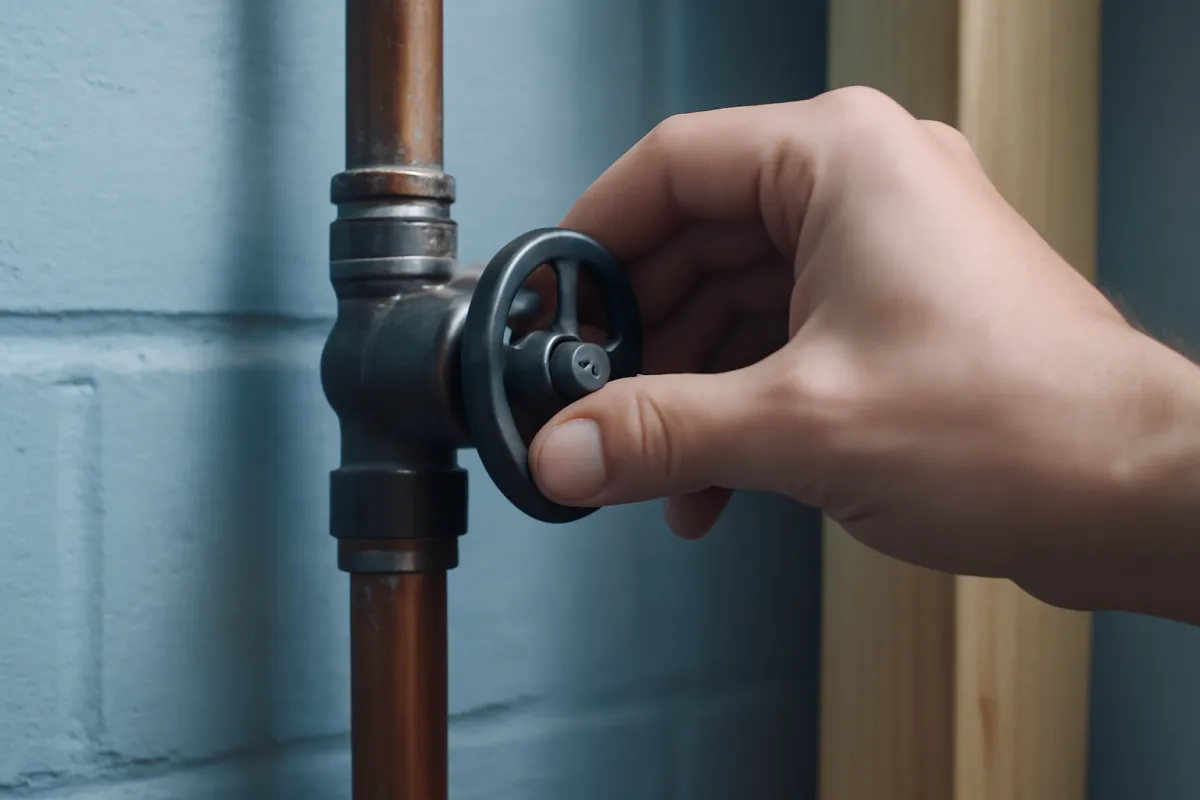
Freeze damage deserves its own section because it is one of the most common large losses on a vacant property in a cold-weather climate, and because the underlying mechanism is simple even though the damage can be severe. A pipe freezes, expands, and splits, and because nobody is present to hear the water running or see it pooling, the loss can continue for days or weeks before anyone discovers it, by which point a modest plumbing repair has become extensive structural and water damage throughout the house.
Most vacant home policies, like most standard policies, carry some version of a reasonable care requirement tied to freeze protection, commonly phrased as maintaining heat at a minimum temperature throughout the property or shutting off and draining the entire water system before the vacancy begins. Confirm which branch your own policy expects, because a mismatch discovered only after a pipe has already burst is a far worse time to learn the policy wanted the water drained rather than the heat maintained. Our coverage note on frozen pipes and our winterizing checklist both walk this specific peril and the preventive routine in detail.
Theft and vandalism exposure on a vacant property
An empty house is a more attractive target for theft and vandalism than one with regular activity, simply because the odds of anyone interrupting it are lower, and an insurer underwriting vacant risk accounts for this directly. Visible deterrents matter in underwriting and in practice: exterior lighting on a timer, a monitored alarm system, boarded or secured entry points on a property that will sit empty for an extended stretch, and a documented schedule of someone checking the property in person.
None of these is usually a strict requirement for coverage, but several can meaningfully affect both pricing and availability in a higher-crime area or a more remote location. Our coverage note on theft and our coverage note on vandalism both cover what a standard occupied policy pays and how settlement works; the vacant-property-specific point is that the baseline likelihood of this kind of loss runs meaningfully higher on a house nobody is watching, which is reflected in both the premium and the named-perils list rather than in a different claims process.
How insurers verify vacancy, and why disclosure matters
Insurers learn a property is vacant in several ways: a disclosed change at renewal, a claim investigation that reveals the home had been empty for months, a neighbor’s report, a routine inspection, or simply a utility record showing no activity. Discovering undisclosed vacancy during a claim investigation is one of the more damaging things that can happen to a homeowner, because it can give the insurer grounds to deny the claim or, in some cases, void the policy back to the date the vacancy began, on the theory that the risk the insurer was carrying no longer matched the one it had priced.
The remedy is simple even if it feels uncomfortable: tell your insurer in writing before the home becomes vacant, or as soon as you know it will, rather than hoping the gap goes unnoticed. A direct conversation about switching to a vacant home endorsement or a standalone policy is a far cheaper and far less stressful process than discovering the coverage gap for the first time while filing a claim.
Vacant home insurance for landlords between tenants
A rental property between tenants is a routine, usually short form of vacancy that most landlord policies anticipate to some degree, though the specifics vary. Our landlord insurance note covers vacancy provisions on a dwelling fire policy in full, including how turnover windows are typically handled and where a standard landlord policy’s own vacancy clause picks up if a unit sits empty longer than expected between leases.
The practical distinction for a landlord is length and intent: a two-week gap for cleaning and showings between tenants is usually well within what a landlord policy already accommodates, while a six-month vacancy because the unit needs major repairs before it can be re-leased starts to look more like the renovation category covered above, potentially needing its own conversation with the insurer about which product actually fits the situation on the ground.
Vacant home insurance for an inherited or estate property
An inherited property is one of the single most common reasons a house sits vacant for an extended, often uncertain stretch, and it is also one of the situations where the insurance question gets overlooked amid everything else a family is handling. The person who died was the named insured on the original policy, and depending on how the policy and the state’s rules treat a death, that coverage may lapse, may continue briefly under the estate, or may require the heirs or the estate’s representative to actively arrange new coverage, sometimes within a short window.
Heirs frequently assume the existing policy simply continues until the property sells, which is not a safe assumption to make without confirming it directly with the insurer and, where relevant, the estate’s attorney. Because the timeline for settling an estate and selling a property is often longer and less predictable than anyone expects going in, a dedicated vacant home policy is frequently the right interim product, and arranging it early protects the property’s value for everyone who eventually inherits a share of it.

Shortening the vacancy risk: inspections, monitoring, and what lowers the premium
Because the core problem with a vacant home is the absence of anyone to catch a developing loss early, almost everything that helps lower the premium or qualify for better terms works by substituting for that missing presence. A documented routine of someone physically checking the property, weekly or biweekly, with dated notes of what they looked at, is one of the most consistently recognized practices among insurers that write vacant risk.
Water-leak sensors that alert a phone the moment moisture is detected, a monitored alarm system, timed exterior lighting, and keeping the heat running at a minimum monitored temperature during cold months all address specific, well-known failure modes of an empty house. None of these guarantees a discount, since underwriting practices differ by insurer, but several can meaningfully improve both pricing and the insurer’s willingness to write the risk at all in a market where some companies decline vacant property outright.
Mail and package buildup is a smaller but easily fixed signal worth mentioning on its own. A stack of flyers wedged in a door, an overflowing mailbox, or a pile of unclaimed packages on a porch is one of the most visible tells that a house is sitting empty, and it is exactly the kind of cue a would-be intruder looks for before anything else. Forwarding mail, pausing deliveries, or asking whoever checks the property to clear the entry regularly costs nothing and removes one of the cheapest signals a vacant home otherwise broadcasts to the street.
How to buy a vacant home insurance policy
Start with your current homeowners insurer and ask directly whether they offer a vacant or unoccupied dwelling endorsement that can simply modify your existing policy, since some companies can handle a known, bounded vacancy this way without requiring a whole new contract. If your current insurer cannot or will not write the risk, which is common since vacant property is a narrower market than standard homeowners insurance, ask for a referral to an insurer that specializes in it, or work with an independent agent who has access to multiple carriers including the surplus-lines market.
Before you call, have the rebuild cost estimate for the structure, the reason for the vacancy, the expected length of time it will sit empty, and a description of how the property will be monitored ready to go, since those four facts are the first questions almost any underwriter will ask. Get the named-perils list in writing and read it before you buy, not after a loss forces you to find out what it actually said.
A worked example: the Reyes family’s inherited house
The Reyes family’s father passes away, leaving a house with an illustrative $380,000 rebuild cost and a standard homeowners policy still in his name. The family spends the first several weeks handling arrangements and has not yet contacted the insurer about the change. Their policy’s vacancy clause, once it is finally reviewed, states that theft, vandalism, and water damage coverage suspend after sixty consecutive days of continuous vacancy, a threshold the empty house is about to cross while the estate works through probate.
Rather than letting the policy quietly narrow on its own, the family calls the insurer, discloses the situation directly, and is offered a vacant home endorsement at an illustrative $3,100 a year, prorated for the roughly five months, about one hundred fifty days, the house is expected to sit empty before the estate sale closes. They arrange for a cousin to check the property weekly, keep the heat running at a monitored low setting through the winter, and document each visit with a dated photo. The endorsement costs more than the father’s original premium, but it keeps the named-perils list intact through the exact stretch when the house is most exposed and nobody is there to catch a problem early. Run your own version of this arithmetic in the companion below.
How an illustrative claims-cause split skews on vacant property
An illustrative sense of which perils drive a disproportionate share of claims on genuinely vacant homes compared with occupied ones. Figures are a teaching example chosen to show the shape of the skew, not a prediction for any property.
The two largest slices, freeze and theft, are exactly the two categories a standard homeowners policy is most likely to suspend once a vacancy clause triggers, which is the whole argument for a dedicated vacant home policy rather than simply hoping the standard one keeps stretching.
Common mistakes that leave a vacant home underinsured or uninsured
A handful of patterns show up repeatedly among owners who discover a coverage gap the hard way. Assuming a standard policy simply continues to cover everything indefinitely is the most common and most consequential, since it is usually true for a while and then quietly stops being true with no notice beyond the policy wording nobody read. Not disclosing vacancy at renewal, sometimes out of a hope that nobody will ask, is a close second, and it is precisely the kind of omission a claim investigation is built to uncover.
Treating a renovation as ordinary vacancy rather than confirming whether the scope of work actually needs a builders risk policy instead is a third mistake, one that can leave the single period of highest physical exposure, an open structure mid-renovation, resting on a product that was never designed for it. A fourth is letting the rebuild cost estimate go stale, particularly on an inherited property nobody has priced recently, the same mistake our dwelling coverage note covers for any home, just easier to overlook on a property in transition.
A fifth mistake worth naming on its own is treating a verbal promise from a neighbor or a relative to keep an eye on the place as a substitute for an actual documented routine. An informal arrangement can quietly lapse, the neighbor moves, the relative gets busy, and nobody tells the owner the checks stopped happening months ago. Keep a simple written log of who checks the property, how often, and what they are asked to look for, the same discipline our winterizing checklist recommends for any home sitting unattended for an extended stretch. That log costs nothing to keep and can matter considerably if a claim ever turns on whether reasonable care was actually being taken.
Questions to ask before buying a vacant home policy
A focused list of questions produces a usable answer faster than a general request for coverage. Ask exactly which perils the named-perils list includes, in writing, rather than accepting a general assurance that it is comparable to a standard policy. Ask what the policy requires for freeze protection specifically, maintained heat or a drained system, since getting this wrong voids exactly the kind of claim an empty house is most prone to. Ask whether any inspection or monitoring routine is required, recommended, or simply optional but rewarded with better pricing.
Ask, finally, how the premium and the available terms change if the expected vacancy length turns out to be longer or shorter than planned, since estate settlements, slow sales, and renovations rarely finish exactly on schedule, and knowing the flexibility in advance avoids a scramble later. Our note on how to choose home insurance covers the broader questions worth asking any insurer beyond the vacancy-specific ones here.
The bottom line
A vacant home is not simply an occupied home with nobody inside it, it is a different insurable interest that most standard policies are not built to hold indefinitely. Know your own policy’s vacancy clause and the exact day count and perils it affects, rather than assuming a number you read somewhere else applies to you. Disclose vacancy to your insurer before it happens or as soon as you know it will, since that single step protects far more value than it costs. Match the product to the actual situation, a standard vacancy endorsement for a short, defined gap, a dedicated vacant home policy for an estate or a slow sale, a builders risk policy for a genuine renovation, and keep a documented routine of someone checking the property while it sits empty. Size the structure in the replacement-cost estimator, read your own named-perils list before you buy, and take the specifics of your situation to a licensed insurance professional who can see the property.
This coverage note describes how vacancy clauses and vacant or unoccupied dwelling policies commonly work in the United States and is general educational information only, not insurance, legal, or financial advice, nor a description of your particular policy. Vacancy definitions, day-count thresholds, named-perils lists, pricing, and the treatment of inherited and estate property differ substantially between insurers and between states, so nothing above should be read as the language of your own contract. Every dollar figure, day count, and percentage in this note is an illustrative teaching example chosen to show how the comparison works, not an estimate for any specific home. Before a property sits vacant, read your own policy’s vacancy wording in full, disclose the situation to your insurer in writing, and confirm your position with a licensed insurance professional and, where an estate is involved, the estate’s attorney.
Frequently asked questions
What is vacant home insurance?
Vacant home insurance is a dedicated policy built for a house that is unfurnished, unoccupied, and not being used as anyone's residence, the condition most standard homeowners policies restrict or exclude once it lasts beyond a stated number of consecutive days. It typically covers the structure against a shorter, named list of perils rather than the broader open-perils basis a standard HO-3 carries, and it is sold for exactly the situations where a house sits empty for weeks or months: an estate pending settlement, a listing between buyers, a gut renovation, or a long vacancy between tenants. The product exists because an empty house is a different risk than an occupied one, and insurers price and structure coverage for it differently rather than simply continuing the policy that was written for someone living there.
How long can a house be vacant before insurance stops covering it?
There is no single number that applies everywhere, because the threshold is set by your own policy's vacancy clause and it varies by insurer and by state. Commonly cited windows are thirty or sixty consecutive days, after which a standard homeowners policy typically suspends or restricts coverage for a specific set of perils, vandalism, theft, freeze damage, and glass breakage among the usual list, even though fire and a handful of other perils often keep responding. Read your own declarations page and policy wording for the exact day count and the exact perils affected, because assuming a number you saw somewhere else applies to your policy is one of the more expensive assumptions a homeowner can make.
Does my standard homeowners policy cover a vacant house?
For a limited time, usually yes for most perils, and then progressively less as the vacancy drags past your policy's stated threshold. Most standard policies keep paying for fire and a short list of catastrophic perils regardless of occupancy, while suspending coverage for theft, vandalism, glass breakage, and water damage from a plumbing, heating, or sprinkler system once the home has been continuously unoccupied beyond the stated window. The policy is not automatically canceled the day the clause triggers, it simply stops responding to specific kinds of claims, which is arguably worse than a cancellation because many owners do not discover the gap until they are already filing one of those excluded claims.
How much does vacant home insurance cost?
There is no single figure that applies broadly, because the premium depends on the home's rebuild cost, its location and regional perils, how long it will realistically sit empty, the reason it is vacant, and how the insurer underwrites vacant risk in your state. As a general pattern, a dedicated vacant home policy commonly costs more than an otherwise similar occupied homeowners policy, often by a meaningful margin, because the insurer is pricing a higher likelihood of an undetected loss running unchecked. Treat any number you see, including the illustrative ones in this note, as teaching figures rather than a quote, and get actual pricing on your specific property.
What does a vacant home insurance policy typically exclude?
Vacant home policies are commonly written on a named-perils basis rather than the broader open-perils basis a standard HO-3 carries, which means only the perils specifically listed are covered rather than everything except what is specifically excluded. Typical gaps include a short or absent personal property limit, since there is usually little to steal in a genuinely empty house, limited or no loss-of-use coverage, since nobody is displaced from a home nobody was living in, and continued exclusions for flood, earthquake, and gradual damage, the same standard exclusions that apply to any homeowners-style policy. Read the named-perils list on your specific quote line by line rather than assuming it mirrors a standard policy with a surcharge attached.
Do I need vacant home insurance if my house is being renovated?
It depends on the scope of the work rather than on the fact that nobody is living there. Minor cosmetic work between occupants is usually tolerated under an existing policy without a change. Significant structural work, anything that opens the building to the weather, removes load-bearing elements, or leaves materials staged on site, generally moves the exposure into builders risk or renovation-policy territory instead, a different product built around construction-period losses rather than ordinary vacancy. Describe the actual scope of work to your insurer before it starts rather than guessing which category it falls into, since the wrong product can leave a real gap exactly when the house is most exposed.
Does vacant home insurance cover theft and vandalism?
Often yes, but usually as a specifically named peril on the policy rather than assumed coverage, and sometimes with a lower sublimit or a higher deductible applied to those perils specifically than to fire or windstorm. Theft and vandalism are also the two perils a standard homeowners policy is most likely to suspend once a home has sat vacant past its own threshold, which is precisely why a dedicated vacant home policy exists in the first place: insurers know an empty house draws more of both kinds of loss than an occupied one, and they price and structure coverage for that reality rather than pretending it does not exist.
How do I buy a vacant home insurance policy?
Start with your current homeowners insurer and ask directly whether they offer a vacant or unoccupied dwelling endorsement, since some insurers can simply modify an existing policy rather than requiring a brand new one. If they cannot, ask for a referral or search for insurers and surplus-lines carriers that specialize in vacant and unoccupied property, since this is a narrower market than standard homeowners insurance and not every company writes it. Have your rebuild cost estimate, the reason and expected length of the vacancy, and your plan for checking on the property ready before you call, because those are the first questions any underwriter will ask.

Hamza Hai is the editor of SumSured. She holds an MBA and reviews the site's articles against our editorial standards, checking that every figure is labelled for what it is, that nothing is presented as verified fact without a source the reader can check, and that the writing stays useful to a non-specialist.