
What's in this note
- What builders risk insurance actually is
- What it covers: the structure, the materials, and more
- What builders risk insurance does not cover
- Who needs to buy it: owner, contractor, or both
- New construction, a major renovation, and an addition: does the scope matter?
- How much builders risk insurance costs
- What drives the price up or down
- Policy period and extending the term
- Soft costs and delay-in-completion coverage
- Materials on site, in transit, and in storage
- How a builders risk claim works
- Transitioning from builders risk to a standard policy at completion
- Builders risk versus a standard homeowners or landlord policy
- A worked example: a kitchen and bathroom gut renovation
- Questions worth asking before you buy a policy
- Builders risk for an owner acting as their own general contractor
- Common mistakes with builders risk insurance
- Common misconceptions worth clearing up
- The bottom line
Short answer: Builders risk insurance covers a home during construction or a major renovation, the structure, the materials on site, and often temporary structures like scaffolding, against perils such as fire, wind, vandalism, and theft of materials. It illustratively prices at 1 to 4 percent of the construction value and runs for the length of the project, commonly 3 to 12 months. It does not cover faulty workmanship, and it must convert to a standard homeowners policy once the project is substantially complete.
Builders risk insurance exists because a home mid-construction is a genuinely different risk than a finished, occupied one, and a standard homeowners policy was never priced or written to carry it. A house with no windows installed, a stack of lumber and cabinetry sitting in the garage waiting for the crew, and an open access point every evening when the workers leave is exposed in ways an occupied home simply is not, and the standard homeowners form generally excludes or sharply limits coverage for a property in that condition. Builders risk is the policy built specifically for that window of time, whether the project is a brand new house going up from a foundation or a major renovation gutting an existing one.
This coverage note goes deep on builders risk specifically: what it covers, what it excludes, how much it costs, who should be the one to buy it, how the policy term works, and how to transition cleanly back to standard homeowners coverage once the work is done. Our notes on vandalism during vacancy and landlord insurance touch on builders risk from the narrower angle of a vacant or between-tenant property; this note treats the coverage itself in full, for new construction and renovation alike. Run your own project value and term through the companion below as you read.
Key takeaways
- Builders risk covers a building, its materials, and often temporary structures during construction or major renovation, which a standard homeowners policy generally will not touch.
- It illustratively prices at 1 to 4 percent of the total construction value, so a 150,000 dollar renovation might run an illustrative 1,500 to 6,000 dollars for the policy term.
- It does not cover faulty workmanship or design errors themselves, only covered-peril damage, such as fire or a storm, to otherwise properly done work.
- Either the homeowner or the general contractor can be the one who buys and is named on the policy, and confirming which one in writing before work starts avoids a dangerous gap.
- Coverage has to convert to a standard homeowners or landlord policy once construction is substantially complete; builders risk is not designed to protect a finished, occupied home.
What builders risk insurance actually is
Builders risk insurance, also called course of construction insurance, is a specialized property policy written for the specific window of time a building is under construction or undergoing major renovation. Unlike a standard homeowners policy, which assumes the property is a finished, occupied residence, a builders risk policy is priced and written around a building site: a structure that may be partially built, materials staged for installation, and conditions that change week to week as the project moves forward. It is sold as its own distinct policy rather than as an endorsement to an existing homeowners form, precisely because the underlying risk is different enough to need its own underwriting.
The policy is written for a defined term rather than a standard annual period, matched to how long the project is expected to take, and it generally needs to stay in force continuously from the start of work through substantial completion. Once the building is finished and ready to be occupied, builders risk coverage is meant to end, and the owner transitions to a standard homeowners or landlord policy for the ongoing, finished-home exposure. Understanding that handoff, and planning for it deliberately rather than as an afterthought, is one of the most practically important things to get right about this entire coverage.
What it covers: the structure, the materials, and more
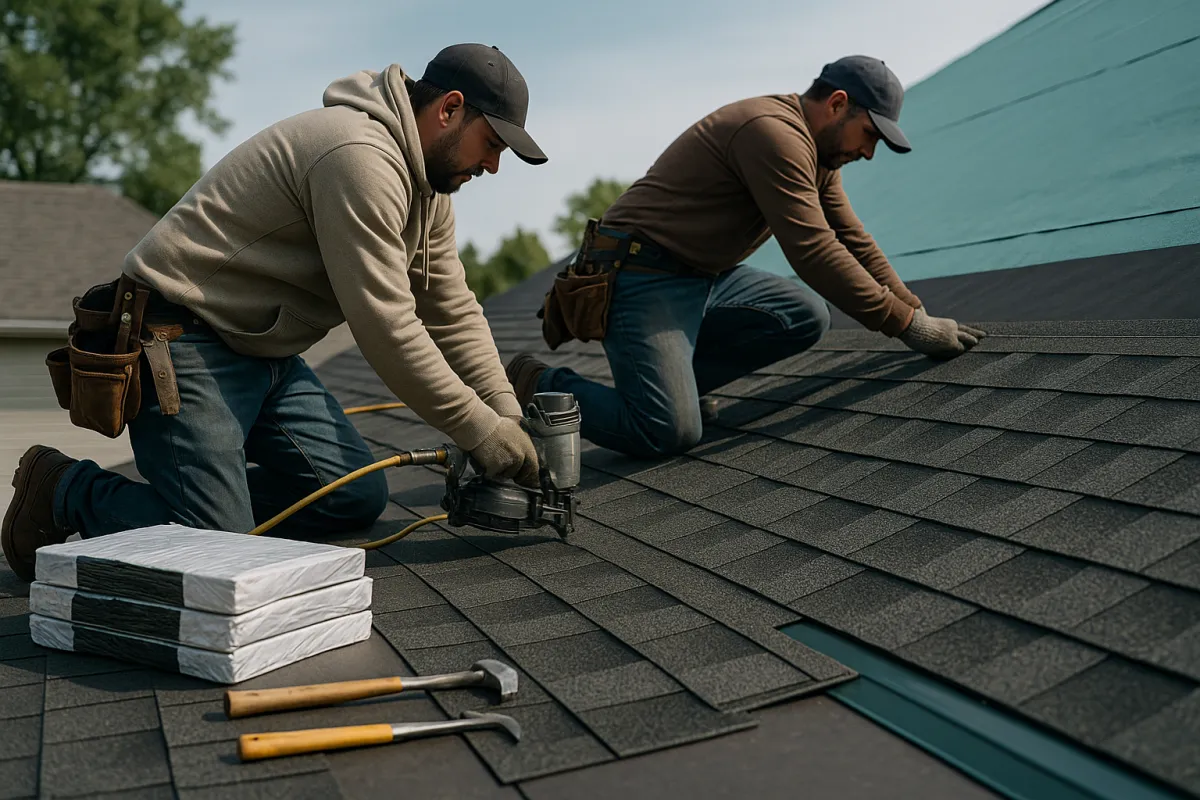
A typical builders risk policy covers the building itself as it exists at any point during construction, from a bare foundation through a substantially finished structure, against a defined list of covered perils that commonly includes fire, lightning, windstorm, hail, vandalism, and theft. It also covers the building materials and supplies intended for the project, which matters enormously on a renovation or new build, since a house under construction routinely has tens of thousands of dollars of lumber, fixtures, cabinetry, and appliances sitting on site, in a garage, or in a trailer long before they are ever installed. Many policies extend that materials coverage to items in transit to the site and in temporary off-site storage as well, not just what has physically arrived.
Temporary structures tied to the project, scaffolding, construction fencing, and temporary power or site offices, are commonly covered too, since those are part of the construction operation rather than the finished building. Some policies add debris removal coverage, paying to clear damaged materials and wreckage after a covered loss, which can be a meaningful cost on its own after anything severe enough to need rebuilding a portion of the work. Read your specific policy’s list of covered perils and included extensions closely, since builders risk forms vary more between insurers than a standard homeowners policy does.
What builders risk insurance does not cover
The most important exclusion to understand is faulty workmanship and design error, which builders risk generally does not pay for. If a wall is framed out of square, if a design detail simply does not work, or if a contractor’s mistake produces a defect, the cost to redo that specific work is typically not a builders risk claim; it is a dispute with the contractor, a warranty question, or in some cases a professional liability matter for a design professional. What builders risk does cover is damage a listed peril causes to otherwise properly done work, a fire that burns through a well-framed wall, or a windstorm that tears off freshly installed roofing. The line between a construction defect and a covered peril damaging good work is the single most contested issue in builders risk claims, and it is worth understanding before you ever need to make one.
Flood and earthquake are typically excluded on a standard builders risk form, mirroring the same exclusions on most standard homeowners policies, and need to be added separately where the project’s location makes either peril a real concern. Employee injury is never covered here; that sits with workers compensation carried by whoever employs the worker. And builders risk coverage does not extend past substantial completion, so a homeowner who assumes the policy quietly continues protecting the finished house is in for an unpleasant surprise the first time something happens after the crew has gone.
Who needs to buy it: owner, contractor, or both
Either the property owner or the general contractor can be the party that purchases and is named on a builders risk policy, and which one actually does varies by project size and by regional custom. On a large new-construction job, the general contractor commonly carries the builders risk policy as part of managing the whole project, often passing the premium through in the overall contract price, and the contractor may be the one dealing directly with the insurer if a claim occurs. On a smaller renovation of a home the owner already occupies or owns, the homeowner frequently buys the policy themselves, sometimes through the same company that writes their existing homeowners insurance, which can simplify the eventual handoff back to a standard policy.
The dangerous gap to watch for is the assumption that someone else is handling it. A homeowner who assumes the contractor carries builders risk, paired with a contractor who assumes the homeowner’s existing policy already covers the work, can both be wrong at the same time, leaving the project uninsured through the entire construction period. Settle this explicitly, in writing, as part of the contract before work begins: name exactly who is buying the policy, confirm the other party is listed as an additional insured or loss payee where appropriate, and keep a copy of the actual policy declarations, not just a verbal assurance that coverage exists.

New construction, a major renovation, and an addition: does the scope matter?
Builders risk applies across a range of project types, but the scale of the work is what decides whether it is genuinely needed versus overkill. A brand new home built on a vacant lot from the foundation up is the clearest case, since there is no existing homeowners policy to lean on at all until the structure is finished and ready to insure in the ordinary way. A major renovation of an occupied or recently purchased home, removing load-bearing walls, a full kitchen or bathroom gut, or anything that leaves the structure open to the weather for an extended stretch, sits in the same category even though a homeowners policy technically exists on the property, because that policy was never priced for a construction site. An addition that expands the footprint of an existing home blends both situations: the existing structure may still be insurable under the homeowners policy while the new addition under construction needs builders risk coverage of its own, and the two need to be coordinated rather than assumed to overlap automatically.
Minor cosmetic work sits outside this entirely. Repainting, replacing flooring, swapping light fixtures, and similar jobs that do not open the structure to the elements or involve structural work are generally fine under an existing homeowners policy without any builders risk policy at all. The decision point is the scope and duration of the exposure, not the dollar amount alone: a short, contained job that never leaves the building vulnerable is a different risk than a gut renovation that leaves walls open for months, even if the two projects cost roughly the same.
How much builders risk insurance costs
Builders risk premiums are commonly priced as a percentage of the total construction value, an illustrative 1 to 4 percent of the project cost for a typical residential job, with the specific rate set by the type of construction, the project’s location, the length of the policy term, the deductible chosen, and whether the structure will sit vacant and exposed for long stretches or stay more continuously worked on.
Illustrative builders risk premium by project size
Rough, commonly cited premium estimates at an illustrative 1.5 percent rate applied to the total construction value, for four sample residential project sizes. Your own rate depends on construction type, location, term length, and deductible, so treat these as illustrative starting points.
Bars are scaled to the illustrative $13,500 custom-build figure. A higher-risk location, a longer term, or frame construction instead of masonry can all move the real rate above or below this illustrative 1.5 percent midpoint.
Every number above is an illustration meant to show how the pricing scales with project size, not a quote for any specific job. Get at least two real quotes once you know your project’s scope and budget, since builders risk pricing varies more between insurers than most standard property lines, and a specialty insurer focused on construction risk can sometimes beat a generalist carrier’s price on the identical project.
What drives the price up or down
A handful of specific factors move a builders risk quote beyond the baseline percentage of construction value. Construction type matters first: wood-frame construction is generally priced higher than masonry or concrete for the same project value, since frame construction burns differently and is statistically associated with more severe fire losses during the vulnerable construction phase. Location matters next, carrying the same weather, crime, and catastrophe-zone considerations that affect any property policy, plus a specific concern about how exposed and unattended the site will be during off hours.
The length of the policy term and how realistic the project schedule is also factor in, since a project that reliably finishes on time is a shorter window of exposure than one prone to delays, and insurers price in some expectation of how often builders risk terms actually need extending. The deductible you choose moves the premium the same way it does on any property policy, with a higher deductible lowering the premium in exchange for carrying more of a small loss yourself. And whether the site will be actively worked or will sit vacant and unattended for stretches, common on a renovation where a subcontractor’s schedule creates gaps between phases, can raise the price, since an unattended site is a materially different vandalism and theft exposure than one with workers present most days.
Policy period and extending the term
A builders risk policy is written for a specific term, commonly 3, 6, or 12 months depending on the expected length of the project, rather than the standard annual period most other property insurance uses. Coverage generally needs to be continuous from before work starts through substantial completion, and most insurers will extend the term for an additional premium if the project runs longer than originally estimated, which on a renovation or a custom build is common enough that the possibility should be planned for rather than treated as a surprise.
The practical discipline here is simple but easy to let slip during a busy project: track the policy’s expiration date against the actual job schedule the same way you track permits and inspections, and request an extension well before the term runs out rather than discovering a lapse after a loss. A builders risk policy that expired two weeks before an unexpected weather event, because nobody was watching the calendar while everyone focused on the work itself, is one of the more common and entirely avoidable builders risk claim denials.
Soft costs and delay-in-completion coverage
Beyond the physical structure and materials, some builders risk policies offer an optional extension for soft costs, which covers the financial fallout of a covered loss delaying the project rather than the physical damage itself. That can include additional interest on a construction loan while rebuilding delays completion, lost rental income on an investment property that was supposed to be generating rent by a certain date, additional architect or engineering fees to redesign or re-inspect damaged work, and in some cases temporary relocation costs if the owner was living on site during a renovation.
This extension matters most on a project with a real financial clock attached to it, a construction loan with mounting interest, a planned move-in date tied to a lease ending elsewhere, or a rental property with committed tenants waiting on a completion date. A straightforward cash-funded renovation with no hard deadline has less need for soft-cost coverage, since a delay, while frustrating, does not carry the same compounding financial cost. Ask specifically whether soft costs are included or available as an add-on, since it is not automatic on every builders risk policy and the limit, if included, is usually a defined sub-limit rather than unlimited protection.
Materials on site, in transit, and in storage
One of the more valuable and least appreciated parts of builders risk coverage is how it treats building materials before they are even installed. A kitchen renovation with 20,000 dollars of custom cabinetry sitting in the garage for three weeks awaiting installation, a new-construction project with lumber and roofing materials staged in the yard, and a bathroom remodel with a delivered vanity and fixtures sitting in a spare room are all routine situations, and all of them represent real, uninsured exposure under a standard homeowners policy if something happens before the materials go in. Builders risk coverage for materials typically extends to items on site awaiting installation and, depending on the policy, to materials still in transit to the site or held in a nearby storage facility.
Confirm the specific wording on your own policy for any materials stored away from the immediate job site, since coverage for off-site storage is more likely to carry its own sub-limit or a separate rate than coverage for materials physically on the property. Keep receipts and, where practical, photographs of significant deliveries as they arrive, the same discipline our note on documenting storm damage recommends for any property loss, since proving what was actually on site at the time of a loss is the difference between a smooth materials claim and a disputed one.
How a builders risk claim works
The claims process for builders risk follows the same general shape as any property claim, with one extra wrinkle: construction sites change constantly, so documenting the state of the project before a loss matters more here than on a finished, static home. Report a loss to the insurer promptly, and before anything is cleaned up or moved if it can be safely left in place, photograph the damage, the surrounding area, and anything that shows the state of construction at the time, which helps the adjuster distinguish covered peril damage from a pre-existing condition or ordinary construction mess.
An adjuster familiar with construction risk will typically want to understand what stage the project was at, what materials were on site, and what the contractor’s own records show about the work completed to date. Keep a running project file throughout construction, photos at each major milestone, delivery receipts, and the contractor’s own progress documentation, since that file becomes the evidence a claim stands on if something goes wrong partway through. A policy with a soft-cost extension will also require documentation of the actual financial impact of any delay, so track added loan interest or lost rental income contemporaneously rather than trying to reconstruct it after the fact.
Transitioning from builders risk to a standard policy at completion
The handoff from builders risk to a standard homeowners or landlord policy is the step most likely to get rushed, and rushing it is exactly how a gap opens up. Plan the transition before the project reaches substantial completion rather than after: confirm the builders risk term’s end date, get a quote for standard homeowners or landlord coverage on the finished structure, and bind the new policy effective before, not after, the builders risk policy expires. Treat it the same way our note on switching home insurance without a gap describes for an ordinary carrier switch, since an uninsured day on a newly finished, often newly more valuable home is a bad place to discover a problem.
The new standard policy’s dwelling limit also needs to reflect the home’s value after the work, not before it. A renovation that added square footage, upgraded finishes, or materially changed the structure can leave an old dwelling limit stale the moment the project wraps, and our coverage note on sizing your dwelling limit walks through getting that figure right. Do not simply reinstate the prior policy’s old limit by default; price the finished home as it actually is now using the home insurance estimator.
Builders risk versus a standard homeowners or landlord policy
Builders risk and a standard homeowners or landlord policy are not competing options for the same situation; they are sequential tools for two different states a property moves through. Our coverage note on vacancy and vandalism covers the related question of a vacant property policy or a vacancy permit endorsement, which fits a property sitting empty without active construction, a different exposure than an active job site. Our landlord insurance note covers the parallel question for a rental property between tenants undergoing minor work, where a standard landlord policy with a vacancy provision may be enough for light cosmetic updates, reserving builders risk for genuinely significant structural work.
The decision rule that cuts through all three is the same one used earlier in this note: look at the scope and duration of the work and the condition it leaves the structure in, not at who technically owns or rents the property. A vacant home awaiting sale needs a vacant-property answer. A rental between tenants getting a quick repaint needs a landlord-policy answer. A home, owned or rented, undergoing a genuine construction project with the structure opened up for weeks or months needs builders risk, regardless of which of the other two situations also technically applies to the property.
A worked example: a kitchen and bathroom gut renovation
Walk one illustrative project through the numbers. The Alvarez family is gutting their kitchen and a bathroom down to the studs, an illustrative 85,000 dollar scope of work expected to take four months, with a contractor who assumes the homeowner is buying builders risk and a homeowner who, having read this far, now knows to confirm that explicitly rather than assume it. They buy a 6 month builders risk policy, giving a buffer past the four month estimate, at an illustrative 1.5 percent rate, pricing the policy at 1,275 dollars for the term.
In month three, with the kitchen walls open and new plumbing roughed in but not yet closed up, a connection a subcontractor had not yet pressure tested fails overnight, soaking the newly delivered cabinetry staged in the dining room along with a section of new subfloor. The builders risk policy responds: the damaged cabinetry and subfloor are covered as materials and in-progress work damaged by a covered water event, separate from the question of whether the connection itself was improperly made, which the Alvarez family and their contractor sort out separately as a workmanship and warranty matter between themselves. The claim pays for the ruined cabinetry and the subfloor repair, net of the policy’s deductible, and the project continues on a revised timeline that the Alvarez family extends their builders risk term to cover.
Where an illustrative $14,000 builders risk claim gets spent
An illustrative breakdown of the Alvarez claim, showing the shape of a typical in-progress materials and structure loss rather than a measured industry average.
The three slices sum to the illustrative $14,000 total. The plumbing connection failure itself, the workmanship question, is handled separately from the covered-peril water damage this policy actually paid for.
Questions worth asking before you buy a policy
A handful of specific questions, asked before the policy is bound rather than discovered during a claim, separate a policy that actually fits the project from one that merely looks affordable on the quote page. Ask exactly which perils are covered and which are excluded on this specific form, since builders risk policies vary more between insurers than a standard homeowners policy does, and a generic description of “fire, wind, and theft” can hide meaningful differences in the fine print. Ask whether materials are covered while in transit and in off-site storage, or only once physically on the property, since that is one of the more commonly restricted extensions. Ask what the policy requires if the site will sit unattended for a stretch, some forms impose a vacancy clause similar to a standard homeowners policy if no work occurs for a defined number of consecutive days, which matters on a renovation with gaps between subcontractor phases.
Ask how the insurer wants a loss reported and documented, since construction sites change by the day and some insurers want photographs or a project log maintained throughout rather than produced only after something happens. Ask specifically about the process and any added cost to extend the term if the project runs long, since nearly every real project does to some degree, and knowing the extension process in advance avoids a last-minute scramble as an expiration date approaches. And ask directly whether soft costs, extra loan interest, lost rental income, or additional design fees from a covered delay, are included or available as an add-on, since this extension is valuable precisely on the projects where a delay would hurt most and is easy to overlook if nobody asks.
Getting clear, specific answers to each of these before binding a policy costs a few phone calls and a bit of patience. Discovering the answer to one of them for the first time while filing a claim costs considerably more, in dollars and in the time it takes to resolve a dispute over what the policy was actually supposed to do.
Builders risk for an owner acting as their own general contractor
A homeowner who is coordinating subcontractors directly, acting as their own general contractor rather than hiring one firm to run the whole job, carries a slightly different version of this exposure and should expect some insurers to ask more questions before quoting. Without a single licensed general contractor managing the whole project, the insurer has less of the usual assurance that work is being sequenced, permitted, and inspected by an experienced party, and some carriers price owner-builder projects higher or restrict eligibility for larger or more complex jobs run this way.
If you are managing your own renovation or build, be prepared to describe your experience, the specific subcontractors involved and their own insurance, and how permitting and inspections are being handled, since an insurer underwriting an owner-builder project is effectively underwriting the management of the project as well as the structure itself. Confirm that each subcontractor carries their own liability insurance and, where they have employees, their own workers compensation coverage, since an uninsured subcontractor’s injury or mistake has a way of eventually landing on the property owner regardless of what the builders risk policy itself covers. A specialty insurer or agent experienced with owner-builder projects specifically, rather than a generalist agent who mainly writes standard homeowners business, is usually the better starting point for this particular situation.
Common mistakes with builders risk insurance
A short, recurring list of errors accounts for most of the uninsured or underinsured losses on construction and renovation projects. Watch for these:
- Assuming the other party is buying it. A homeowner assuming the contractor carries builders risk, and a contractor assuming the homeowner's existing policy covers it, can both be wrong at once, leaving the project uninsured.
- Letting the policy term expire mid-project. A delayed project with an unextended builders risk term can lapse right before the loss that was going to test it.
- Assuming it covers faulty workmanship. It covers covered-peril damage to the work, not the cost of redoing work that was simply done wrong in the first place.
- Not insuring materials staged off the immediate job site. Off-site storage coverage is more likely to carry its own sub-limit, and some policies need it added specifically.
- Forgetting to convert to a standard policy at completion. Builders risk is not designed to protect a finished, occupied home; a gap here is a gap in ongoing protection.
- Insuring the old dwelling value instead of the new one. A renovation that added value or square footage needs an updated standard-policy dwelling limit, not the pre-renovation figure carried forward by default.
Common misconceptions worth clearing up
- "My homeowners policy already covers the renovation." A standard homeowners form is generally not written for an open structure, staged materials, and active construction risk, and significant work usually needs its own builders risk policy.
- "Builders risk covers bad work." It covers covered-peril damage to the work, not the cost to fix work that was simply done incorrectly, which is a workmanship or warranty question instead.
- "The contractor always carries it." On many residential renovations the homeowner is the one who buys it, and assuming otherwise without confirming is a common, expensive mistake.
- "It automatically continues after construction finishes." It is built to end at substantial completion, and the owner has to convert to a standard policy to stay protected afterward.
- "A short cosmetic project needs it too." Minor work that never opens the structure to the weather generally does not need a separate builders risk policy at all.
The bottom line
Builders risk insurance covers a home during construction or a major renovation, the structure itself, the materials staged for it, and often the temporary structures that go along with the work, against perils a standard homeowners policy was never priced to carry on an open job site. It illustratively prices at 1 to 4 percent of the construction value for the length of the project, commonly 3 to 12 months, and it excludes faulty workmanship, flood, and earthquake unless specifically added. Confirm in writing who is buying the policy, the homeowner or the contractor, before work starts, track the policy term against the real project schedule, and plan the handoff back to a standard homeowners or landlord policy, at an updated dwelling limit, before the builders risk term expires rather than after. Run your own project value and term through the companion below, check the finished home’s rebuild figure in the home insurance estimator once work wraps, and read our notes on vacancy and vandalism and landlord insurance for the related situations that sit just outside what builders risk itself is built to cover.
This coverage note explains how builders risk insurance commonly works for residential construction and renovation projects in the United States and is general information only, not insurance, legal, or construction advice. Every premium rate, dollar figure, and claim scenario above is an illustrative example chosen to show how the pieces fit together, not a quote or a prediction of what any insurer would charge or pay. Builders risk policy forms, covered perils, exclusions, materials and soft-cost extensions, and term and extension rules vary by insurer, by project, and by state, and they change over time. Before relying on any figure here, describe your actual project to a licensed insurance professional or an agent experienced with construction risk, and read the specific policy proposed.
Frequently asked questions
What is builders risk insurance?
Builders risk insurance, sometimes called course of construction insurance or renovation insurance, is a short-term property policy that covers a building while it is under construction or undergoing a major renovation. It is built for the exposures a standard homeowners policy generally will not touch: a structure with no walls up yet, materials sitting on site waiting to be installed, and a work site that is open to weather and to anyone who wanders onto the property. It typically runs for the length of the project rather than a full year, and coverage usually ends once construction finishes and the completed structure converts to a standard homeowners or landlord policy.
What does builders risk insurance cover?
A typical builders risk policy covers the structure being built or renovated, the building materials and supplies intended for it, whether on site, in transit, or in temporary storage nearby, and often scaffolding, fencing, and other temporary structures erected for the project. Covered causes of loss generally include fire, lightning, wind, hail, vandalism, and theft of materials, though the exact list and any exclusions depend on the specific policy form. Some policies also add soft costs, covering extra expenses like additional loan interest or lost rental income if a covered loss delays completion.
What does builders risk insurance not cover?
It generally does not cover faulty workmanship or design errors themselves, meaning the cost to redo work that was simply done wrong, as opposed to damage a covered peril like fire or a storm causes to otherwise good work. It typically excludes flood and earthquake unless specifically added, mirrors most property policies in excluding wear and ordinary settling, and does not cover a worker's own injury, which is a workers compensation question for whoever employs that worker. It also does not continue to cover the finished building once construction wraps up; that protection has to convert to a standard homeowners or landlord policy at completion.
How much does builders risk insurance cost?
Builders risk premiums are commonly priced as a percentage of the total construction value, an illustrative 1 to 4 percent of the project cost for a typical residential job, so an illustrative 150,000 dollar renovation might price in the range of 1,500 to 6,000 dollars for the policy term. The exact rate depends on the type of construction, the location, the length of the project, the deductible chosen, and whether the work is new construction or a renovation of an occupied or vacant structure. Get an actual quote from an insurer or your contractor's agent before budgeting a number, since the spread between carriers on this type of policy can be wide.
Who buys builders risk insurance, the homeowner or the contractor?
Either party can be the one who purchases and is named on the policy, and which one does varies by the size of the project and by local custom. On a large new-construction project, the general contractor commonly carries the builders risk policy as part of the job and may pass the cost through in the contract price. On a smaller renovation of a home the owner already lives in or owns, the homeowner often buys the policy directly, sometimes through the same insurer that writes their homeowners coverage. Confirm explicitly, in writing, who is buying it and who is named on the policy before work starts, since an uninsured gap between the parties is one of the most common and most expensive mistakes on a renovation project.
How long does a builders risk policy last?
A builders risk policy is written for the expected length of the project, commonly a term of 3, 6, or 12 months, rather than a standard annual policy, and most insurers allow an extension if the project runs long, usually for an additional premium. Coverage generally needs to stay in force through substantial completion, and a project that drags well past its original estimate without extending the policy can end up with a gap between when the original term expired and when the work actually finished. Track the policy's expiration date against the project schedule the same way you would track any other deadline on the job.
Do I need builders risk insurance for a renovation, or only for new construction?
Both situations commonly need it, though the scale of the work decides how essential it actually is. Minor cosmetic work, new paint, replacing flooring, swapping fixtures, is usually fine under an existing homeowners policy with no special builders risk coverage needed. Significant structural work, removing load-bearing walls, a full kitchen or bathroom gut, an addition, or anything that leaves the building open to the weather for an extended period, is exactly the exposure builders risk is built for, since a standard homeowners policy is not designed to cover a property in that condition. When in doubt, describe the actual scope of work to your insurer before it starts rather than assuming your existing policy already handles it.
What happens to builders risk coverage when construction finishes?
Builders risk coverage is meant to end once the project reaches substantial completion, and the owner needs to convert to a standard homeowners or landlord policy at that point, since builders risk is not designed to protect a finished, occupied home going forward. The safest practice is to line up the new or updated standard policy before the builders risk term expires, so there is no gap between the two, and to update the homeowners dwelling limit to reflect the home's new value after the work is done, since a renovation that added square footage or significant value can leave an old dwelling limit stale the moment the project wraps.

Hamza Hai is the editor of SumSured. She holds an MBA and reviews the site's articles against our editorial standards, checking that every figure is labelled for what it is, that nothing is presented as verified fact without a source the reader can check, and that the writing stays useful to a non-specialist.