What's in this note
- What ordinance or law coverage actually is
- The three parts: demolition, compliance cost, and increased cost of construction
- What actually triggers a code-compliant rebuild
- Who carries the most exposure: older homes and updated-code jurisdictions
- How ordinance or law coverage is typically sized
- Ordinance or law coverage versus extended and guaranteed replacement cost
- Flood zones, wildfire zones, and code-driven rebuild costs
- What ordinance or law coverage does not cover
- How a claim with ordinance or law coverage is actually paid
- Common building code triggers worth knowing about
- How to estimate your own code-upgrade exposure
- Reading your declarations page for ordinance or law coverage
- State variations and why no two policies match exactly
- Common mistakes with ordinance or law coverage
- A worked example: a fire-damaged older home
- How the coverage layers stack on a significant rebuild
- Talking to your insurer about raising your limit
- Why a flat-dollar limit quietly loses ground over time
- Ordinance or law coverage on a rental or home-business property
- The bottom line
Short answer: Ordinance or law coverage is a homeowners insurance provision that pays the extra cost of rebuilding to current building codes after a covered loss, costs a standard dwelling limit does not fund on its own. It typically covers demolition of undamaged portions code requires removed, the cost to bring the rebuild up to code, and the increased cost of construction that a stricter modern standard adds. It is commonly sized as a percentage of your dwelling limit, and older homes in jurisdictions with updated codes tend to carry the most exposure to the gap it closes.
What is ordinance or law coverage? It is the provision that answers a question most homeowners never think to ask until a contractor asks it for them: when your damaged home gets rebuilt, does it get rebuilt exactly as it was, or does it have to meet today’s building code? For a meaningful share of homes, especially older ones, the answer is the second one, and the cost difference between those two rebuilds can run into tens of thousands of dollars that a standard dwelling limit was never sized to cover.
This coverage note works through ordinance or law coverage end to end: what it is and the three components it is commonly built from, what actually triggers a code-compliant rebuild, how it differs from extended and guaranteed replacement cost, how it is typically sized, and the gaps it leaves. It also covers who carries the most exposure to this gap in practice, how a flat-dollar limit quietly loses ground to inflation while a percentage-based one does not, and how the same mechanics apply when the insured property is a rental or carries a home-based business rather than a straightforward owner-occupied home. If you have not run a current rebuild estimate recently, our coverage estimator is a reasonable place to start before you work through the ordinance or law math below. Where a related coverage has its own full treatment, this note links out rather than repeating it, including our coverage note on dwelling coverage, which this provision sits directly beside. You can run your own dwelling limit and a code-upgrade estimate through the companion below to see where your own coverage would land.
Key takeaways
- Ordinance or law coverage pays the added cost of rebuilding to current building code after a covered loss, a cost a standard dwelling limit does not fund.
- It is commonly split into three parts: demolition of code-required removals, the cost to comply with current code, and the increased cost of construction from a stricter modern standard.
- It is typically sized as a percentage of your dwelling limit, often ten to fifty percent, and raising it is usually inexpensive relative to the exposure it closes.
- Older homes in jurisdictions that have updated codes meaningfully since the home was built carry the most exposure, though no home's exposure is ever exactly zero.
- It is a separate provision from extended or guaranteed replacement cost, which cushions an inaccurate rebuild estimate rather than a code-compliance cost, and a well-protected policy typically carries both.
What ordinance or law coverage actually is
Ordinance or law coverage is a provision, written either as a standard inclusion up to a stated limit or as an added endorsement, that pays the additional cost of rebuilding in compliance with current building ordinances and laws after a covered loss. The name comes from the two kinds of local rule it responds to: building ordinances, the construction and zoning rules a municipality enforces, and building laws more broadly, which can include state or regional code adoption. Functionally, it is the bridge between what your dwelling coverage pays to replace and what your local building department will actually require you to build.
The reason this gap exists at all is that dwelling coverage, Coverage A on a standard policy, is built to restore the structure that was lost, valued at what it would cost to rebuild the same house. It was never designed to anticipate that a building department might require more than a like-for-like rebuild. Ordinance or law coverage is the piece written specifically to close that difference, and without it, a homeowner facing a code-mandated upgrade pays the gap out of pocket, often at the worst possible time, in the middle of recovering from a loss.
The three parts: demolition, compliance cost, and increased cost of construction
Insurers phrase ordinance or law coverage differently, but it is commonly understood as responding to three distinct kinds of added cost. The first is demolition cost for the undamaged part of the structure, which matters when a building department determines that a partially damaged structure cannot simply be repaired in place and must be more fully demolished before a compliant rebuild can proceed. Losing a section of a home to fire can, in some jurisdictions, trigger a requirement to remove more of the surviving structure than the fire itself destroyed, specifically so the whole rebuild can proceed on a uniform, current-code footing.
The second is the cost to comply with current code during the repair or rebuild itself, which covers upgrades the original structure never had and would not otherwise be required to add, such as updated electrical service, modern plumbing materials, added structural bracing, or energy-code insulation levels. The third, often labeled increased cost of construction, is the broader cost premium of building to a stricter modern standard across the whole project rather than an older, looser one. These three pieces often overlap in practice on a single rebuild, and most ordinance or law provisions are written to respond to the combination rather than requiring a homeowner to separate them out claim by claim.
What actually triggers a code-compliant rebuild
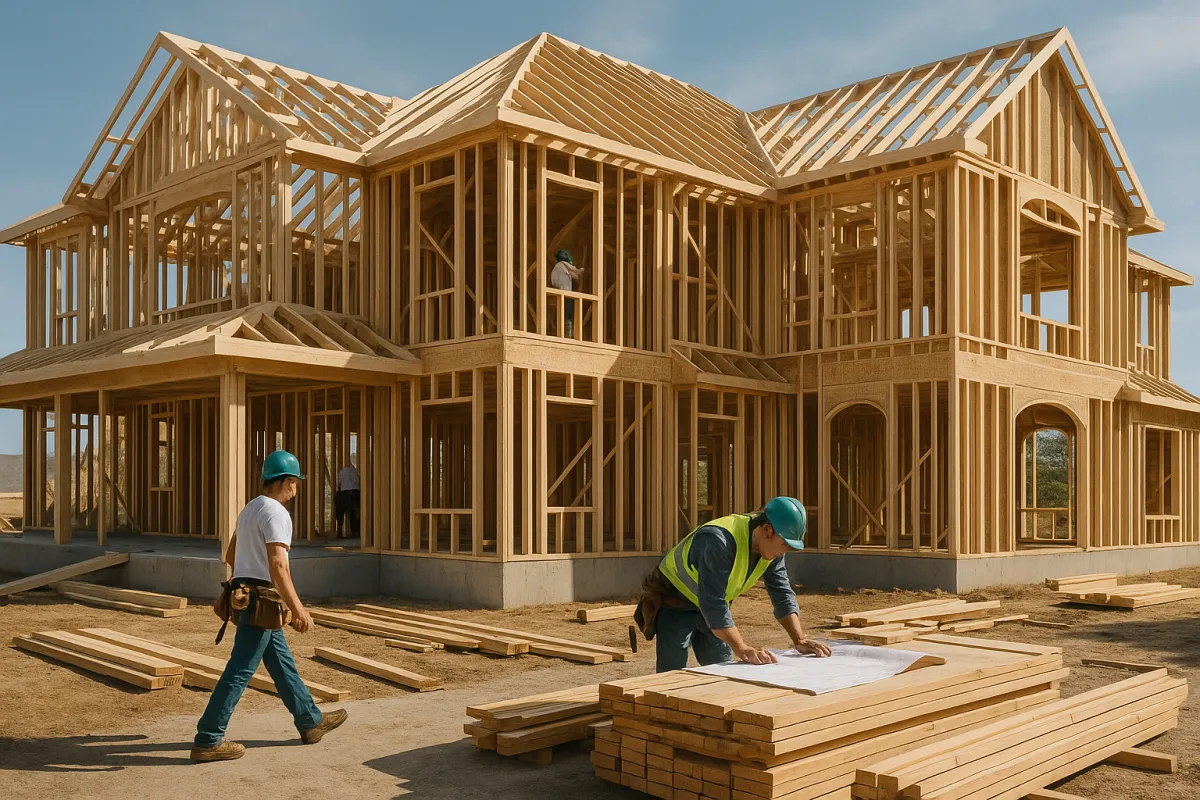
Not every claim triggers ordinance or law coverage, and understanding the trigger is the key to understanding when this provision matters. The most common trigger is a building department’s substantial damage determination, a threshold many jurisdictions apply once repair costs exceed a stated share of the structure’s pre-loss value, commonly in the range of fifty percent though the exact figure and method vary by jurisdiction. Once that threshold is crossed, the building department can require the entire structure, not merely the damaged portion, to be brought up to current code as a condition of issuing a rebuild permit.
A second, narrower trigger is a code requirement tied specifically to the system that was damaged, independent of any substantial-damage threshold. A kitchen fire that destroys wiring in one wall, for example, can trigger a requirement that the electrical work be brought to current code in the affected area even if the rest of the house is untouched and the overall damage share is modest. Both triggers share the same underlying logic: once a building department is involved in approving repair work at all, it has an opportunity, and often an obligation, to apply the code that exists today rather than the one the home was originally built under.
Who carries the most exposure: older homes and updated-code jurisdictions
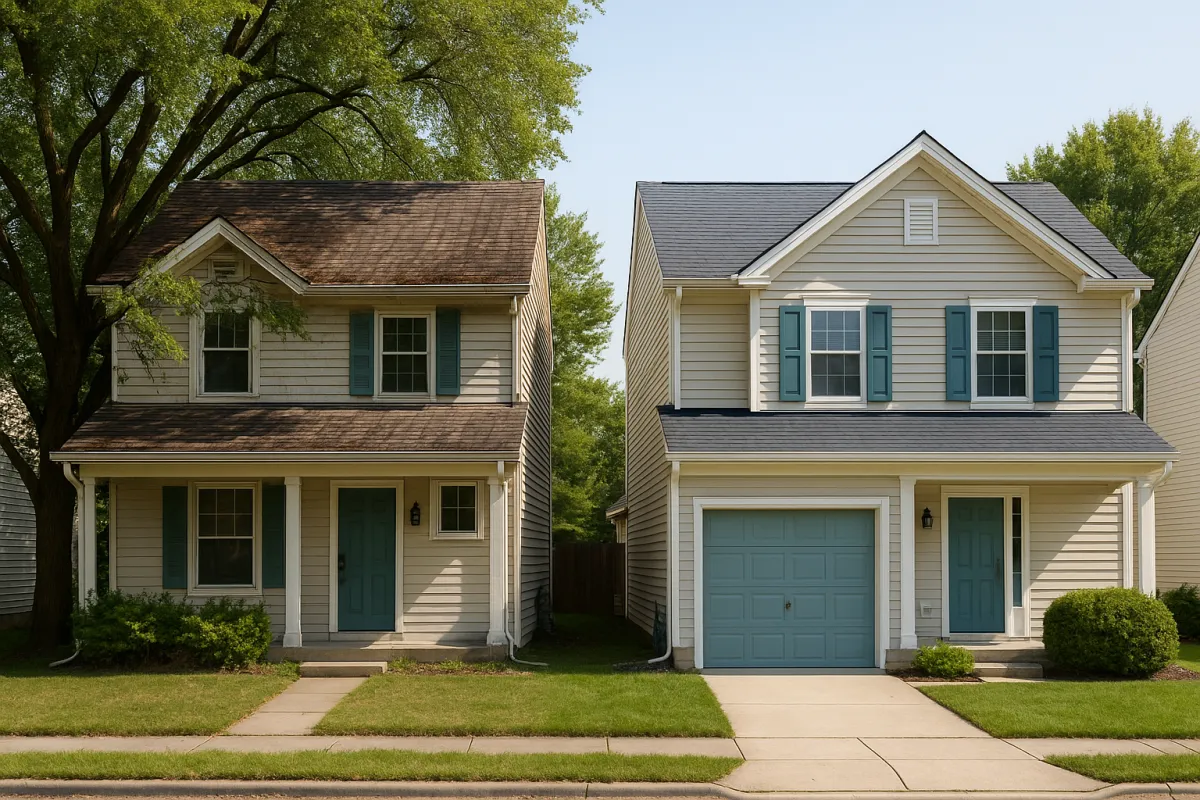
The scale of this exposure is not evenly distributed across homes, and knowing where your own home sits on that scale is useful context for deciding how much coverage to carry. A home built decades ago, before significant code revisions in wiring, plumbing, wind resistance, seismic bracing, or energy efficiency, can face a large gap between its original construction standard and what a rebuild would be required to meet today. A newer home, built closer to the current code, generally faces a smaller gap, though building codes continue to evolve even over a handful of years, so the gap for a newer home is rarely literally zero.
Geography compounds the age factor. Jurisdictions that have revised codes meaningfully in response to hurricanes, wildfires, or earthquakes, often adopting stricter wind, defensible-space, or seismic standards after a significant regional event, tend to impose a larger compliance gap on older stock than a jurisdiction with a more stable code history. A homeowner in a coastal or wildfire-prone region with an older home sits at the intersection of both factors, which is exactly the profile most likely to find the standard default ordinance or law limit too small for the actual exposure.
How ordinance or law coverage is typically sized
Ordinance or law coverage is most commonly written as a percentage of the dwelling limit, with ten percent frequently appearing as a default inclusion on standard policies and higher percentages, often twenty five or fifty percent, available as an upgraded endorsement for a modest additional premium. Because it is pegged to the dwelling limit the same way other structures and loss of use often are, as covered in our coverage note on dwelling coverage, an underinsured dwelling limit quietly shrinks the ordinance or law dollar amount too, compounding the exposure from two directions at once.
Some insurers instead offer a flat dollar amount of ordinance or law coverage rather than a percentage, which can be easier to reason about directly but requires the same periodic review, since a flat dollar figure set years ago does not track rising construction costs the way a percentage of a current dwelling limit does. Either way, the number to look for on your declarations page is explicit, and it is worth comparing it honestly against what a realistic code-compliance rebuild on your specific home might actually cost, using the companion below as a starting structure for that comparison.
Ordinance or law coverage versus extended and guaranteed replacement cost
It is easy to assume that a generous extended or guaranteed replacement cost provision already handles the code-upgrade problem, and that assumption is one of the more expensive misunderstandings a homeowner can carry into a claim. Extended and guaranteed replacement cost exist to cushion an inaccurate rebuild estimate or a construction-cost spike after a regional disaster, protecting the dwelling limit itself from being too low for an ordinary like-for-like rebuild. Ordinance or law coverage protects against an entirely different shortfall: the cost that exists specifically because code requires more than a like-for-like rebuild in the first place.
A policy can carry generous extended replacement cost and minimal ordinance or law coverage, or the reverse, and either combination leaves one kind of gap open. The safest position carries a meaningful amount of both, because they respond to different failure modes that can occur independently of one another: an estimate that was simply too low, and a code requirement that adds cost regardless of how accurate the original estimate was. When reviewing a policy, check both lines on the declarations page rather than treating a strong figure on one as a substitute for the other.
Flood zones, wildfire zones, and code-driven rebuild costs
Where you live changes not just whether a code-compliance gap exists, but what kind of upgrade it typically demands, and this site’s flood-insurance coverage notes touch a related but distinct version of the same idea. In a flood zone, a home substantially damaged by a flood is often required to be elevated to the current base flood elevation standard on rebuild, a requirement our coverage note on flood insurance for high-risk areas discusses from the flood-policy side. The National Flood Insurance Program addresses that specific scenario through its own increased cost of compliance benefit, a narrower, capped provision distinct from a homeowners ordinance or law endorsement, which is why it is worth checking both policies separately rather than assuming either one covers what the other does.
In wildfire-prone jurisdictions, updated codes increasingly require fire-resistant materials, specific roofing and venting standards, and defensible-space landscaping as a condition of rebuilding after a wildfire loss, each of which can add real cost beyond a simple like-for-like reconstruction. None of these region-specific triggers change the underlying mechanics of ordinance or law coverage; they simply make the gap it closes larger and more likely to matter in practice. A homeowner in either kind of higher-risk zone has more reason than most to confirm the limit is adequate rather than accepting a default percentage without checking it.
What ordinance or law coverage does not cover
The boundaries matter as much as the coverage itself. Ordinance or law coverage does not pay for voluntary upgrades a homeowner wants but code does not require, such as choosing premium finishes or expanding square footage beyond what was there before, which remain the homeowner’s own expense regardless of how the claim settles. It does not apply when no code-triggering event occurs at all, such as routine maintenance, a cosmetic remodel unconnected to a covered loss, or damage too minor to invoke a building department’s substantial-damage review.
It also does not retroactively apply to a structure that was already out of compliance with code before the loss for reasons unrelated to the claim, such as an unpermitted addition built without inspection years earlier; insurers generally expect the insured structure to have been legally built in the first place. And like the rest of a homeowners policy, it only responds after a covered peril causes the underlying loss; it does not create coverage for an otherwise excluded cause of damage, it only adjusts how much is paid once a covered loss has already triggered a claim.
How a claim with ordinance or law coverage is actually paid
In practice, a claim that triggers ordinance or law coverage typically unfolds in layers rather than as one combined number. The adjuster first evaluates the loss under the ordinary dwelling coverage terms, establishing what it would cost to simply restore what was damaged. Separately, the building department’s requirements are identified, often through a permit application process that surfaces exactly what code compliance will demand on this specific rebuild. The ordinance or law benefit is then applied against the incremental cost those requirements add, up to whatever limit the policy carries for that coverage.
Because this second step depends on an actual building department determination rather than a generic estimate, the timeline for a code-triggering claim is often longer than an ordinary repair claim, and documentation from the permitting process becomes part of the claim file. Homeowners navigating a claim like this benefit from the same discipline our coverage note on filing a home insurance claim describes generally: keep every piece of correspondence with the building department, and ask your adjuster directly, in writing, how the ordinance or law benefit is being calculated on your specific rebuild.
Common building code triggers worth knowing about
A handful of systems account for most of the code-upgrade cost on a typical older-home rebuild, and knowing them in advance makes the exposure concrete rather than abstract. Electrical service is a frequent trigger, since older homes commonly carry service panels and wiring well below what current code requires for a modern household’s load. Plumbing materials and venting are another, particularly on homes built before current standards for pipe material and drainage design. Structural bracing against wind or seismic forces is a major one in regions that have revised those standards, often requiring reinforced connections the original framing never had. Insulation and energy-code compliance round out the common list, adding cost to walls, attics, and windows that a like-for-like rebuild would not otherwise touch.
None of these triggers is exotic, and most homes built more than a couple of decades ago will encounter at least one of them in a significant rebuild. That is precisely the pattern that makes ordinance or law coverage worth carrying at a meaningful level rather than treating it as a line item to skim past on the declarations page.
How to estimate your own code-upgrade exposure
A precise number requires a local contractor or building official’s input, since code requirements and their cost impact are specific to your jurisdiction and your home’s actual age and systems, but a rough orientation is possible without one. Start with your home’s age relative to the last major code revision cycle in your area, which a local permitting office or an experienced local contractor can usually describe in general terms. Layer on your region’s disaster history, since jurisdictions that have revised code after a hurricane, earthquake, or wildfire tend to impose larger gaps on older stock than regions with a quieter code history.
From there, a conservative starting estimate treats a meaningful share of your dwelling limit, often in the same range as the percentage your ordinance or law coverage is already written at, as the rough scale of exposure worth planning against, then compares that figure to your actual limit using the companion below. If you want a fresh rebuild-cost starting point for that comparison, our general coverage estimator on the homepage walks the same size-and-rate math our dwelling coverage note describes. The goal is not precision, which no simple estimate can offer, but an honest sense of whether your current limit is in the right neighborhood or badly short of it.
Reading your declarations page for ordinance or law coverage
The practical starting point for every homeowner is the same: open your current declarations page and look for ordinance or law coverage by name, which may also appear as “ordinance and law,” “building ordinance coverage,” or as a line within an endorsements or additional coverages section. Note whether it is written as a percentage of your dwelling limit or a flat dollar figure, and note the number itself. If the line is missing entirely rather than simply small, that is worth a direct question to your insurer, since some older or more basic policy forms may not include it as a standard feature.
State variations and why no two policies match exactly
Ordinance or law coverage is shaped by both your insurer’s policy form and your state’s regulatory environment, and the two combine to produce real variation in what is included by default, what percentage caps apply, and how the coverage interacts with other provisions. Some states mandate a minimum level of ordinance or law coverage be offered or disclosed; others leave the detail entirely to the insurer’s own form language. Rather than quote a specific state’s rule, which risks going stale or being wrong for your particular state, the more durable habit is to ask your own insurer directly what your state’s requirements are and how your specific form implements them, and to treat anything general said here as a prompt for that conversation rather than a substitute for it.
Common mistakes with ordinance or law coverage
The same handful of misunderstandings account for most of the trouble at claim time. Assuming the dwelling limit alone covers a code-compliant rebuild is the most common, since it overlooks that code compliance is a separate cost category entirely. Confusing ordinance or law coverage with extended or guaranteed replacement cost is a close second, treating one provision as though it does the other’s job. Accepting a default percentage without checking it against your home’s age and local code history is a third, particularly risky for older homes in jurisdictions with an active code-revision history. Skipping the question entirely because nothing about a policy renewal prompts it is the quiet fourth mistake, and it is the easiest one to fix, since asking the question costs nothing and raising the limit, where needed, is usually inexpensive.
- Assuming dwelling coverage alone funds a code-compliant rebuild. It funds a like-for-like rebuild; code compliance is a separate, additional cost.
- Conflating ordinance or law with extended or guaranteed replacement cost. They solve different problems and a strong figure on one does not substitute for the other.
- Accepting the default percentage without checking it against your home’s age. Older homes in jurisdictions with revised codes carry more exposure than a flat default accounts for.
- Overlooking flood- and wildfire-zone specific triggers. Elevation and fire-resistant rebuild requirements add cost categories a generic ordinance or law estimate may not anticipate.
- Never asking the question at renewal. The limit is on your declarations page already; checking it costs nothing.
A worked example: a fire-damaged older home
Walk through one illustrative scenario to make the mechanics concrete. Suppose a home built in the 1970s, with a dwelling limit of $350,000 and ordinance or law coverage set at the common default of ten percent, suffers a serious kitchen and attic fire. The damage, combined with smoke and structural compromise, crosses the local building department’s substantial-damage threshold, triggering a requirement that the rebuilt structure meet current electrical, insulation, and structural bracing standards throughout, not just in the directly burned rooms.
The ordinary dwelling coverage pays to rebuild what was damaged at an illustrative $280,000. The code-compliance requirements add an illustrative further $55,000 across upgraded wiring, added insulation, and reinforced framing connections. At a ten percent ordinance or law limit on a $350,000 dwelling amount, the homeowner’s available ordinance or law benefit is $35,000, leaving an illustrative $20,000 of code-upgrade cost unfunded and payable out of pocket. Had the homeowner instead carried a twenty five percent ordinance or law endorsement, the available benefit would have been $87,500, comfortably covering the illustrative $55,000 gap with room to spare. Run your own dwelling limit, ordinance or law percentage, and an estimated code-upgrade cost through the companion below to see the same arithmetic on your own numbers.
How much of a $55,000 code-upgrade cost each limit covers
Illustrative example on a $350,000 dwelling limit. Real limits, costs, and code requirements vary by home, insurer, and jurisdiction.
Bars are scaled to the $87,500 figure as a full-coverage reference. Once the limit exceeds the actual code-upgrade cost, additional percentage buys no further protection for this specific loss, which is why matching the limit to a realistic estimate matters more than simply maximizing it.
How the coverage layers stack on a significant rebuild
Seeing ordinance or law coverage next to the rest of a rebuild budget clarifies where it actually sits. On a loss serious enough to trigger a code review, the total rebuild cost typically breaks into the ordinary replacement cost of what was lost, the code-compliance add-on ordinance or law coverage is built to fund, and, in some cases, a further shortfall if even the ordinance or law limit is exceeded. The chart below illustrates one way that total could split on a significant rebuild.
Where the dollars go on one illustrative code-triggering rebuild
Illustrative shares of a total rebuild cost. Every loss and every policy differ.
The middle slice is exactly what ordinance or law coverage is built to absorb. Whether the third slice exists at all, and how large it is, depends entirely on whether the limit chosen matches the actual code-compliance cost on the specific rebuild.
Talking to your insurer about raising your limit
Raising an ordinance or law limit is typically one of the more straightforward conversations to have with an insurer, since it does not require re-underwriting the whole policy the way some other changes do. Ask directly what percentage options are available above whatever you currently carry, and ask for the premium difference at each tier so you can weigh the modest additional cost against the exposure it closes. If your insurer offers only a narrow range of options, it is worth asking whether a separate ordinance or law endorsement from the same carrier, or a different carrier’s policy form, offers a higher ceiling.
Bring any specific knowledge you have about your home’s age and your local code history into that conversation, since an agent who knows your home was built well before a major local code revision can often speak more specifically to whether your current limit is adequate than a generic percentage recommendation can. The conversation costs nothing, and for most homeowners the premium difference between tiers is modest relative to the gap a low limit can leave open. Put the question on a recurring schedule rather than a one-time check, since both your dwelling limit and your local code can move again well before your next move or your next full policy review, and a limit that was adequate two renewals ago is not guaranteed to still be adequate today.
Why a flat-dollar limit quietly loses ground over time
A percentage-based ordinance or law limit tracks your dwelling amount automatically, which means it rises, at least on paper, whenever your dwelling limit is updated for construction inflation. A flat-dollar limit does not have that built-in adjustment, and that difference matters more than it first appears. A homeowner who locked in a flat $40,000 ordinance or law limit several years ago is carrying the same $40,000 today, even though construction labor and material costs, and the cost of the specific code upgrades this coverage is meant to fund, have very likely risen in the meantime. The dollar figure on the page has not changed; its real purchasing power against an actual rebuild has quietly shrunk.
This is the same drift problem our coverage note on dwelling coverage describes for an unreviewed dwelling limit, applied to a narrower but equally real line item. The fix is the same habit applied to one more number: when you review your policy at renewal, check whether your ordinance or law coverage is written as a percentage that moves with your dwelling limit or as a flat figure that does not, and if it is flat, ask explicitly whether it has been adjusted since it was first set. An insurer is generally happy to quote a higher flat figure or convert the coverage to a percentage basis; the homeowner simply has to ask, since nothing about a routine renewal notice prompts the question on its own.
Ordinance or law coverage on a rental or home-business property
The same mechanics apply when the insured property is a rental or carries a home-based business, though the practical stakes can look a little different. A landlord rebuilding a code-triggering loss on a rental property faces the identical demolition, compliance, and increased-construction-cost categories as an owner-occupant, and our coverage note on landlord insurance covers the broader policy structure a rental property typically carries; ordinance or law coverage sits inside that structure the same way it sits inside an ordinary homeowners policy, sized as a percentage of the rental dwelling’s own limit.
A home-based business adds a wrinkle worth naming rather than ignoring: if a portion of the home used for business purposes is damaged and the rebuild triggers a code review, that review can extend to business-use areas as readily as it extends to residential ones, particularly where local code treats a home office or workshop differently from ordinary living space. Our coverage note on insuring a home-based business walks the broader coverage picture for that situation; the ordinance or law question is simply one more reason to confirm, specifically, that the policy insuring the structure, not just the business’s equipment and liability, carries an adequate limit for the whole building.
The bottom line
Ordinance or law coverage is the provision that pays the extra cost of rebuilding to current code after a covered loss, a cost that a standard dwelling limit, even a generous one, is not built to fund on its own. It responds to demolition of code-required removals, the cost to bring a rebuild up to current standards, and the increased cost of construction a stricter modern code adds, and it is typically sized as a percentage of your dwelling limit that is worth checking rather than assuming. Older homes, and homes in jurisdictions that have meaningfully revised their codes, carry the most exposure to the gap this coverage closes, and it is a separate, complementary provision to extended or guaranteed replacement cost rather than a substitute for it. Find the number on your own declarations page, run it against a realistic code-upgrade estimate for your home in the companion below, and ask your insurer directly whether a higher tier is available before you need it rather than after.
This coverage note is educational reading about how ordinance or law coverage commonly works on a homeowners policy, and it is not insurance, legal, or construction advice specific to any home. Percentages, dollar limits, triggering thresholds, and the mechanics of substantial-damage determinations vary by insurer, by state, and by local building department, and every dollar figure and claim outcome described above is an illustrative example chosen to show how the coverage generally works, not a quote, an estimate, or a prediction for any specific property. Before relying on anything here, read your own declarations page and policy wording, confirm your local building department’s substantial-damage and code-compliance rules, and talk with a licensed insurance professional who can see your actual policy and your actual home.
Frequently asked questions
What is ordinance or law coverage?
Ordinance or law coverage is an endorsement, or a built-in provision on some policies, that pays the extra cost of rebuilding to current building codes after a covered loss, costs a standard dwelling limit is not designed to fund. When a home is damaged badly enough that local code requires the rebuild to meet today's standards rather than simply restore what was there, the gap between those two numbers can be substantial, especially on an older home. Ordinance or law coverage is typically written as a percentage of the dwelling limit, often ten, twenty five, or fifty percent, and it is one of the cheaper upgrades a homeowner can add relative to the exposure it closes.
What does ordinance or law coverage actually pay for?
It is commonly described in three parts, though insurers phrase and bundle them differently. The first is the cost to demolish and remove the undamaged portion of a structure when code requires tearing down more than the loss itself destroyed. The second is the cost to comply with current code during the rebuild, meaning upgrades to wiring, plumbing, structural bracing, insulation, or similar systems the original home never had. The third, often called increased cost of construction, is the added expense of simply building to a newer, stricter code standard than the one the original home was built under. A standard dwelling limit pays to replace what was lost; ordinance or law pays the additional amount code requires on top of that.
How much ordinance or law coverage do I need?
The honest answer depends on your home's age, your local code's history of becoming stricter, and how much of your home's systems would likely need replacing in a significant rebuild, none of which a short note can price for a specific house. As a general orientation, older homes in jurisdictions that have updated code requirements meaningfully since the home was built tend to carry more exposure than a newer home built to something close to the current standard. Many homeowners carry this coverage at ten to twenty five percent of their dwelling limit by default, and increasing it is usually inexpensive relative to the potential gap, which is why it is worth asking your insurer directly what your current limit actually is and whether a higher one is available.
Does ordinance or law coverage apply to a partial loss or only a total loss?
It can apply to either, and that surprises people who assume code upgrade costs are only a total-loss problem. Many building departments trigger code-compliance requirements once damage exceeds a certain share of a structure's value, a threshold sometimes called a substantial damage determination, which can be reached by a partial loss on an older home even when most of the structure survives. A homeowner who assumes ordinance or law coverage is a total-loss-only protection can be caught off guard by a mid-sized claim that still triggers a full code review on the portion being rebuilt.
Is ordinance or law coverage the same as extended replacement cost?
No, and conflating them is one of the more consequential mistakes a homeowner can make when reviewing a policy. Extended or guaranteed replacement cost adds a cushion above your dwelling limit for the ordinary cost of rebuilding the same structure, protecting against an estimate that turns out too low or construction costs that spike after a regional disaster. Ordinance or law coverage is a different, separate provision that specifically funds the added cost of meeting current building codes, a cost that exists independently of whether your rebuild estimate was accurate. A well-protected policy typically carries both, because they cover two different kinds of shortfall.
Does flood or earthquake insurance include ordinance or law coverage?
Sometimes, but not automatically, and it is worth checking each policy separately rather than assuming one coverage carries over to another. A standard flood insurance policy through the National Flood Insurance Program includes a specific, capped increased cost of compliance benefit intended to help fund elevation or other floodplain management requirements after a flood loss, which is a narrower and differently structured provision than a homeowners ordinance or law endorsement. Earthquake policies vary by insurer and state on whether an equivalent provision is included or must be added separately. Read each policy's own ordinance, law, or compliance language rather than assuming it matches your homeowners endorsement.
Why do older homes carry more ordinance or law exposure than newer ones?
Building codes tend to move in one direction over time, toward stricter wind, seismic, electrical, plumbing, and energy standards, and a home built decades ago was built to whatever standard existed then. When that home is damaged badly enough to trigger a code-compliant rebuild, the gap between the old standard it was built to and the current standard it must be rebuilt to is where ordinance or law coverage does its work. A newer home built close to the current code generally has a smaller gap to fund, though it is rarely zero, since codes keep evolving even for recently built homes.
Where do I find my ordinance or law coverage limit on my policy?
It is usually listed on your declarations page, sometimes as its own line item and sometimes folded into an endorsements or additional coverages section, typically expressed as a flat dollar amount or as a percentage of your dwelling limit. If you cannot find it listed at all, that is worth a direct question to your insurer or agent, since on some older or more basic policies it may be minimal or absent entirely rather than simply unlabeled. Confirming the number now, while nothing is wrong, is far easier than discovering it during a rebuild.

Hamza Hai is the editor of SumSured. She holds an MBA and reviews the site's articles against our editorial standards, checking that every figure is labelled for what it is, that nothing is presented as verified fact without a source the reader can check, and that the writing stays useful to a non-specialist.