
What's in this note
- Flood insurance for high-risk areas: the short answer
- What a high-risk flood zone means: the Special Flood Hazard Area
- Reading the zone letters: A zones and V zones
- The one percent annual chance floodplain, decoded
- How to check whether your home is in a high-risk area
- The mandatory-purchase rule: when high-risk coverage is required
- NFIP flood insurance for high-risk areas
- Private flood insurance for high-risk areas
- NFIP versus private: choosing in a high-risk zone
- Why premiums are higher in high-risk areas
- Risk Rating 2.0, in general terms
- Building coverage and contents coverage: two separate limits
- What flood insurance covers in a high-risk area
- What flood insurance does not cover
- The elevation certificate and why it matters most in high-risk zones
- How to lower flood insurance cost in a high-risk area
- The 30-day waiting period and buying ahead of the season
- Why coverage limits can leave a high-risk home underinsured
- When your high-risk zone changes: map revisions
- A worked example: one home in a high-risk AE zone
- How this differs from our other flood notes
- The bottom line
Short answer: In a high-risk area, a FEMA-mapped Special Flood Hazard Area with at least a one percent annual flood chance, flood is still excluded from your homeowners policy, so you need a separate flood policy, and with a federally backed mortgage you are usually required to carry one. Coverage comes from the National Flood Insurance Program or a private insurer, premiums run higher because the expected loss is larger, and documented elevation lowers the cost most.
Flood insurance for high-risk areas is a different conversation from flood insurance anywhere else, because in a high-risk zone the question stops being whether flooding could happen and becomes how you fund the flooding that the map already expects. If your home sits in what the Federal Emergency Management Agency calls a Special Flood Hazard Area, you live somewhere the odds of a serious flood over the length of a mortgage are real rather than remote, your standard homeowners policy still excludes flood entirely, and, if you carry a federally backed loan, coverage is very likely required rather than optional. That combination changes how you should think about the whole subject, from what you are required to buy to how much it costs and what you can do to bring the number down.
This coverage note is written for people who already know, or have just been told, that they are in a high-risk flood area. It explains what a high-risk flood zone actually means and how the zone letters work, when flood coverage becomes mandatory, how the National Flood Insurance Program compares to the growing private market for a high-risk home, why premiums run higher and how the Risk Rating 2.0 approach frames that, what the coverage limits are and where they can leave a high-risk home short, what a flood policy covers and what it pointedly does not, and the concrete levers, elevation certificates, mitigation, and deductible, that lower the cost. It sits alongside our companion notes on how much flood insurance costs and how much flood insurance you need, and you can sketch a rebuild figure with our replacement-cost estimator before you price a policy against it.
Key takeaways
- A high-risk area is a FEMA-mapped Special Flood Hazard Area, the A and V zones expected to face a flood with at least a one percent chance in any given year.
- In a high-risk zone with a federally backed mortgage, flood coverage is usually mandatory, tied to the zone and the loan rather than to whether the home has ever flooded.
- Coverage comes from the National Flood Insurance Program or a growing private market, and pricing the two against each other is worth doing for a high-risk home.
- Premiums run higher because the expected loss is larger, and under Risk Rating 2.0 the price is meant to reflect each property's specific risk, including elevation.
- The biggest cost levers in a high-risk area are elevation documented with a certificate, mitigation, and the deductible you choose, all illustrative until you get a real quote.
Flood insurance for high-risk areas: the short answer
Here is the whole subject compressed before we unpack it. In a high-risk area, flood is excluded from your homeowners policy just as it is everywhere else, so you need a separate flood policy, and if you have a federally backed mortgage you are very likely required to carry one. That coverage comes either from the National Flood Insurance Program, the long-standing federal program, or from a private flood insurer, and for a high-risk home it is worth quoting both. The premium runs higher than it would in a low-risk zone because the expected loss is larger, and the single biggest thing you can do about it is elevation: a home whose lowest floor sits above the level a serious flood is expected to reach is priced far more favorably than one sitting below it.
Hold three facts in mind as you read. First, being in a high-risk zone is a statement about probability, not certainty, and not a prediction that your home will flood this year. Second, the mandatory-purchase requirement is tied to your zone and your loan, so it can apply to a home that has never taken on a drop of water. Third, every dollar figure in this note is illustrative, chosen to show how the pieces relate rather than to quote your address, and the only numbers that matter are the ones on real quotes for your specific home. The rest of this coverage note walks the zone system, the requirement, the two markets, the price drivers, the coverage limits, and the levers, and closes with a worked example on one high-risk home.
What a high-risk flood zone means: the Special Flood Hazard Area
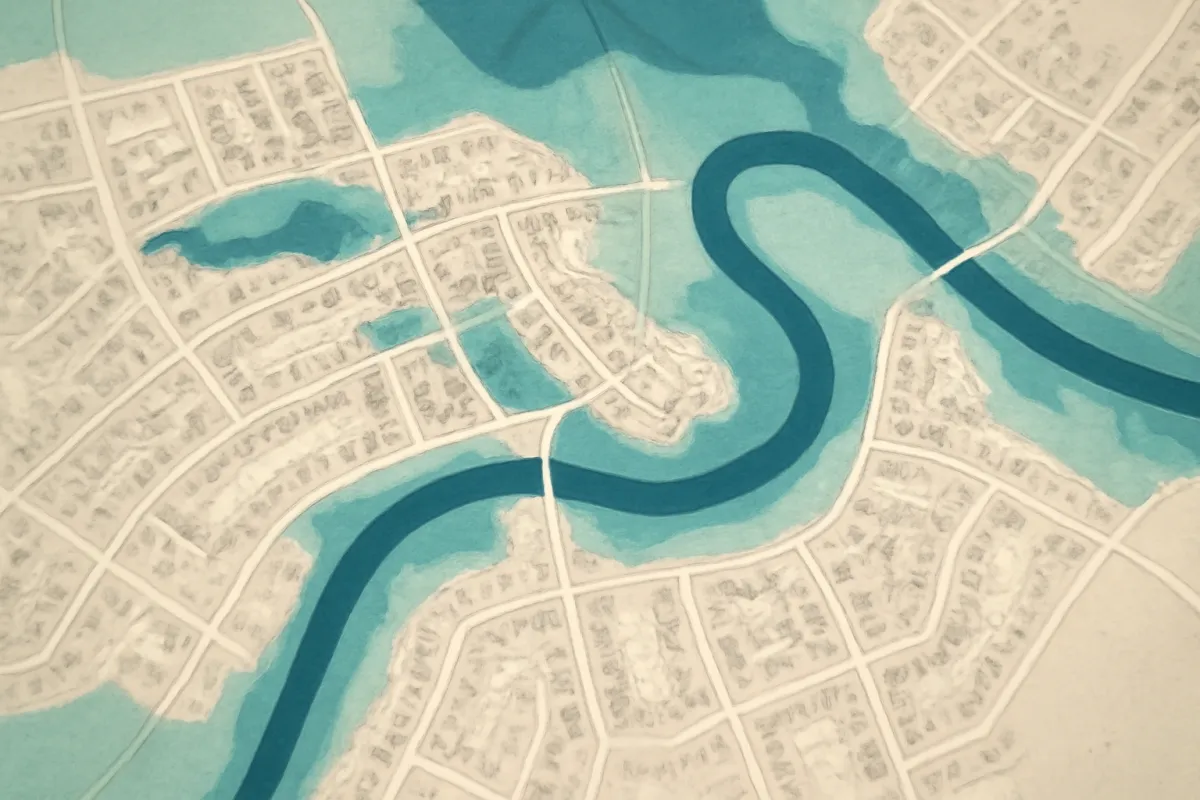
The phrase that defines the whole subject is Special Flood Hazard Area, and it has a precise meaning. FEMA maps flood risk across the country on Flood Insurance Rate Maps, and the Special Flood Hazard Area is the land where a flood has at least a one percent chance of being reached or exceeded in any given year. That one percent annual chance is the threshold that separates high-risk from moderate-and-minimal-risk land, and it is why the Special Flood Hazard Area is also called the one percent annual chance floodplain. When someone says a home is in a high-risk flood zone, they mean it sits inside this mapped area.
High risk does not mean the water is coming tomorrow, and it does not mean the home floods every year. It means the long-run odds are high enough that the federal government, lenders, and insurers all treat the property differently. The designation drives three separate things at once: it sets a higher expected premium, it can trigger the mandatory-purchase requirement if you have a federally backed mortgage, and it shapes which coverages and discounts apply. Because so much rides on the label, the first practical step for anyone who thinks they might be in a high-risk area is to confirm it, rather than relying on a neighbor’s assumption or a decade-old memory of where the line used to be.
Reading the zone letters: A zones and V zones
Flood zones use a letter system, and in a high-risk area two families of letters matter. Zones beginning with A, including A, AE, AO, and AH, are high-risk inland areas along rivers, lakes, and other watercourses, expected to face significant flooding from rising water. The most common is AE, which comes with a published base flood elevation, the specific height the one percent annual chance flood is expected to reach, that insurers use to price the home. Zones beginning with V, including V and VE, are high-risk coastal areas that face not just rising water but wave action and storm surge, which is why they are the most expensive of all to insure. Together, the A and V zones make up the Special Flood Hazard Area.
Outside the high-risk designation sit the B, C, and X zones, the moderate-to-minimal-risk areas. These still flood, just less often, and homes there are eligible for lower-cost coverage precisely because the risk is real but reduced. The distinction that trips people up is that a home can be one lot away from a high-risk zone and pay a fraction of the premium, because the map follows terrain and water flow rather than neighborhood boundaries. If your address falls in an A or V zone, you are squarely in high-risk territory for insurance purposes, and the specific letter, along with your elevation relative to the base flood elevation, does most of the work in setting your price. Our note on how much flood insurance costs walks the premium ranges those zones produce in more detail.
The one percent annual chance floodplain, decoded
The language you will run into constantly is the hundred-year flood, and it is one of the most misunderstood terms in the whole field. It does not mean a flood that happens once a century, and it certainly does not mean that if one occurred last year you are safe for ninety-nine more. It is a statement of annual probability: the hundred-year flood level is the flood that has a one percent chance of being reached or exceeded in any given year. That is exactly why the high-risk Special Flood Hazard Area is also called the one percent annual chance floodplain, which is the same idea stated more honestly and without the reassuring calendar framing.
Compound that one percent annual chance over the length of a mortgage and the picture sharpens considerably. A one percent yearly probability works out to roughly a 26 percent chance of at least one such flood over a 30-year period, which is far higher than the phrase hundred-year suggests and meaningfully higher than the odds of a house fire over the same span. There is also a 500-year flood, the 0.2 percent annual chance level, used to define a moderate-risk band around the high-risk core. For anyone weighing coverage in a high-risk area, the useful move is to translate the marketing-sounding label back into annual odds, then into mortgage-length odds, because the honest numbers make the case for carrying coverage far better than the calm-sounding name does. This is also the framing our note on how much flood insurance you need uses to size a limit against real exposure.
How to check whether your home is in a high-risk area
Do not guess, and do not rely on whether the street has flooded in your memory, because the map is the document that governs your premium and any requirement. FEMA publishes the official maps through the Flood Map Service Center, where you can enter an address and see the flood zone assigned to the parcel. Your mortgage lender will also have ordered a flood zone determination as part of the loan, and that determination is what triggers or does not trigger the mandatory-purchase requirement, so it is worth asking your lender what zone they have on file. An insurance agent who writes flood coverage can pull the same information and read the zone letter and, for an AE zone, the base flood elevation that will price the home.
Two wrinkles are worth knowing before you conclude anything. First, maps get revised. FEMA updates Flood Insurance Rate Maps over time as it re-studies watersheds and coastlines, and a revision can move a home into or out of a high-risk zone, sometimes changing a premium or a requirement fairly suddenly. Second, the zone at the front of a property is not always the zone at the back, and a large parcel can straddle a line, so the determination looks at where the structure actually sits. If you believe your home has been mapped into a high-risk zone incorrectly, there is a formal process to request a change, but it requires elevation data and professional documentation, which is one more reason an elevation certificate can be worth having.
The mandatory-purchase rule: when high-risk coverage is required
For many owners in a high-risk area the decision is not theirs to make, and that is by design. Under federal law, if you have a mortgage from a federally regulated or insured lender and your home sits in a high-risk Special Flood Hazard Area, the lender is required to make you carry flood insurance for the life of the loan, at least up to the outstanding loan balance or the maximum available coverage under the program, whichever is less. This is the mandatory-purchase requirement, and it is the reason a large share of flood policies exist at all: the borrower did not weigh the odds and opt in, the closing paperwork required it.
Two features of the rule catch people off guard. First, it is tied to the zone and the mortgage, not to your personal sense of risk or the home’s history, so a house that has never flooded in living memory can still be required to carry coverage simply because the map says high risk. Second, the requirement is a floor, not a ceiling: lenders require coverage up to the loan balance, but the loan balance can be far below the cost to rebuild the home, so meeting the minimum can still leave you badly underinsured for an actual total loss. If you are required to carry flood insurance, it is worth checking whether the mandated amount actually matches your rebuild exposure, a figure you can sketch with our replacement-cost estimator, rather than assuming the lender’s minimum is enough to make you whole. If you own the home outright, no federal rule forces the purchase, but the same risk that would trigger it is still present.
NFIP flood insurance for high-risk areas
The National Flood Insurance Program, administered under FEMA, is the source most high-risk homeowners start with, and for good reason. The program was created precisely so that coverage would be available in high-risk areas that private insurers historically would not touch, and it does not decline a home for being high risk. Its coverage is standardized: building coverage for a single-family home is capped at an illustrative $250,000, and contents coverage at around $100,000, and those limits apply the same way in a high-risk V zone as anywhere else. If your community participates in the program, which most flood-prone communities do, NFIP coverage is available for your address.
The program’s strengths in a high-risk area are availability, consistency, and the fact that lenders universally accept it for the mandatory-purchase requirement. Its weaknesses are the coverage caps, which can leave an expensive home underinsured because $250,000 of building coverage may fall well short of the cost to rebuild in a high-cost market, and the absence of some features a homeowner might want, such as coverage for additional living expenses during a long rebuild. The program also includes a feature worth knowing about in a high-risk zone: Increased Cost of Compliance coverage, an illustrative amount up to $30,000 that can help pay to bring a substantially damaged home into compliance with local floodplain rules, often by elevating it, after a qualifying flood. That coverage exists because rebuilding in a high-risk area frequently means rebuilding higher.
Private flood insurance for high-risk areas
Alongside the NFIP, a private flood market has grown rapidly as insurers have gained confidence in modeling flood risk, and for high-risk homes it is now a genuine alternative rather than a niche. Private flood insurers set their own limits, deductibles, and premiums, and they can do several things the NFIP cannot. They can write building coverage above the $250,000 cap, which matters for a high-value home where the federal limit falls short of the rebuild cost. They can sometimes price a particular home more cheaply than the federal rate, especially a well-elevated one. And they can add coverages the NFIP omits, such as loss-of-use coverage for living expenses during a rebuild, or replacement-cost rather than depreciated settlement on contents.
The tradeoffs are real and worth weighing before you switch. Private availability and appetite vary by insurer and can change, so a private option that exists this year may not next year, whereas the NFIP is a stable backstop. Some private policies carry their own conditions and may not automatically satisfy every lender’s requirement, so if you are switching to satisfy a mortgage you should confirm the lender accepts the specific policy. Continuity also matters, because dropping an NFIP policy for a private one and later trying to return can affect pricing and eligibility. For most high-risk buyers the sensible approach is to keep the NFIP quote in hand as a baseline and compare one or two private quotes against it on price, limits, deductible, and terms rather than switching blind.
NFIP versus private: choosing in a high-risk zone
With two real markets to choose from, the decision in a high-risk zone deserves a deliberate comparison rather than a default. The NFIP wins on availability and acceptance: it is offered almost everywhere a community participates, every lender takes it, and it will not turn a high-risk home away. Private insurers win, when they are willing to write the home, on flexibility: higher limits that can actually match a rebuild cost, occasionally lower premiums for a well-elevated property, and extra coverages the federal program leaves out. Neither is universally better, which is exactly why quoting both is the right move for a high-risk address.
A practical way to run the comparison is to hold the coverage constant and read the differences. Ask each option for the same building and contents limits, the same deductible, and then compare the annual premium, the features included, and any conditions attached. Look specifically at whether a private policy includes loss-of-use coverage, how it settles contents, and whether your lender will accept it if you have a mortgage. The same shop-around discipline our deductible note applies to homeowners coverage applies here, with the added wrinkle that flood availability shifts over time, so it is worth repeating the comparison every year or two rather than treating the first decision as permanent.
Why premiums are higher in high-risk areas
The reason flood insurance costs more in a high-risk area is not a penalty, it is arithmetic: the premium is funding a larger expected loss. In a Special Flood Hazard Area the expected frequency and depth of flooding are higher than in a moderate or minimal-risk zone, so over the long run the program or insurer expects to pay more claims, of larger size, per home. That expected cost is what the premium recovers, spread across policyholders, so a higher expected loss produces a higher premium. It is the same logic that makes coastal V zones the most expensive of all, because they add wave action and storm surge, forces that damage structures more severely than rising water alone, on top of the flood risk.
Elevation is where this shows up most concretely for an individual home. Two houses on the same high-risk street can be priced very differently if one sits a few feet higher than the other, because the higher home floods less often and less deeply, which directly reduces its expected loss. That is why the levers that lower a high-risk premium are almost all about elevation and expected depth: raise the floor, keep water out of the enclosure, and move the expensive mechanical systems up. The chart below sketches how illustrative annual premiums differ across risk tiers, and it is a warning against averages as much as anything, because the blended national figure describes almost no individual high-risk home.
Illustrative annual flood premium by risk tier
Rough annual premium bands for a typical single-family home across risk tiers. Illustrative only: your quote depends on elevation, coverage, deductible, and insurer.
Bars are scaled to the high-risk coastal figure. The commonly cited national average sits near the bottom, which is why it describes almost no high-risk home: an A or V zone can run several times the blended number, and elevation moves it further in either direction.
Risk Rating 2.0, in general terms
Anyone reading about flood premiums today will run into the phrase Risk Rating 2.0, and it is worth understanding in general terms without overstating the specifics. Risk Rating 2.0 is the name of the pricing approach the NFIP moved to in order to set premiums based on each property’s own flood risk more closely than the older system did. The older approach leaned heavily on which zone a home sat in, so many homes inside a zone paid similar rates regardless of their individual characteristics. The newer approach is meant to fold in more property-specific factors, such as the home’s elevation, its distance to a water source, and the types of flooding it could face, so that a well-elevated home and a low-lying one in the same zone are not automatically priced the same.
The practical takeaway for a high-risk homeowner is directional, not precise, and that is deliberate. Under a risk-based approach, the characteristics of your specific home matter more, which is one reason two neighbors can receive different quotes, and it is a reason documenting a favorable elevation can help your case. Because the details of how any pricing system weighs each factor can change and are set by the program rather than by any individual insurer, the honest posture is to treat Risk Rating 2.0 as the reason your quote is property-specific rather than as a formula you can reverse-engineer at home. Confirm the current treatment of your property with a flood-insurance agent and with FEMA’s own materials rather than relying on any general description, including this one.
Building coverage and contents coverage: two separate limits
A flood policy is not one bucket of money, it is two, and in a high-risk area understanding the split is the difference between a policy that makes you whole and one that leaves a gap. Building coverage, sometimes called building property coverage, pays for physical damage to the structure itself: the foundation, walls, floors, electrical and plumbing systems, the furnace and water heater, built-in appliances, and permanently installed fixtures. Contents coverage pays for your belongings: furniture, clothing, electronics, and other personal property damaged by the flood. Under the NFIP these carry separate limits, illustratively up to $250,000 for building and up to $100,000 for contents on a single-family home, and you can buy one without the other.
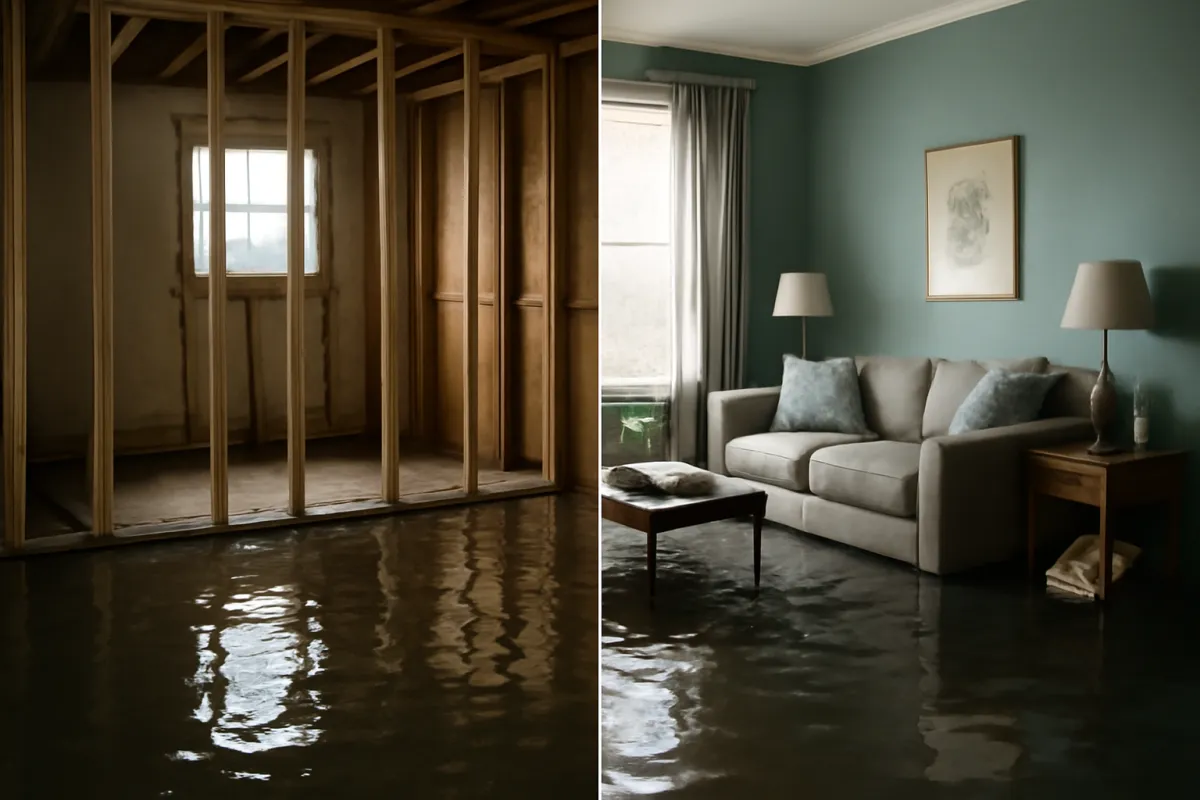
The split matters for two reasons in a high-risk zone. First, if you have a mortgage, the lender typically requires only building coverage, so contents coverage is often the piece you have to choose to add, and skipping it leaves everything you own exposed to the same flood the lender made you insure the walls against. Second, the chart below shows how an illustrative building-and-contents premium tends to divide, with the structure taking the larger share because it is the more expensive thing to repair. Deciding how much of each to carry is a real choice in a high-risk area: match the building limit to your rebuild cost where the cap allows, and consider private coverage if the rebuild figure exceeds the NFIP limit, a gap our note on how much flood insurance you need walks in detail.
Where an illustrative high-risk flood premium goes
Rough share of one illustrative building-and-contents flood premium in a high-risk zone. Exact splits vary by home, elevation, and how much contents coverage you add.
The building slice dominates because rebuilding the structure is the larger exposure. The small third slice reflects program fees and the NFIP's Increased Cost of Compliance coverage, which helps fund elevating a substantially damaged home. Shares are illustrative.
What flood insurance covers in a high-risk area
Within its limits, a flood policy in a high-risk area covers direct physical damage caused by flooding, and it is worth knowing what that includes so the boundaries later make sense. On the building side, it covers structural damage to the home and its foundation, the electrical and plumbing systems, central air and heating, the water heater and furnace, built-in appliances such as a dishwasher, permanently installed carpeting over an unfinished floor, permanently installed cabinets and paneling, and detached garages up to a portion of the building limit. On the contents side, when you buy that coverage, it pays for personal belongings damaged by the flood: furniture, clothing, electronics, portable appliances, and similar property, generally on an actual-cash-value basis under the NFIP unless a private policy offers replacement cost.
Two features specific to high-risk rebuilding are worth flagging. The Increased Cost of Compliance coverage mentioned earlier can help pay to elevate, floodproof, or relocate a substantially damaged home so it meets current floodplain rules, which is a real cost in a high-risk area where you often cannot simply rebuild at the old height. And debris removal and certain flood-related cleanup are generally covered as part of the loss. The through-line is that the policy pays to repair the flooded structure and replace the flooded belongings you insured, up to the limits you carry, which is exactly why matching those limits to your real rebuild and contents exposure matters more in a high-risk zone than anywhere else. The difference between actual-cash-value and replacement-cost settlement is one our note on the two settlement bases unpacks for home coverage generally.
What flood insurance does not cover
A flood policy is not unlimited, and in a high-risk area the exclusions cause the same claim-time surprise the homeowners flood exclusion does. Additional living expenses, the cost of staying elsewhere while your home is repaired, are generally not covered under a standard NFIP policy, though some private flood policies add it, which is one reason to compare the two. Property outside the building, such as decks, patios, fences, landscaping, seawalls, hot tubs, and swimming pools, is usually excluded or sharply limited. A vehicle damaged by flood is not a flood-policy claim at all, it belongs to the comprehensive portion of your auto insurance. And loss of income from a home business, or the value of currency, precious metals, and valuable papers, sits outside or is capped.

Basements and below-grade areas carry limitations that catch high-risk owners off guard, because these are often the first spaces to flood. The NFIP restricts coverage in basements and in enclosures below the lowest elevated floor, generally covering structural elements and certain mechanical systems such as the furnace and water heater but not finished walls, floor coverings, or personal belongings stored down there. Damage from moisture, mold, or mildew that could have been prevented is excluded, and, most importantly, the caps are real: once building damage exceeds the policy limit, the excess is uninsured, which is exactly how a high-value high-risk home ends up underinsured at the NFIP cap. Reading what a policy leaves out is as decisive as reading what it covers, the same discipline our coverage note on what home insurance covers applies to standard policies.
The elevation certificate and why it matters most in high-risk zones
In a high-risk zone the elevation of your lowest floor relative to the expected flood level is one of the biggest factors in your premium, and an elevation certificate is the document that proves it. An elevation certificate is a form completed by a licensed surveyor or engineer that records the precise elevations of your home and the surrounding ground, letting an insurer compare your lowest floor to the base flood elevation, the height the one percent annual chance flood is expected to reach. A home whose lowest floor sits above that level floods less often and less deeply, which reduces its expected loss, and the premium can reflect that with a meaningful reduction.
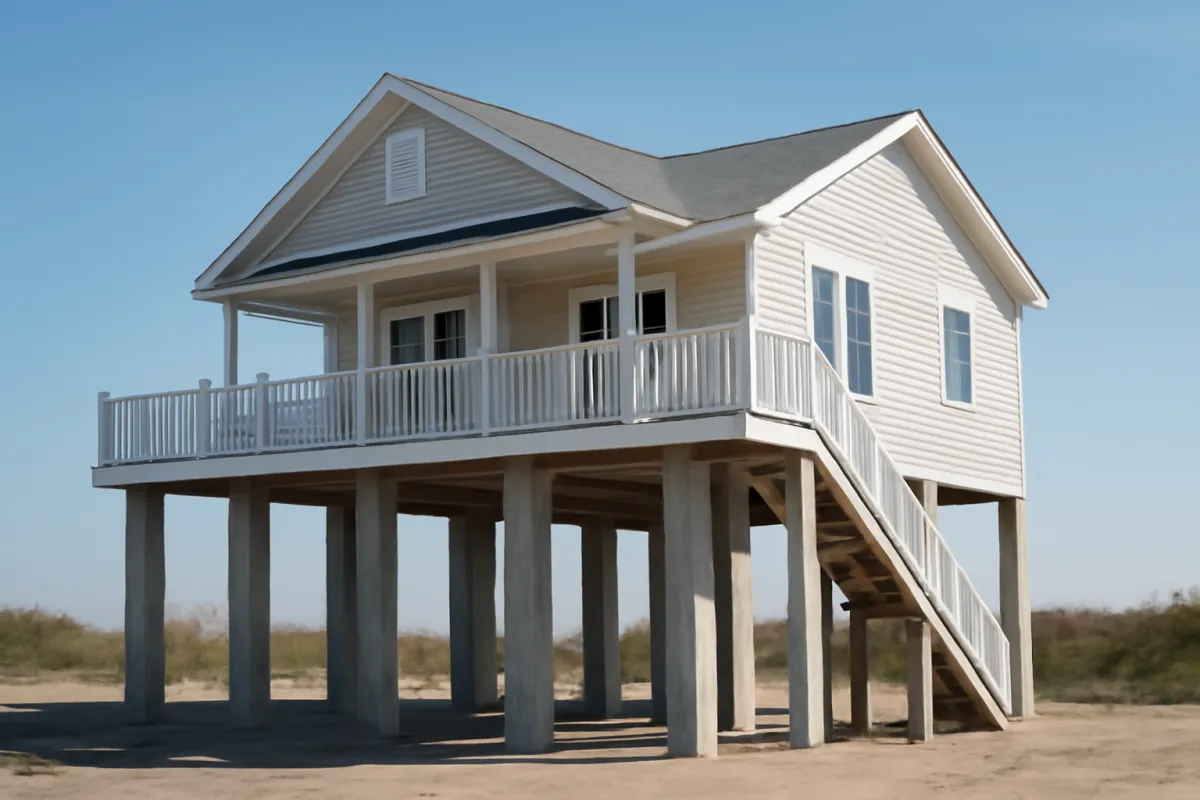
The certificate helps in two situations that are common in high-risk areas. First, an existing home that already sits high relative to the flood level may be paying more than it needs to simply because no one has documented the elevation, so obtaining a certificate can lower an existing bill or support a request to correct the mapped zone. Second, physically raising a home, or building a new one above the flood level, moves it into a more favorable rating for the life of the structure. Under the current Risk Rating 2.0 approach a certificate is not always required just to get a quote, but it remains one of the most useful pieces of documentation a high-risk owner can hold, because so much of the price turns on the elevation it proves. It is a paid engagement, not free, but in a high-risk zone the potential premium savings can justify the cost.
How to lower flood insurance cost in a high-risk area
Several levers can bring a high-risk flood premium down, and they map directly onto the price drivers. The first and largest is elevation and mitigation: documenting a favorable elevation with a certificate, raising the structure where feasible, adding flood vents to an enclosure so water can flow through rather than build pressure, and moving the furnace, water heater, and electrical panel above the expected flood height all reduce expected losses and therefore the premium. These are capital projects, not free, but in a high-risk zone the premium savings can pay back a meaningful share over time, and some also reduce the damage you would suffer in an actual flood, which is a return the premium line does not capture.
The second lever is the deductible: choosing a higher deductible lowers the annual premium in exchange for absorbing more of a loss yourself, exactly the tradeoff our deductible note walks in full for homeowners policies, with the same break-even logic. The third is your community’s participation in the Community Rating System, a program that gives policyholders in towns that invest in floodplain management a discount on NFIP premiums, so it is worth asking your local officials whether your community qualifies and at what discount level. The fourth is shopping the NFIP against private quotes, since the two markets price the same high-risk home differently. Every figure here is illustrative and the savings depend on your specific home, but the pattern is consistent: reduce the risk, document it, or match the coverage to it, and the premium follows.
The 30-day waiting period and buying ahead of the season
The timing trap that catches people every storm season matters even more in a high-risk area: a new flood policy usually does not take effect the day you buy it. Under the NFIP there is typically a 30-day waiting period between purchase and the start of coverage, with only narrow exceptions, such as a policy bought in connection with closing on a new mortgage or certain situations tied to a flood-map revision. The purpose is to stop people from buying coverage only when a flood is already bearing down, which would break the insurance pool, but the effect is that procrastination in a high-risk zone has a hard, unforgiving deadline.
The practical consequence is blunt for anyone in a high-risk area. If a hurricane is three days offshore and you have never bought flood insurance, it is too late: a policy purchased today will not be in force when the surge arrives. Flood coverage in a high-risk zone has to be arranged as a standing part of your protection, months before any specific threat, and kept in place year-round, the way you would not wait for smoke to buy a fire policy. Private flood insurers sometimes offer shorter waiting periods, which can matter if you are buying under time pressure, but the safe mental model in a high-risk area is that coverage goes in place well ahead of the season and stays there. If you are also filing after a loss, our note on how to file a flood insurance claim walks the steps and deadlines that follow.
Why coverage limits can leave a high-risk home underinsured
The most consequential gap for a high-risk home is the one hiding inside the coverage limits, and it deserves its own section because it is where owners who did everything else right still fall short. The NFIP caps building coverage at an illustrative $250,000 for a single-family home, and in many high-cost markets the cost to rebuild after a total loss exceeds that figure, sometimes substantially. A home that would cost $400,000 to rebuild but carries the $250,000 NFIP maximum has a $150,000 exposure the policy will never pay, no matter how faithfully the premiums were paid, because the limit is the limit. Meeting a lender’s mandatory-purchase minimum, which is tied to the loan balance rather than the rebuild cost, can leave an even wider gap.
Closing that gap is exactly where private flood insurance earns its place for a high-risk home, because a private insurer can write building coverage above the NFIP cap to match the full rebuild figure. The starting point is to know your rebuild cost rather than guess it, since the whole decision turns on comparing that number to the available limits. You can sketch a rebuild figure with our replacement-cost estimator and read the gap directly: if your rebuild cost sits near or below $250,000, the NFIP cap may cover you, and if it sits well above, a private policy or an excess flood policy is worth pricing. The mistake is to assume that carrying flood insurance and being fully covered are the same thing in a high-risk zone, when the caps mean they often are not.
When your high-risk zone changes: map revisions
A high-risk designation is not permanent, and map revisions are a live issue for anyone in or near a Special Flood Hazard Area. FEMA periodically re-studies watersheds and coastlines and issues revised Flood Insurance Rate Maps, and a revision can move a home into a high-risk zone that was previously moderate risk, or out of one it used to sit in. A home newly mapped into a high-risk zone can suddenly face a mandatory-purchase requirement and a higher premium, while a home mapped out may see a requirement lifted. Because these changes can arrive with little in the way of personal warning, it is worth knowing your community’s map status and asking your agent or lender whether a revision is pending.
Two protections soften the transition and are worth knowing about in general terms. When a home is newly mapped into a high-risk zone, buying a policy before the new map takes effect can sometimes lock in more favorable treatment than waiting until after, which is one reason to act promptly on news of a pending revision. And if you believe your home has been mapped into a high-risk zone in error, because it sits on naturally high ground for instance, there is a formal process to request a map amendment or revision, which requires elevation data and professional documentation. The specifics of these processes and any grandfathering provisions are set by FEMA and can change, so confirm the current rules with a flood-insurance agent rather than relying on a general description here.
A worked example: one home in a high-risk AE zone
Put the pieces together on one illustrative home. The Ramirez family owns a single-family house they could rebuild for about $340,000, and their Flood Insurance Rate Map places them in an AE zone, a high-risk inland area along a nearby creek, which means their federally backed mortgage requires flood coverage. They choose an illustrative $250,000 of building coverage, the standard NFIP cap, which sits below their full rebuild cost, and add $80,000 of contents coverage, since a creek flood would reach their ground floor and everything on it. Because the NFIP building cap leaves a gap against their $340,000 rebuild figure, they also price a private policy that could write building coverage up to the full amount.
On this illustrative model, their building coverage prices out to a few hundred dollars of base premium scaled up by the high-risk AE zone, and their contents coverage adds a smaller amount, landing at an illustrative annual total somewhere in the low-four-figure range, with the building portion carrying roughly three-quarters of it as the chart showed. Two levers are visible to them. An elevation certificate showing their lowest floor sits a foot above the base flood elevation could pull the premium down noticeably, and stepping up the deductible would trade a lower annual cost for more out-of-pocket exposure at claim time. They confirm their community participates in the Community Rating System, which applies a discount, and they weigh the NFIP quote against the private one on price, limits, and whether their lender accepts it. Run your own version by sketching your rebuild number in our replacement-cost estimator and reading your flood zone off the map, then getting real quotes, because every figure in this example is illustrative and your address is the only one that matters.
How this differs from our other flood notes
Because flood insurance raises several distinct questions, it helps to know which note answers which. This coverage note is specifically about high-risk areas: what the Special Flood Hazard Area means, when coverage is mandatory, why the price is higher, and how to lower it for a home the map already flags. If your question is instead the raw price, our note on how much flood insurance costs prices illustrative premiums by zone and explains what drives the number for any home, high risk or not. If your question is how large a limit to carry, our note on how much flood insurance you need sizes building and contents coverage against your rebuild cost and belongings.
And if the flood has already happened, the task shifts from buying to claiming, which our note on how to file a flood insurance claim walks step by step, including the proof-of-loss deadline that governs an NFIP claim. Kept together, the four notes cover the arc of flood coverage for a high-risk home: understand the zone and the requirement here, price it and size it in the companion notes, and know how to claim if the water arrives. The one thread running through all of them is the same honesty this note keeps: every dollar figure is illustrative, the map and the program rules are the authorities, and a real quote for your specific address is the only number that describes your home.
The bottom line
Flood insurance for high-risk areas comes down to a short list. A high-risk area is a FEMA-mapped Special Flood Hazard Area, the A and V zones expected to face a flood with at least a one percent chance in any given year, and if you carry a federally backed mortgage there, coverage is very likely mandatory rather than optional. That coverage comes from the National Flood Insurance Program or a growing private market, and for a high-risk home it is worth quoting both, especially if your rebuild cost exceeds the NFIP’s illustrative $250,000 building cap. Premiums run higher because the expected loss is larger, and under the Risk Rating 2.0 approach the price reflects your property’s specific risk, which is why elevation matters so much. The levers that lower the number are elevation documented with a certificate, mitigation, a higher deductible, the Community Rating System, and shopping the two markets against each other. Learn your zone off the FEMA map, translate the hundred-year label into real mortgage-length odds, size your limits against your rebuild cost with our replacement-cost estimator, read how much flood insurance costs and how much you need, and get real quotes, because every figure here is illustrative and your address is the only one that counts.
This coverage note is educational reading about how flood insurance works in high-risk areas, not insurance, legal, or financial advice, and it does not describe or quote your specific policy. Every premium, coverage limit, deductible, zone example, and dollar figure above is illustrative, selected to show how the pieces relate rather than to state what any program or insurer would charge for your home, and real flood premiums are set by your exact location, elevation, coverage amounts, and the program or insurer you choose. Flood-zone maps, the mandatory-purchase requirement, program coverage caps, the Risk Rating 2.0 pricing approach, waiting periods, Increased Cost of Compliance and Community Rating System provisions, and the availability and terms of private flood insurance are set by FEMA and the National Flood Insurance Program and by individual insurers, and they change over time and differ by community, state, and property. Look up your flood zone on the FEMA Flood Map Service Center, obtain quotes for your address, and confirm the current rules and your own coverage with a licensed flood-insurance professional before you rely on anything here.
Frequently asked questions
What counts as a high-risk area for flood insurance?
A high-risk area is one that the Federal Emergency Management Agency maps as a Special Flood Hazard Area, the land expected to face a flood with at least a one percent chance of happening in any given year. On a Flood Insurance Rate Map these are the zones whose labels begin with A (such as A, AE, or AO) for inland areas near rivers and lakes, and V (such as V or VE) for coastal areas exposed to wave action and storm surge. If your parcel falls inside one of those zones, you are in a high-risk area for flood-insurance purposes, which affects both your premium and whether coverage is required. You can look up your address on the FEMA Flood Map Service Center, and it is worth doing before you assume you are or are not high risk, because zone lines follow water and terrain, not neighborhoods.
Is flood insurance mandatory in a high-risk zone?
Often, but not automatically for everyone. The federal mandatory-purchase requirement applies when you have a mortgage from a federally regulated or insured lender and your home sits in a high-risk Special Flood Hazard Area. In that situation the lender must require you to carry flood insurance for the life of the loan, at least up to the outstanding loan balance or the maximum available coverage, whichever is less. If you own your home outright with no mortgage, no federal rule forces you to buy it even in a high-risk zone, though the risk that triggered the requirement is still there. The requirement is tied to the zone and the loan, not to whether the home has ever flooded, so a home that has stayed dry for decades can still be required to carry coverage.
Why is flood insurance more expensive in high-risk areas?
Because the premium is pricing a real and recurring risk rather than a remote one. In a high-risk Special Flood Hazard Area the expected frequency and depth of flooding are higher, so the expected loss the insurer or program is funding is larger, and the premium follows. Elevation matters enormously here: a home whose lowest floor sits below the level a serious flood is expected to reach will be priced well above an otherwise identical home that sits a few feet higher. Coastal V zones cost the most because they add wave action and storm surge on top of rising water. Under the NFIP's Risk Rating 2.0 pricing approach, premiums are meant to reflect each property's specific flood risk more closely than the older zone-only system did, which is why two homes on the same street can be priced differently.
What is the difference between NFIP and private flood insurance for a high-risk home?
The National Flood Insurance Program is the federal program that has underwritten most residential flood coverage for decades. It offers standardized coverage almost everywhere a community participates, with building coverage for a single-family home capped at an illustrative $250,000 and contents at around $100,000, and it does not decline a home for being high risk. Private flood insurance is a growing market of standalone insurers that set their own limits, deductibles, and pricing, and they can write coverage above the NFIP caps, sometimes price a home differently, and add features such as loss-of-use coverage that the NFIP omits. For a high-risk home the practical move is to get an NFIP quote and one or two private quotes and compare them on price, limits, and terms. Availability and appetite vary by insurer and can change, so the comparison is worth repeating over time.
How can I lower flood insurance cost in a high-risk area?
The largest lever in a high-risk zone is elevation, documented with an elevation certificate: a home whose lowest floor sits above the expected flood level floods less often and less deeply, and the premium can reflect that. Physically raising the structure, adding flood vents to an enclosure so water can flow through, and moving the furnace, water heater, and electrical panel above the expected flood height all reduce expected losses. Choosing a higher deductible lowers the annual premium in exchange for absorbing more of a loss yourself. If your community participates in the Community Rating System, you may qualify for a discount on NFIP premiums. Shopping the NFIP against private quotes can also move the number, since the two markets price the same high-risk home differently. Every saving is illustrative and depends on your specific home.
Does flood insurance in a high-risk area cover everything in a flood?
No, and the gaps surprise people. A flood policy covers direct physical damage from flooding to the building and, if you buy it, to your contents, but it typically excludes several things around the flood. Additional living expenses while your home is repaired are generally not covered under a standard NFIP policy, though some private policies add them. Property outside the building such as decks, fences, landscaping, and pools is usually excluded or sharply limited, and a flooded vehicle is a comprehensive auto-insurance claim rather than a flood-policy one. Basements and areas below the lowest elevated floor carry their own limitations, generally covering structural elements and certain mechanical systems but not finished walls, floor coverings, or belongings stored down there. Reading what the policy leaves out matters as much as reading what it includes.
What is an elevation certificate and do I need one in a high-risk zone?
An elevation certificate is a form completed by a licensed surveyor or engineer that records the precise elevations of your home and the surrounding ground, letting an insurer compare your lowest floor to the base flood elevation, the height the one percent annual chance flood is expected to reach. In a high-risk zone this comparison is one of the biggest factors in the premium, so a certificate can matter a great deal. Under the NFIP's current Risk Rating 2.0 approach an elevation certificate is not always required to get a quote, but it can still help you document a favorable elevation that lowers the price, and it is often needed when you are seeking a discount or when a private insurer asks for one. If your home already sits high relative to the flood level, getting a certificate can be worth the cost.
What is the 30-day waiting period and how does it affect high-risk homes?
Most new flood policies do not take effect the day you buy them. Under the NFIP there is typically a 30-day waiting period between purchase and the start of coverage, with narrow exceptions such as a policy bought in connection with closing on a new mortgage or certain map-change situations. In a high-risk area this matters even more, because the season when you most want coverage is exactly when it is too late to arrange it: buying a policy as a hurricane approaches does not work, since it will not be in force when the water arrives. The safe assumption is that flood coverage in a high-risk zone has to be a standing part of your protection, arranged well ahead of any specific threat and kept in place year-round. Private flood policies sometimes offer shorter waiting periods, but the same discipline applies.

Hamza Hai is the editor of SumSured. She holds an MBA and reviews the site's articles against our editorial standards, checking that every figure is labelled for what it is, that nothing is presented as verified fact without a source the reader can check, and that the writing stays useful to a non-specialist.