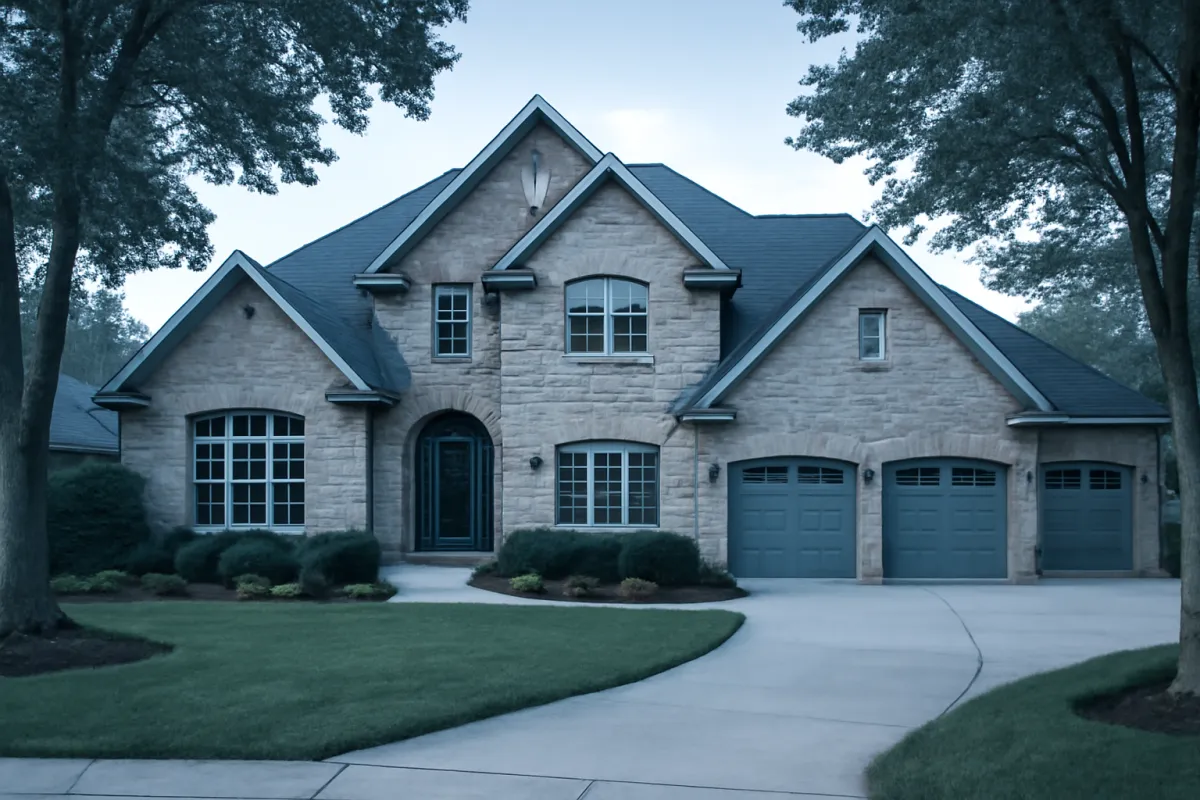
What's in this note
- The short answer: home insurance on a $500,000 house
- Typical cost to insure a 500K house
- Average home insurance cost for a $500,000 home
- Rebuild cost not purchase price drives the premium
- Market value versus rebuild cost on a $500,000 home
- Why a $500,000 house costs more to insure than a $300,000 one
- How much dwelling coverage for a $500,000 house
- What home insurance cost for a $500,000 house depends on
- Monthly cost to insure a 500K house
- How the deductible changes the premium on a $500,000 home
- Illustrative annual premium by deductible on a $500,000 home
- What a $500,000 home premium reflects
- Higher-value home considerations: guaranteed replacement cost and scheduled property
- Regional variation: why $500,000 homes cost different amounts to insure
- How to lower home insurance on a $500,000 house
- Scaling from $300,000 to $500,000: how the number grows
- A worked example: one $500,000 home, priced
- Common mistakes pricing a $500,000 house
- The bottom line
Short answer: Illustratively, home insurance on a $500,000 house runs around $2,400 to $3,800 a year, or roughly $200 to $315 a month, at an average risk profile and a mid-level deductible, with a middle-of-the-range illustration near $3,000. The premium is priced on rebuild cost rather than the $500,000 sale price, and homes in wildfire, hail, or coastal storm zones can sit well above that band while low-risk inland homes can sit below it.
How much is home insurance on a $500,000 house? Illustratively, expect somewhere around $2,400 to $3,800 a year, or roughly $200 to $315 a month, at an average risk profile and a mid-level deductible. The catch buried in the question is that the $500,000 is the market price, and insurers do not price on market price. They price on what it would cost to rebuild the structure, which for a $500,000 home is often a smaller number than the sticker.
This coverage note answers the $500,000 question directly and then unpacks every force that moves your own figure above or below the range. It is the higher-value companion to our coverage note on a $300,000 house, which prices the rung below this one, and it sits on the wider ladder in our coverage note on cost by home value. It leans on two more siblings for the machinery underneath: our coverage note on sizing the policy for the rebuild math the premium rests on, and our contents note on actual cash value versus replacement cost for the belongings clause folded into the bill. Anchor the whole thing with a rebuild figure from our replacement-cost estimator before you read a single quote.
Key takeaways
- Illustratively, home insurance on a $500,000 house runs around $2,400 to $3,800 a year, or roughly $200 to $315 a month, at an average risk profile and a mid-level deductible.
- The premium is priced on rebuild cost, not the $500,000 purchase price: for many homes the rebuild figure sits below the sticker because the land is part of the price and does not burn.
- A $500,000 house costs more to insure than a $300,000 one because there is more structure to rebuild and every percentage-based coverage layer scales up with the larger dwelling limit.
- Higher-value homes are where guaranteed or extended replacement cost and scheduled personal property start to earn their keep, cushions a smaller home often skips.
- The number to insure is the rebuild estimate, not the $500,000 price; anchor coverage to reconstruction and let the other layers inherit its accuracy.
The short answer: home insurance on a $500,000 house
Here is the direct answer the search is looking for, stated as a range because a single number would be misleading. At an average risk profile and a mid-level deductible, home insurance on a $500,000 house might run somewhere around $2,400 to $3,800 a year, with a middle-of-the-range illustration near $3,000. Divide by twelve and that is roughly $200 to $315 a month. Homes in low-risk inland areas can sit under that band, and homes in wildfire, hail, or coastal storm zones can sit well above it.
Every figure here is illustrative, chosen to show the shape of the number rather than to quote your house. The shape is the lesson: the premium on a $500,000 home is driven far more by where the home sits and what it costs to rebuild than by the $500,000 price tag itself. Read the range as a map of the terrain, then use our estimator and a couple of real quotes to find your own position on it. The rest of this coverage note is about why the range is as wide as it is, and why the number is meaningfully higher than the figure on a $300,000 home.
Typical cost to insure a 500K house
The phrasing changes but the answer does not: homeowners insurance on a 500k house illustratively lands around $2,400 to $3,800 a year at an average risk profile and a mid-level deductible, with a middle illustration near $3,000, or roughly $250 a month. Homeowners insurance and home insurance are the same product under two names, so any figure you see for one applies to the other. What matters far more than the label is the risk profile underneath it.
The single most useful move you can make with this number is to stop treating it as a fact about $500,000 homes in general and start treating it as a question about your $500,000 home in particular. The same 500k house insures for very different amounts in a calm inland county versus a coastal storm zone, and the rebuild cost that actually drives the premium can vary by a hundred thousand dollars on finishes alone. The range in this coverage note assumes an average profile precisely so you can adjust up for a high-risk region or elaborate construction, and down for a benign climate and standard finishes, when you read your own quote.
Average home insurance cost for a $500,000 home
If you want a single average to hold onto, a commonly cited illustration for a $500,000 home is near $3,000 a year at an average risk profile and a $1,000 deductible. That number is useful for one thing only: sensing the rough scale of the bill. As a guide to what you personally will pay, a national average is close to useless, because it blends a low-cost inland state where the same home might insure for $1,900 with a hurricane-exposed coastal county where it might cost $5,500 or more.
The average hides the very thing you care about, which is your own position in a very wide distribution. Two $500,000 homes can quote a thousand dollars apart on nothing more than roof age, the local fire-protection rating, and whether a prior owner filed a water claim. This is exactly why the broader cost-by-home-value note presents a ladder of illustrative tiers rather than one figure, and why this note keeps returning you to a quote on your specific address. Use the $3,000 average to sense the scale, then throw it away the moment you have a real number.
Rebuild cost not purchase price drives the premium
This is the question that fixes almost everything else, so it belongs early. Home insurance is based on rebuild cost, not purchase price, and confusing the two is the single most expensive misunderstanding in the subject. When a home is a total loss, the land is still there. The lot, the location, the school district, the view, none of it burned, and none of it needs replacing. What the insurer has to fund is the physical reconstruction: framing, roof, wiring, plumbing, and finishes, at today’s labor and material prices. That reconstruction figure is the dwelling coverage, and the dwelling coverage is the largest single input to your premium.
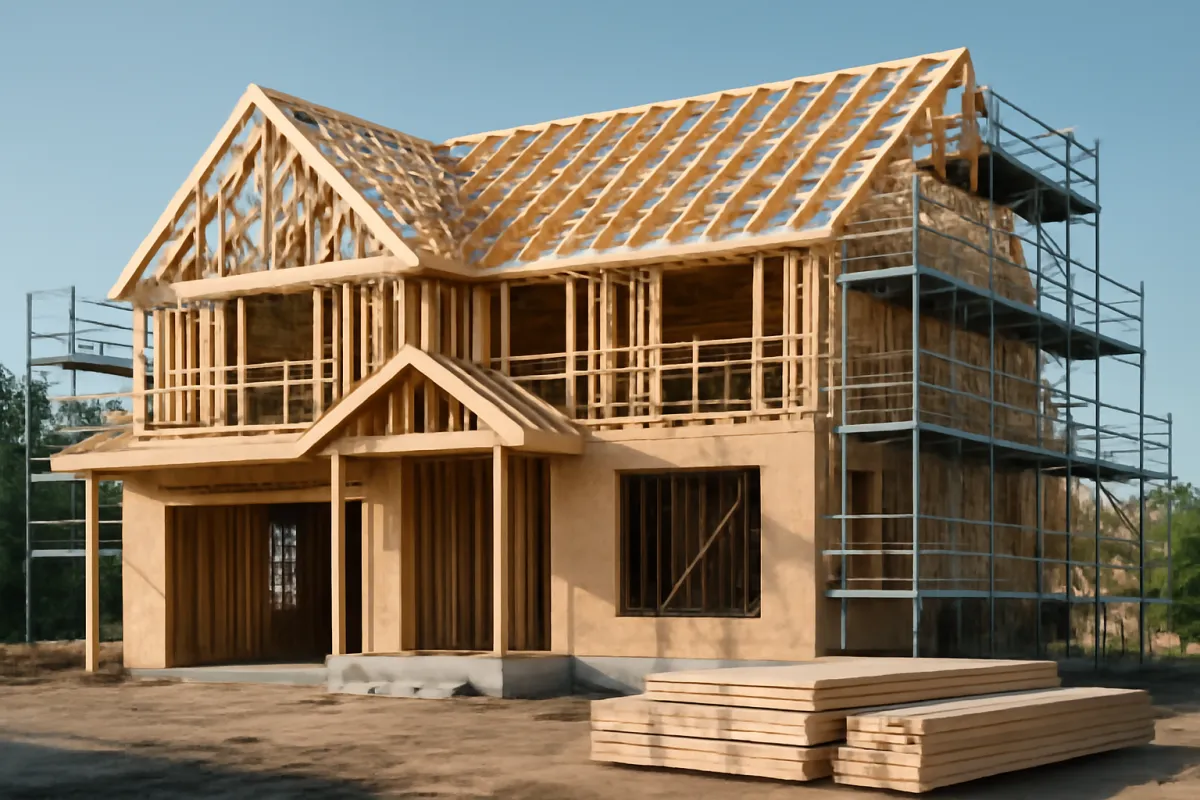
So when you ask what insurance costs on a $500,000 house, the honest first move is to translate $500,000 (a price) into a rebuild figure (a construction cost), because the second number is what the premium is actually built on. Our coverage note on sizing the policy walks that translation in full, and our contents note covers the closely related replacement-versus-depreciated choice on your belongings. Get the rebuild number first, and the rest of this note has something solid to stand on.
Market value versus rebuild cost on a $500,000 home
Walk through why the two numbers diverge, because it is where most of the confusion on a $500,000 home lives. Market value is land plus structure plus location premium. Rebuild cost is structure only. In an expensive metro where land is half the price of the home, a $500,000 house might rebuild for $330,000 or less, and the premium follows the smaller number, so the insurance is cheaper than the price would suggest. In a rural or low-land-value area where the structure is most of the value, the rebuild cost can approach or even exceed the $500,000 price, especially with custom finishes, and the premium reflects that.
This is why a $500,000 home in a coastal city and a $500,000 home in a rural county are not the same insurance problem at all, even before you get to weather risk. The first is likely a modest structure on expensive land, insuring a fairly contained rebuild figure. The second may be a large, well-finished structure on cheap land, insuring a rebuild figure close to or above the full price. The purchase price is the same $500,000 in both cases, and the dwelling coverage, which drives the premium, is not. Our contents note on actual cash value versus replacement cost covers the parallel version of this distinction on your belongings, where depreciation quietly shrinks a payout the same way a stale market-value anchor distorts the dwelling figure.
Why a $500,000 house costs more to insure than a $300,000 one
Here is the comparison the search behind this note is really making, so it earns its own section. A $500,000 house costs more to insure than a $300,000 one for two connected reasons. First, there is simply more structure to rebuild: a home that sells for $500,000 usually carries a larger or better-finished building than one at $300,000, so its reconstruction cost, and therefore its dwelling coverage, is higher. Second, every layer of the policy that is set as a percentage of the dwelling limit scales up with it. Contents at 50 to 70 percent, other structures at 10 percent, and loss of use at 20 percent all grow when the dwelling figure grows, so the whole coverage stack rises together.
There is a third, quieter reason. Higher-value homes tend to carry more liability coverage and more often add endorsements like guaranteed replacement cost or scheduled personal property that a smaller home skips, each of which adds to the premium in exchange for more protection. The increase is not usually a perfect straight line with the price, since much of the difference between a $300,000 and a $500,000 sticker can be land rather than structure, and land does not affect the premium. But the rebuild figure and the coverage limits both climb, so a $500,000 home commonly costs a good deal more to insure than a $300,000 one. Our coverage note on the $300,000 rung prices that lower figure directly, and the scaling section later in this note lays the two side by side.
How much dwelling coverage for a $500,000 house
Dwelling coverage, sometimes called Coverage A, is the amount the policy will pay to rebuild the physical structure, and for a $500,000 house it is the number worth getting right first. For a typical $500,000 home in an average land-value area, the rebuild estimate frequently lands somewhere in the high $300,000s to the low $400,000s, though it can be higher with custom finishes or in high-construction-cost regions, and lower where land is expensive. That dwelling figure then anchors the entire rest of the policy, because the other coverages are usually set as percentages of it.

The mistake to avoid is insuring the dwelling to the $500,000 price. Insure to the price when the rebuild is lower and you overpay for coverage you can never actually collect, because the policy pays to rebuild, not to refund the sticker. Insure to a stale price when the rebuild has risen and you are underinsured, which is the more dangerous direction. Our replacement-cost estimator produces the dwelling anchor in a minute from your square footage and local building cost, and our coverage note on sizing the policy explains the 80 percent rule that can quietly reduce even partial claim payments when the dwelling limit drifts too far below the rebuild figure.
What home insurance cost for a $500,000 house depends on
Set the price aside and the premium on a $500,000 house resolves into a handful of drivers, roughly in order of weight. First is rebuild cost, which sets the dwelling coverage and most of the bill. Second is location and its weather risk: wildfire exposure in parts of the West, hurricane and named-storm risk along the Gulf and Atlantic coasts, hail and tornado frequency across the central plains, and even the local cost of construction labor. Third is the age and condition of the home, especially the roof, since an older roof is a claim waiting to happen in an insurer’s model.
Fourth is your claims history, which follows both the property and your name through the industry claims database, so a home with recent water claims prices higher. Fifth is the coverage you choose: higher limits, replacement-cost contents, guaranteed replacement cost, and scheduled items all raise the premium in exchange for more protection, and higher-value homes carry more of these. Sixth is the deductible, the one lever on this list you can move freely at renewal. And in many states, a seventh factor is your credit-based insurance score, though a handful of states restrict or ban its use in home pricing. Two identical $500,000 prices can carry very different premiums once these drivers are layered in, which is the whole reason a quote on your specific home beats any table.
Monthly cost to insure a 500K house
The monthly figure is the annual premium divided by twelve, so if the illustrative annual band on a $500,000 house is around $2,400 to $3,800, the monthly equivalent is roughly $200 to $315, with a middle illustration near $250 a month. That is the arithmetic, and it is genuinely all there is to the monthly number, but the way you actually pay it is worth understanding because it trips people up.
Most homeowners with a mortgage never see a monthly insurance bill at all. The lender collects roughly one-twelfth of the annual premium each month inside the escrow account, bundled with property taxes, holds it, and pays the insurer once a year on your behalf. So the “monthly cost” shows up as a slice of your mortgage payment rather than a separate insurance charge. If you pay outside escrow, some carriers offer monthly installments but add a small billing fee for the convenience, which means paying annually or semi-annually is usually a touch cheaper. When you compare quotes, compare the annual premium, since the monthly figure is just that number sliced twelve ways and can be muddied by installment fees.
How the deductible changes the premium on a $500,000 home
The single fastest way to change the premium on a $500,000 house is the deductible, the amount you absorb on each claim before the policy pays anything. Raising it from a low default to a higher tier commonly trims a meaningful slice of the premium, because you are agreeing to handle the small, frequent losses yourself and letting the insurer price only the large ones. On a $500,000 home the difference between a $500 and a $2,500 deductible can be several hundred dollars a year, recovered every single year you do not file a claim, and because the base premium is larger than on a smaller home, the dollar savings from the lever are larger too.
There is a wrinkle worth knowing on storm-exposed $500,000 homes: the percentage deductible for wind, hail, and named storms, which is calculated as a percentage of the dwelling coverage rather than a flat dollar figure. On a home insured for $400,000 of dwelling coverage, a 2 percent wind deductible is $8,000, regardless of the comfortable flat number printed elsewhere on the policy. That is a real out-of-pocket exposure hiding inside an otherwise affordable premium, and it is larger on a $500,000 home than on a $300,000 one precisely because it scales with the dwelling limit. Read the storm language before you assume the flat deductible is the whole story. Our deductible note runs the full break-even math, and the short version is that a household with a funded emergency reserve usually wins by carrying a higher deductible and banking the recurring savings.
Illustrative annual premium by deductible on a $500,000 home
Put the deductible choice on a chart and the trade becomes visible. Each step up in the deductible buys a lower annual premium, and the gaps between the bars are the recurring rent you pay for a lower deductible. The figures below are one illustrative profile on a $500,000 home; your own numbers will differ, but the downward shape is real and consistent across carriers.
Illustrative annual premium by deductible on a $500,000 home
One illustrative average-risk profile on a $500,000 house. Real pricing varies widely by rebuild cost, location, and insurer.
Bars are scaled to the $3,300 top figure. Moving from a $500 to a $2,500 deductible trims the illustrative premium by roughly $750 a year, a saving you keep every year you do not file, in exchange for a larger out-of-pocket figure when you do.
Read the chart as a shape, not a quote. The point is not that a $500,000 home costs exactly $3,000 at a $1,000 deductible, it is that each tier up saves a predictable slice, and whether that slice is worth taking depends entirely on whether your emergency fund can genuinely absorb the higher deductible, twice in a bad year. Run your own version in our estimator and against a live quote before you decide.
What a $500,000 home premium reflects
It also helps to see where the premium goes, because a home policy is really four coverages bundled into one bill. The largest slice funds the dwelling, the structure itself, which is why rebuild cost dominates everything and why it dominates even more on a higher-value home. A meaningful chunk funds personal property, your belongings inside. A smaller but critical slice funds liability, which protects your assets if someone is injured and you are found responsible. And the remainder covers other structures like fences and sheds, loss of use during a rebuild, and various smaller protections.
What a $500,000 home premium reflects
Rough share of an illustrative $500,000 home premium by coverage type. Exact splits vary by policy and carrier.
The dwelling slice is why the rebuild figure, not the $500,000 price, drives the bill: well over half the premium is priced directly off the cost to reconstruct the home, and that share tends to grow on a higher-value house. The contents slice is where the replacement-cost versus actual-cash-value choice lives, and liability is the piece sized to your assets rather than your house.
Two of these slices connect to our sibling notes. The contents slice is where the choice between replacement cost and actual cash value plays out, and our contents note prices that gap at a scale worth understanding before you trim it. The liability slice is sized to what you could lose in a lawsuit, not to what your house is worth, which is why a $500,000 household often wants more of it than the default, frequently backed by an umbrella policy. When you read a premium on a $500,000 home, remember you are looking at all four coverages at once, and our coverage note on sizing the policy breaks each layer down in detail.
Higher-value home considerations: guaranteed replacement cost and scheduled property
A $500,000 home sits at the price point where two upgrades that a smaller home often skips start to earn their keep. The first is guaranteed or extended replacement cost. A standard policy caps its dwelling payout at the coverage limit, so if a widespread disaster spikes local labor and material prices and the rebuild ends up costing more than the limit, you absorb the gap. Extended replacement cost pays a set percentage above the limit, commonly 25 to 50 percent, as a cushion. Guaranteed replacement cost goes further and pays the full cost to rebuild with no dollar cap, subject to the policy’s terms and any conditions on keeping the limit current. On a higher-value home, where the rebuild figure is larger and the potential shortfall is larger too, that cushion often costs a modest share of the premium.
The second upgrade is scheduled personal property. Standard contents coverage carries low interior caps on categories like jewelry, watches, fine art, cash, and collectibles, frequently a few thousand dollars regardless of the headline contents limit. A $500,000 household is more likely to own items that exceed those caps, and the fix is a scheduled rider (sometimes called a floater) that insures each named item for an agreed value, often with no deductible and broader covered perils. Both upgrades add to the premium, and availability varies by carrier and region, so ask each insurer what it offers, read the exact percentage and conditions on replacement cost, and inventory anything unusually valuable before you assume the base policy has it covered. Our contents note explains the belongings side of this in full.
Regional variation: why $500,000 homes cost different amounts to insure
Pick up an identical $500,000 house and set it down in three different states and you will get three very different premiums, sometimes by a factor of two or three, with nothing changed but the map. Location drives an enormous share of home insurance cost because it determines the perils the insurer has to price. A $500,000 home in a calm inland county with a good fire-protection rating is a modest risk. The same $500,000 home in a coastal hurricane zone, a wildfire interface, or a hail-prone plain is a much larger one, and the premium reflects the exposure, not the price.
Within a region the variation continues at street level. Distance to a fire station and the local fire-protection class, proximity to the coast or a floodplain, the crime rate that informs theft coverage, and the density of trees over your roofline all feed the model. Two $500,000 homes a mile apart can price differently because one sits inside a better fire-protection district. This is why national average figures for a $500,000 home are close to useless for your decision, and why the illustrative range in this note assumes an average risk profile precisely so you can adjust up for a high-risk region or down for a benign one when you read your own quote. Flood, worth noting, is never part of a standard policy at any price, and a $500,000 home in a flood zone needs a separate flood policy on top, budgeted with the illustrative ranges in our note on how much flood insurance costs.
How to lower home insurance on a $500,000 house
If your quote on a $500,000 home comes back higher than you like, work the levers in order of impact and controllability. First, the deductible: raising it from a low default to a higher tier is the most reliable single reduction, and because the base premium on a $500,000 home is larger, the dollar savings are larger too, provided your emergency fund can genuinely cover the higher figure, twice in a bad year. Second, bundle home and auto with one carrier, which commonly discounts both policies and often stacks on top of other savings. Third, shop at least three carriers at renewal, because home insurance pricing varies enough between insurers that the same $500,000 risk can quote a thousand dollars apart.

Fourth, ask for every discount you qualify for and confirm the ones already applied: a monitored alarm, a newer or impact-resistant roof, updated wiring and plumbing, claims-free credit, and loyalty or non-smoker discounts all exist at various carriers. Fifth, address fixable risk factors over time, most notably an aging roof, which is often the largest surcharge on the policy. What does not belong on the list is cutting the dwelling coverage below the rebuild estimate to buy a smaller premium. That is not a saving, it is underinsurance wearing a discount’s clothes, and the day of a claim is a bad day to discover it. When you compare, normalize every quote to the same rebuild figure, deductible, and endorsements first, because a cheaper premium that quietly covers a lower rebuild cost or drops guaranteed replacement cost is a coverage cut, not a bargain.
Scaling from $300,000 to $500,000: how the number grows
It helps to see the two price points side by side, because the jump from a $300,000 to a $500,000 home is exactly the comparison many readers arrive with. On our illustrative average-risk profile, a $300,000 home sits near $1,800 a year and a $500,000 home near $3,000, so the premium rises but not in a clean one-to-one line with the price. The reason is that much of the extra $200,000 of purchase price can be land rather than structure, and land does not affect the premium. The part of the price that is bigger or better-finished building is what lifts the rebuild cost, the dwelling coverage, and every percentage-based layer above it.
So the honest way to think about the scaling is through rebuild cost, not sticker price. If a $300,000 home rebuilds for $240,000 and a $500,000 home rebuilds for $400,000, the dwelling coverage rises by two-thirds, and the premium rises roughly in proportion to that dwelling figure plus the extra liability and endorsements a higher-value home tends to carry. Our coverage note on the $300,000 rung prices the lower figure directly, and the broader cost-by-home-value note lays out the full ladder from the low tiers to the high ones. The through-line across all three notes is the same: read the rebuild figure, not the price, and the scaling stops being mysterious.
A worked example: one $500,000 home, priced
Assemble the whole method on one illustrative household. The Navarros buy a home for $500,000 in a metro where land carries real value, so their reconstruction estimate comes in at $390,000, not $500,000. That single correction matters: pricing the dwelling to the rebuild figure rather than the purchase price keeps them from paying for $110,000 of coverage they could never collect. At an average risk profile and a $1,000 deductible, their illustrative premium lands near $3,000 a year, or roughly $250 a month, most of which is collected quietly through their mortgage escrow.
Now they work the levers. Their emergency fund comfortably covers a higher deductible, so they requote at a $2,500 deductible and trim an illustrative $450 or so off the annual bill, banking the recurring saving. Because their home is a higher-value one, they price extended replacement cost and find the cushion costs a modest amount, so they add it against the risk of a post-disaster rebuild running over the limit. They schedule a $12,000 ring that would otherwise fall under a low contents cap. They bundle their auto policy, shop two more carriers, normalize each quote to the same $390,000 rebuild figure, the same deductible, and the same endorsements, and pick the lowest premium for equal coverage rather than the lowest headline number. None of these figures is a quote for anyone else, but the sequence is the point: rebuild first, deductible next, then the higher-value endorsements, then bundle, shop, and discounts, each checked against the same coverage. Re-run your own version in our estimator with your rebuild figure in place.
Common mistakes pricing a $500,000 house
The recurring errors, collected for the review.
- Insuring to the $500,000 price. The premium and the payout both follow the rebuild cost, which is often lower than the price where land is expensive; anchor coverage to reconstruction, not the listing.
- Assuming the premium scales one-to-one with the price. The jump from a $300,000 to a $500,000 home is driven by the rebuild figure and coverage limits, not the sticker, since much of the extra price can be land that never affects the premium.
- Skipping the higher-value endorsements. A $500,000 home is where guaranteed or extended replacement cost and scheduled personal property start to matter; leaving them off can expose a real gap after a widespread disaster or a high-value theft.
- Ignoring the percentage wind or hail deductible. On a storm-exposed $500,000 home, 1 to 2 percent of the dwelling coverage can be many thousands of dollars, larger than on a smaller home and dwarfing the flat deductible.
- Cutting coverage to lower the premium. The deductible is the lever built for price; trimming the dwelling limit below the rebuild cost quietly underinsures the structure.
- Forgetting flood is separate. A standard policy pays nothing for flood at any price; a $500,000 home in a flood zone needs its own flood policy on top.
Each mistake is invisible until a claim or a renewal, and every one is correctable in an afternoon before it costs anything.
The bottom line
The honest answer to how much home insurance costs on a $500,000 house is a range, not a number, because the price follows the cost to rebuild your specific home, its location and weather risk, its history, and the deductible you choose, with the $500,000 price serving only as a rough proxy for all of that. Illustratively the annual figure sits somewhere around $2,400 to $3,800, or roughly $200 to $315 a month, at an average risk profile and a mid-level deductible, and it runs meaningfully above a $300,000 home because there is more structure to rebuild and every coverage layer scales up with the larger dwelling limit. Anchor the coverage to a current rebuild estimate with our replacement-cost estimator and coverage note on sizing the policy, see how the $500,000 rung compares with the $300,000 one and where it sits on the wider cost-by-home-value ladder, price the higher-value endorsements, and pull the deductible lever deliberately. Do that and the number stops being a surprise and starts being a decision you made on purpose.
SumSured publishes these coverage notes to explain how premiums are built, not to price your policy or steer your decision. Nothing here is insurance, financial, or legal advice, and every premium, monthly figure, rebuild estimate, coverage split, endorsement, and worked scenario above is an invented illustration chosen to show the shape of the relationship on a $500,000 home, not a quote, a rate, or a promise of any carrier’s pricing. Your real cost turns on your reconstruction cost, precise location and peril exposure, roof and system condition, claims history, credit where state law allows it, the limits, endorsements, and deductible you select, and each insurer’s own rating rules, all of which differ by state and policy form. Price a $500,000 home with live quotes on your own address, read your own declarations page and endorsements line by line, confirm whether guaranteed replacement cost and scheduled items are actually in force, and run the final decision past a licensed insurance professional who can see your specific numbers.
Frequently asked questions
How much is homeowners insurance on a 500k house?
Illustratively, homeowners insurance on a $500,000 house often lands somewhere around $2,400 to $3,800 a year at an average risk profile and a mid-level deductible, which works out to roughly $200 to $315 a month. The honest caveat is that the $500,000 is the market price, and insurers do not price on market price. They price on the cost to rebuild the structure, which for a $500,000 home is frequently lower than the sticker because the land is part of the price and the land does not burn. Treat any single figure as a starting sketch and get a real quote on your own address before trusting a number.
What is the average home insurance cost for a $500,000 home?
A commonly cited illustration for a $500,000 home sits near $3,000 a year at an average risk profile and a $1,000 deductible, but a national average is close to useless for your decision. The average blends a low-cost inland state with a storm-exposed coastal one, and your home lives in exactly one place. Two $500,000 homes can quote a thousand dollars apart on roof age, distance to a fire station, claims history, and local weather risk. Use the average to sense the scale of the number, then replace it with a quote on your specific home.
How much is insurance on a $500K house per month?
If the illustrative annual premium on a $500,000 house is somewhere around $2,400 to $3,800, the monthly figure is simply that divided by twelve, so roughly $200 to $315 a month at an average risk profile and a mid-level deductible. Many homeowners never see a monthly bill directly, because the premium is usually collected through the mortgage escrow account along with property taxes and paid to the insurer once a year. Paying monthly outside escrow sometimes carries an installment fee, so the annual figure is the cleaner one to compare across quotes.
How much dwelling coverage do I need for a 500k house?
Enough dwelling coverage to rebuild the structure from the ground up at current construction costs, which for a $500,000 home is frequently somewhere in the high $300,000s to the low $400,000s but can be higher with custom finishes or lower where land is expensive. That dwelling figure then anchors the rest of the policy, because other structures, personal property, and loss of use are usually set as percentages of it. The number to insure is the rebuild estimate, not the $500,000 price, and getting that anchor right is what our coverage note on sizing the policy walks through. A current reconstruction estimate from our estimator or a builder is the reliable way to set it.
Is home insurance based on purchase price or rebuild cost?
It is based on rebuild cost, not purchase price, and this is the single most expensive misunderstanding in the whole subject. Purchase price includes the land, the location, the school district, and the neighborhood, none of which burns down or needs replacing after a total loss. The insurer funds the physical reconstruction of the structure at today's labor and material prices, and that figure, the dwelling coverage, is the largest input to the premium. For a $500,000 home the rebuild cost is often lower than the price where land is expensive, and can approach the price where land is cheap.
Why is insurance on a 500k house more than a 300k house?
Because there is simply more structure to rebuild and higher coverage limits to fund. A $500,000 home usually carries a larger rebuild cost than a $300,000 home, which lifts the dwelling coverage, and every percentage-based layer above it (contents, other structures, loss of use) scales up in step. Higher-value homes also tend to carry more liability and often add endorsements like guaranteed replacement cost or scheduled personal property that a smaller home skips. The premium does not usually rise in a perfect straight line with the price, but it climbs meaningfully, which is why a $500,000 home commonly costs a good deal more to insure than a $300,000 one.
Does a $500,000 home need guaranteed or extended replacement cost?
It is worth pricing on a $500,000 home, because the risk it addresses (a rebuild that costs more than the policy limit after a widespread disaster spikes local labor and material prices) grows with the size of the structure. Extended replacement cost pays a set percentage above the dwelling limit, commonly 25 to 50 percent, while guaranteed replacement cost pays the full cost to rebuild with no dollar cap, subject to the policy's terms. Neither is free, and availability varies by carrier and region, but on a higher-value home the extra cushion often costs a modest share of the premium. Ask each insurer what it offers and read the exact percentage and conditions before assuming you have it.
How can I lower home insurance on a $500,000 house?
The reliable levers, roughly in order of impact, are raising your deductible to a level your emergency fund can genuinely cover, bundling home and auto with one carrier, shopping at least three insurers at renewal, and claiming every discount you qualify for such as a monitored alarm, a newer roof, or a claims-free credit. On a higher-value home the deductible lever moves more dollars because the premium is larger to begin with. What you should not do is trim the dwelling coverage below the rebuild estimate to chase a cheaper price, because that quietly underinsures the structure. Our deductible note runs the full break-even math on that trade-off.

Hamza Hai is the editor of SumSured. She holds an MBA and reviews the site's articles against our editorial standards, checking that every figure is labelled for what it is, that nothing is presented as verified fact without a source the reader can check, and that the writing stays useful to a non-specialist.